
Michigan Carp Seasons: Spring, Summer, Fall and Winter
Michigan carp seasons do not follow fixed dates. Spring, summer, fall and winter change where fish hold, how confidently they feed, baiting levels, depth, weed, oxygen, pressure and the best times to fish.
This guide to Michigan carp seasons helps you choose the right approach before changing bait, rigs or swim. Start with the season, then narrow the plan using water temperature, fish movement, depth and current conditions.
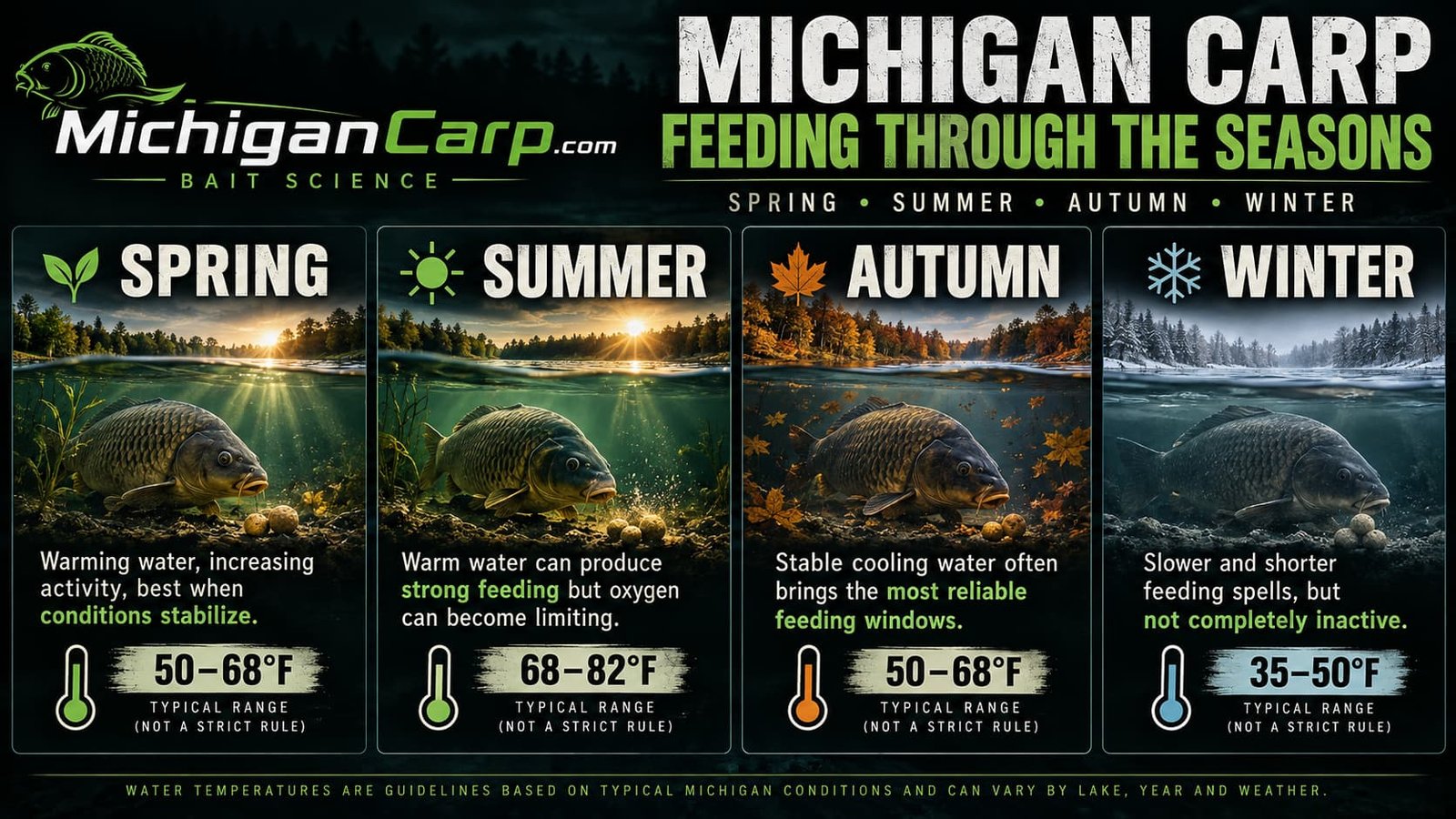
Michigan Carp Seasons: Start With Water Conditions
The same swim can be excellent in one season and almost pointless in another. Start with the seasonal pattern, then choose the water, depth, bait and timing.
Spring
Warming water, improving comfort, shallow movement, pre-spawn routes and careful baiting. Spring rewards observation and restraint.
Spring guide →Summer
Weed, oxygen, low-light windows, pressure, boat traffic, repeat feeding routes and controlled baiting.
Summer guide →Fall
Cooling water, stronger feeding intent, weed dieback, food routes, deeper access and the move toward stability.
Fall guide →Winter
Cold-water stability, short windows, deep holding areas, safety, light baiting and patience.
Winter guide →Follow the Water, Not the Calendar.
Michigan carp seasons are shaped by water, not just calendar dates. A cold spring can lag behind the calendar. A warm fall can still fish like late summer. A protected dark-bottom bay can be weeks ahead of the main lake.
Seasonal carp fishing works best when you read the trend: water temperature, sunlight, wind, weed, oxygen, natural food, spawning stage, pressure and whether fish are showing signs of using the area.
Spring, Summer, Fall and Winter Carp Fishing Guides
These guides explain the seasonal picture behind location, depth, movement and timing.
Water Temperature
Use temperature as a decision tool for location, feeding windows, baiting amount, depth and cold-water risk.
Temperature guide →Seasonal Movement
Understand how carp move from winter stability into spring routes, summer areas, fall feeding and cold-water holding.
Movement guide →Spawning Cycle
Learn the difference between pre-spawn movement, active spawning and post-spawn recovery so you do not misread visible fish.
Spawning cycle →Spring Carp Fishing in Michigan
Spring is the transition season. Fish begin moving, shallow water can come alive, and a few warm days can change everything — but cold nights and fronts still matter.
Where to Start in Spring
Look for warming shallows, dark bottoms, protected bays, reed edges, inflows, nearby depth and routes into comfort water.
Spring overview →Signs Carp Are Feeding
Learn how to read bubbles, clouded water, tails, liners, rolling fish and moving weed before committing your rods or bait.
Read feeding signs →Spring Baiting
Use careful baiting, smaller traps, corn, light crumb, soluble signals and confidence before heavy feeding.
Spring bait guide →Summer Carp Fishing in Michigan
Summer is one of the more variable Michigan carp seasons: fishing can be consistent, but only when you read oxygen, weed, shade, boat pressure, low light and repeat feeding windows.
Summer Location
Focus on weed edges, wind lanes, shade, inflows, patrol routes, clean spots and areas carp can use confidently.
Summer guide →Oxygen and Heat
Hot water can make a lake look active while the better fishing happens at dawn, dusk, night, wind edges or oxygen-rich zones.
Oxygen guide →Summer Bait Control
Carp may feed harder, but weed, nuisance fish and heat mean baiting still needs a plan.
Bait Guide →Visible Carp Are Not Always Feeding Carp.
During the spawning cycle, carp can be extremely visible and still be poor targets from a normal fishing point of view. Pre-spawn, active spawning and post-spawn recovery are different phases.
When fish are clearly in active spawning mode, back off and let them finish. Use the cycle to understand movement and timing, not to force a photo when fish care should come first.
Fall Carp Fishing in Michigan
Fall can be one of the most productive Michigan carp seasons, but it still rewards anglers who follow cooling water, changing weed and routes between food and depth.
Early Fall
Some summer areas still work, especially low light and stable weather. Do not abandon productive water too early.
Fall guide →Mid-Fall
Feeding can become more repeatable around food areas, edges, shelves, routes and areas with access to deeper safety water.
Seasonal movement →Late Fall
Windows shorten again. Tighten baiting, focus on stability and avoid fishing summer memories too long.
Cold-water bait →Winter Carp Fishing in Michigan
Winter is often the most demanding of the Michigan carp seasons. It is not about covering water with bait, but finding stable fish, fishing safely and accepting that feeding windows may be short.
Winter Location
Look for stability, deeper holding water, slow current, safe access, mild spells and places carp can hold with minimal disturbance.
Winter guide →Cold-Water Bait
Use tiny amounts, small hookbaits, low oil, soluble signals, light crumb, corn, small milk baits and patient presentation.
Cold-water bait →Safety and Access
Winter access, ice, cold air, slippery banks and regulations matter. No bite is worth unsafe fishing.
Fish care and safety →Seasonal Carp Location Clues: Temperature, Oxygen and Food
For the underlying science, the USGS guide to water temperature explains why warming and cooling affect aquatic life. Its dissolved oxygen guide explains why depth and water movement matter, especially during warm conditions. Use these concepts alongside your own observed carp activity, rather than treating a temperature reading as a fixed bite-time rule.
Across Michigan carp seasons, different clues matter most. The best sign is the one that fits the water temperature, fish activity and seasonal pattern in front of you.
Depth
Carp may use shallow spring warmth, summer weed edges, fall transition routes and deeper winter stability.
Depth guide →Wind and Weather
Wind, pressure, fronts, sun and storms all matter differently depending on water temperature and season.
Weather fronts →Feeding Signs
Bubbles, fizzing, rolling, cloudy patches, tailing and liners mean more when they match the seasonal location pattern.
Feeding signs →Change Bait Amount Before You Change Everything.
Many seasonal mistakes are not caused by the wrong bait. They are caused by using the wrong amount of bait for the water temperature, feeding window, fish confidence and session length.
- Early spring: light baiting, quick signals, careful location.
- Late spring: more movement, but still watch fronts and spawning behavior.
- Summer: controlled baiting, weed edges, oxygen and repeat windows.
- Fall: stronger food value can work, but only where fish are using the area.
- Winter: tiny amounts, close to fish, safe access and patience.
Practical MichiganCarp view: start with the season and the water. Then choose bait, rigs and amount. Do not force one favorite approach across the whole year.
Seasonal Bait, Rigs and Tactics
Seasonal fishing connects directly to bait choice, rig choice and session planning. Use these hubs when the season has told you what problem you are solving.
Bait Guide
Choose corn, boilies, particles, tiger nuts, pellets, cold-water bait or food bait by season and session length.
Bait Guide →Rigs
Let the bottom and season choose the rig: clean spots, weed, silt, dying weed, cold water and pop-up need all change.
Rigs →Tactics
Use tactics to turn seasonal clues into a real plan: where to cast, how much bait, when to move and when to wait.
Tactics →Connect Seasons to the Rest of MichiganCarp.com
Understanding Michigan carp seasons supports nearly every fishing decision. It explains why the same bait, rig or swim can work one month and fail the next.
Watercraft
Use Watercraft when the question is wind, weed, oxygen, pressure, depth, temperature, signs or daily conditions.
Watercraft →Guide Library
Use the main library to move between seasons, tactics, bait, rigs, fish care, gear and deeper support articles.
Guide Library →Fish Care
Hot weather, cold weather, spawning, night fishing, ice and unsafe banks all change the fish-care decision.
Fish Care →Every Season Asks a Different Question.
Spring asks where the water is improving. Summer asks where carp can stay comfortable and feed safely. Fall asks where food and depth meet as the water cools. Winter asks where fish can hold with the least stress and whether fishing is safe and realistic.
Answer the seasonal question first. Then choose the swim, bait, rig and session plan.