

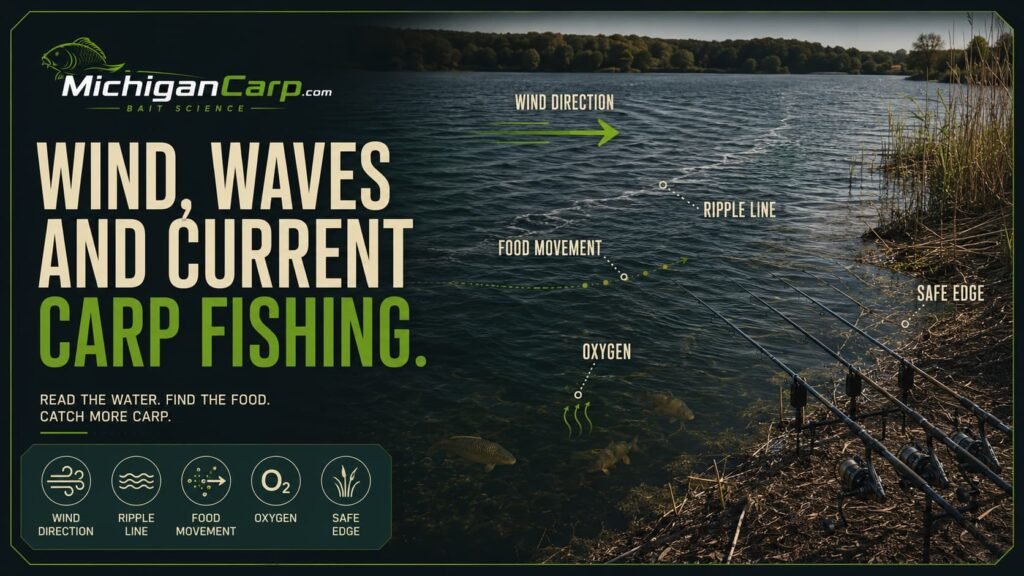
Wind, waves and current carp fishing is really about understanding what moving water does to the lake. Wind can move food, oxygen, warmth, color, surface drift and carp confidence. Current can create routes, seams, slacks and feeding edges. Waves can give carp cover, but they can also make fishing unsafe if you ignore line control, landing angles and fish care.
That is why simple rules like “always fish the wind” or “always get on the back of the wind” are not enough.
A warm spring wind pushing into a shallow bay can be excellent. A cold wind after a front can ruin that same bay. A summer breeze can improve oxygen and switch a weed edge on. A violent wind can make presentation poor and fish care difficult. A steady wind across a large Michigan lake can create a feeding line, while a short gusty wind may do very little.
The useful question is not just:
Which way is the wind blowing?
The better question is:
What is this moving water doing to the exact area the carp are using?
This guide explains how wind, waves and current affect Michigan carp fishing, how moving water positions carp, when to fish the wind, when to avoid it, how to read current seams and inflows, and how to connect wind direction to oxygen, temperature, weed, food, baiting and safety.
For the main condition-reading system, start with Watercraft and Conditions for Michigan Carp Fishing. For oxygen, read Dissolved Oxygen and Carp Fishing. For timing, use Carp Bite Windows in Michigan.
Quick Answer: How Wind, Waves and Current Position Carp
Wind, waves and current position carp by changing comfort, food movement, oxygen, visibility, water temperature and safety. Carp rarely respond to moving water for one reason only. They usually respond when several advantages overlap.
A windward bank can be good because it may receive food, color, surface movement, oxygen and wave cover. A sheltered bank can be good when the main wind is too cold, too violent, too exposed or unsafe. An inflow can be excellent when it brings oxygen and food, but poor when it brings cold dirty water or dangerous flow. A current seam can hold carp because it lets them feed near movement without sitting in the strongest push.
The best moving-water area is not always the wildest-looking water. It is the area where carp can feed comfortably and you can fish safely.
| Moving-water clue | What it can do | Best carp-fishing response |
|---|---|---|
| Warm wind into shallow water | Can push warmer surface water and food into a bank | Check bays, reed edges, margins and shallow flats |
| Cold wind into shallow water | Can chill the area and reduce shallow confidence | Look for sheltered, sunny or deeper comfort water |
| Steady summer wind | Can improve oxygen, cover and food movement | Fish windward weed edges, ripple lines and colored water |
| Heavy waves | Can create cover but also presentation and safety problems | Fish the edge of the blow or safer adjacent water |
| Inflow or current | Can bring oxygen, food and routes | Fish seams, slacks, edges and softer water near flow |
| Flat calm | Can increase visibility and reduce comfort in heat | Look for low light, shade, depth, signs or subtle patrol routes |
The best wind is not always the strongest wind. The best wind is the one that creates a useful combination of food, oxygen, temperature, cover, carp confidence and safe fishing.
Table of Contents
Moving Water Is a Watercraft Clue, Not a Rule
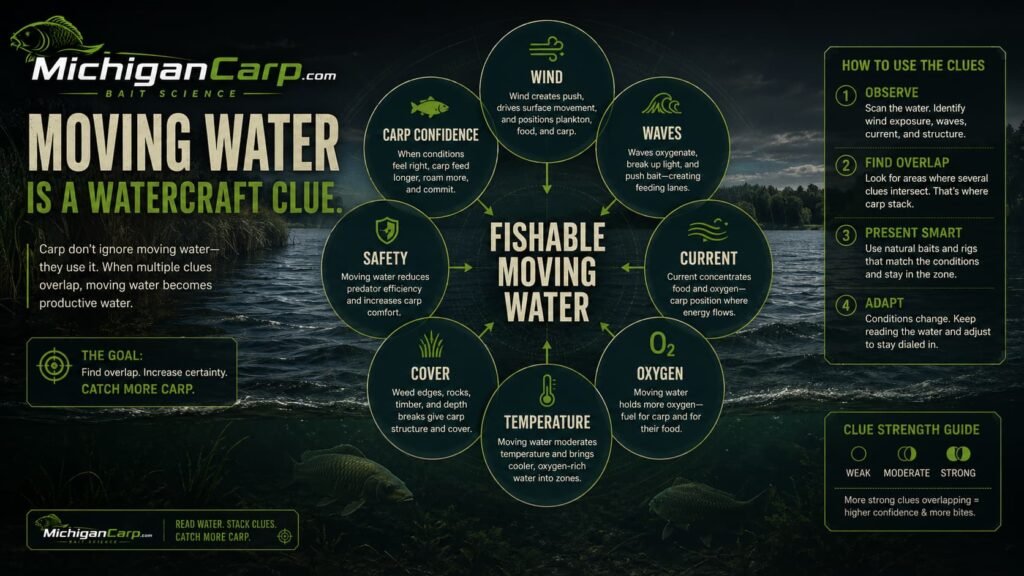
Moving water is useful because it changes the lake. It does not automatically create feeding carp.
A wind-blown bank with no food, no cover, no depth nearby, no fish signs, poor access and unsafe waves is not automatically a good swim. A sheltered bay with warmth, weed, signs and safe landing can be better, even if it is on the “wrong” side of the wind. A current seam can be excellent, but the fastest water may be less useful than the softer edge beside it.
This is where many anglers go wrong. They turn wind direction into a rule instead of asking what the wind is actually doing.
On Michigan waters, that question matters because the same lake can contain shallow bays, reed lines, weed beds, deep holes, boat channels, points, campground banks, inflows, dam current, narrows, rock, silt and zebra mussels. Wind and current do not affect all of those areas the same way.
Good moving-water decisions start with observation. Watch where the ripple hits. Watch where color forms. Watch where foam, pollen, leaves, floating seeds or scum collect. Watch where baitfish flick. Watch where birds work. Watch where carp roll, fizz, push reeds, cloud silt or create liners. Then ask whether that moving water is improving the swim or simply making it harder to fish.
The Windward Bank
The windward bank is the bank the wind is blowing into. It is the classic area anglers talk about when they say “fish the wind.” Sometimes that is very good advice. Sometimes it is lazy advice.
A windward bank can be productive because wind may push food, oxygen, warmer surface water, insects, floating debris, color and wave cover into that side of the lake. Carp may follow because the area becomes more comfortable, more productive, or safer to feed in.
Windward banks are especially interesting when the wind has been blowing steadily for long enough to change the water. A light breeze for ten minutes may not matter much. A steady wind for half a day, overnight, or several days can create a real pattern.
Good windward-bank situations include a warm spring wind pushing into a shallow bay, a steady summer wind working along a weed edge, ripple breaking up clear-water visibility, waves stirring soft silt or natural food, wind blowing into reeds or pads, a bay entrance receiving drift, or carp showing repeatedly on the windward side.
The windward bank becomes less attractive when the wind is very cold, the waves are unsafe, the water becomes too dirty, floating debris covers the rigs, the line cannot be controlled, bait cannot be placed accurately, or fish are clearly showing elsewhere.
Fish the wind when it improves the area. Do not fish it because a rule told you to.
The Back of the Wind
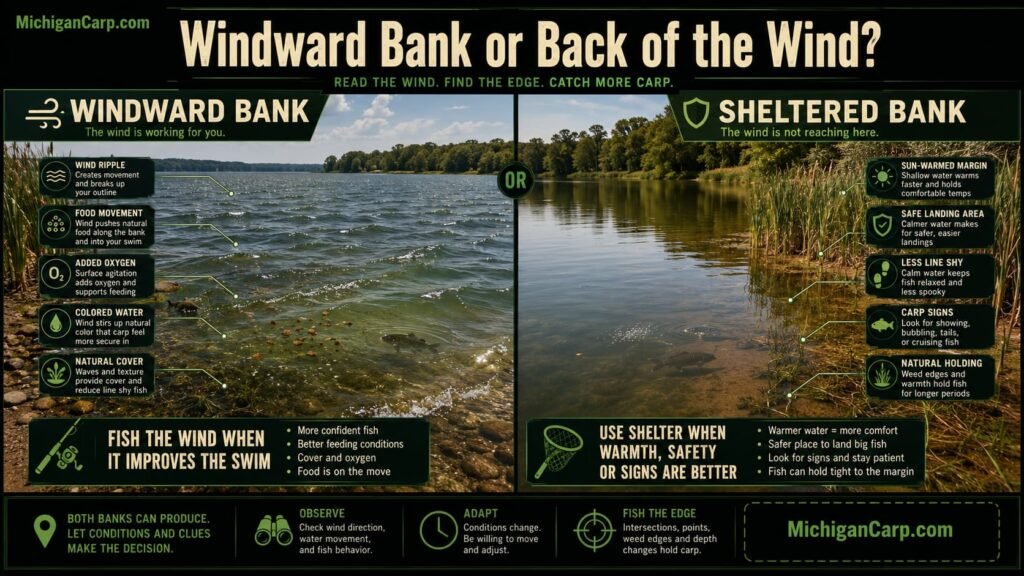
The back of the wind is the sheltered side of the water. Some anglers dismiss it because it does not look as active. That can be a mistake.
Sheltered water can be better when the windward side is too cold, too rough, too dirty, too snaggy or too unsafe. In early spring, a protected sunny corner may warm faster than an exposed bank hit by a cold wind. On clear pressured lakes, carp may cruise quieter sheltered margins. After heavy boat pressure or storms, carp may use calmer areas to recover confidence.
The back of the wind can also fish well when the lake has enough food, weed, shade, depth or natural cover on that side. Wind direction alone does not decide everything. Carp still need comfort and a reason to be there.
In summer heat, sheltered flat water can become poor if it turns stagnant and oxygen drops. But it can still produce when it has shade, healthy weed, depth, night confidence or fish actually showing. Again, the answer is not the wind direction by itself. The answer is what the wind has done to the water.
Do not treat sheltered water as second best. Treat it as a different clue.
Warm Wind and Cold Wind
Warm wind and cold wind can produce opposite results on the same swim.
In spring, warm wind can be powerful. If warmer air pushes surface water into a shallow bay, reed line or dark-bottomed margin, that area may wake up faster than the main lake. Carp that were holding deeper can move in when the shallow water becomes more comfortable.
A warm spring wind is strongest when it lines up with shallow water, dark bottom, early weed, reeds, natural food, sun, nearby depth, stable weather and visible fish signs. That is when a previously dead bay can become the best area on the lake.
Cold wind is different. A cold wind blowing into shallow water can pull temperature down and reduce confidence quickly. It may push fish toward deeper water, sheltered margins, channels, sunlit protected areas or the back of the wind. In cold-water periods, temperature trend often matters more than wind direction.
This does not mean cold wind always kills fishing. A cold wind can still create movement, oxygen and cover, and carp may still feed if they are already using the area. But the calculation changes. Ask whether the wind is improving comfort or reducing it.
For the temperature side of the decision, read Carp Water Temperature Guide for Michigan Lakes. For season-by-season location, use Michigan Carp Fishing Seasons.
Wind, Oxygen and Summer Carp
Wind can become especially important in summer because it can improve surface movement, oxygen, cover and confidence.
USGS explains that dissolved oxygen is the oxygen available in water for aquatic life, and that stagnant water generally contains less oxygen than rapidly moving water. It also explains that warm water holds less dissolved oxygen than cold water. For the science background, use USGS: Dissolved Oxygen and Water.
For carp anglers, that science becomes practical. A hot, still, shallow back bay with dying weed may look tempting but fish poorly. A wind-rippled weed edge beside it may be far better. A summer breeze can break up light, refresh shallow water, move food, and make carp feel safer in areas they avoided during flat calm.
Good wind-and-oxygen areas include windward weed edges, inflows with ripple, wave-washed points, shaded wind lanes, channels with movement, colored water on shallow shelves, and areas where the wind pushes water without making fish care unsafe.
In hot conditions, carp may choose comfort over the warmest water. That is why a windward edge can come alive after a dead flat spell.
For the dedicated oxygen guide, read Dissolved Oxygen and Carp Fishing. For summer location, read Summer Carp Fishing in Michigan.
Waves, Cover and Fish Confidence
Waves can give carp cover. They break up light, reduce surface visibility, hide bank movement and make shallow water feel less exposed. This is especially useful in clear Michigan lakes where carp can be cautious during bright, flat conditions.
A soft chop on a clear margin can make a big difference. Carp that would avoid the area in bright flat water may use it when ripple adds cover. A wave-washed reed edge, weed line, point or shallow shelf can become more attractive when the water gains color and movement.
But heavy waves create problems. They can make casting inaccurate, move leads, create line bow, drag debris into the line, reduce bite indication, make netting dangerous, and increase the risk of poor fish care around rocks, steep banks or snaggy edges.
The best area is often not the most violent part of the wave action. It may be the edge of the blow, the side pocket, the calmer lane, the reed edge, the bay entrance, the inside seam, or the water just off the main push.
Good wave cover helps the fishing. Bad wave pressure ruins control.
Before fishing heavy wind or waves, ask whether you can cast accurately, hold bottom, control the line, see bites, land fish safely and return carp properly. No wind advantage is worth losing fish or risking unsafe bank work.
For fish handling and safety, use Fish Care and Safety. For official wind safety guidance, use NOAA / National Weather Service Wind Safety.
Wind and Food Movement
Wind moves food directly and indirectly.
It can push floating seeds, insects, pollen, foam, algae, surface scum and fine debris. It can move suspended particles. It can stir shallow silt. It can create colored water. It can wash food from weed, reeds, shorelines, mussel areas or soft bottom. It can also concentrate baitfish, birds and small aquatic life into one side of a lake.
Carp are not always feeding on wind-blown surface food, but food movement often reveals water movement. Where the water collects food, carp may follow.
Useful food-movement clues include foam lines, pollen lines, floating debris, insects, bird activity, cloudy shallows, colored water, wave-washed margins, weed collecting drift, baitfish flicking in the ripple, and repeated carp signs on the same wind line.
Do not overread one clue. A foam line with no depth, no food, no safety and no fish signs may mean little. But a foam line crossing a weed edge, point, bay mouth or soft-silt feeding area deserves attention.
Wind can show you where the lake is delivering food. Your job is to decide whether carp can use that delivery safely and confidently.
Crosswinds, Side Winds and Ripple Lines
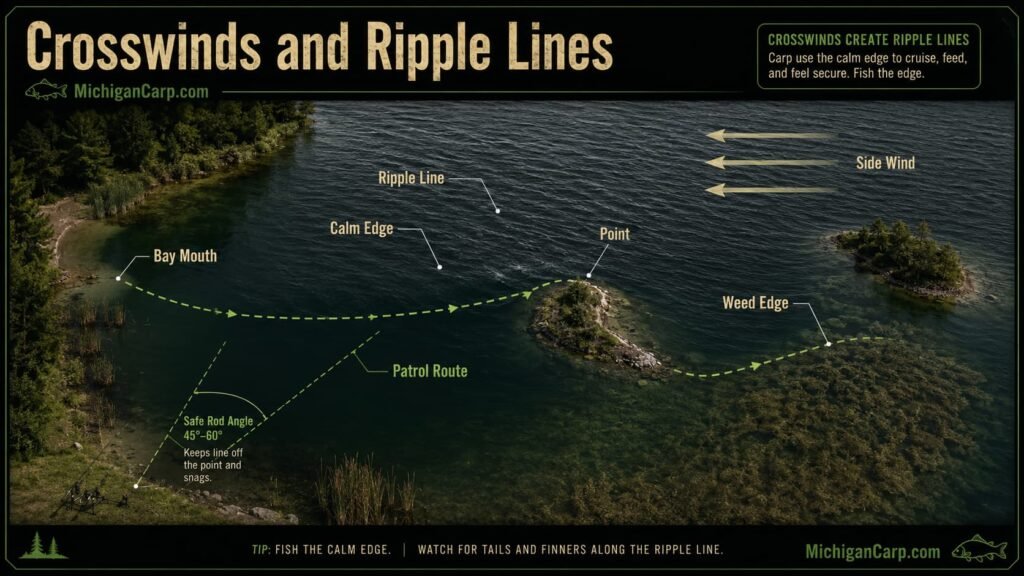
A crosswind can be awkward to fish, but useful for finding carp.
Side winds do not simply push everything into one obvious bank. They can create lanes, ripple edges, drift lines, scum lines, pressure lines and patrol routes. They can push food along a bank instead of directly into it. They can make one rod fish better than another because the line angle and bait position sit more naturally in the movement.
Useful crosswind areas include points, bay mouths, side edges of weed beds, channels across the wind, inside corners, downwind island edges, calm/ripple boundaries, bars, shelves and places where surface drift catches or changes direction.
The line between calm and rippled water is worth watching. Carp may use the ripple for cover, then feed on the edge where food collects and visibility changes. In clear water, that soft edge can be more important than the fully exposed windy bank.
Do not ignore crosswind because it is uncomfortable. Read where the movement is going.
Current in Lakes, Channels and Reservoirs
Many Michigan carp waters are not completely still.
Channels, dam ponds, drowned river systems, inflows, outflows, culverts, bridges, narrows, river mouths and boat channels can all create current or subtle movement. Even when the surface looks calm, water may be moving underneath because of wind, level changes, inflow, outflow or basin shape.
Carp often use current because it brings oxygen and food, but they do not always sit in the fastest water. Efficient feeding matters. Carp usually prefer the comfortable edge where food passes without forcing them to fight the strongest flow.
Look for seams, slower edges, slacks, behind points, inside bends, channel edges, bridge edges, culvert influence, inflow mouths, outflow areas, weed near movement, and wind-against-current zones.
In moving water, the edge is often the key. The seam. The slack. The crease. The spot where the flow delivers food but the carp can hold comfortably.
This matters on dammed systems and flooded river areas. A channel can act like a carp road, but the exact fishing spot still needs to be chosen by bottom type, safe landing, line angle, depth and fish signs.
Inflows, Outflows and Narrows
Inflows can be excellent because they may bring oxygen, cooler water, warmer water, food, color, insects, current and movement. They can also be overrated if anglers cast blindly into the strongest flow.
An inflow can help when summer water is hot and stagnant, when rain adds food movement, when water temperature is favorable, when carp use the inflow as a route, when the inflow creates color, when baitfish and birds are active, or when there is a slower edge to fish.
An inflow can hurt when it brings very cold water in spring, makes the area unstable after heavy rain, pushes too much debris, creates unsafe flow, brings poor water quality, or makes landing difficult.
The best part of an inflow is often not the mouth itself. It may be the seam, the slack beside it, the downstream food trap, the first clean shelf, the weed edge near the influence, or the deeper water close enough for carp to move in and out.
Outflows, narrows and channels can also concentrate movement. Carp may use them to travel between basins, bays, rivers, marshes and deeper areas. Good areas include channel mouths, narrows, drop-offs beside flow, old riverbeds, bridge edges, weed near current, points where flow turns and places where food settles.
Fish the usable edge of movement, not the strongest water just because it looks dramatic.
Wind and Bite Windows
Wind can create bite windows because it changes comfort, cover, oxygen, food movement and confidence.
A windward bank may not produce immediately. It may need time to push food and water. On the other hand, a sudden cold wind may slow a shallow area quickly. A summer wind after flat calm heat may improve oxygen and produce a short feeding spell. Wind easing after several rough hours may make the edge of the blow easier to fish. A warm rain with wind may move food and soften light. Low light plus wave cover can make shallow carp more confident.
Useful wind-related bite windows include the first warm wind in spring, wind increasing after flat calm summer weather, wind easing after rough conditions, evening ripple into a margin, dawn after overnight wind, stable wind over several days, pre-front cloud and wind, and low light with wave cover.
The timing matters as much as the direction. A good wind that arrives at the wrong time may not help. A modest wind that matches the feeding window can be enough.
For the full timing article, read Carp Bite Windows in Michigan. For weather-front decisions, read Barometric Pressure and Weather Fronts for Carp Fishing in Michigan.
Wind, Waves and Baiting
Moving water changes baiting.
Strong wind can spread loose bait wider than expected. Waves can move lighter particles. Current can drag bait downstream or along a channel. Wind can make spodding inaccurate. Undertow can shift bait and line. Weed can collect bait in places you did not intend. If you bait as though the water is still when it is clearly moving, the rig may not be sitting where the feed finishes.
On a windward bank, a small accurate patch can be better than loose bait scattered everywhere. In current, bait placed slightly upstream may settle where carp are actually feeding. On wave-washed shallows, heavier particles may hold better than light floating pieces. In weed, tight baiting on the clean edge is often better than dumping bait into the thickest growth.
When water is moving, ask where the bait will end up, not just where it lands.
Wind can also change bite indication and line control. A crosswind can bow the line. Heavy ripple can make bobbins move. Current can pull on the lead. Floating weed and debris can mask bites. In those conditions, rig placement, lead size, line angle and distance control matter more.
For bait choice, use Carp Bait Guide for Michigan Lakes. For particles, read Particle Prep for Carp Fishing.
Rig Placement and Line Control in Moving Water
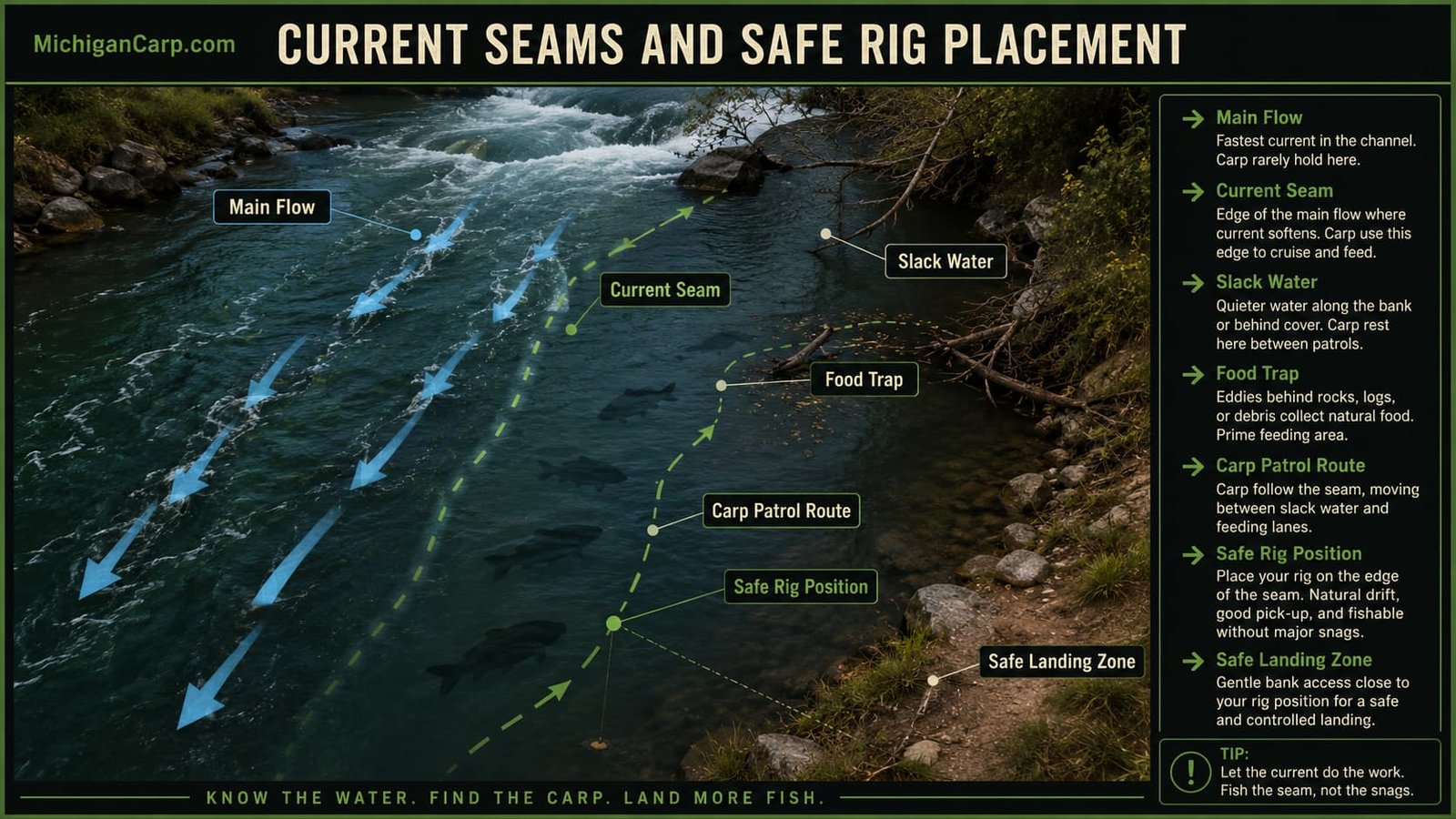
A moving-water swim can look perfect and still fish badly if the rig is not presented cleanly.
Wind and current affect the line before they affect the hookbait. A side wind can put a bow in the line. Undertow can pull line across weed. Waves can move light leads. Current can drag rigs into debris. Floating weed can collect on the line. A poor line angle can make a safe-looking spot much harder to fish.
Keep the rig simple and strong enough for the water. Fish the cleanest usable edge, not the most dramatic part of the feature. In current, the seam or slack is often better than the main push. Around weed, the safe edge or clean hole is usually better than the thickest growth. Around rocks, mussels or timber, line strength, leader choice and landing angle matter.
Before casting, ask:
Will the rig hold? Can I control the line? Will debris collect? Can I land a fish safely? Is there a clear route from bite to net? Is the fish likely to bury in weed or snags? Is this spot still safe if the wind increases?
For rig choice, use The Complete Michigan Carp Rig Guide. For line and leader decisions, use Line and Leaders. For fish-care decisions, use Fish Care and Safety.
Seasonal Wind Decisions
Wind means different things in different seasons.
In spring, wind is mainly a temperature and movement clue. A warm wind into shallow water can be excellent. A cold wind can push fish back toward stable areas. Sheltered sunny water may beat the windward bank if the wind is chilling the shallows.
In summer, wind becomes more about oxygen, shade, cover, weed edges and pressure. A ripple line or windward weed edge may outfish flat hot water. Dawn, dusk and night windows often work better when wind has helped the area stay comfortable.
In fall, wind can concentrate food and help you track routes as weed changes and fish prepare for colder water. A stable wind into a food-rich edge can be worth repeating. But late fall often rewards comfort and access to depth more than chasing every blow.
In winter or very cold water, wind can make fishing uncomfortable and unsafe without improving feeding enough to justify it. Stable water, safe access and realistic windows matter more than heroic exposure.
Use Spring Carp Fishing in Michigan, Summer Carp Fishing in Michigan, Fall Carp Fishing in Michigan and Winter Carp Fishing in Michigan to match wind decisions to the season.
A Simple Wind, Waves and Current Plan
Step 1: Identify what is moving
Look at wind direction, ripple, waves, current, inflows, outflows, surface drift, foam lines, pollen lines and debris movement. Do not guess from the forecast alone. Stand at the water and watch.
Step 2: Ask what the movement improves
Does it improve oxygen, warmth, cover, color, food movement or confidence? Or is it making the swim colder, dirtier, unsafe or harder to fish?
Step 3: Connect movement to features
Wind is strongest when it hits something useful: weed edge, reed line, bay mouth, point, shelf, silt area, inflow, channel, mussel bed, margin route or patrol line.
Step 4: Check safety and fish care
Do not fish water you cannot land from safely. Heavy waves, steep banks, rocks, snags, weed and poor access can turn a good-looking swim into a bad decision.
Step 5: Match baiting to movement
Think about where bait will settle, not just where it lands. Use tighter baiting in wind, current and weed unless carp are clearly feeding and returning.
Step 6: Watch for bite-window changes
Wind often needs time. Watch what changes as the wind builds, eases, turns, cools, warms or pushes into low light.
Step 7: Keep notes
Record wind direction, strength, water temperature, wave action, carp signs, bite times, baiting and exact swim position. Over time, your own water will tell you which winds matter.
Common Wind and Current Mistakes
Following “fish the wind” blindly
The windward bank is only good when it improves the water carp are likely to use. Cold, unsafe, dirty or unfishable wind is not automatically good.
Ignoring the back of the wind
Sheltered water can be excellent when it is warmer, safer, calmer, clearer or simply where the carp are showing.
Fishing the strongest current instead of the edge
Carp often use seams, slacks and softer edges because food comes past without forcing them to sit in the hardest water.
Letting wind ruin line control
A good spot is not good if line bow, debris, moving leads or undertow stop the rig fishing properly.
Over-baiting moving water
Wind and current can spread bait. Tight, accurate baiting is often better than assuming everything stays where it lands.
Ignoring safety
Heavy wind and waves can make casting, boating, bank access, landing and fish care unsafe. No watercraft clue overrides safety.
Not connecting wind to season
A warm spring wind and a hot summer wind do not mean the same thing. Always read wind with water temperature and seasonal behavior.
My Practical MichiganCarp View
For Michigan carp fishing, I treat wind, waves and current as a way to understand the lake, not as a fixed rule.
Some of my best-looking windy areas have not produced because the wind was wrong for the season, too cold, too violent, or not connected to food and safe fishable water. Other times, a modest ripple on the right weed edge or bay mouth has made more difference than a full gale into a dead bank.
Moving water matters because it changes what carp feel and find: oxygen, food, cover, temperature and confidence. But the useful spot is still the one that lets you present a rig cleanly and land fish safely.
So I do not ask only where the wind is blowing. I ask what it is doing.
Is it moving food? Is it improving oxygen? Is it warming or cooling the swim? Is it giving cover? Is it creating a bite window? Is it still safe to fish?
When those answers line up, moving water becomes one of the strongest clues in carp fishing.
FAQ
Should I always fish the wind for carp?
No. Fish the wind when it improves the swim by adding food movement, oxygen, cover, warmth, color or confidence. Avoid it when it is too cold, unsafe, dirty, snaggy or impossible to fish properly.
Is the windward bank best for carp fishing?
Sometimes. A windward bank can be excellent when the wind is steady and useful. But the back of the wind can be better when it is warmer, safer, calmer or where carp are actually showing.
How does wind affect carp feeding?
Wind can move food, oxygen, surface water, color and cover. It can make carp more confident, especially around weed edges, reed lines, bay mouths, points and shallow feeding areas.
Is warm wind better than cold wind?
Warm wind is often useful in spring because it can push warmer water into shallow areas. Cold wind can slow shallow water, especially after fronts. The effect depends on season, water temperature and fish signs.
Do waves help carp fishing?
Moderate waves can help by breaking up light and adding cover. Heavy waves can make fishing unsafe, move rigs, create line bow and make fish care difficult.
Where should I fish in current?
Fish the seam, slack or softer edge near the current rather than automatically fishing the fastest water. Carp often feed where food comes past but holding position is still comfortable.
Are inflows good for carp?
Inflows can be very good when they bring oxygen, food, movement, color or favorable temperature. They can be poor when they are too cold, muddy, strong, unsafe or disconnected from carp movement.
Does wind improve oxygen?
Wind can improve surface movement and mixing, which can help oxygen conditions, especially in warm weather. This matters most when it connects to food, cover, weed edges and safe fishing.
How should I bait in wind or current?
Bait tighter and think about where the feed will settle. Wind, waves and current can spread bait, move lighter particles and pull rigs or line out of position.
What is the safest way to fish windy water?
Fish the useful edge, not necessarily the roughest water. Make sure you can cast, hold bottom, control the line, land carp safely and handle fish properly before choosing the swim.
Next Steps
Read these next:
- Watercraft and Conditions for Michigan Carp Fishing
- Dissolved Oxygen and Carp Fishing
- Carp Water Temperature Guide for Michigan Lakes
- Carp Bite Windows in Michigan
- Weed Beds and Carp Fishing in Michigan
- Best Depth for Carp Fishing in Michigan Lakes
- Carp Fishing Tactics in Michigan
- Fish Care and Safety
Wind, waves and current are not guarantees. They are clues. Use them to understand where food, oxygen, temperature, cover and carp confidence are being moved. Then choose the fishable edge, present a rig cleanly, control your baiting and keep fish care safe.