
Spring carp fishing is all about timing.
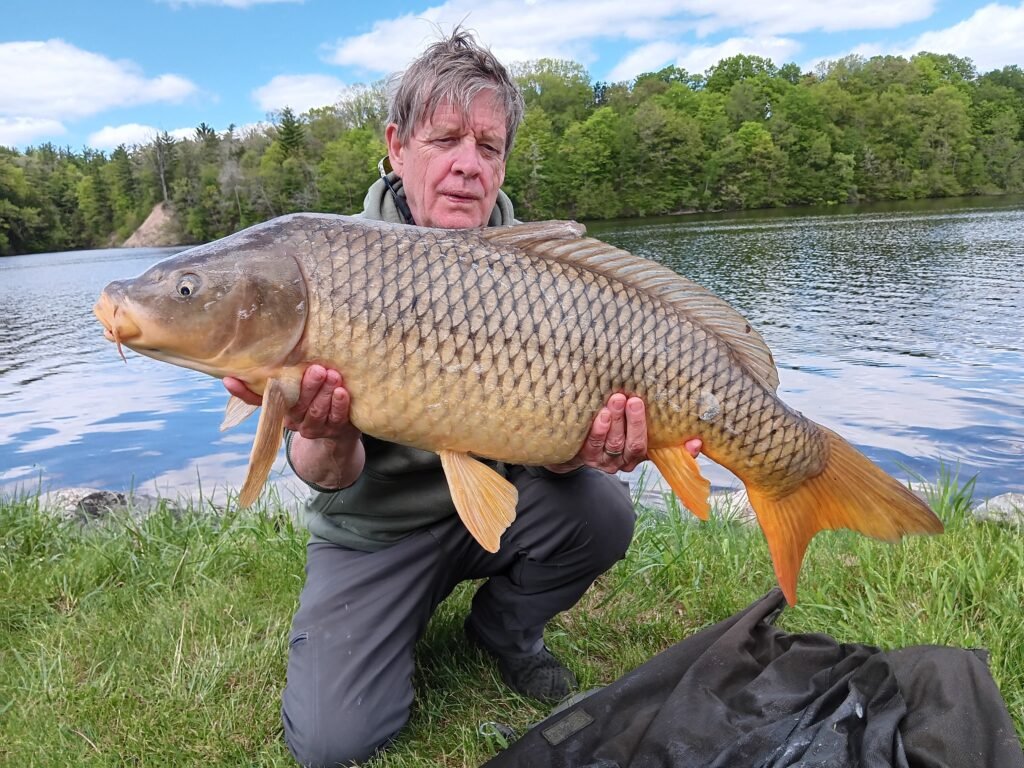
The carp are waking up, but they do not all switch on at once. Some days feel alive. Other days feel dead. A warm afternoon can produce bites when the morning felt hopeless. One shallow bay might have fish moving, while another area only a few hundred yards away still feels like winter.
That is why the best carp bait for spring fishing is not one single bait.
It depends on where you are in spring.
Early spring usually fishes like cold water. Carp may move into warmer areas, but they are not always feeding hard. Late spring is different. As the water stabilizes and warms, carp feed more confidently, move more, and begin to respond better to boilies, pellets, particles, corn, and tiger nuts.
On Michigan lakes, spring can be especially uneven. Northern Michigan often warms slowly. Shallow bays may switch on before the main lake. Cold nights can knock the edge off a good-looking day. Wind can move warmer surface water. Dark-bottomed areas can heat faster. Carp may be present before they are ready to feed properly.
This guide explains how to choose the best carp bait for spring fishing, how to adjust from early spring to late spring, and how to avoid overbaiting when the fish are only just beginning to feed.
Quick Start
- Early spring should be treated like cold-water fishing.
- Corn is usually one of the safest spring bait choices.
- Small boilies work, but should be used lightly.
- Pellets can help as small support bait once water begins warming.
- Particles should be used carefully early, then more confidently later.
- Tiger nuts are useful when you need a tougher hookbait.
- Spring baiting should start light and increase only when fish respond.
- Warming trends matter more than the calendar.
- Location is more important than bait choice.
Why spring baiting is different
Spring is a transition period.
In winter or cold water, carp feed very little. In summer, they can feed heavily and return to baited areas. Spring sits between those two stages.
That means carp behavior can change quickly.
In early spring, carp may move before they feed. You may see them in shallow areas, rolling, cruising, or holding in warmer water, but they may not be ready for a proper baited area. A big pile of bait can be too much.
Later in spring, carp begin feeding more regularly. They may return to the same areas, browse along weed edges, and respond better to bait. That is when boilies, particles, pellets, and tiger nuts become more useful.
The trick is not to rush the season.
Michigan Notes: In Michigan spring fishing, the water temperature trend is more useful than the date. A stable warming period is far better than one warm day after a cold snap.
Early spring baiting
Early spring needs a light hand.
Carp may be active in short windows. They may feed briefly during the warmest part of the day. They may visit shallow water for comfort rather than food. In these conditions, your bait should be small, simple, and easy to eat.
Good early spring baits include:
- corn
- small boilies
- tiny PVA bags
- light pellet use
- small wafters
- near-single hookbaits
The goal is not to build a swim. The goal is to create one easy feeding opportunity.
A few grains of corn can be enough. One small boilie with two broken freebies can be enough. A small wafter over light crumb can be enough.
Avoid heavy particles, large boilie spreads, and big pellet beds until the fish prove they are feeding.
For colder conditions, read Best Carp Bait for Cold Water.
Late spring baiting
Late spring is when bait options begin to open up.
As water temperatures rise and become more stable, carp feed more regularly. They may begin visiting shallow feeding areas, weed edges, reedlines, shelves, and natural food zones.
This is when you can gradually introduce:
- more corn
- small boilie spreads
- pellets
- light particles
- tiger nuts
- mixed baiting approaches
But still build slowly.
Late spring does not mean full summer baiting every day. Cold nights, storms, pressure changes, and spawning behavior can all interrupt feeding.
A sensible late spring approach is to start with a small controlled amount and increase only if fish respond.
Michigan Notes: Late spring can produce excellent carp fishing, but it can also be inconsistent. Let the fish response decide how much bait goes in.
Corn in spring
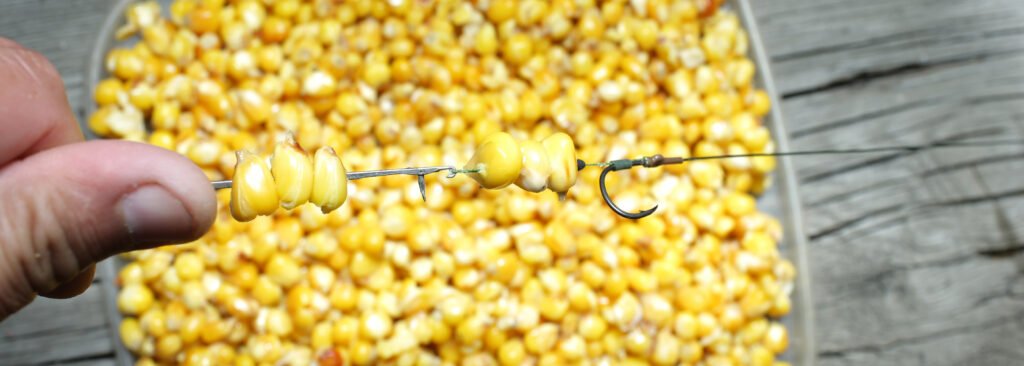
Corn is one of the best carp baits for spring fishing.
It works because it is simple, visible, easy to eat, and quickly accepted. Early spring carp do not always want a big meal. Corn gives them a low-effort food item they can pick up quickly.
Corn is especially useful when:
- water is still cold
- fish are feeding lightly
- you are fishing short sessions
- you want a simple hookbait and feed match
- you are testing a new swim
- carp are moving but not feeding heavily
Use very little corn early in spring. A few grains around the rig may be enough.
As spring improves, you can increase slightly, especially if fish are clearing bait or feeding confidently.
Read the full guide here: Corn for Carp in Michigan.
Boilies in spring
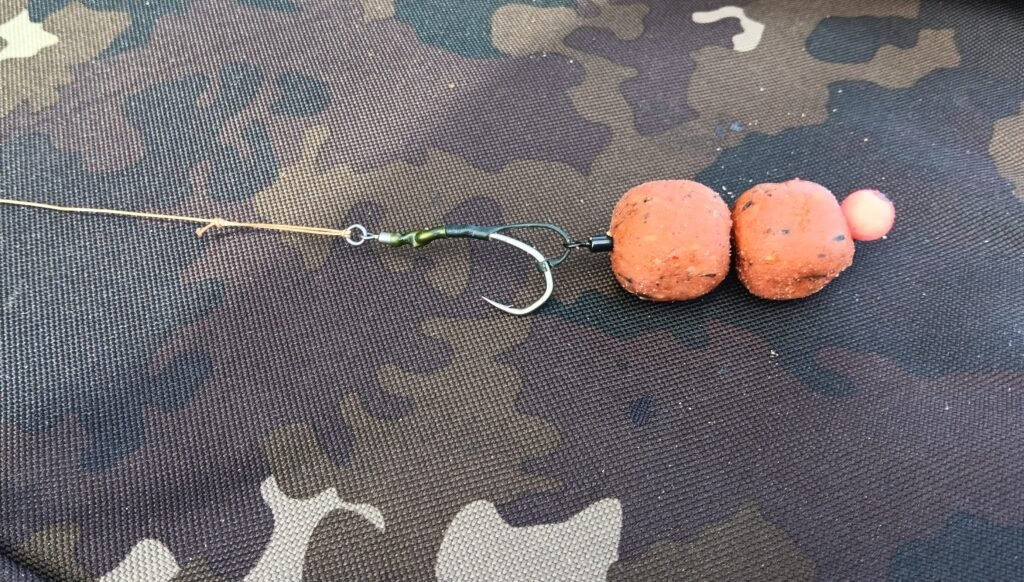
Boilies can work well in spring, but they need restraint.
Early spring is not the time for heavy boilie baiting unless you know fish are feeding properly. Smaller boilies, broken boilies, crumb, and wafters are usually better.
Good spring boilie tactics include:
- one small boilie hookbait
- a few broken freebies
- boilie crumb
- small wafters
- boilie and corn combinations
- small PVA bags with crumb and pellets
As the water warms, boilies become stronger. Late spring can be a good time to introduce a more controlled boilie approach, especially if you are targeting better fish or fishing longer sessions.
Michigan Notes: Smaller boilies often make more sense than large boilies in Michigan spring fishing. Fish are not always conditioned to big bait, and smaller hookbaits are sometimes easier to accept. But big baits should not be ruled out as they can often catch the bigger carp.
Read more here: When to Use Boilies for Carp in Michigan.
Pellets in spring
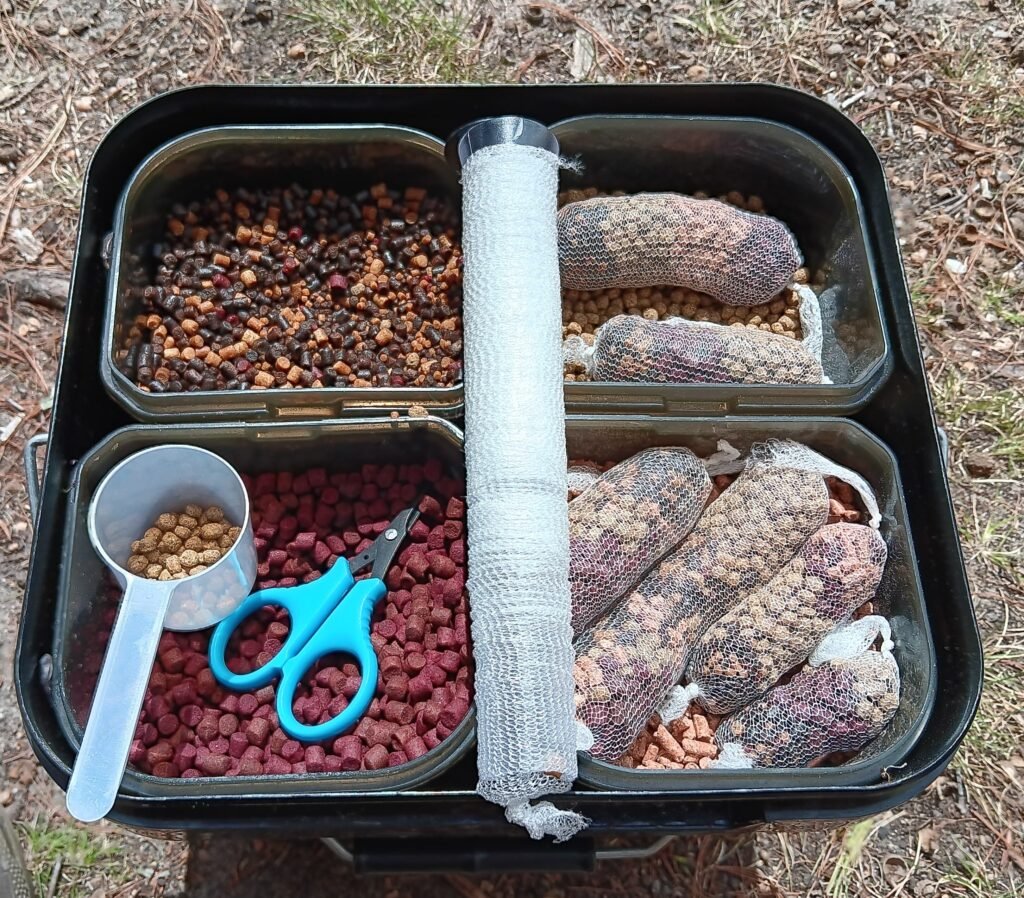
Pellets are useful in spring, but they are not always the main bait.
In early spring, pellet breakdown may be slow, and carp may not respond strongly. Use pellets in small amounts as support bait.
Good spring pellet uses include:
- small PVA bags
- a pinch around corn
- mixing with boilie crumb
- short-session attraction
- warm afternoon feeding windows
As water warms, pellets become more useful. Late spring can be a good time to use pellets with corn, boilies, or small particles.
Do not pile in pellets early. Their job is to add attraction, not create a big feed bed.
For pellet detail, read Pellets for Carp.
Particles in spring
Particles need careful timing in spring.
Early spring particle baiting can be too much. Carp may not be ready to browse over a bed of small food items. A few grains of corn may be fine. A heavy particle mix may be a mistake.
Later in spring, particles become more useful as carp feed more confidently.
Good spring particle options include:
- corn
- light hemp
- small mixed particles
- chopped tiger nuts
- maize if properly prepared
- small particle traps near natural feeding areas
Particles work best when carp are willing to stop and browse. If they are only moving through, keep particle use very light.
For safe particle use, read Particles for Carp Fishing Guide.
Tiger nuts in spring
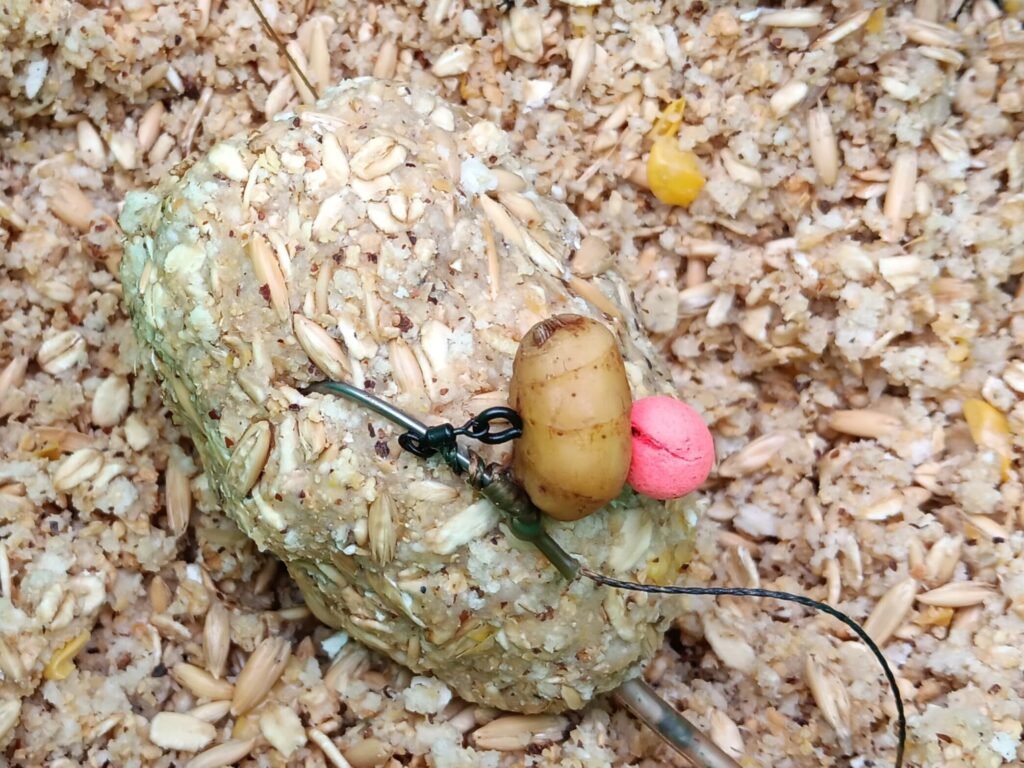
Tiger nuts can be useful in spring, especially as the water warms.
They are tougher than corn and more durable as hookbait. That makes them useful if small fish, turtles, or crayfish begin causing problems.
Use tiger nuts in spring when:
- carp already recognise them
- nuisance species are active
- corn is being cleared too quickly
- you want a tougher hookbait
- water is warming and fish are feeding
In early spring, keep tiger nut use minimal. A single tiger nut hookbait with only a few free offerings may be enough.
Do not heavy-bait tiger nuts unless the fish prove they are feeding confidently.
Matching bait to spring water temperature
Water temperature is one of the biggest spring clues.
Low 40s
Use near-single hookbaits, corn, tiny crumb, and almost no freebait.
Mid 40s
Corn and small boilies become more realistic. Keep bait very light.
High 40s to low 50s
Pellets, small boilies, and tiny particle amounts can begin to help.
Mid to upper 50s
Feeding improves. You can begin using more mixed baiting, but still stay controlled.
60°F and above
Late spring can begin fishing more like early summer, depending on spawning behavior and conditions.
For the full temperature picture, read Carp Water Temperature Guide for Michigan Lakes.
Spring baiting around warm water
In spring, small differences in water temperature matter.
Carp often visit places that warm faster, such as shallow bays, dark-bottomed areas, protected margins, reed edges, and north-facing protected shallows that catch sun.
Bait works better when placed where carp already want to be.
Good spring baiting areas include:
- sheltered bays
- reedline edges
- shallow shelves
- dark-bottomed margins
- sun-warmed corners
- areas near deeper water
- quiet wind-influenced banks during warming trends
Michigan Notes: A bait placed in water that is one or two degrees warmer can outperform better bait in colder water.
How much bait to use in spring
Start with less than you think.
Early spring often needs almost no bait. Late spring can take more, but only if fish respond.
A good spring approach is:
- start with a small amount
- keep bait tight
- watch for signs
- increase only after activity
- stop baiting if bites slow
Do not bait heavily just because you are eager for the season to start.
For more detail, read How Much Bait to Use for Carp.
How often to bait in spring
Spring baiting should be based on response, not time.
Early spring may need only one small baiting at the start of the session. Later spring may allow small top-ups if carp are feeding.
Do not rebait every hour just because nothing has happened. A quiet swim may need patience or a location change, not more bait.
For bait timing, read How Often Should You Bait for Carp.
Spring hookbait and freebait combinations
Good spring combinations include:
- corn over a few grains of corn
- small boilie over crumb
- wafter over crushed boilie
- corn over a tiny pellet bag
- tiger nut over a few grains of corn
- small boilie over light particles in late spring
The hookbait should remain important. Do not bury it in feed.
For more pairings, read Best Hookbait and Freebait Combinations for Carp.
Common Mistakes
Baiting like it is summer
Early spring is not summer. Start light.
Assuming visible carp are feeding carp
Carp may be warming themselves, not feeding.
Using too many particles too early
Particles become stronger later in spring.
Ignoring warming trends
A stable warming trend matters more than the date.
Using big hookbaits too soon
Smaller baits often get better spring pickups.
Rebaiting too often
Spring carp may only feed briefly. Too much disturbance hurts.
FAQ
What is the best carp bait for spring fishing?
Corn is often the best spring starting bait. Small boilies, pellets, light particles, and tiger nuts can all work as water warms.
Do boilies work in spring?
Yes, but use them lightly early in spring. Smaller boilies, crumb, and wafters are usually better than heavy baiting.
Are pellets good in spring?
Pellets can work as support bait, especially as water warms. Use small amounts early.
Should I use particles in spring?
Use particles carefully. Corn and very light particle amounts are safest early. Heavier particle use is better later in spring.
How much bait should I use in spring?
Start with very little and increase only if fish respond.
Is spring carp fishing better in the afternoon?
Often, yes. In early spring, afternoon warming can improve feeding.
Next Steps
Read Best Carp Bait for Cold Water for early spring conditions.
Then read Best Carp Bait for Summer Fishing for late spring and warm-water baiting.
For bait choices, read Corn for Carp in Michigan, Pellets for Carp, Particles for Carp Fishing Guide, and When to Use Boilies for Carp in Michigan.
Then link this page back to the main Carp Bait Guide.