

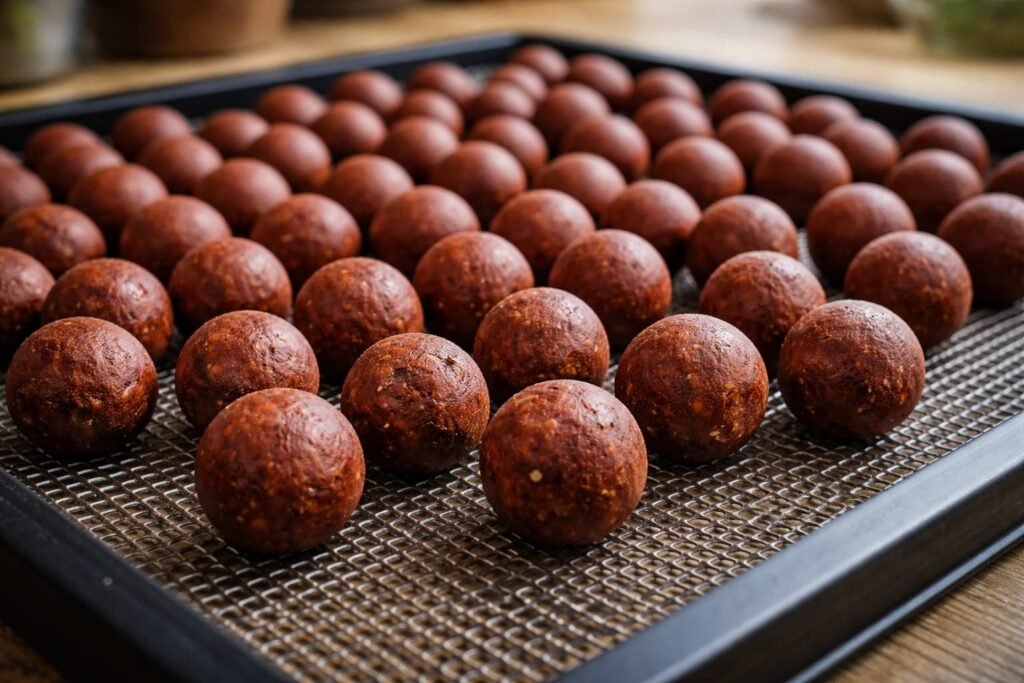
When to Use Boilies for Carp in Michigan
Knowing when to use boilies for carp in Michigan is more important than simply deciding that boilies are a good bait.
Boilies catch carp. That part is not in doubt.
But they are not always the best bait, and they are not always the fastest bait. On the wrong day, in the wrong water temperature, or in the wrong type of swim, boilies can be too slow, too selective, or simply more bait than the carp are willing to deal with.
Used properly, though, boilies are one of the most useful tools a Michigan carp angler can carry. They give you control. They last longer than soft baits. They help reduce nuisance activity. They allow you to fish accurately, bait carefully, and target better fish without throwing half a bucket of feed into the lake.
The mistake is thinking of boilies as an automatic answer.
They are not.
The real question is not whether boilies work. The real question is when they make sense.
This guide breaks down when to use boilies for carp in Michigan, when to avoid them, how they behave in different seasons, and how to fish them without overcomplicating the job.
Quick Start
- Use boilies when you need control, durability, and selectivity.
- Boilies are strongest in summer, early fall, longer sessions, and repeat swims.
- Use small amounts in cold water or spring conditions.
- Do not rely on heavy boilie baiting when carp are only passing through.
- Boilies are useful when nuisance fish are clearing corn, pellets, or particles.
- Smaller boilies usually suit Michigan waters better than oversized bait.
- Balanced hookbaits and wafters often improve pickup on pressured fish.
- Boilies work best when location is right first.
What boilies actually do well
Boilies are controlled bait.
That is their biggest strength.
A boilie lets you decide exactly what goes into the swim. If you put out twenty boilies, you know roughly what is there. If you break a few in half, you know how much attraction you have added. If you fish one wafter over five free offerings, you know you are fishing a tight, controlled trap.
That matters.
With particles, carp can browse and spread out. With corn, small fish and nuisance species can clear bait quickly. With pellets, attraction can disappear once the pellet breaks down. Boilies sit somewhere different. They are more durable, more measurable, and easier to control.
Boilies are useful when you want:
- a bait that lasts longer
- a bait that resists nuisance activity better
- a controlled amount of feed
- a hookbait that matches the free bait
- a more selective approach
- a bait that can build confidence over time
Michigan Notes: On many Michigan waters, boilies are not needed for every session. But when you want more control than corn, more durability than pellets, and more selectivity than small particles, boilies become very useful.
When boilies are the right choice
Boilies make sense when the fishing situation rewards control.
That usually means the carp are likely to feed properly, the session is long enough for the bait to work, or the water has nuisance activity that makes softer bait difficult.
Use boilies when:
- you are fishing a longer session
- you are returning to the same swim
- fish are feeding confidently
- smaller fish are becoming a problem
- you want to target better carp
- the water is warm enough for proper feeding
- you want a hookbait that will last
- you need a more selective bait than corn or pellets
That does not mean you need to pile boilies in.
A good boilie approach is often controlled and modest. The point is not to prove you are using a “proper carp bait.” The point is to use the right amount of boilies for the job in front of you.
When boilies are not the right choice
There are plenty of times when boilies are not the best answer.
If the session is very short, the water is cold, carp are only passing through, or the fish are not really feeding, boilies may be too slow. A few boilies can still work, especially as a hookbait, but a full boilie baiting approach may be unnecessary.
Boilies are weaker when:
- the water is very cold
- feeding windows are short
- carp are not settled
- you need an instant response
- fish are feeding on tiny natural food
- the swim is better suited to corn or particles
- you are still trying to locate fish
This is where anglers get into trouble. They pick the bait before reading the water.
If carp are showing, bubbling, moving slowly through a margin, or browsing near weed, boilies may be a good option. If you are casting at empty water and hoping bait will solve it, boilies will not save you.
Location still comes first.
Boilies in cold water
Cold water is where boilie use needs the most care.
In cold Michigan water, carp feed less often and digest food more slowly. They are less likely to settle over a baited area and more likely to take one or two easy items before moving on.
That does not mean boilies are useless.
It means they need to be used differently.
In cold water, use boilies as:
- single hookbaits
- small broken offerings
- light crumb
- a few free baits near the hookbait
- part of a minimal baiting approach
Avoid large spreads. Avoid heavy baiting. Avoid thinking you need to “feed them into the swim.”
A few small boilies can be enough.
Michigan Notes: In early spring, especially when water is still in the 40s or low 50s, corn often produces faster bites than boilies. But a small boilie or balanced hookbait can still be useful when you want a more durable bait.
For deeper cold-water bait choices, link this article to Best Carp Bait for Cold Water.
Boilies in spring
Spring is a transition period.
Carp are waking up from winter patterns, moving more, and starting to feed more regularly. But they do not all switch on at once. Some days feel alive. Other days feel dead.
That makes spring boilie fishing a matter of timing.
Early spring usually calls for very light boilie use. Small baits, minimal feed, and simple presentation are the safer choice.
Late spring is different. As water warms, carp move more, feed harder, and begin visiting reliable areas. That is when boilies become more useful.
Good spring boilie tactics include:
- small boilies
- chopped boilies
- crumbed boilies
- boilie-and-corn combinations
- balanced hookbaits
- light baiting near warming margins
The key is to build slowly.
Do not start with summer-style baiting in spring. Let the fish tell you when they are ready for more.
Boilies in summer
Summer is when boilies come into their own.
Carp feed more. They digest food better. They move between areas more often. Feeding spells can last longer. This gives boilies enough time to work properly.
In summer, boilies are useful for:
- longer sessions
- bigger fish
- controlled baiting
- repeat feeding
- reducing nuisance activity
- building confidence in a swim
This is also when boilies can be combined very effectively with particles, corn, and pellets.
A good summer approach might use a small amount of particles to hold fish, pellets for quick attraction, and boilies for selectivity and hookbait confidence.
Michigan Notes: On warm Michigan lakes, boilies are often strongest when used near natural feeding areas rather than thrown randomly into open water. Edges of weed, clean spots, shelves, and patrol routes are better than comfortable casting spots with no fish activity.
For a full warm-water baiting article, link this page to Best Carp Bait for Summer.
Boilies in fall
Fall can be one of the best times to use boilies.
As water begins cooling, carp often feed well before the colder period sets in. They may use reliable food areas more seriously, and better fish can become more catchable.
Boilies are useful in fall because they offer:
- controlled feeding
- good nutrition
- durability
- selectivity
Early fall can fish much like summer. You can still use boilies confidently, especially in longer sessions. As water cools, scale back.
The mistake in fall is treating the whole season the same.
Warm early fall and cold late fall are not the same thing.
Adjust the amount of bait, boilie size, and feeding pattern as conditions change.
Boilies in winter
Winter boilie fishing is possible, but it is not the easiest route for most anglers.
If you use boilies in winter, keep it very simple.
Use:
- one hookbait
- tiny amounts of crumb
- very few free offerings
- smaller bait sizes
Do not fish winter like a summer boilie campaign.
Winter carp are not usually looking for a pile of bait. They are looking for easy food in the right place.
If you can find the fish, a carefully placed boilie can catch. But if you are using boilies to search for fish, you may struggle.
Boilie size for Michigan carp
Boilie size matters more than many anglers think.
A lot of European carp content talks about 18mm, 20mm, or larger boilies. Those sizes have their place, but they are not always ideal for Michigan waters, especially when fish are not heavily conditioned to boilies.
Smaller boilies are often better.
Common useful sizes:
- 10mm
- 12mm
- 14mm
- 15mm
Smaller boilies are easier for carp to take, especially in cold water, spring, pressured swims, and short sessions. Larger boilies can be useful when nuisance fish are a problem or when you are targeting better fish in warm water.
A good rule is simple:
Use the smallest bait that still does the job.
If nuisance fish are not a major issue, a smaller boilie will often get more confident pickups than a larger one.
Bottom baits, wafters, and pop-ups
Boilies are not just round bottom baits.
How they sit in the water matters.
Bottom baits
Bottom baits are simple and natural. They suit clean areas, firm bottoms, and situations where carp are feeding confidently.
They are a good choice when you want the hookbait to match the freebies closely.
Wafters
Wafters are often very useful on Michigan waters.
They reduce the weight of the hookbait and can make it easier for carp to pick up. This can be especially useful over soft silt, light debris, or pressured fish.
A wafter does not need to be flashy. A subtle balanced bait can be very effective.
Pop-ups
Pop-ups are useful when you need the hookbait lifted above debris, weed, or soft bottom. They can also be useful as visual singles.
But pop-ups can be overused.
A bright pop-up may work well when carp are curious or active. It may be too obvious when fish are cautious. Match the presentation to the situation.
Michigan Notes: For many Michigan situations, a small wafter or balanced boilie is a strong middle ground. It gives better pickup without looking as blatant as a high pop-up.
Matching boilies with other bait
Boilies do not have to be used alone.
In fact, they often work best as part of a controlled bait system.
Boilies with corn
Corn adds quick acceptance and visibility. Boilies add durability and selectivity.
This combination is excellent for Michigan waters where corn is already accepted but you want something tougher and more controlled near the hookbait.
Boilies with pellets
Pellets add fast attraction. Boilies remain after the pellet breaks down.
This is useful for PVA bags, short sessions, and quick-response setups.
Boilies with particles
Particles hold fish. Boilies provide a selective hookbait and larger food items.
This is strongest in summer and early fall when carp are feeding confidently.
For a wider comparison, link this article to Boilies vs Corn vs Particles for Carp.
How much boilie bait to use
Less than most anglers think.
Boilies are concentrated bait. You do not need a lot to create a clear feeding signal.
For short sessions, a few boilies can be enough. For cold water, even fewer. For longer summer sessions, you can build slowly, but you should still avoid dumping bait in before you know fish are responding.
A simple approach:
- start with a few boilies
- watch for signs
- top up only if fish respond
- stop baiting if bites slow down
Too many boilies can reduce urgency. Carp may feed slowly, spread out, or clear freebies without finding the hookbait.
Michigan Notes: Many Michigan carp anglers would catch more by cutting their boilie feed in half and focusing harder on location.
Boilies for short sessions
Boilies can work on short sessions, but they need to be used carefully.
Short-session boilie fishing is not about building a swim.
It is about using a durable, controlled hookbait with just enough attraction around it.
Good short-session boilie tactics include:
- single boilie hookbait
- small PVA bag with crumb
- two or three crushed boilies
- a few freebies near the hookbait
- boilie with a small amount of corn or pellets
Avoid large bait spreads. You do not have time for them to work properly.
Boilies for longer sessions
Longer sessions are where boilies become much stronger.
You have time to let fish find the bait, return, and feed with more confidence. This is where a boilie approach can build through the session.
For longer sessions:
- start modestly
- bait accurately
- top up after activity
- keep records of what works
- avoid overfeeding early
If fish respond well, you can increase bait. If they do not, stay controlled.
Boilies on pressured waters
Pressured carp can be tricky.
Sometimes boilies help because they are selective and controlled. Other times, obvious boilie baiting can make fish cautious.
On pressured waters, use boilies subtly.
Try:
- smaller boilies
- broken boilies
- crumb
- washed-out colours
- balanced hookbaits
- fewer freebies
Do not assume a bright hookbait and a pile of round baits is the answer.
Pressured fish often respond better to quiet baiting and careful placement.
Boilies and nuisance fish
One of the best reasons to use boilies is nuisance resistance.
If corn, pellets, or small particles are being cleared too quickly, boilies can help.
They are useful when:
- small fish are active
- turtles are around
- soft bait is not lasting
- you need the hookbait to stay fishing
Boilies are not nuisance-proof, but they are more durable than many simple baits.
This can make a big difference on mixed-species waters.
How to know boilies are working
Boilies are working when you see:
- repeat bites from the same area
- fewer nuisance takes
- fish returning to the spot
- improved average size
- confident pickups
- less need for constant rebaiting
They are not working when:
- fish show but do not feed
- bites are slow despite activity
- bait is untouched
- nuisance fish are still dominating
- the swim feels dead after baiting
When boilies are not working, do not automatically add more.
Often, the fix is:
- less bait
- smaller bait
- simpler presentation
- better location
Simple decision guide
Use boilies when you need:
- control
- durability
- selectivity
- longer-lasting bait
- a stronger hookbait
- better nuisance resistance
Avoid heavy boilie use when:
- water is cold
- sessions are short
- fish are only passing through
- you need instant attraction
- carp are feeding on tiny natural food
- location is uncertain
This is the basic decision that matters.
Common Mistakes
Using boilies because they feel like “proper” carp bait
Boilies are useful, but they are not always best. Let the water decide.
Using too many boilies
Heavy boilie baiting can slow bites, especially on Michigan waters where fish are not conditioned to big bait beds.
Ignoring water temperature
Boilie use must change between cold spring water and warm summer water.
Fishing large boilies when smaller ones would work better
Smaller bait often gets more confident pickups.
Using boilies to fix poor location
No bait fixes empty water.
Forgetting about corn, pellets, and particles
Boilies are one tool. They work best when used as part of a sensible bait system.
FAQ
When should I use boilies for carp in Michigan?
Use boilies when you need control, durability, and selectivity, especially in warmer water, longer sessions, and swims where carp are feeding confidently.
Are boilies good in cold water?
Boilies can work in cold water, but use them lightly. Small boilies, crumb, or single hookbait approaches are better than heavy baiting.
What size boilies are best for Michigan carp?
Small to medium boilies are often best. Sizes around 10mm to 15mm suit many Michigan situations, especially when fish are cautious or water is cool.
Are boilies better than corn?
Not always. Boilies are more durable and selective. Corn is usually faster, cheaper, and easier for carp to accept.
Should I use boilies with particles?
Yes, especially in warm water. Particles can hold fish, while boilies provide a more selective hookbait and controlled food item.
Can boilies catch big carp in Michigan?
Yes. Boilies can help target better carp because they are durable, controlled, and less likely to be cleared instantly by small fish.
Next Steps
Read Boilies vs Corn vs Particles for Carp to understand how boilies compare with other bait options.
For seasonal decisions, read Best Carp Bait for Cold Water and Best Carp Bait for Summer.
For simple bait alternatives, read Corn for Carp in Michigan, Pellets for Carp, and Particles for Carp Fishing Guide.
Then connect this page back to your main Carp Bait Guide so it supports the full bait section.