
How to Find Carp in Big Lakes
Big lakes fool a lot of anglers.
They look open, featureless, and impossible to break down from the bank. So people do one of two things: they either sit in the nicest-looking swim and hope, or they spend the whole session wandering around without ever committing to a proper area.
Neither is a real system.
If you want to find carp consistently in big lakes, you need to stop thinking about the whole water at once. Your job is to reduce a huge lake into a handful of high-percentage zones, then narrow those zones down again until you have one area worth fishing with confidence.
This guide is the broad version. If you want the tighter follow-up built specifically for bank anglers, read Finding Carp in Big Lakes (Michigan Strategy Guide) and Finding Carp in Big Michigan Lakes: A Bank Angler System.
Quick Start
- do not try to read the whole lake at once
- start with wind, warmth, depth change, and safety
- look for routes, not random empty water
- find banks that let carp move from comfort water to feeding water easily
- watch first, then cast
- once you find a live zone, fish it properly before moving again
Why Carp Feel Hard To Find On Big Lakes
Carp are not spread evenly across large lakes.
Even in huge waters, they still use certain routes, shelves, weed edges, bars, corners, drop-offs, and comfort areas far more than others. The trouble is that from the bank, those zones are not always obvious unless you force yourself to think in layers.
Instead of asking, “Where are the carp in this lake?” ask:
- which side is most likely to hold life today?
- where can carp move safely from deep to shallow water?
- where would they pause rather than just pass through?
- which bank gives me access to that route?
That line of thinking immediately makes a big lake smaller.
Start With The Season First
The season sets the rules. If you ignore that, the rest of the puzzle becomes much harder than it needs to be.
Spring
In spring, warmth matters. Dark-bottom bays, sheltered corners, shallow areas with nearby deeper access, and sunny margins can all come alive quickly. Carp are often not everywhere — but the areas they do use can be very obvious once the water starts lifting.
Summer
In summer, wind, oxygen, weed growth, patrol routes, and feeding areas matter more. Carp can use much more of the lake, but they still favour certain lines and certain banks over others.
Fall
In fall, feeding areas, stable conditions, depth access, and repeat routes become more important again. Do not just chase the last showing fish. Think about where carp can feed and then drop back comfortably.
For the temperature side of this, use Carp Water Temperature Guide for Michigan Lakes. It helps stop you making warm-weather decisions in cold-water conditions.
Reduce The Lake Into Zones
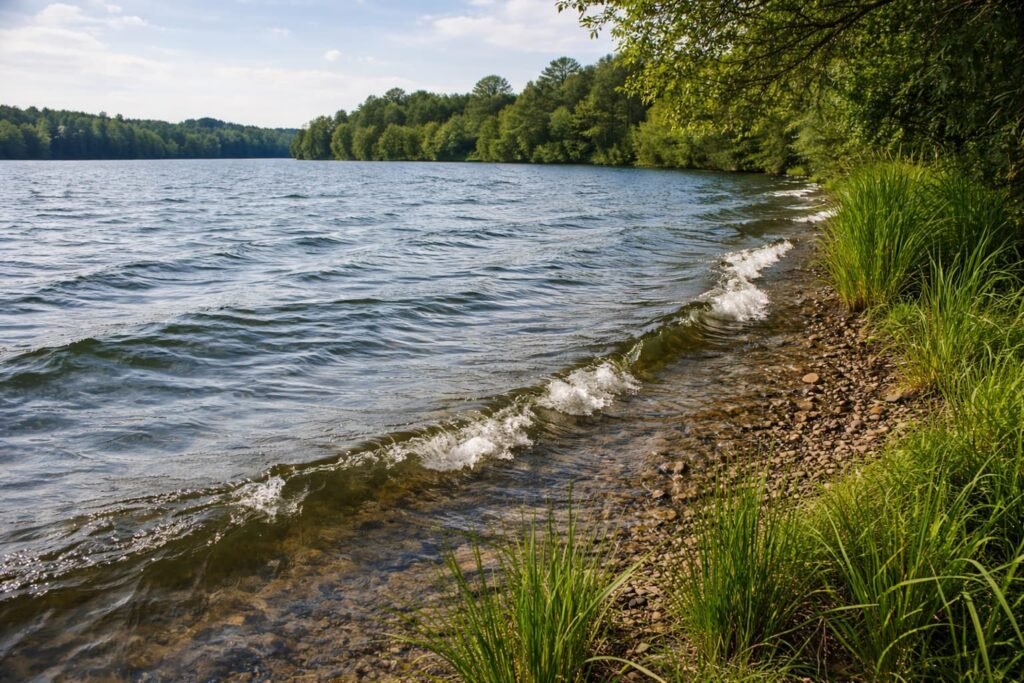
When you arrive at a big lake, do not ask where the fish are. Ask where the likely zones are.
I reduce a big lake in this order:
- windward banks
- warm areas or stable comfort water
- depth change near the bank
- natural food and feeding-friendly bottom
- weed edges, reeds, bars, points, and inside turns
- quiet banks with less pressure
That gives you a shortlist fast.
If a bank offers three or four of those things together, it deserves proper attention. If it offers none of them, it is probably just a nice place to sit.
The Main Things That Pull Carp Into Big-Lake Areas
1) Wind
Wind often matters more than anglers admit. It pushes surface life, food, oxygen, and slightly warmer water into certain areas. It also creates active banks and dead banks. A lot of big-lake location starts there.
2) Warmth
Especially in spring, warmth can pull carp into the right side of a lake very quickly. Dark bottoms, sheltered corners, and calm sunny areas can all turn into feeding water before the rest of the lake really wakes up.
3) Access to depth
Carp like options. Banks that offer shallow feeding water with deeper water close by are always worth attention. They let fish move in and out safely without commuting across half the lake.
4) Natural food
Mussels, weed, soft silt, light debris, bloodworm areas, and feeding-friendly bottom all matter. Carp need a reason to stop, not just a route to travel.
5) Safety
Quiet banks, areas with less disturbance, sensible cover, and places that let fish feed without feeling pinned all matter more than many people realise.
What Good Big-Lake Areas Usually Have In Common
- a reason for carp to pass through
- a reason for them to slow down
- an easy route back to deeper or safer water
- enough food or attraction to make the stop worthwhile
That is why points, bars, channel edges, inside turns, reed lines, weed boundaries, shelves, and clean patches near growth all show up again and again in carp watercraft.
What To Look For Before You Ever Cast
Observation matters more on big lakes because bad casting wastes so much time.
Real signs to watch for
- single fish showing in the same general area more than once
- pin-prick bubbles moving steadily
- mud clouds or discoloured patches over shallow feeding areas
- fizzing in one strip of water rather than random surface disturbance
- bird activity over likely natural food
- subtle movements along a windward shelf or reed edge
One sign is useful. Repeated signs in the same zone are much more useful.
How A Bank Angler Should Read The Lake
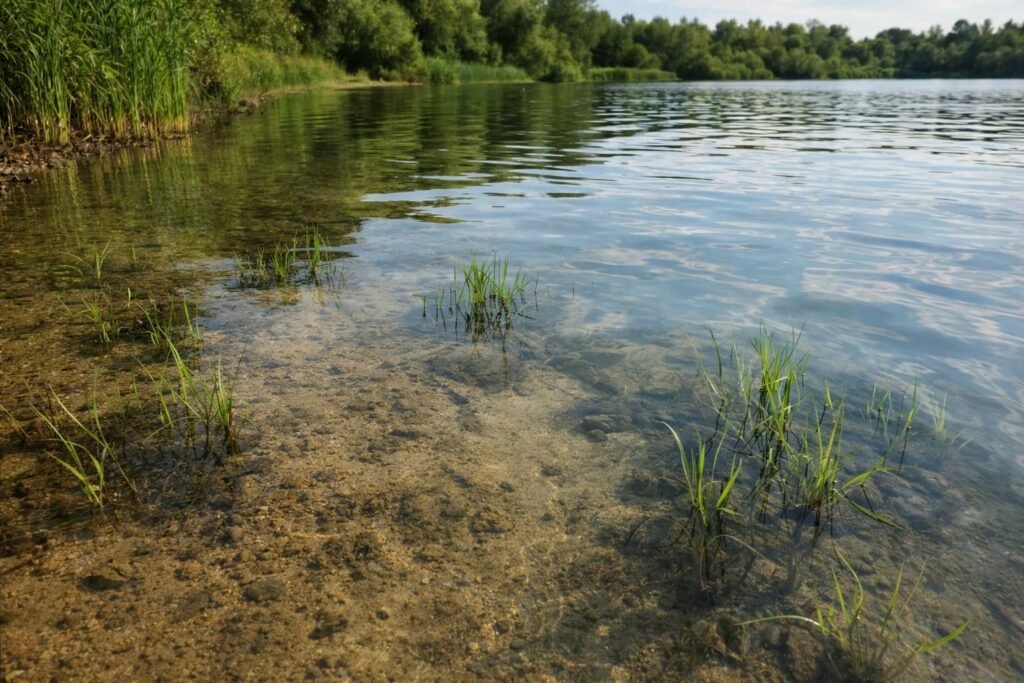
From the bank, the goal is not to find every carp. It is to find the best bank that lets you intercept them properly.
That usually means choosing a bank that gives you access to:
- a patrol route
- a shelf or depth change
- a likely feeding line
- a quiet edge fish can use confidently
If you want the bank-only version of this read, go straight to Finding Carp in Big Michigan Lakes: A Bank Angler System. That article takes the general system here and turns it into a more practical bank order.
How Long To Watch Before Fishing
Long enough to learn something, not so long that you waste the session.
If a bank makes sense on wind, warmth, depth, and route, give it proper observation time. If it looks dead, lifeless, featureless, and poor on all four, do not stay just because you are already there.
On big lakes, good movement decisions often catch more fish than fancy rigs do.
Where Most Anglers Go Wrong
- they fish convenience instead of probability
- they cast long because the lake looks big
- they ignore near-bank routes and depth change
- they keep moving without ever fishing a good area properly
- they start baiting before they have found a real zone
- they assume one random show means “the fish are here”
One of the biggest mistakes is introducing bait before the location side is sorted. If you want to build an area properly once you have actually found the fish, use Prebaiting Big Lakes: The 4-Week Blueprint.
What To Do Once You Find A Likely Area
Keep it tidy.
- present accurately
- do not spread rods all over the swim
- start with a light bait approach unless the spot clearly demands more
- fish the area in line with why you picked it
If the fish are there because of a route, do not fish as though it is a huge food area. If they are there because of feeding signs, do not treat it like a quick intercept zone. Match the approach to the reason the fish are using the area.
Michigan Notes
Michigan lakes change quickly.
Wind can wake one bank up in a few hours. A clear spring day can suddenly make one margin feel two weeks ahead of another. Zebra mussels, clean water, and changing weed growth can also make some old-looking “good areas” far less useful than they once were.
That is why local carp fishing here rewards observation so heavily. The fish are there, but you still have to read the water that is in front of you now, not the water you wish you were fishing.
Common Mistakes
- trying to fish the whole lake at once
- picking a swim because it is comfortable, not because it makes sense
- failing to follow the wind and temperature properly
- overvaluing random shows and undervaluing routes
- baiting before the location job is done
- fishing too far out when the best water is closer than you think
FAQ
What is the first thing I should check on a big lake?
Wind direction and which banks are most likely to hold warmth, life, and access to depth.
Are carp always on the windward bank?
No. But it is one of the best places to start unless conditions strongly suggest otherwise.
Should I always cast far on big lakes?
No. A lot of big-lake carp are caught far closer in than people expect, especially where depth change, routes, and food all meet near the bank.
How much should I move?
Enough to avoid dead water, but not so much that you never fish a good area properly.
What if I see no carp at all?
Use the system anyway. Wind, warmth, depth, food, and safety still narrow the lake down even when fish are not showing openly.
What should I read next?
Go to Finding Carp in Big Michigan Lakes: A Bank Angler System, then Prebaiting Big Lakes: The 4-Week Blueprint.