
Best Hookbait and Freebait Combinations for Carp
The best hookbait and freebait combinations for carp are not random. A hookbait is the bait on the rig. Freebait is the loose feed around it. When the two work together, carp can feed confidently without instantly detecting the trap. When they clash badly, the hookbait can look too obvious, too different, or too suspicious.
For Michigan carp fishing, this matters because many of our waters are clear, natural, weedy, pressured, or full of nuisance fish. Carp may be feeding on corn, particles, snails, mussels, weedbed food, boilie crumb, or scattered bait rather than sitting over a neat pile. The hookbait needs to match the situation, not just look good in the tackle box.
This guide explains what makes a hookbait different from a freebait, why the two need to work together, and which combinations make the most sense for Michigan lakes, rivers, channels, and public waters.
This page works alongside Carp Bait Guide, Corn for Carp in Michigan, Particles for Carp Fishing Guide, How Much Bait to Use for Carp, and What Rig Should I Use for Carp?.
Quick Answer
The safest hookbait and freebait combination is usually a hookbait that matches the loose feed closely but has one small advantage. That advantage might be slightly bigger size, extra buoyancy, brighter color, stronger leakage, or better presentation.
For example, if you are feeding corn, a grain of corn or fake corn on the hair makes sense. If you are feeding particles and chopped boilies, a small boilie or wafter can stand out just enough. If nuisance fish are a problem, a tiger nut or larger boilie may be better than a soft bait.
What Is a Hookbait?
A hookbait is the bait attached to the rig. It may be mounted on a hair, bait screw, micro swivel, bait floss, band, or other presentation. Its job is not just to attract the carp. It also has to help the rig work properly.
A good hookbait should:
- present cleanly over the lakebed
- survive nuisance fish and small fish long enough
- match or complement the freebait
- allow the rig to reset if disturbed
- help the hook turn and take hold
- give the carp a reason to pick it up
This is why the hookbait is often slightly different from the freebait. It still belongs in the food picture, but it may be firmer, more balanced, brighter, larger, or more durable.
What Is Freebait?
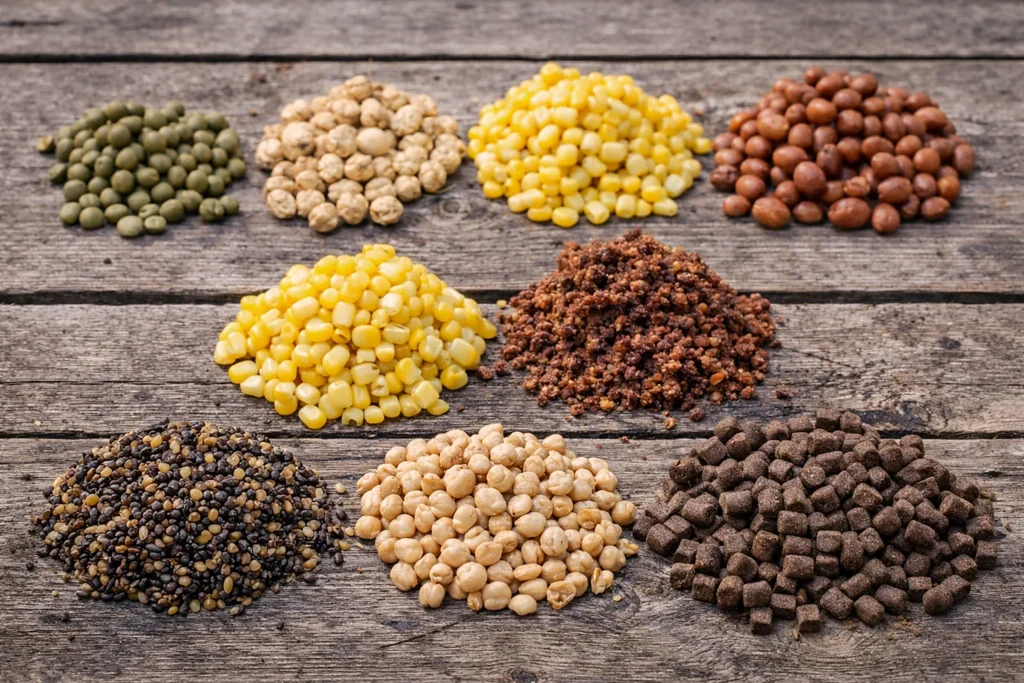
Freebait is the loose bait you feed around the rig. It can be corn, maize, hemp, pigeon seed, pellets, chopped boilies, crumb, tiger nuts, packbait, method mix, or any bait that encourages carp to feed in the area.
The freebait does three jobs:
- it pulls carp into the area
- it gives carp confidence to feed
- it creates a food pattern around the hookbait
The mistake is thinking freebait only needs to smell strong. In reality, freebait also affects how carp move, how they feed, how long they stay, and how they approach the hookbait.
Hookbait vs Freebait: The Simple Difference
| Bait Type | Main Job | Best Qualities | Common Mistake |
|---|---|---|---|
| Hookbait | Get picked up and make the rig work | Durable, balanced, visible, attractive, rig-friendly | Making it too obvious or too different |
| Freebait | Build feeding confidence | Safe, familiar, digestible, spreadable, matched to the water | Using too much or feeding bait the hookbait does not match |
The Best Hookbait and Freebait Rule
The best rule is simple:
Match the food signal, then give the hookbait one small edge.
That means your hookbait should usually feel like part of the same meal. But it can still have one advantage that helps it get selected.
That advantage might be:
- a slightly bigger boilie among chopped boilies
- a balanced wafter over a bed of particles
- a tiger nut over corn and hemp
- fake corn over real corn
- a bright topper over natural bait
- a harder hookbait among softer freebies
- a pop-up over crumb or method mix
The hookbait should not look like a trap. It should look like the easiest or most interesting item in the feeding area.
Best Hookbait and Freebait Combinations
| Freebait | Best Hookbait | Why It Works | Best Situation |
|---|---|---|---|
| Corn or maize | Real corn, fake corn, maize, or corn stack | Matches the feed and looks natural | Beginner sessions, clear water, spring and summer |
| Mixed particles | Tiger nut, maize, wafter, or small boilie | Gives a stronger target in a busy baited area | Big lakes, longer sessions, public waters |
| Boilie crumb | Matching boilie, wafter, or snowman | Hookbait belongs to the same food signal | Boilie fishing, cautious carp, natural lakes |
| Pellets | Pellet hookbait, wafter, small boilie, or fake bait | Uses the pellet signal but improves durability | Short sessions, method feeder, warm water |
| Tiger nuts | Tiger nut, balanced tiger, or tiger/sweetcorn stack | Hard, selective, and nuisance-resistant | Bigger fish, nuisance fish, longer sessions |
| Packbait or method mix | Corn, wafter, boilie, or fake corn | Hookbait sits inside an attractive breakdown zone | Short sessions, pressured spots, channels |
Corn Hookbait Over Corn Freebait
This is one of the simplest and most reliable combinations. If you are feeding corn, a corn hookbait makes sense. Carp already expect to find it there.
Good options include:
- two or three grains of sweetcorn
- field corn or maize on the hair
- fake corn tipped with real corn
- corn and small boilie snowman
- yellow wafter over corn feed
This combination is excellent for beginners, short sessions, and waters where carp already recognize corn as food. The weakness is nuisance fish. If bluegills, catfish, turtles, or small fish are destroying soft corn, switch to maize, fake corn, tiger nut, or a small boilie.
Tiger Nut Hookbait Over Particle Freebait
A tiger nut can be a brilliant hookbait over maize, hemp, pigeon seed, or mixed particles. It is harder, more selective, and more durable than sweetcorn. That makes it useful when you want to feed smaller items but avoid using a fragile hookbait.
This combination works especially well when:
- you are fishing longer sessions
- nuisance fish are active
- you want a harder hookbait
- you are feeding maize, hemp, or pigeon seed
- you want a bait that can sit out longer
For Michigan carp, tiger nuts are not magic, but they are useful. They give you a firmer hookbait that still fits naturally into a particle-based baiting approach.
Boilie Hookbait Over Boilie Crumb
If you are using boilies, one of the best ways to make them work faster is to feed crumb, chops, and broken pieces rather than only whole baits. A matching boilie hookbait over boilie crumb gives the carp the same food signal but a cleaner target to pick up.
This is a strong combination for:
- clear water
- pressured carp
- cold or cool water
- shorter feeding windows
- milk, nut, birdfood, or seed-based boilies
A whole boilie over crumb can stand out just enough without looking unnatural. A wafter or snowman can be even better when the bottom is slightly silty or covered with light debris.
Wafters Over Particles
A wafter is often one of the best hookbait choices over particles. It gives you a balanced bait that can be sucked in more easily than a heavy bottom bait, but it still behaves more naturally than a high pop-up.
This is useful when feeding:
- hemp
- maize
- pigeon seed
- chopped boilies
- small pellets
- crumb or method mix
A wafter can give the carp a slightly easier mouthful in a busy feeding area. It also helps when the bottom has light weed, silt, shells, or debris.
Pop-Ups Over Freebait
A pop-up is not always the best hookbait over freebait, but it has its place. It can help when the bottom is soft, covered with weed, or difficult to present on. It can also work when you want a visual target above the baited area.
Pop-ups work best over:
- boilie crumb
- scattered boilies
- light particle mixes
- PVA bags
- method-style attraction
The mistake is using a pop-up that is too high, too bright, or too different when the fish are feeding cautiously. In clear Michigan water, subtle often beats extreme.
Should the Hookbait Match the Freebait Exactly?
Sometimes yes, sometimes no.
Exact matching is useful when carp are cautious or the bait is simple. Corn over corn is the classic example. A matching boilie over boilie crumb is another.
But exact matching is not always necessary. A hookbait can be different if it still belongs in the same feeding situation. A tiger nut over particles, a wafter over crumb, or fake corn over real corn can all work because they fit the food picture while giving the rig a practical edge.
Michigan Notes: Clear Water, Weed, and Nuisance Fish
Michigan carp waters often create three hookbait problems: visibility, presentation, and durability.
In clear water, carp may inspect bait carefully. In weed, silt, or shells, the hookbait may not sit cleanly. Around nuisance fish, soft hookbaits may not last long enough.
That is why the best hookbait is not always the bait carp like most. It is the bait that carp will eat and that still fishes properly for the length of the session.
Good Michigan hookbait choices include:
- maize over corn or particles
- tiger nut over mixed particles
- wafter over crumb or chopped boilies
- fake corn over sweetcorn
- snowman over boilie crumb
- hard boilie over soft feed
Common Hookbait and Freebait Mistakes
Using a hookbait that does not match the baited area
If you feed corn and fish a random strong-smelling bait that does not fit the situation, it may stand out for the wrong reason.
Using freebait that is too filling
Too much heavy bait can fill the fish before they reach the hookbait. This is especially risky in cold water or short sessions.
Using a hookbait that is too soft
Soft baits can be excellent, but they may not survive nuisance fish, turtles, crayfish, or long casts.
Making the hookbait too obvious
A bright bait can work, but it can also look suspicious in clear water. Match the situation rather than always choosing the loudest bait.
Ignoring the rig
The hookbait has to work with the rig. A bait that is too heavy, too buoyant, or too large can ruin the mechanics.
Best Simple Starting Combinations
If you want a simple starting point, use these:
- Corn feed + fake corn or maize hookbait for simple short sessions.
- Particles + tiger nut hookbait when nuisance fish are active.
- Boilie crumb + matching wafter when using boilies carefully.
- Pellets + small boilie or wafter for method-style fishing.
- Mixed particles + snowman when you want a more selective target.
Final Verdict
The best hookbait and freebait combinations for carp are the ones that make sense together. The freebait builds confidence. The hookbait gives the rig a clean, durable, attractive target.
For Michigan carp fishing, the safest approach is to match the food signal first, then give the hookbait one small advantage. That advantage might be durability, balance, visibility, buoyancy, or size.
Do not choose a hookbait just because it looks good. Choose it because it fits the baited area, the lakebed, the nuisance fish pressure, the season, and the way the carp are likely to feed.
FAQ
What is the difference between hookbait and freebait?
The hookbait is the bait attached to the rig. Freebait is the loose bait fed around the rig to attract carp and build feeding confidence.
Should my hookbait match my freebait?
Usually, yes. The hookbait should normally match or complement the freebait, but it can have one small advantage such as better durability, balance, color, or leakage.
What is the best hookbait over corn?
Real corn, fake corn, maize, or a corn-and-boilie stack can all work well over corn feed. If nuisance fish are a problem, maize or fake corn may be better than soft sweetcorn.
What is the best hookbait over particles?
Tiger nuts, maize, wafters, small boilies, and snowman presentations can all work over particles. The best choice depends on nuisance fish, bottom type, and how selective you want to be.
Can I use a pop-up over freebait?
Yes. Pop-ups can work over crumb, particles, PVA bags, and scattered boilies, especially over soft or weedy bottoms. In clear water, avoid making the pop-up too obvious unless the fish are responding well to visual baits.
Next Articles
To build a better bait approach, read these next: