

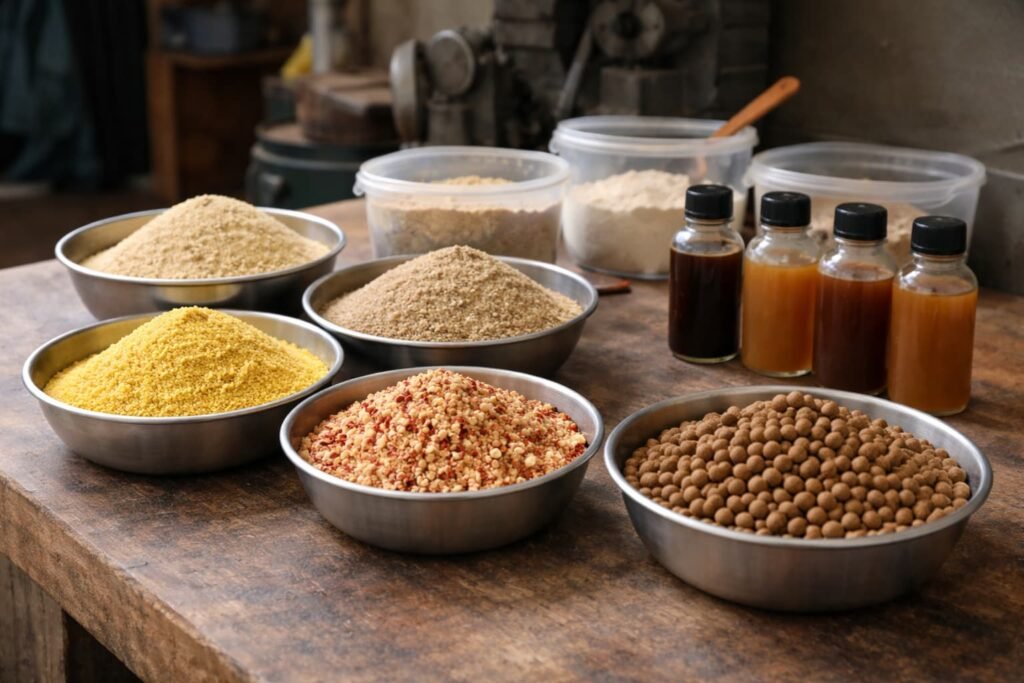
Do carp detect sugars, sweeteners, and carbohydrates the way anglers often talk about them?
Not really.
That is where a lot of confusion starts.
Anglers often lump sugar, sweeteners, syrups, milk sugars, cereal flours, and carbohydrate-rich ingredients into one big “sweet” category. But they do not all do the same job, and carp do not read them the way a human tongue does.
That matters, because plenty of baits that contain sugars or carbohydrate-rich ingredients work very well. They just do not work simply because they taste “nice” to us.
In carp bait, these ingredients usually matter more for solubility, support, leakage, fermentation potential, energy contribution, texture, and overall bait balance than for some simple sweet-tooth trigger.
So yes, they can help.
But no, the usual angler idea of “make it sweeter and it will pull fish” is far too basic.
This page breaks it down in plain English so you can use these ingredients properly and avoid building a bait around the wrong idea.
For the wider bait-science background, read Bait Science
https://michigancarp.com/bait-science/
For how support signals fit into the bigger picture, also read Salt, Acids, and Mineral Signals in Carp Bait
https://michigancarp.com/salt-acids-and-mineral-signals-in-carp-bait/
Quick Start
- sugars, sweeteners, and carbohydrates are not the same thing
- many good baits contain sugar or carbohydrate-rich ingredients, but not because they are simply “sweet”
- sweeteners are usually support tools, not magic triggers
- carbohydrate-rich ingredients often help with texture, leakage, binding, and bait function more than direct attraction
- sugary liquids can help in hookbait work, particles, crumb, and some cold-water support jobs
- overdoing syrups and sticky liquids can easily make a bait worse
- in Michigan waters, clean food signal and sensible leakage usually matter more than chasing sweetness
Sugars, Sweeteners, and Carbohydrates Are Not the Same
This is the first thing to get straight.
Sugars
These include things like simple sugars, milk sugars, molasses-type inputs, and syrup-based ingredients. They can support solubility, leakage, fermentation, and food signal.
Sweeteners
These are ingredients added mainly to increase perceived sweetness, either for the angler or within the bait package. They are usually used in small amounts.
Carbohydrates
This is the broad group. It includes cereal flours, grain meals, seed meals, maize products, breadcrumb, biscuits, and many binders. Some are more active than others. Some are mainly structure.
That means a bait can contain carbohydrate-rich ingredients without being a “sweet bait” in the usual angler sense.
What These Ingredients Really Do in Bait
In practical bait work, sugar-based and carbohydrate-rich ingredients often do more for the bait than they do as direct attraction triggers.
They can help with:
- texture
- binding
- rolling
- leakage support
- fermentation potential
- energy value
- bait breakdown
- water movement through the bait
- overall bait-package balance depending on the form
That is why some baits with sugars or carbs work very well.
Not because the carp are reacting to them like a person eating pudding, but because those ingredients help the bait behave properly in the water.
Do Carp Actually Respond to Sweetness the Way Anglers Think?
Generally, not in the simple way anglers often describe it.
A bait may contain sugary or sweetened ingredients and still work very well. But the main reason is usually what those ingredients do to the bait package, not some neat little dessert-style feeding trigger.
In other words, sweetness is often part of the package rather than the whole answer.
That is why a bait with honey, condensed milk, lactose, corn steep liquor, molasses, or a light sweetener can still be a very good bait. But it does not automatically prove that fish are responding mainly to “sweetness” as we think of it.
Usually, I think the smarter approach is to treat sweetness as one possible modifier rather than the main feeding trigger.
Where Sugary Liquids Can Help
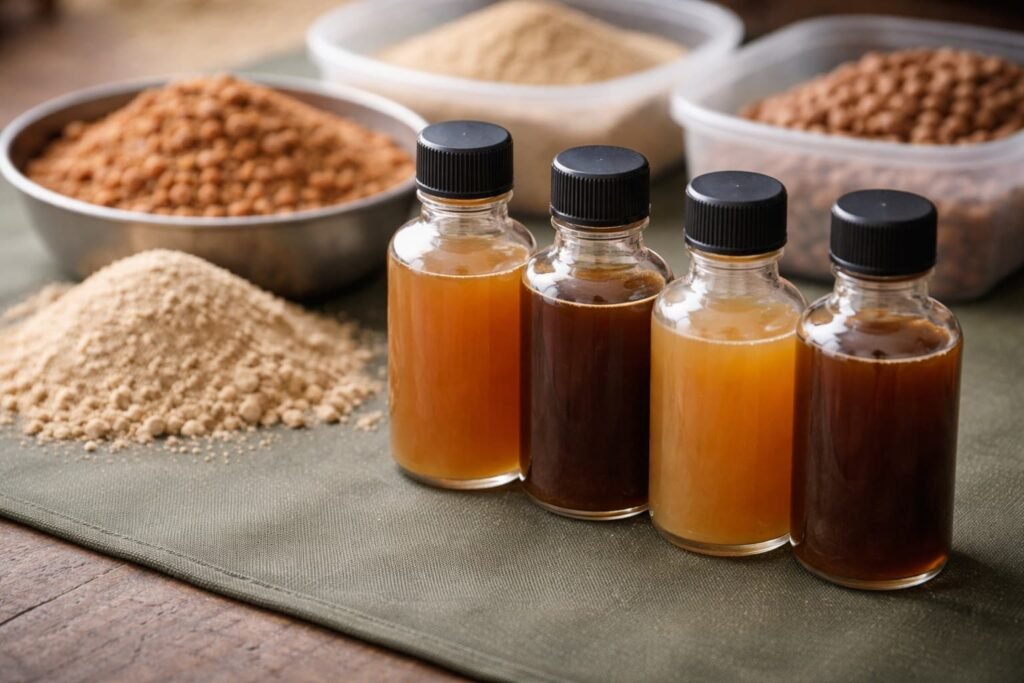
Sugary liquids do have a place.
As humectants and carriers
Some syrupy liquids help hold moisture, carry other signals, and improve how a bait package behaves.
In hookbait treatment
A small amount can help round off a hookbait or balance sharper savoury ingredients.
In cold-water liquids
Certain sugar-based carriers can sometimes be useful where you want gentle, clean leakage.
In particle mixes
Sweetcorn, maize liquor, and certain syrup-supported particle mixes can work well, especially where the feed is already open and active.
In shelf-life support
Some sugar-based liquids help with stability and bait condition.
That is all useful. But it is different from saying sweetness alone is the magic.
Sweeteners: Useful or Overhyped?
Sweeteners definitely have a place, but they are often overhyped.
A little sweetener can help smooth out round off a bait. It can soften certain savoury or hookbait treatments and sometimes help make a bait package feel a bit more balanced.
But in my view, sweeteners are usually support ingredients rather than major triggers.
They are often most useful when they:
- soften harsh edges
- help hookbait balance
- support mild milk-based or birdfood-style packages
- tidy up certain liquid profiles rather than dominate everything
They are not usually stand-alone weapons.
Carbohydrates in Carp Bait
Carbohydrates matter a great deal in bait, but not always for the reasons anglers first assume.
A lot of the structure found in carp bait comes from carbohydrate-rich ingredients such as flours, grains, cereals, meals, seed products, biscuits, and breadcrumb-style components.
These ingredients can influence:
- how the bait rolls
- how hard it sets
- how quickly it breaks down
- how easily it leaks
- how readily it takes in water
- how stable it stays once made
- the overall feeding character of the bait
So carbohydrate-rich ingredients are often more important structurally and functionally than as direct sweetness on their own.
That is why a bait can be full of useful carbohydrate ingredients without ever producing what anglers would call a “sweet hit”.
Where Anglers Get It Wrong
There are a few common mistakes here.
Assuming sweet means attractive
It might. But it is not automatic.
Confusing bait function with feeding trigger
An ingredient may be useful because it helps the bait work properly, not because it directly pulls fish in.
Overloading sweet liquids
Too much sweetness can make a bait clumsy, sticky, or one-dimensional.
Ignoring the rest of the signal package
A good bait still needs leakage, food signal, balance, and presentation.
Thinking carbs are filler only
Some are fillers. But carbohydrate-rich ingredients also shape bait form, breakdown, and behaviour in the water.
How I’d Use Them Practically
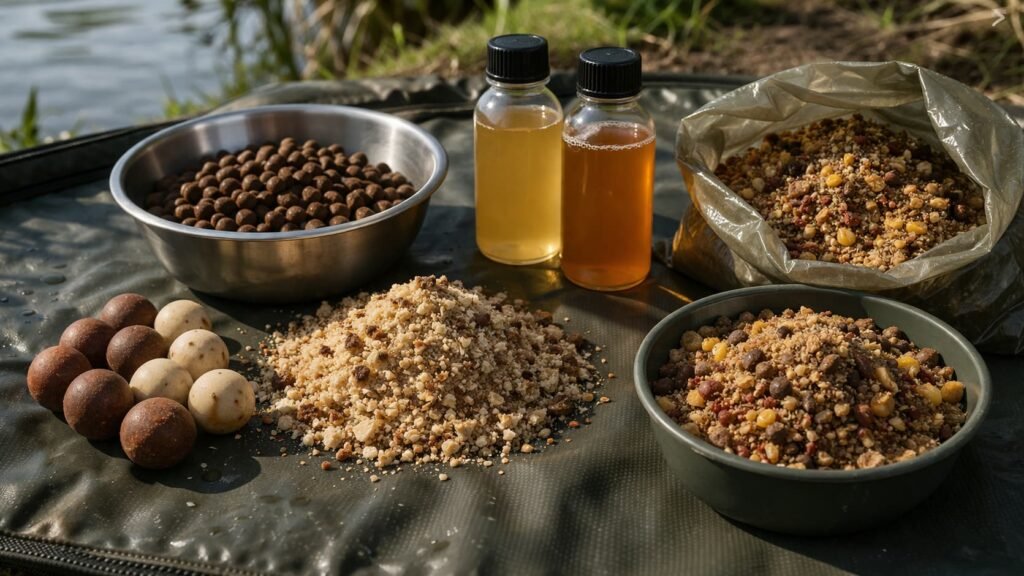
The simplest way to use this group well is to stay practical.
Use sugary liquids for a job
If they help the bait carry, leak, balance, or condition, fine. If not, leave them out.
Use sweeteners sparingly
A little often goes a long way.
Respect carbohydrate function
Do not just see carbohydrate-rich ingredients as cheap bulk. They control how the bait behaves.
Keep sweetness in proportion
On many waters, a bait with sensible food signal and proper leakage beats one trying too hard to taste like dessert.
Michigan Notes
For a lot of Michigan carp fishing, I think sweeteners work best as support rather than as the whole plan.
That is because:
- many venues already contain natural food
- clear water often punishes clumsy bait signals
- spring and autumn can reward cleaner leakage
- particles, crumb, hookbaits, and sensible feed areas usually outperform overloaded baiting
In spring, I would usually rather have a bait with good solubility and proper food communication than one built around obvious sweetness.
On big waters, sweet liquids can still help, but they usually work more as bait balancers, hookbait supporters, or support notes than as the main talking point.
In warmer water, certain syrupy or sugary supports can still work nicely, especially in particles and hookbait treatments, but again they should support the bait rather than dominate it.
That is how I tend to see it in real fishing, not marketing terms.
This article also supports the wider baiting pages on Sessions and Tactics
https://michigancarp.com/sessions/
https://michigancarp.com/tactics/
Common Mistakes
- treating all sweet ingredients the same
- assuming sweetness is the main trigger
- overdoing syrups and sticky liquids
- ignoring bait structure
- judging everything by human taste
- forgetting food signal
FAQ
Do carp like sweet baits?
They can respond well to baits that include sweet elements, but that does not necessarily mean sweetness is the main reason the bait works.
Are sweeteners important in carp bait?
They can be useful as support ingredients, especially for rounding off a bait or hookbait treatment, but they are rarely the main trigger.
What do carbohydrates do in carp bait?
They help with structure, rolling, breakdown, leakage, energy, and sometimes fermentation behaviour.
Is molasses a good carp bait ingredient?
It can be useful, especially in particles and some crumb or liquid packages, but it works best as part of a balanced bait rather than as a magic ingredient.
Do sugary liquids help in cold water?
Some can, especially if they help carry signal cleanly. But food signal and solubility usually matter more than simple sweetness alone.
Should I build a whole bait around sweetness?
Generally, no. Sweeter notes usually work best as one support part of a much wider bait package.
Next Steps
Read these next:
Bait Shed
Bait Science
Salt, Acids, and Mineral Signals in Carp Bait
The Truth About Yeast, CSL, and Fermented Liquid Foods
Why Some Carp Baits Leak Faster Than Others this page is especially worth reading after this page.