Choosing the best carp bait for Michigan lakes is not just a matter of copying what works on small ponds, day-ticket fisheries, or heavily stocked commercial waters.
This is the practical follow-up to the main Carp Bait Guide for Michigan Lakes.
This page is about what actually makes sense on big natural Michigan waters. Not in theory. Not on small day-ticket-style venues. Not on heavily stocked ponds. On real lakes where carp move, natural food is already there, and overbaiting can kill your chances before the session really starts.
On these waters, the best bait is usually not one magic item. It is the combination that does the right jobs: attracts fish without feeding them too heavily, holds them just enough once they arrive, gives the hookbait a clear role, and still fits your budget and time on the bank.
That means thinking in terms of bait approaches, not just bait products. Boilies, particles, pellets, hookbaits, liquids, PVA bags, sticks, and method-style mixes all have a place, but they do different jobs. This page shows how to use them in a way that suits Michigan lakes rather than fighting them.
This page is about what actually makes sense on big natural Michigan waters. Not in theory. Not on small day-ticket-style venues. Not on heavily stocked ponds. On real lakes where carp move, natural food is already there, and overbaiting can kill your chances before the session really starts.
On these waters, the best bait is usually not one magic item. It is the combination that does the right jobs: attracts fish without feeding them too heavily, holds them just enough once they arrive, gives the hookbait a clear role, and still fits your budget and time on the bank.
That means thinking in terms of bait approaches, not just bait products. Boilies, particles, pellets, hookbaits, liquids, PVA bags, sticks, and method-style mixes all have a place, but they do different jobs. This page shows how to use them in a way that suits Michigan lakes rather than fighting them.
For the broader overview, go back to the Carp Bait Guide for Michigan Lakes. For the deeper ingredient and science side, read The Smart Angler’s Guide to Carp Bait.
Michigan is different.
A lot of the waters here are large, natural, and full of competing food. Carp have room to move, they do not always settle in one area for long, and they often have plenty to eat already. On top of that, conditions can change quickly. Wind shifts. Temperatures move. Fish show in one zone one day and drift elsewhere the next.
That is why the best carp bait for Michigan lakes is usually not the most complicated bait. It is the bait that gives you the best balance of attraction, feeding response, cost control, and presentation.
In plain terms, that usually means a sensible mix of particles, boilies, pellets, and well-chosen hookbaits, all used in a controlled way.
This guide breaks down what actually works on Michigan lakes, where each bait fits, and how to build a practical baiting approach that makes sense on big natural waters.
On This Page
Understanding Michigan Waters
Best Carp Baits
Liquids & Enhancement
Practical Bait Strategy
- A Simple Bait Strategy That Works
- Boilies vs Particles
- Method Mix, PVA Bags, Sticks, and Stringers
- How Much Bait Should You Use
Seasonal Approach
Michigan-Specific Notes
Common Issues
Help & Answers
Quick Start
If you want the short version, here it is:
- Use simple, food-based bait.
- Build most of your baiting around particles and pellets.
- Use boilies to add control, selectivity, and better hookbait options.
- Use tiger nuts sensibly as part of a mixed approach, not as the whole plan.
- Keep baiting controlled on big waters.
- Around the hook, a small PVA bag, tight stick, or stringer often makes more sense than a huge lump of method mix.
If you do that well, you are already close to a good Michigan baiting approach.
What Makes Michigan Lakes Different
The biggest mistake anglers make is thinking bait works in a vacuum.
It does not.
Bait always works in relation to the water in front of you, and Michigan lakes often ask different questions than small, contained carp waters.
Most Michigan lakes have some combination of:
- natural food such as snails, insect life, mussels, bloodworm, weed growth, and soft bottom food
- large patrol routes rather than small feeding areas
- fish that can move long distances between zones
- changing clarity, depth, and temperature bands
- long stretches of apparently featureless water that still hold feeding fish
That means your bait must do four things well.
First, it must attract fish without feeding them too heavily. On a big lake, overfeeding is one of the easiest ways to kill your chances.
Second, it must hold fish just enough once they arrive. That is where particles and scattered feeding items become important.
Third, it must give the hookbait a clear role. On these waters, the hookbait often needs to be the cleanest, strongest item in the immediate area.
Fourth, it must fit your budget and time on the bank. A baiting plan that looks clever on paper but is too expensive or awkward to keep up is not much use.
That is why the best bait for Michigan carp fishing is usually not one thing. It is a sensible combination used with restraint.
The Best Carp Baits for Michigan Lakes
Boilies
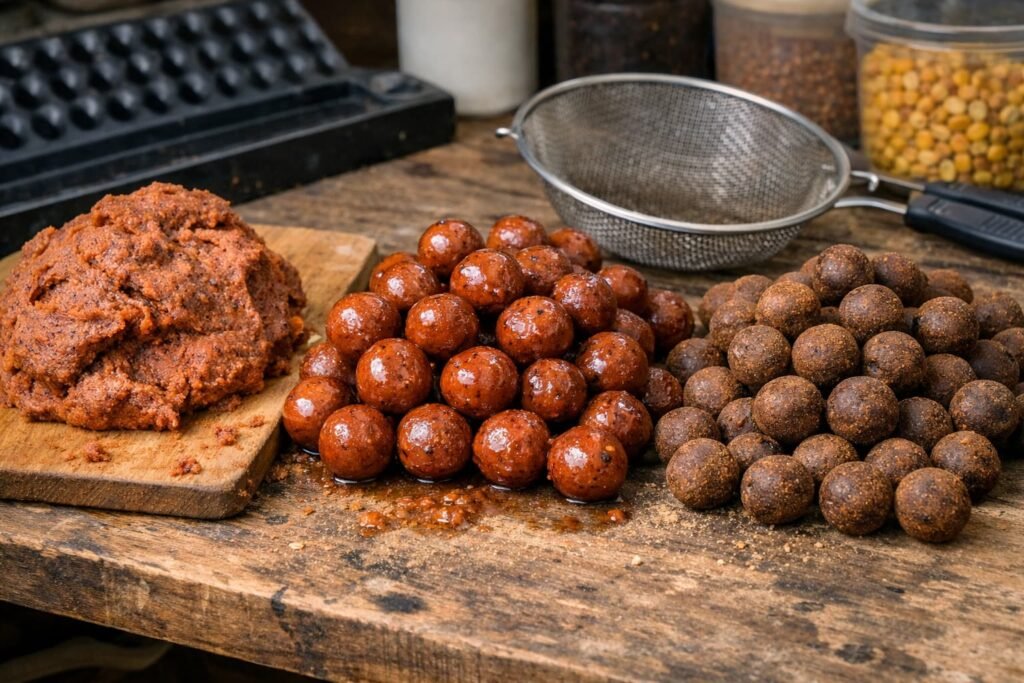
Boilies are one of the best carp baits for Michigan lakes when used properly.
Their real strength is not just attraction. It is control.
Boilies let you:
- bait neatly
- keep feed sizes consistent
- avoid some nuisance species
- build a more selective baiting approach
- match free offerings to the hookbait more precisely
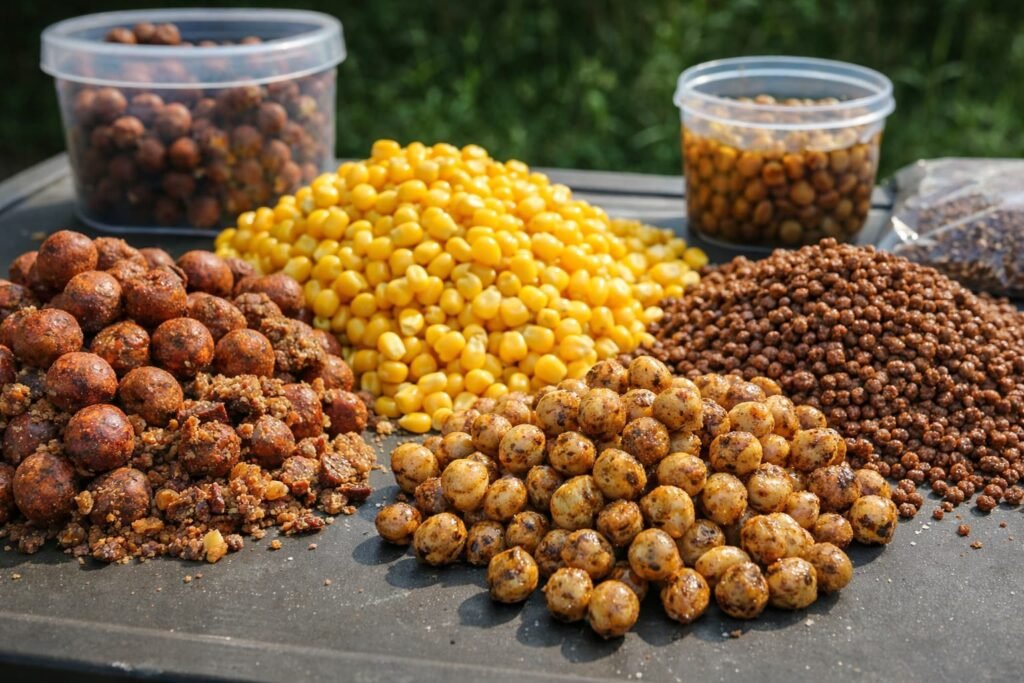
On large Michigan waters, boilies are especially useful when you want to target better fish without piling in a huge amount of feed. A handful of boilies scattered over a productive area often makes more sense than trying to carpet a swim heavily.
They are also useful because they pair well with other bait types. A mixed approach of particles plus a few boilies is often stronger than either one used in isolation.
If you are using boilies, pay attention to how you prepare and treat them. A plain boilie will catch fish, but a properly prepared one often leaks attraction more effectively and gives you more confidence.
Read: How to Treat Boilies for Carp (Step-by-Step)
Particles
Particles are the foundation of a lot of successful Michigan baiting.
That is because they do several jobs at once:
- they help spread feeding fish out across the area
- they keep carp browsing rather than dipping in and leaving
- they give you a cost-effective way to bait big waters
- they match the natural, food-searching behaviour carp often show on large lakes
The main particle options are:
- maize
- hemp
- tiger nuts
- birdseed mixes
- mixed prepared particles
Maize is a classic for a reason. It is cheap, visible, easy to use, and useful for building a baited area.
Hemp is excellent for keeping fish grubbing around. It gives lots of small food items and often helps hold fish in the zone without filling them up.
Birdseed mixes can add variety and keep carp searching.
In practical terms, particles are often what build the area, while boilies and hookbaits help define the trap.
Tiger Nuts
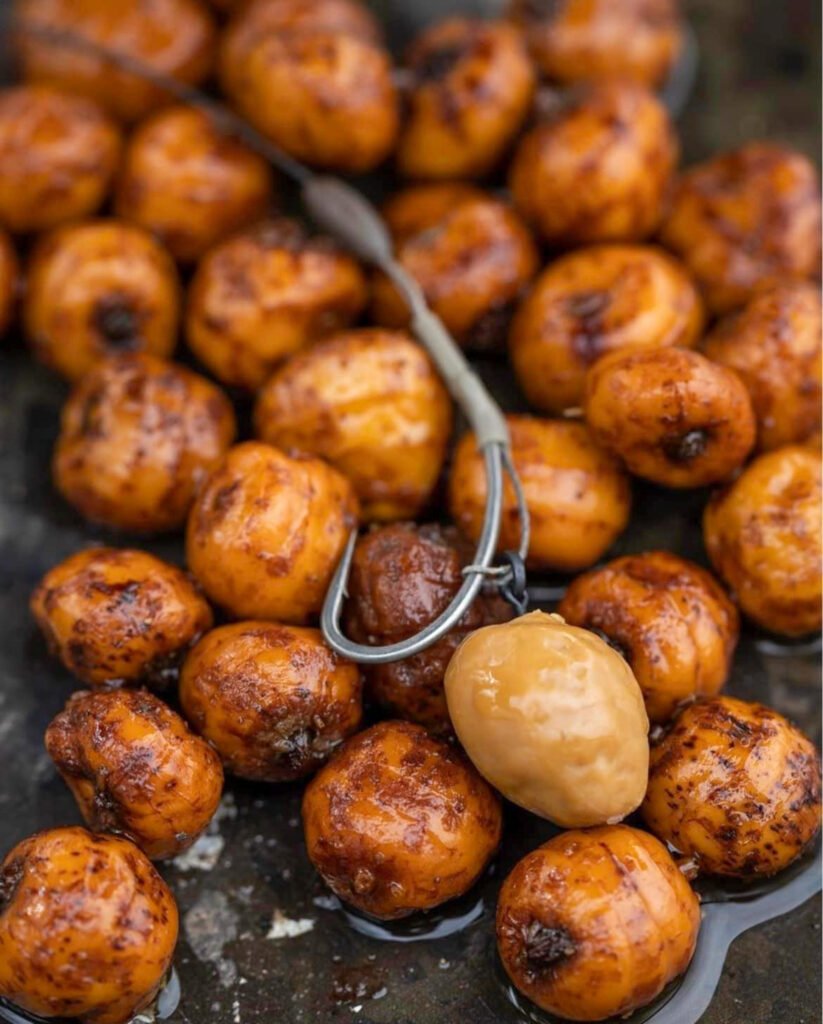
Tiger nuts deserve their own section because they are often either overhyped or underused.
Used properly, they can be a very effective bait on Michigan lakes.
Their main strengths are:
- they can be selective
- they often hold fish in an area well
- they work as both free offerings and hookbaits
- they fit naturally into a mixed particle plan
They are especially useful when you want a slightly more selective food item than maize or birdseed, but still want something that behaves naturally within a baited area.
That said, I would not build the whole approach around tiger nuts alone. On big Michigan waters, they usually make more sense as part of a broader baiting mix. A few tiger nuts used among maize, hemp, pellets, and boilies can be very effective. A whole campaign built only around nuts is often less flexible than it needs to be.
They also need proper preparation and sensible use. That part still matters.
Pellets
Pellets are one of the most useful support baits for Michigan carp fishing.
They are not always the star of the show, but they do a lot of good work.
Pellets help because they:
- break down at useful speeds
- add a feeding signal around the hook
- combine well with particles and crumb
- work well in bags, sticks, and small trap presentations
Koi pellets are especially useful because they are easy to get, affordable, and practical. They can be crushed, soaked lightly, mixed into bags, or used as part of a loose feed.
On Michigan lakes, pellets are often best thought of as a connector bait. They bridge the gap between particles and boilies and help create a more active, food-like patch around the area you are fishing.
Natural Baits
Natural baits still matter, especially on waters where carp are tuned into what is already available.
Worms, sweetcorn, and natural food mimic hookbaits can all be useful in certain situations.
They are worth remembering when:
- fish seem cautious on standard carp baits
- the lake has lots of visible natural food
- you want a change-up bait
- you are dealing with fish that have seen plenty of standard presentations
Natural baits are not always the main plan, but they can be very effective change-of-pace options.
The Role of Liquids
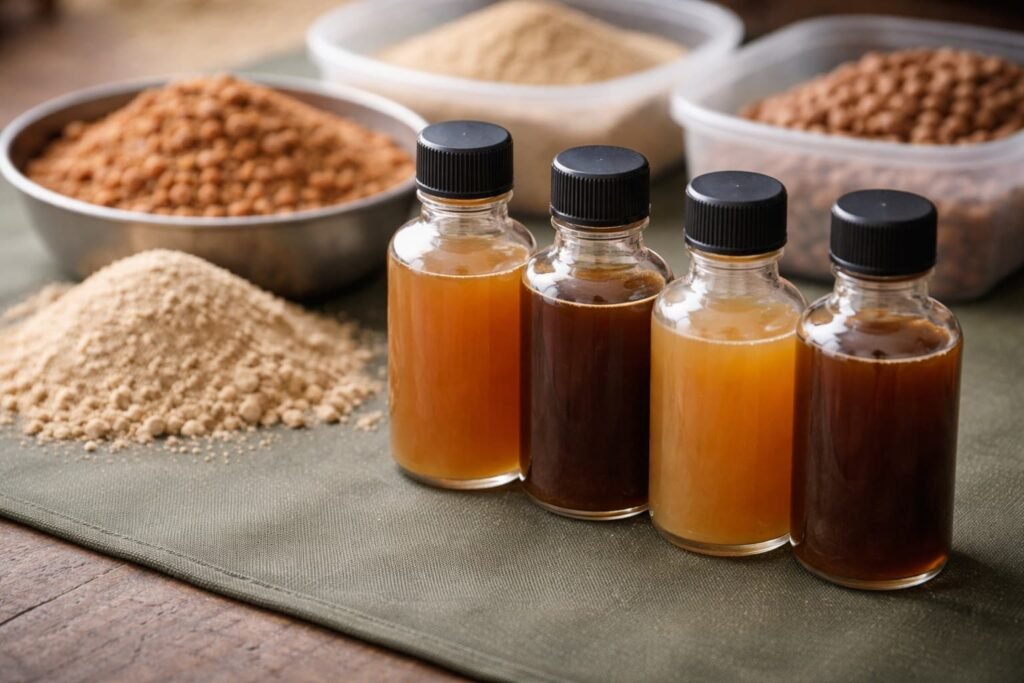
Liquids are not the main bait, but they can make the main bait work harder.
On Michigan lakes, a good liquid can help by:
- improving leak-off
- giving a stronger food signal
- making a hookbait stand out
- freshening up otherwise plain bait
- helping a small amount of bait do more work
The key is choosing the right role for the liquid.
Broader liquids like CSL or fermented particle liquids often make more sense on freebies.
Richer liquids like yeast extract or liver hydrolysate often make more sense on hookbaits, sticks, or the little trap around the rig.
That is a better approach than soaking everything in the same heavy liquid and hoping for the best.
Useful reads:
- Best Liquids for Carp Fishing in Cold Water
- Cheap Carp Bait Liquids That Actually Work
- Homemade CSL for Carp Fishing in Michigan
- Homemade Yeast Extract for Carp Bait
- Liver Hydrolysate for Carp Bait
A Simple Bait Strategy That Works
Most anglers do better when they simplify the plan.
A good Michigan lake baiting approach often looks like this:
Base baiting
- maize
- hemp
- pellets
- optional tiger nuts in moderation
Around the rig
- a small PVA bag
- a tight stick mix
- or a simple stringer
Hookbait
- boilie
- tiger nut
- or pop-up
- lightly treated, not overdone
This combination works because it gives you:
- broad feeding attraction from the particles
- extra activity from the pellets
- a cleaner, more controlled trap near the hook
- a hookbait that still feels like the best item in the immediate area
That is a lot better than dumping a huge volume of bait into one spot and hoping the carp stay there.
Boilies vs Particles
This should never be treated like a simple argument of one versus the other.
On Michigan lakes, they usually do different jobs.
Use particles when you want to:
- build a feeding area
- encourage browsing
- bait larger waters more affordably
- create natural-feeling food competition
Use boilies when you want to:
- target better fish
- tighten the trap
- add more selectivity
- keep the feed more controlled
In practice, the best answer is usually a combination of both.
Particles often do the area-building work. Boilies often do the control work.
That is a much more useful way to think about it than picking sides.
Method Mix, PVA Bags, Sticks, and Stringers
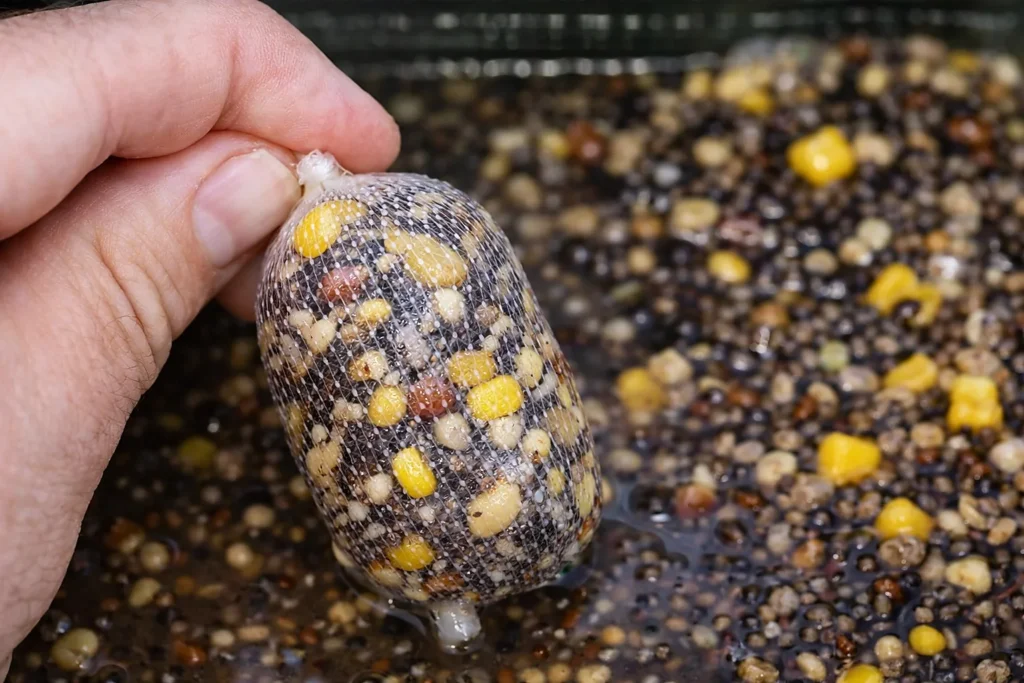
This is one of the most important practical sections on the page.
A lot of anglers get over-reliant on method bait, especially large football-sized lumps moulded around the lead. On some waters that can work, but on many Michigan lakes it is too much.
Big natural waters are different. Fish move. Conditions change. Carp do not always want to drop onto one big heavy mound of feed sat around the rig.
Very often, a cleaner and better option is:
- a small PVA bag
- a tight stick
- a simple stringer
- or just a lightly treated hookbait over a sensible spread of bait
These approaches often make more sense because they give you:
- tighter presentation
- less feed right next to the hook
- quicker response
- cleaner rig areas
- better control over what the fish finds first
If I had to choose on most Michigan lakes, I would usually back a small PVA bag or a neat stick mix over a big overloaded method ball.
Stringers still deserve respect too. They are simple, tidy, and often enough to add just the right amount of extra bait without overdoing it.
This is one of those areas where restraint usually beats excess.
How Much Bait Should You Use?
This is where many anglers lose fish before they even cast out.
Too much bait is one of the biggest mistakes in Michigan carp fishing.
On big natural waters, anglers often think they need to pile bait in because the lake is so large. But the opposite is often true. The larger the water, the more careful you often need to be about what happens right around the productive zone you have found.
A better approach is:
- start light
- fish for signs
- adjust only when the fish tell you to
- keep baiting consistent rather than dramatic
Small spreads, measured baiting, and repeated accurate application usually beat one giant baiting effort.
Seasonal Bait Adjustments
Spring
In spring, carp are often moving more than feeding heavily.
That means:
- keep baiting light
- lean more on liquids
- use smaller traps
- make the hookbait count
This is a time for attraction without overfeeding.
Summer
Summer usually allows more bait, but that still does not mean mindless volume.
Fish are more active, patrol routes may be broader, and feeding spells can be longer. Particles, pellets, and boilies can all work very well, but control still matters.
Fall
Fall can be an excellent feeding period, and this is one time when you can often increase bait carefully.
But even then, the key word is carefully. You still want the bait to work with the fish, not against them.
Michigan Notes
Big water changes everything
On a Michigan lake, you are not trying to feed fish for the sake of it. You are trying to attract them, settle them just enough, and give yourself a clean chance.
Natural food matters
Carp in Michigan often have plenty of natural food available. That means your bait needs to compete without looking absurdly heavy-handed.
Movement matters
On these lakes, fish movement is often one of the biggest factors. Your baiting should reflect that. Controlled spreads and mobile-friendly traps often make more sense than huge static bait piles.
Keep it simple
Most anglers would improve faster by simplifying their baiting rather than adding more ingredients. Simple bait, properly prepared and properly placed, wins a lot of carp.
For the wider approach, also read:
Common Mistakes
Using too much bait
This is still the main one. Big water does not automatically mean big baiting.
Overcomplicating bait
You do not need ten moving parts to catch carp. A simple mixed baiting plan is usually more repeatable.
Ignoring location
Bait does not rescue poor positioning. You still need to be in the right area.
Switching bait too often
Constantly changing bait types usually creates more confusion than advantage.
Relying too heavily on big method balls
They have a place, but they are often overused. On many Michigan lakes, smaller trap presentations are the better option.
FAQ
What is the best bait for carp in Michigan lakes?
A mixed approach of particles, pellets, and boilies is one of the most reliable systems.
Do boilies work in US waters?
Yes. They work very well when used in moderation and matched to the rest of the baiting plan.
Are tiger nuts worth using for Michigan carp?
Yes, when prepared properly and used sensibly as part of a broader approach.
Should I use pellets for carp on big lakes?
Yes. Pellets are excellent support baits, especially in bags, sticks, and mixed feed.
Is method mix the best option on Michigan lakes?
Not always. A small PVA bag, tight stick, or stringer is often a cleaner and more controlled option.
How much bait should I use on big lakes?
Usually less than you think. Start light and build only if the fish show you it is needed.
Next Steps
How to Treat Boilies for Carp (Step-by-Step) — make boilies leak better and work harder.
Best Liquids for Carp Fishing in Cold Water — where liquids fit when water temperatures drop.
Cheap Carp Bait Liquids That Actually Work — practical lower-cost bait treatments.
Seasonal Baiting — match bait amounts and style to the time of year.
The Bait Shed — practical bench-to-bank bait preparation.
Boilie School — improve your baiting confidence and homemade bait knowledge.