
Most anglers still get this backwards.
They turn up, start thinking about rigs, hookbaits, lead setups, and cast angles, then try to fit those ideas onto whatever water happens to be in front of them. That is the wrong way round. Carp fishing starts with fish, not end tackle.
If the carp are not there, the rig barely matters.
That does not mean rigs are unimportant. They matter once you are in the right area, over the right kind of lakebed, at the right time, with fish likely to feed. But too many anglers try to solve a location problem with a presentation answer. They blank in dead water, then start changing hooks, shortening hooklinks, swapping pop-ups, or blaming pressure when the real problem is far simpler: they are fishing where the carp do not want to be.
That is why location comes first.
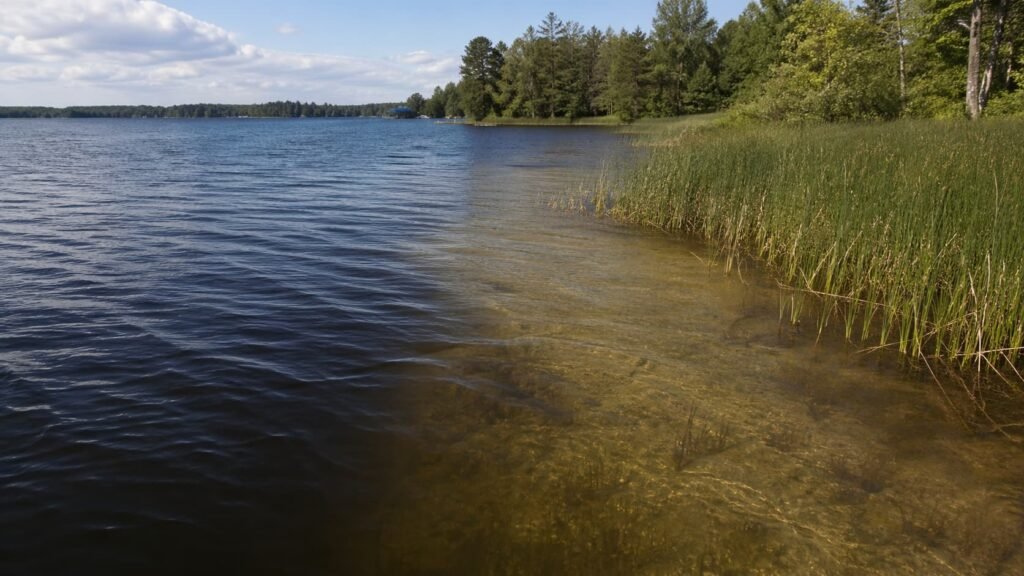
For Michigan carp anglers, this matters even more. Big natural lakes, changing wind, spring warm-ups, clear water, public access pressure, weed growth, shallow bays, marinas, river mouths, reedlines, and seasonal travel routes all create a moving puzzle. You are not just trying to “get a bite.” You are trying to understand where carp are most likely to hold, move, and feed right now.
Once you do that, the rest gets easier.
Quick Start
- Find carp first, then worry about rigs
- Always ask where are the fish likely to be now, not where you wish they were
- Look for comfort, food, safety, and travel routes
- Watch the water before casting whenever possible
- Use signs, season, wind, temperature, clarity, and lake shape together
- A simple rig in the right place beats a perfect rig in the wrong place
- If the area is wrong, changing rigs usually changes nothing
- Build each session around location → timing → presentation, in that order
Why location beats presentation
Carp are not spread evenly across a lake.
They group up around areas that make sense to them. Those areas usually offer one or more of the following:
- natural food
- warmth or stable comfort
- cover and security
- good oxygen
- access to depth
- movement routes
- low disturbance
- repeat feeding opportunity
That is what you are really looking for.
A good presentation can help you convert a chance. It cannot create a chance where no real chance exists.
This is the biggest reason experienced anglers seem to make “simple” fishing look easy. They are not always using magic rigs. Very often they are simply starting in the right zone.
On the other side of it, many blanks come from anglers fishing tidy, sensible, technically sound setups in poor areas. The setup may be fine. The water choice is not.
The proper order of a carp session
A lot of wasted time disappears once you use the right order.
1. Location
Where are carp likely to be?
2. Timing
When are they likely to use that area?
3. Presentation
What is the cleanest, safest, most believable way to fish for them there?
Most anglers put step three first because it feels more controllable. You can buy rigs. You can tie rigs. You can change rigs. Location takes more thought and more patience, which is exactly why it gives such an edge.
What you are really trying to find
When you look at a swim, do not just ask whether it “looks carpy.” Ask what actual job the area does for the fish.
A productive area is usually one of these:
Holding water
A place carp feel safe sitting in for long periods.
Movement water
A route carp use to travel between zones.
Feeding water
An area where carp actively search for food.
Opportunity water
A place that is not a full-time home, but becomes good under certain conditions like wind, warmth, dusk, low light, or pressure change.
The best anglers understand the difference.
A showing fish in movement water is not the same as a feeding fish in a proper feeding area. A holding area may tell you where fish live, but not always where to place your bait. An opportunity area may look dead most of the time, then suddenly become brilliant for two hours.
That is why location is not just about finding “a fish.” It is about understanding the role of the water in front of you.
The four things that usually control carp location
Food
Carp want reasons to visit an area repeatedly. Natural food is one of the biggest. Weed, snails, mussels, bloodworm-rich silt, margins, reedlines, clear patches near cover, and soft feeding zones all matter.
That is why Natural Food Sources is not a side topic. It is central to location.
Safety
Carp do not just go where food is. They go where food and safety overlap. In pressured public water, that matters even more. Weed, pads, depth, snags, marinas, reeds, darker water, low light, and distance from disturbance all help fish feel safer.
Comfort
Temperature, oxygen, light penetration, and general lake mood decide a lot. Carp may ignore a good-looking area if it feels wrong on the day.
That is why Carp Water Temperature Guide for Michigan Lakes, Water Clarity & Light Penetration — Adjusting Your Approach, and Wind, Waves & Current — How Water Movement Drives Carp Location all belong inside the location conversation.
Routes
Carp rarely teleport from one good area to another. They travel. Edges, channels, bars, drop-offs, weed lines, marginal shelves, points, and sheltered lanes all help fish move around the lake.
Find the routes, and you often find the fish.
How to start reading a new water
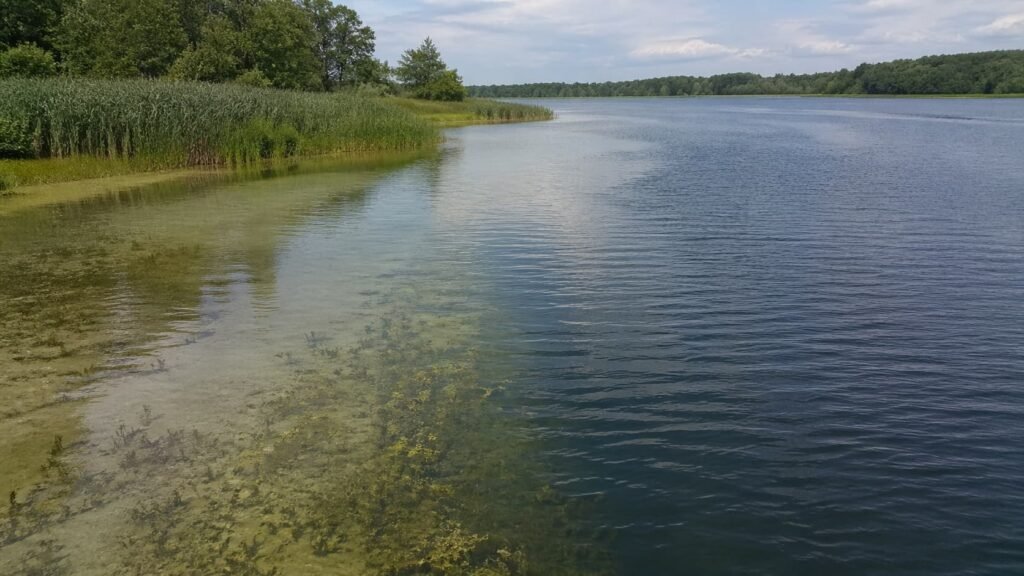
If you arrive at a water you do not know well, resist the urge to rush.
Start by breaking the lake into simple pieces:
- shallow bays
- deeper basins
- reedlines
- weed zones
- exposed banks
- sheltered banks
- man-made features
- access to deeper water
- likely feeding shelves
- routes between those zones
Then ask:
- Where would fish feel safe right now?
- Where would they feed if they wanted to feed?
- How would they move between those places?
That alone is a major improvement over random casting.
On a large Michigan lake, this process matters even more because there is so much water that can waste your time. Big water rewards elimination. You are cutting away dead water until only the meaningful zones remain.
The signs that matter most
The water itself gives you answers if you watch it properly.
Showing fish
Not every show means “cast here now,” but it always means pay attention. Rolling, topping, ghosting through, repeated movement on a line, and fish appearing at similar times all tell you something.
Bubbling and clouding
Purposeful bubbling, coloured water patches, and disturbed silt can indicate actual feeding rather than simple passing movement.
This is why Signs Carp Are Feeding should always sit close to this page.
Repeat movement
One fish showing once is useful. Multiple fish using the same line, zone, shelf, or edge over time is much better.
Silence in obvious water
Do not ignore what is missing. If the obvious swim looks perfect but shows no life, no signs, and no reason to believe fish are using it, do not get attached to it just because it photographs well.
Seasonal location thinking
Spring
Spring location is often built around warming water, access to depth, protected areas, reedlines, shallow shelves, and the first meaningful feeding or holding zones of the year.
You are often looking for places that improve earliest.
Pre-spawn and spawning period
Fish may shift toward protected zones, reedy areas, quieter shallows, and routes leading toward spawning habitat. That does not mean you should fish right on spawning fish, but it does mean movement patterns tighten up.
Summer
Summer often creates more stable routes. Weed, natural food, shade, oxygen, marinas, man-made cover, and dawn/dusk feeding areas become more defined. Carp may use clear patterns if the lake is read properly.
Fall
Fall often means more serious feeding, but still through logical routes and zones. Fish may range more, yet the best areas are still the ones that make food, comfort, and movement sense.
Michigan Notes: on our waters, spring and fall often create the biggest location rewards because the fish are clearly responding to temperature shifts, wind changes, and seasonal movement. Summer can still be excellent, but it often punishes lazy watercraft because the lake gives carp more options.
What to look for on Michigan waters
Michigan carp fishing is not one thing. A small inland lake is not the same as a harbor, a river mouth, or a large natural lake. But the following usually matter:
Reedlines and natural margins
These hold cover, life, and access. Often good in spring and during lower-light windows.
Shallow bays with nearby depth
These can switch on when warmth, shelter, and food line up.
Weed edges and holes
Not just the weed itself, but the shape of it. Edges, lanes, clear pockets, and nearby strips are usually far more useful than casting into the thickest jungle.
Man-made structure
Harbors, marinas, retaining walls, channels, bridge areas, and urban margins can all hold fish because they offer warmth, shelter, food concentration, or movement funnels.
Big-lake transitions
On larger waters, little shifts matter more than anglers think: a harder strip, a depth change, a cleaner shelf, an inside turn, a point into the wind, a lane beside weed. These are not decorative features. They shape movement.
When presentation actually does matter
Presentation matters once you have solved location and timing well enough to create a real chance.
Then it matters a lot.
You still need:
- a rig that suits the lakebed
- a hookbait the fish will accept
- fish-safe setup
- a line angle that does not wreck the swim
- baiting that fits the area
But notice what all of those have in common: they are answers to a location problem already understood.
You do not choose the rig in isolation. You choose it because you know the bottom, the cover, the feeding mood, and the way fish are likely to use the area.
That is why “location first” is not anti-rig. It just puts rigs in their proper place.
What to do when you know fish are there
Once you are confident you have found fish or a strong fish area, now you can narrow down the presentation.
Ask:
- Are they feeding or just passing through?
- Is the bottom clean, soft, weedy, or mixed?
- Is this a hold-up area or a short feeding window area?
- Do I need subtlety or instant visibility?
- Can I fish it safely?
Now the rig choice becomes logical.
A bottom bait on a clean patch near feeding signs makes sense. A pop-up over uncertain ground makes sense. A tight little trap in a natural food zone makes sense. But those decisions come after the location work.
When to move and when to stay
This is one of the hardest judgment calls in carp fishing.
Stay when:
- you have real signs
- the area fits the conditions
- timing still supports the swim
- fish are using nearby water even if the rods are quiet
Move when:
- the swim made sense earlier but clearly no longer does
- a weather shift has changed the whole zone
- fish are obviously elsewhere
- you are staying only because you already cast there
Many anglers stay too long in the wrong place because moving feels like admitting the first decision was wrong. In truth, good anglers relocate because they are still playing the location game properly.
Michigan Notes
- Big Michigan lakes reward route-finding more than random feature-fishing
- Public access pressure often makes carp use safety water more tightly than anglers expect
- Slight weather changes can switch shallow and marginal areas on or off very quickly
- Clear water often makes location even more important because fish may be present but uncatchable in exposed zones
- Wind can transform one bank and kill another in a matter of hours
- Natural food areas are often more important than classic “carp-looking” water with no feeding reason behind it
Common Mistakes
Choosing a rig before choosing a swim
This gets the whole session backwards.
Fishing features without asking why carp would use them
A feature is only useful if it offers food, safety, comfort, or movement value.
Casting at one show and calling that location
One show is a clue, not a full answer.
Staying loyal to dead water
If the signs and conditions say the fish are elsewhere, believe them.
Confusing movement water with feeding water
Both matter, but not in the same way.
Trying to solve blanks with terminal tackle changes alone
Sometimes the problem is not the rig. It is the water choice.
FAQ
Does location really matter more than rigs?
Yes. If carp are not there, the rig has almost no chance to do its job. Location creates opportunity. Rigs convert it.
What is the first thing I should look for on arrival?
Look for fish signs, likely holding water, likely feeding water, and the routes between them before thinking about rigs.
Are showing fish always worth casting at?
Not always. Shows can indicate movement as well as feeding. They are useful clues, but they need context.
How do I know if a swim is feeding water or just a route?
Feeding signs like bubbling, clouding, repeated use, natural food value, and fish lingering usually point more toward feeding water. Straight-line movement with little settling can suggest a route.
Should I move if I am not getting bites?
Sometimes. The better question is whether the swim still makes sense based on signs, timing, and current conditions.
What matters most on big Michigan lakes?
Breaking the water down into meaningful zones, finding routes, and cutting away dead water until the likely carp areas become obvious.
Next Steps
Read Signs Carp Are Feeding next so you can separate actual feeding activity from simple movement.
Then read Finding Carp in Big Lakes if you are applying this to larger Michigan waters.
For the environmental side of location, keep this tied to Carp Water Temperature Guide for Michigan Lakes, Wind, Waves & Current — How Water Movement Drives Carp Location, and Water Clarity & Light Penetration — Adjusting Your Approach.
And for the food side of location, follow it with Natural Food Sources and Weed Beds, Lily Pads & Aquatic Vegetation — Natural Food Factories.