

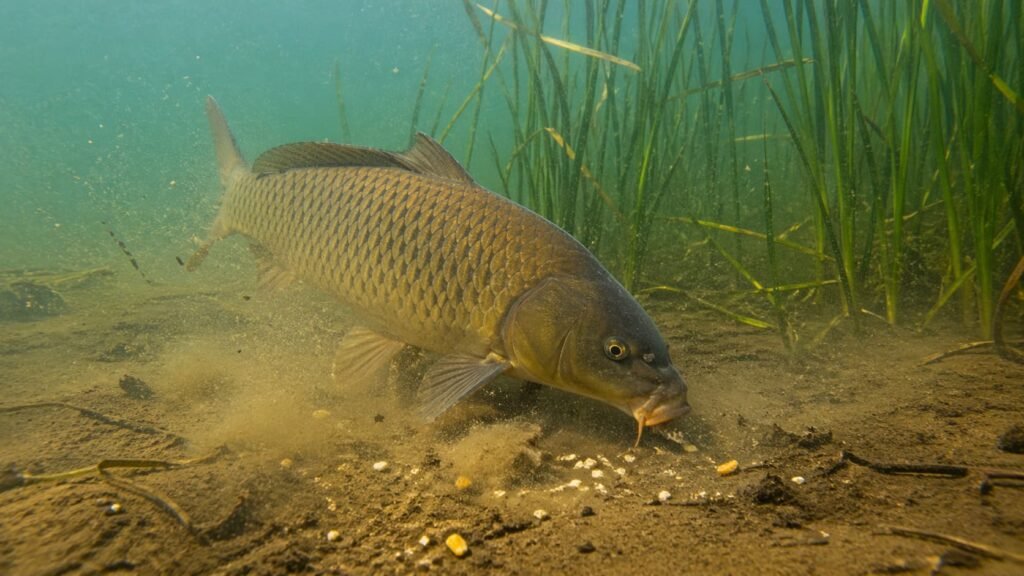
A lot of carp anglers still talk about bait as if fish simply “smell it and come in.”
That is too basic.
Carp do not find food with one sense alone. They use a full set of tools together. Smell matters. Taste matters. Sight matters. Water movement matters. Vibration matters. The shape of the lake, the clarity of the water, the amount of light, the type of bottom, the level of pressure, and the fish’s own confidence all change how those senses get used.
That is why one bait can look brilliant on paper and still fail in the wrong situation.
It is also why simple bait can work very well when it is fished in the right place, at the right time, in a way carp can detect and trust.
For Michigan anglers, understanding carp senses helps with much more than bait choice. It helps with location, presentation, hookbait colour, rig placement, feeding signals, margin stalking, big-water movement, and why fish sometimes pass straight through an area without dropping to feed.
This page is about how carp actually find food and how anglers can use that knowledge properly.
Quick Start
- Carp do not rely on one sense alone
- Smell and taste are major feeding tools, but they work with movement, sight, and confidence
- Carp often find food by combining chemical signals, visual clues, and bottom-level investigation
- Clear water usually increases the importance of good presentation and visual caution
- Murky water often increases the value of strong location and detectable food signals
- A bait only works if carp can find it, accept it, and feed safely on it
- Better location usually matters more than “stronger attractor”
- The smartest approach is to match bait and presentation to the conditions in front of you
Carp are not just “smell-driven”
This is the first thing to get straight.
Yes, carp are extremely good at detecting chemical signals in the water. They can pick up dissolved food cues and investigate them very effectively. That is a huge part of how they feed.
But they do not live like dogs sniffing a straight line to a boilie.
Carp move through water with several senses working together. They pick up dissolved compounds. They inspect the bottom. They see changes in contrast and shape. They feel disturbance and movement. They react to light, pressure, and danger. They learn from bad experiences.
That means bait attraction is not just a question of “how strong does it smell?” It is really a question of:
- can the fish detect it?
- does it fit the situation?
- do the signals make sense?
- does the lakebed allow the bait to be found properly?
- does the fish feel safe enough to feed?
That is why location always remains king. A brilliant bait in the wrong place is still in the wrong place.
Smell — how carp detect food signals in the water
Smell is one of the biggest reasons carp can find food items in water they cannot clearly see.
Dissolved compounds leak from natural food and angler’s bait alike. Amino-rich liquids, soluble compounds, fermentation by-products, salts, acids, sugars, small food particles, and breakdown products all create a chemical picture in the water. Carp can respond to that.
But there are three important realities anglers often miss.
1. Signal strength is not the same as usefulness
A bait can leak very strongly without being especially convincing.
Sometimes a softer, more natural, more balanced signal works better than a loud one. Especially on pressured waters, fish often trust food that fits what they already encounter naturally.
2. Water movement changes everything
A chemical trail behaves differently in still margins, undertow, wind-driven water, currents, channels, shallow bays, weeded zones, and deeper water. In one place the signal may hang nicely. In another it may disperse quickly or get carried off the spot.
That is why smell must always be understood alongside Watercraft and lake movement, not treated as a magic force.
3. Smell gets fish interested, but not always committed
A fish may detect something attractive and still not feed properly if the presentation is poor, the bottom is wrong, the area feels dangerous, or the hookbait does not behave naturally enough.
Smell can start the process. It does not guarantee the finish.
Taste — the final decision maker
This is where a lot of feeding confidence is won or lost.
Carp do not just sample food with the mouth in the same way people imagine. They are excellent at testing, mouthing, sorting, and rejecting things that do not feel right.
In practical angling terms, taste matters because once carp come close, they often decide very quickly whether something is worth continuing with.
That means hookbait value is not just about leakage. It is about whether the bait:
- feels acceptable
- tastes right
- breaks down in a believable way
- fits the feed around it
- does not scream danger
This is one reason why overdoing hookbait treatments can work against you. A hookbait loaded with every liquid in the shed might put out a massive signal, but if the final message is odd or unbalanced, it is not always helping.
Simple, coherent bait often wins.
Sight — often underestimated, often misunderstood
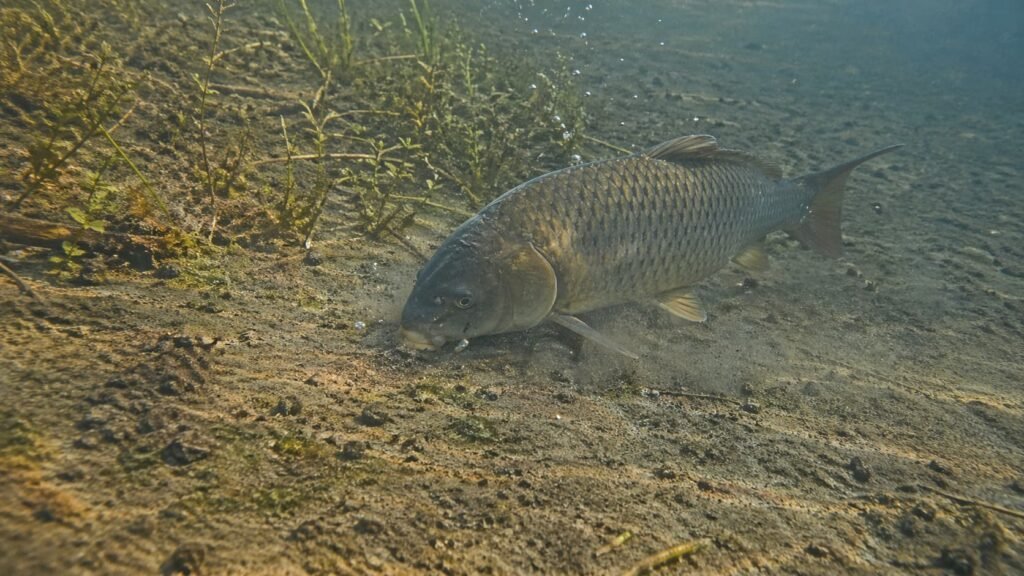
Some anglers underestimate sight because carp are frequently filmed grubbing in murky water or silt. Others overestimate it and act as if carp can study a rig like a human.
The truth is somewhere in the middle.
Sight matters more when:
- the water is clear
- the light is good
- fish are feeding cautiously
- the bait contrasts strongly with the lakebed
- the hookbait is elevated or stands out
- the fish are inspecting before feeding
Sight matters less when:
- the water is heavily coloured
- fish are feeding aggressively
- the bait is in silt or debris
- the fish are rooting hard on the deck
- the main trigger is chemical and close-range investigation
For Michigan waters, this matters a lot because water clarity can change everything. A bright pop-up that helps fish find a spot in one situation can look totally wrong in another.
That is why visual attraction should never be treated as automatic. It is just another tool.
The lateral line and water movement
This is the part many anglers never think enough about.
Carp are highly tuned to disturbance and movement in the water around them. That matters for natural feeding, group behaviour, danger detection, and nearby activity.
Practical implications include:
- fish can pick up subtle movement from other feeding carp
- bottom disturbance can help draw fish in
- baiting patterns can create small but useful signals
- fish may react to line tension, splashy casting, clumsy wading, or repeated disturbance
- feeding groups often become easier to locate because one feeding carp can help trigger others
This is why quiet, controlled angling matters so much. Once fish are in the area, unnecessary disturbance can damage your chance fast.
It is also why feeding signs matter. Clouded water, subtle fizzing, moving silt, repeated liners, and shifting body language can all tell you more than a bright hookbait ever will.
Read that alongside Signs Carp Are Feeding and a lot of sessions start making more sense.
How carp actually find bait in real life
Most of the time the process is not a neat sequence. It is messy and overlapping.
But in broad terms, it often looks like this:
1. A fish enters an area for some other reason
It may be travelling, holding, using cover, moving with temperature, following food, or using a route.
2. It picks up clues
Those clues might be dissolved signals, silt disturbance, feeding sounds, movement from other fish, or visual contrast.
3. It comes close enough to investigate properly
Now the fish begins to sort what is on the bottom, what looks edible, and what feels right.
4. The bait either fits or it does not
If the baiting and presentation fit the situation, the fish settles. If not, it may drift off, circle, sample, or ignore the lot.
That is why location and context matter so much. Carp often do not “home in” on bait from nowhere. They encounter it as part of an area they were already likely to use.
Why location still beats attraction
This is worth saying clearly.
Understanding carp senses should make you a better locator, not just a better glugger.
Carp find food best in areas they already want to be in. That means:
- natural food zones
- patrol routes
- comfortable holding areas
- transitions
- feeding shelves
- clear spots near cover
- margins used at the right times
- big-lake movement paths
A weak bait in a brilliant area often outperforms a brilliant bait in a poor area.
That is why this page must sit alongside How to Locate Carp Before You Cast and Finding Carp in Big Lakes.
The fish has to be there first.
How water clarity changes carp behaviour around bait
Clear water makes carp look cleverer because they usually are more cautious in it.
In clear water:
- visual mismatch matters more
- line and lead placement matter more
- bright hookbaits can help or hurt
- fish may inspect before feeding
- disturbance from the bank matters more
In coloured water:
- visual suspicion may reduce
- scent and location can do more work
- fish may feed with more confidence in shallow water
- tight, well-placed bait can work very well
This is why one angler swears by bright singles and another swears they spook fish. Both can be right, depending on the water.
How pressure changes how carp use their senses
Pressured carp are not just “harder to catch.” They often behave differently at close range.
They may:
- approach more cautiously
- test more carefully
- ignore obvious signals they associate with danger
- feed better in lower light
- use safer zones more often
- respond better to subtlety than noise
This is where bait confidence becomes a real issue. Sometimes the best thing you can do is make the whole picture look calmer and more believable, not more attractive in the loud sense.
Michigan Notes: on busy public waters, especially smaller accessible lakes, pressured fish often tell you that less is more. Cleaner location, quieter angling, and a believable feed area can beat “high-attract” chaos.
Hookbaits and senses — what really matters
A hookbait does not need to be magical. It needs to make sense.
The best hookbaits usually do one or more of these things well:
- stay fishable on the lakebed
- offer a clear but believable signal
- stand out just enough for the conditions
- match the feed around them or present a sensible exception
- hold up long enough to do the job
- feel acceptable when a fish mouths them
That is why the best hookbait for one situation is not the best for every situation.
In clear water
Leaner, more natural-looking hookbaits often make sense.
In chod, silkweed, or low-light situations
A more visible bait may help.
In heavy pressure
Subtle but trustworthy is often stronger than loud and flashy.
In short sessions
A more instantly detectable hookbait can help, provided it still fits the swim.
Bait signals vs natural food signals
Carp do not experience your bait in isolation. They experience it alongside the rest of the lake.
That means your bait is competing with:
- snails
- mussels
- bloodworm
- insect life
- seeds and plant material
- detritus-rich feeding zones
- other anglers’ bait
This is why natural-food-rich areas are so important. Carp already expect to feed there. Your bait does not have to drag them across the lake. It only has to be one more good thing in the right area.
That is also why Signs Carp Are Feeding and knowledge of feeding areas beat blind bait faith every time.
Michigan Notes
- In clear Michigan waters, presentation and visual caution often matter more than anglers think
- In spring, warming shallow water can pull carp into areas where sight and confidence change through the day
- Large natural lakes often reward anglers who understand movement routes first and bait response second
- On pressured public venues, heavy attraction alone rarely fixes bad location
- Weeds, pads, reeds, and softer bottoms can change how chemical and visual signals behave around the hookbait
Common Mistakes
Thinking stronger smell always means better bait
It does not. Stronger is just stronger.
Ignoring the lakebed
A fish cannot find or trust a bait properly if it is buried, masked, or presented badly.
Using visual hookbaits without context
A bright bait is not automatically an edge.
Overloading hookbaits with too many additives
Sometimes the final message becomes less believable, not more.
Forgetting that fish learn
Pressured carp often respond differently from naive fish.
Treating senses as more important than location
They are not. Location is still the frame that makes the rest work.
FAQ
Do carp find bait mainly by smell?
Smell is a major part of it, but not the whole story. Carp also use taste, sight, movement detection, and close-range investigation.
Does hookbait colour matter?
Yes, but only in context. In some conditions colour helps fish locate or single out a bait. In others it makes the bait look wrong.
Can carp feel feeding activity from other carp?
They can certainly respond to disturbance, movement, and nearby activity in ways that help group feeding build.
Is a stronger-smelling bait always better in coloured water?
Not always. It can help, but location and believable presentation still matter more than raw strength alone.
Why do carp come into the swim but not feed?
Often because something about the area, the setup, or the bait picture does not fully fit. They may detect the swim and investigate it without committing.
What matters most: bait attraction or fish location?
Location. Always. Attraction only matters once fish are in a position to use it.
Next Steps
Read How to Locate Carp Before You Cast to put carp behaviour into a location-first framework.
Then read Signs Carp Are Feeding so you can separate feeding behaviour from simple movement.
For bigger-water application, read Finding Carp in Big Lakes.
And for the wider environmental picture, read Carp Water Temperature Guide for Michigan Lakes and Spring Carp Fishing in Michigan.