
One of the biggest mistakes in carp fishing is casting rigs before knowing where the fish actually are. Carp rarely spread evenly across a lake. Most of the time they concentrate in areas that provide food, comfortable water conditions, and protection.
Spending time observing the water before casting can dramatically improve your success. By learning to recognize carp behaviour and lake features, you can place your rigs where carp are already likely to be feeding.
If you’re unfamiliar with reading water conditions, start with Reading a Lake Like a Carp Angler. That guide explains how carp use structure, wind, and natural food sources.
Quick Start
Before casting your first rig, spend a few minutes looking for:
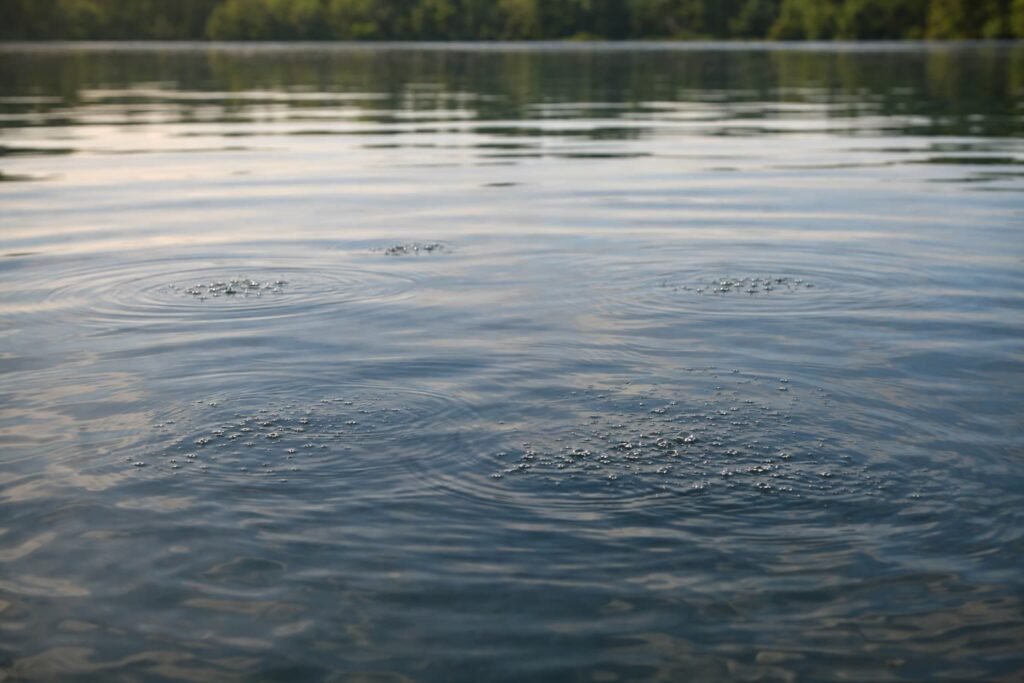
• bubbling or fizzing patches on the surface
• carp rolling or showing near the surface
• cloudy water or disturbed bottom
• wind-blown banks collecting food
• shallow flats warming in sunlight
These signs often reveal where carp are already active.
Watch the Water First
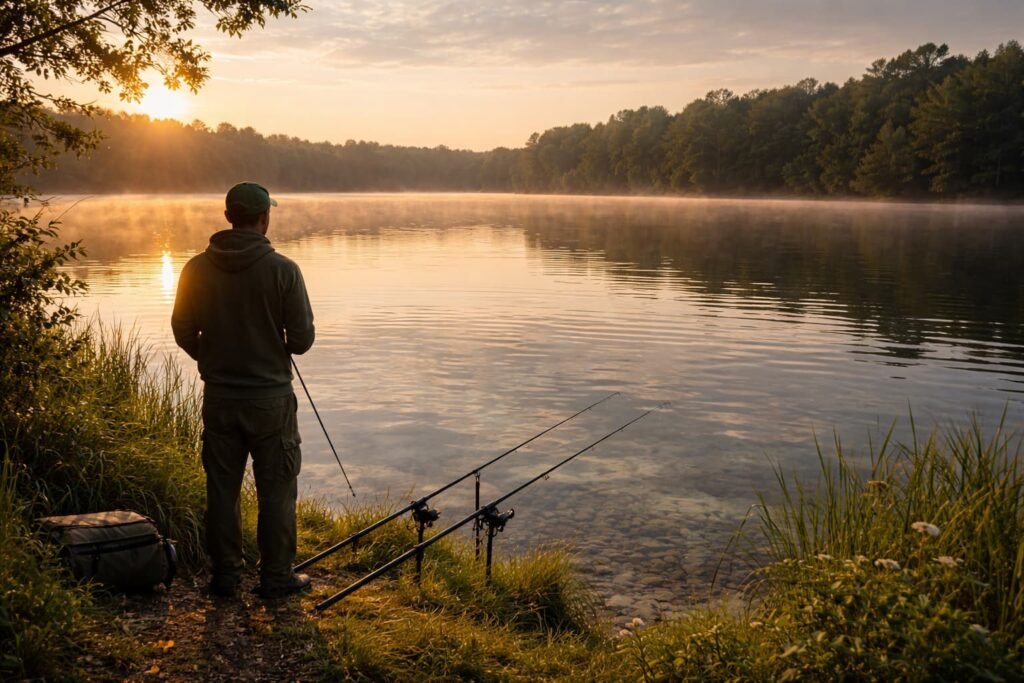
Observation is one of the most valuable skills in carp fishing. Even a few minutes of watching the water can reveal feeding fish.
Look for:
• small bubbles rising in clusters
• drifting patches of cloudy water
• subtle surface rolls
• carp cruising near the margins
These clues can help you identify productive areas before you ever make a cast.
You can learn more about these signals in Signs Carp Are Feeding.
Identify Feeding Zones
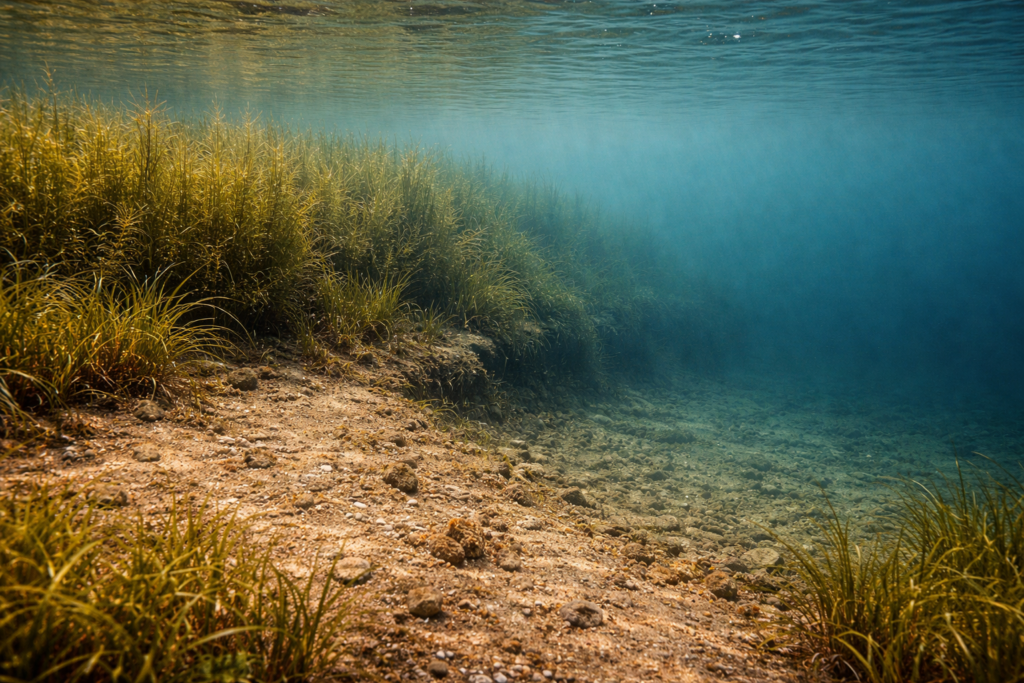
Carp often feed in predictable areas where natural food is abundant.
Common feeding locations include:
• shallow bays
• weed beds and reed lines
• silt flats containing insect larvae
• wind-blown shorelines
• lake margins with plant debris
These zones often hold natural food such as snails, bloodworm, and insect larvae.
Look for Travel Routes
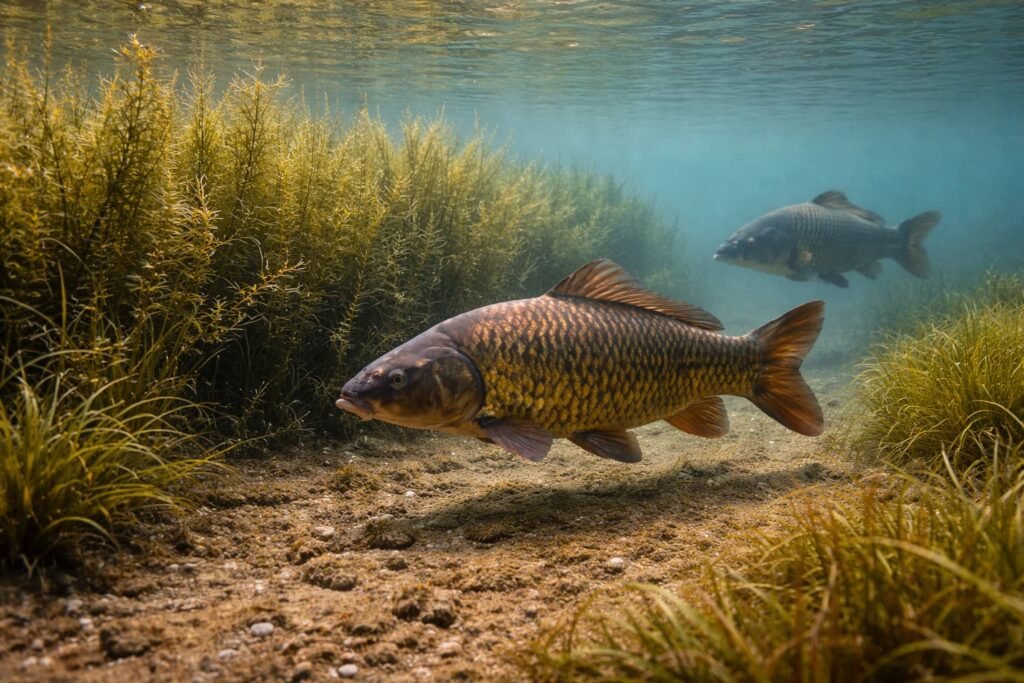
Carp rarely stay in one place all day. Instead they move along routes between resting areas and feeding zones.
Typical carp travel routes include:
• weed edges
• underwater ledges
• drop-offs
• channels cutting through flats
• shoreline margins
Fishing these travel routes can often produce consistent action.
Pay Attention to Wind Direction
Wind plays a major role in carp location.
Wind pushes food and oxygen into one side of the lake, often attracting feeding carp.
Look for:
• wind-blown banks
• areas where waves push toward shore
• sheltered bays receiving warm winds
These areas frequently produce feeding activity.
Consider Depth and Structure
Depth changes often reveal productive carp areas.
Look for locations where depth transitions occur such as:
• shallow flats dropping into deeper water
• gravel bars and underwater ridges
• weed edges along drop-offs
• channels running through lakes
These features allow carp to move easily between feeding and resting areas.
Learn more in Best Depth for Carp Fishing.
Michigan Notes
Many Michigan lakes contain shallow bays, weed beds, and natural feeding flats where carp regularly search for food.
Common patterns include:
• spring carp feeding in shallow warming water
• summer carp holding near weed edges
• fall carp feeding heavily before winter
Large lakes can also hold carp in predictable zones. Learn how to narrow down these waters in Finding Carp in Big Lakes.
Common Mistakes
Casting immediately
Taking a few minutes to observe the water can reveal feeding carp before you cast.
Fishing random areas
Carp usually concentrate in specific locations rather than spreading evenly across a lake.
Ignoring subtle clues
Small bubbles, muddy patches, and occasional rolling fish can reveal carp activity.
FAQ
How long should I observe the water before casting?
Even five to ten minutes of watching the water can reveal carp activity.
Do carp always show themselves?
No, but subtle signs such as bubbles or cloudy water can indicate feeding fish.
Should I cast directly onto feeding fish?
It’s often better to place your rig slightly beyond the activity.
Are margins good places to look for carp?
Yes. Carp frequently patrol lake margins looking for natural food.
Next Steps
• Where Carp Hold During the Day
• Finding Carp in Big Lakes
More Carp Location Articles
* How to Find Carp in Lakes
* Reading a Lake Like a Carp Angler
* Signs Carp Are Feeding
* Best Depth for Carp Fishing