

Boilie paste consistency is where a lot of bait making problems begin.
If the paste is wrong, everything that follows becomes harder. Sausages split, boilies misshape, rolling gets messy, and finished baits often end up too hard, too soft, or inconsistent.
The good news is that most paste problems can be corrected if you slow down and work through them properly.
This guide shows you how to fix boilie paste consistency step by step, so you can stop guessing and start reading the mix properly.
If you are already dealing with wider bait problems, read this as well:
Boilie Problems: Real Causes and Fixes That Actually Work
If the trouble is specifically cracked, split, or soft boilies, also read:
Why Boilies Crack, Split, or Go Soft: The Real Causes
Quick Start
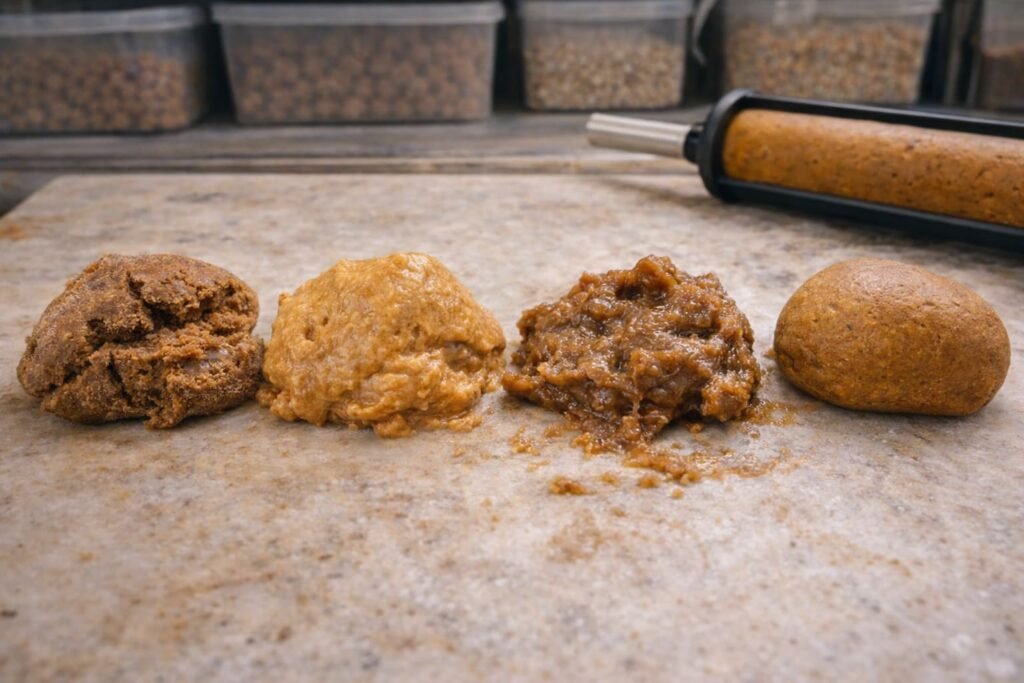
If your paste is:
- too stiff — add a little reserved liquid and knead again
- too soft — rest it first, then add a little dry mix if needed
- sticky — let it settle, cool it down, and clean the bench
- crumbly — improve hydration and knead longer
Do not try to fix everything at once.
Make one small change, knead properly, and reassess.
Step 1: Stop and Read the Paste Properly
Before correcting anything, ask:
- is it too stiff?
- is it too soft?
- is it sticky?
- is it crumbly?
- has it been rested yet?
A lot of anglers try to judge paste too early.
Some mixes need a short covered rest before they show their true working consistency. If you rush this stage, you often create the very problem you are trying to avoid.
Step 2: If the Paste Is Too Stiff
What it looks like
- hard to knead
- hard to gun out
- sausage tears or splits
- paste tightens quickly
What to do
Add a small amount of reserved liquid and knead thoroughly.
Do not dump extra liquid straight in.
Work in small corrections and let the paste absorb the change before deciding it still needs more.
Why it happens
- too many absorbent ingredients
- not enough total liquid
- slow-hydrating powders still pulling in moisture
- paste left uncovered too long
Best practice
Always hold some liquid back at the start. That gives you room to correct the mix without losing control.
Step 3: If the Paste Is Too Soft
What it looks like
- slumping paste
- poor sausage definition
- sticking to hands and table
- difficult rolling
What to do
Rest it first.
If it is still too soft after resting, add a little dry base mix back in and knead again.
If the whole dry mix is already used up, correct it with a sensible support ingredient rather than guessing.
Good options include:
- semolina
- biscuit meal
- a little extra structural milk-protein support where suitable
Why it happens
- too much liquid
- under-mixing
- too many syrupy liquids
- not enough dry support
Best practice
Add liquids gradually, not all in one hit.
Step 4: If the Paste Is Sticky
What it looks like
- clings to hands
- sticks to gun and rollers
- smears on the table
- feels hard to control
What to do
Let it rest. Cool it down. Clean the bench.
A sticky paste often becomes more manageable after a short rest, especially if it contains liquid foods, hydrolysates, or syrupy ingredients.
Why it happens
- too many sticky liquids
- warm paste
- too much oil with poor dry structure
- high liquid food loading
Best practice
Sticky does not always mean bad paste. Some attractive mixes are naturally tacky. The issue is whether the paste is still workable.
Step 5: If the Paste Is Crumbly
What it looks like
- breaks apart
- will not form a clean sausage
- tears instead of stretching
- poor cohesion
What to do
Knead longer and improve hydration.
If needed, add a little supportive binder material and just enough liquid to activate it properly.
Why it happens
- too much dry cereal bulk
- poor binder support
- weak protein structure
- not enough liquid
- poor mixing
Best practice
A crumbly paste usually means the mix is not knitting together properly. Fix the cohesion first rather than trying to force it through the gun.
Step 6: Rest the Paste Before Final Judgement
This is one of the most missed steps in bait making.
After correcting the paste, let it sit covered for a short time and then reassess it.
A mix that looks too soft at first can firm up nicely.
A mix that looks fine straight away can tighten too much after resting.
That is why proper paste correction is never just about what it feels like in the first minute.
Step 7: Test a Small Sausage Before Running the Full Batch
Before pushing ahead with the whole mix:
- gun out a short sausage
- see if it holds shape
- see if it splits
- see if it swells
- see if it rolls cleanly
This one small test saves a lot of wasted time and spoiled bait.
Step 8: Match the Paste to the Job
Not every paste should feel exactly the same.
A paste for:
- clean round bottom baits
- dumbells
- hookbaits
- soluble short-session baits
may all behave slightly differently.
The key is not chasing one “perfect” feel for every recipe. The key is getting the paste right for the job and consistent enough to work cleanly.
Common Mistakes
- judging the paste too early
- adding all liquids at once
- trying to fix everything in one correction
- not holding liquid back
- forcing poor paste through the gun
- ignoring how the paste changes after resting
Michigan Notes
In Michigan spring and fall, anglers often make bait indoors in cooler conditions, then store or dry it in heated spaces. That can throw paste behaviour off more than people think.
A mix may seem fine on the bench and then tighten too much, or dry more aggressively than expected once it is indoors.
That is why small corrections and proper resting matter so much.
FAQ
Should I add water if my paste is too stiff?
Usually it is better to add reserved liquid phase rather than plain water, unless the recipe specifically allows for it.
Why does my paste seem fine at first and then go stiff?
Because some ingredients hydrate more slowly and continue pulling in moisture after mixing.
Why is my paste sticky even though the recipe is good?
Often because of liquid foods, hydrolysates, syrupy additives, or warm working conditions.
Can crumbly paste be saved?
Sometimes, yes. But you need to improve hydration and cohesion properly rather than just forcing it together.
Should every boilie paste feel the same?
No. Different jobs call for slightly different working textures, but they all still need control, cohesion, and clean handling.
Next Steps
To tighten up your bait making further, read: