
Big lakes beat anglers before the rods even go out. There is simply too much water, too many empty-looking areas, and too many places that seem “about right.”
The answer is not to search every inch of the lake. The answer is to narrow the water down into areas that make sense for carp. Once you do that, the lake gets smaller in a hurry.
Carp in large lakes do not live everywhere equally. They use certain features, routes, and comfort zones again and again.
Quick Start
- Start with areas that offer warmth, food, cover, and movement routes.
- Look at bars, bays, points, weed edges, inflows, snags, and windblown banks.
- Carp often travel edges and transitions rather than featureless open water.
- Shallow water is often vital in spring.
- In large Michigan lakes, time spent watching usually pays better than blind casting.
Shallow Bays and Warm Corners
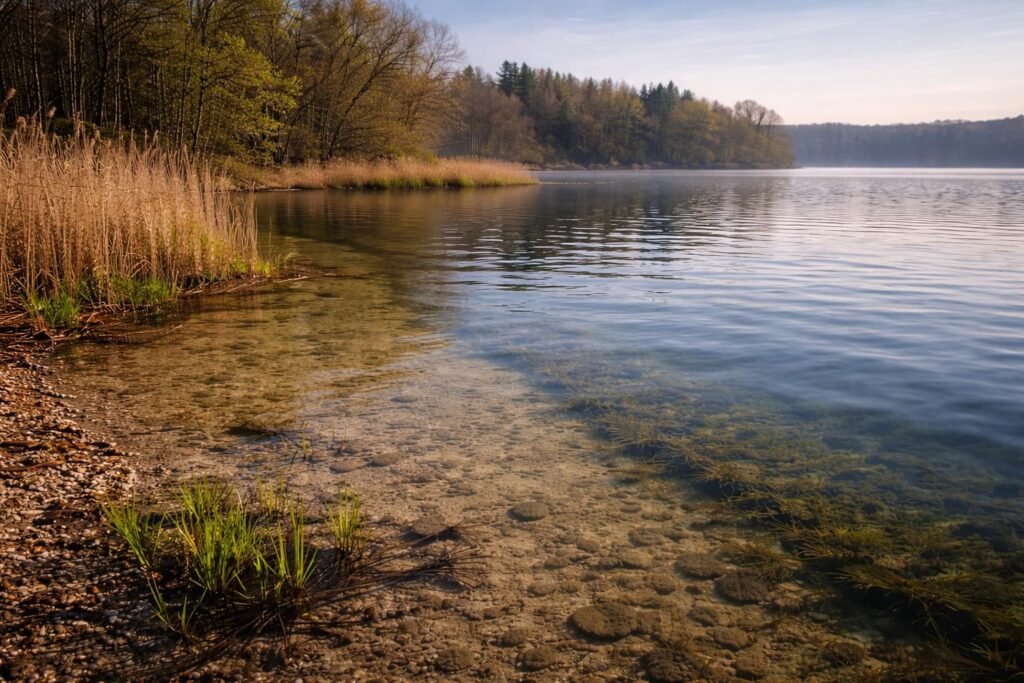
In spring especially, these are prime starting points. Shallow water warms first and often holds more early activity.
A protected corner with a soft bottom, some reed growth, and a bit of sunlight can draw carp long before the main body of the lake wakes up. Never dismiss the obvious warm water.
Bars, Shelves, and Drop-Offs
Carp love routes. A bar, a shelf, or a drop-off gives them one. These features help fish move, feed, and change depth without roaming aimlessly.
On big lakes, a bar is often not just a spot to cast to. It is a line the fish use. That matters far more.
Weed Edges and Clear Patches
Weed holds life. The edge of it often holds carp. Clear areas beside weed give fish an easy place to feed and anglers an easier place to present a rig.
Do not focus only on the clearest spot in the lake. Focus on the spot that looks easiest for a carp to use.
Snags, Reeds, and Quiet Cover
Large carp often like secure areas. Snaggy banks, overhanging trees, reed lines, and low-disturbance corners can all hold fish.
You may not always be able to fish right in the cover, but you can often fish the route in and out of it.
Windblown Banks and Food Accumulation
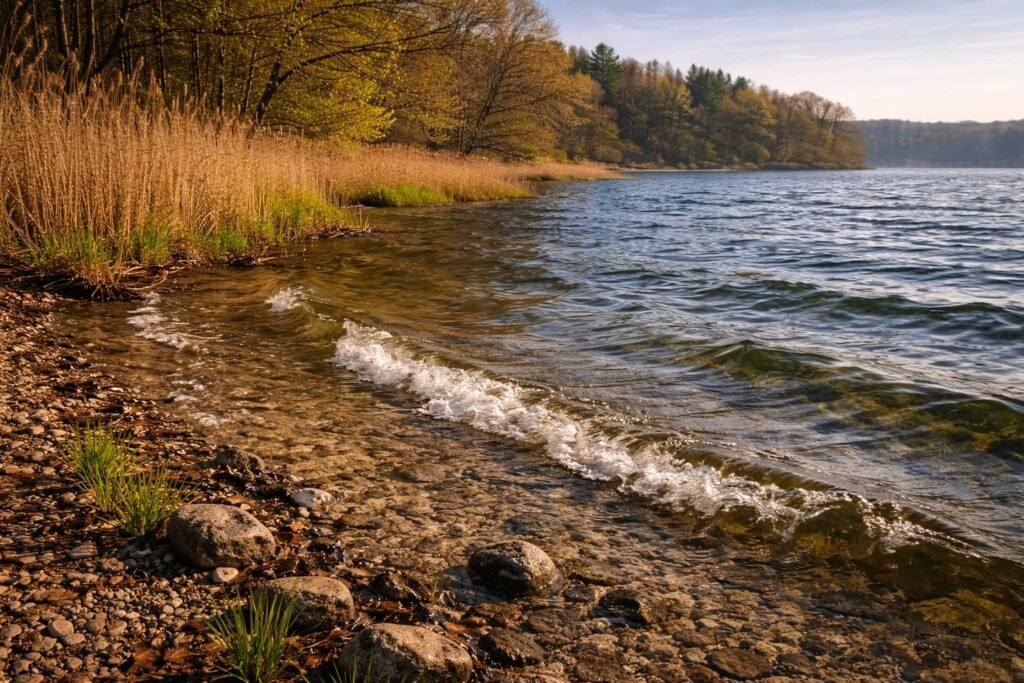
Wind can push warmer water, natural food, and general life into one side of a lake. Carp often follow that.
Not every wind is good on every lake, but on large natural waters it is foolish to ignore the bank getting the push, especially if it has suitable depth and a decent bottom.
Michigan Notes
Michigan’s larger carp waters often have long shallow margins, broad flats, reed-lined areas, stump fields, mixed weed, and soft bays that all deserve attention. The biggest mistake is usually assuming carp sit in the deepest water because the lake is big.
Quite often they do their real feeding in much more accessible places. Big water does not always mean deep-water carp.
Common Mistakes
- Trying to fish the middle because the lake is large.
- Ignoring shallow water in spring.
- Fishing spots because they look good to anglers, not carp.
- Missing the value of routes and transitions.
- Setting up before doing any proper watching.
FAQ
Do carp live in deep water on large lakes?
Sometimes, but they often feed and move through much shallower areas.
Are bars important for carp?
Yes. They often act as travel routes and feeding lines.
Is the windward bank always best?
Not always, but it is often worth close attention.
Do weed edges hold carp?
Very often, yes. They provide cover and natural food nearby.
Should I move if I see no signs?
On a big lake, usually yes. Dead water is expensive water.
Next Steps
Read How Long It Takes Carp to Find Bait, Carp Water Temperature Guide, and Sessions.