

Brief History of The Combi Rig
The combi rig has long been a staple in the carp angler’s arsenal, tracing its roots back to the early days of modern carp fishing in the UK during the 1980s. Born from the innovative minds of pioneering anglers who were constantly seeking ways to outwit increasingly pressured fish, the combi rig emerged as a hybrid design — combining a stiff boom section with a supple hook length to create a presentation that offered both anti-eject properties and natural movement. Popularised through the pages of British carp magazines and refined by legends of the bank such as Terry Hearn and others throughout the 1990s and 2000s, the rig became renowned for its ability to nail wary, educated carp that had wised up to more straightforward set-ups. Its genius lay in the marriage of two contrasting materials — typically a fluorocarbon or stiff mono boom paired with a softer coated braid or supple hooklink — creating a tangling-resistant presentation that sat perfectly on the lakebed while remaining devastatingly effective on the hook-up. It is little surprise then, that a rig born on the estate lakes and gravel pits of England has found its way across the Atlantic, proving just as deadly on the hard-fighting carp of Michigan’s rivers and inland seas.
The Combi Rig: Stiff + Supple for Clean Hooking on Michigan Gravel
The combi rig is a simple idea that solves a real problem: you want the rig to cast straight and kick away (stiff section), but you still want the hookbait to move naturally and take hold cleanly (supple section). On clear Michigan lakes and hard gravel spots, it’s a tidy “set it and trust it” presentation.
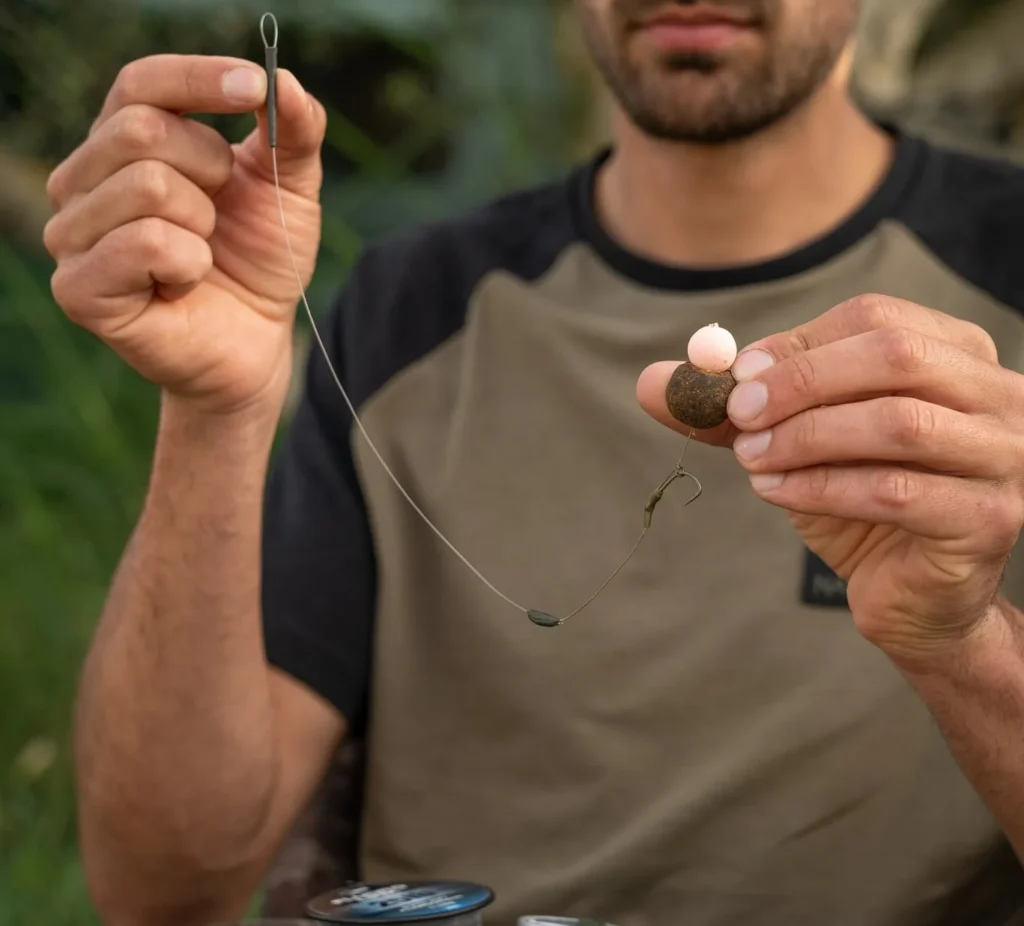
Image © Nash Tackle — used with permission (nashtackle.co.uk).
Quick Start
- Best on: clean gravel, firm sand, clear water, longer casts
- Hookbait: bottom baits and wafters; small balanced pop-ups (not big “balloon” pop-ups)
- Typical total length: 8–12 inches
- Stiff boom: 6–9 inches (fluorocarbon or stiff coated)
- Supple hook section: 2–4 inches (braid)
- Hook sizes: 4–8 (size 6 is a safe Michigan default)
- Fish safety: always pair with a safe lead system that can release under pressure
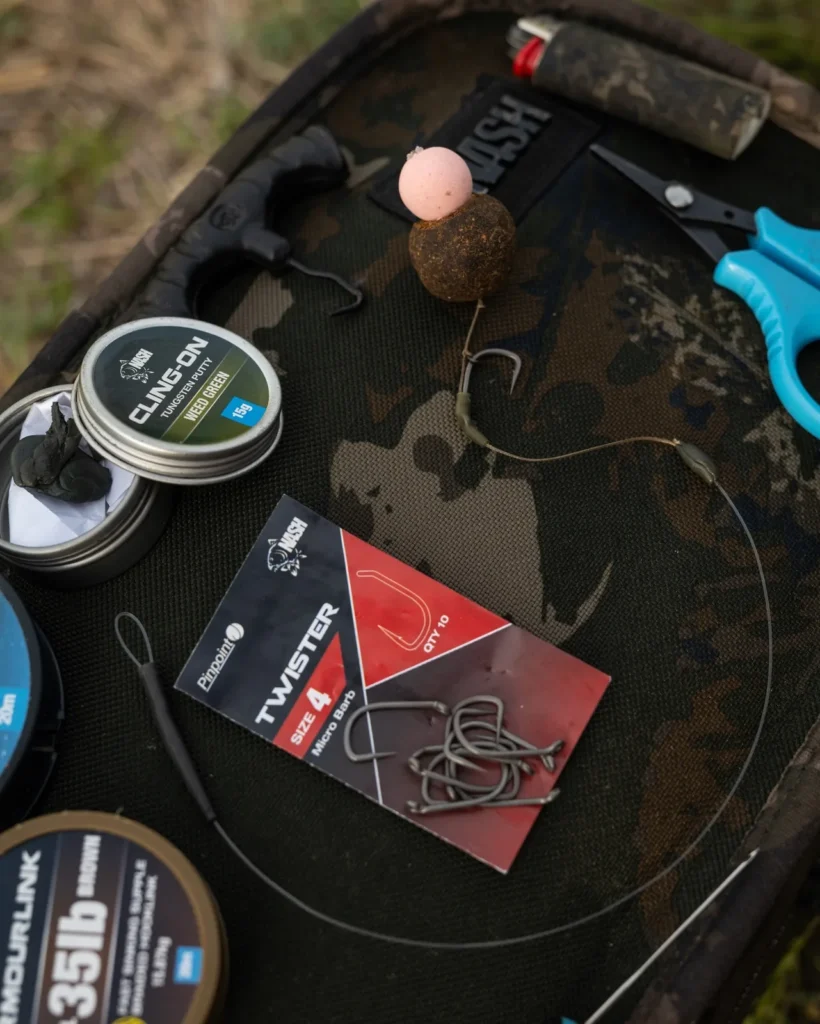
Image © Nash Tackle — used with permission (nashtackle.co.uk).
What You Need
- Stiff boom material: fluorocarbon (around 20–25 lb) or a stiff coated hooklink
- Supple braid: 15–25 lb for the hook section
- Hook: wide gape or curved pattern that stays sharp (size 6 to start)
- Swivel: size 11 ring swivel or quick-change swivel
- Anti-tangle sleeve: optional but helps on longer casts
- Tungsten putty: to pin down the hinge/join
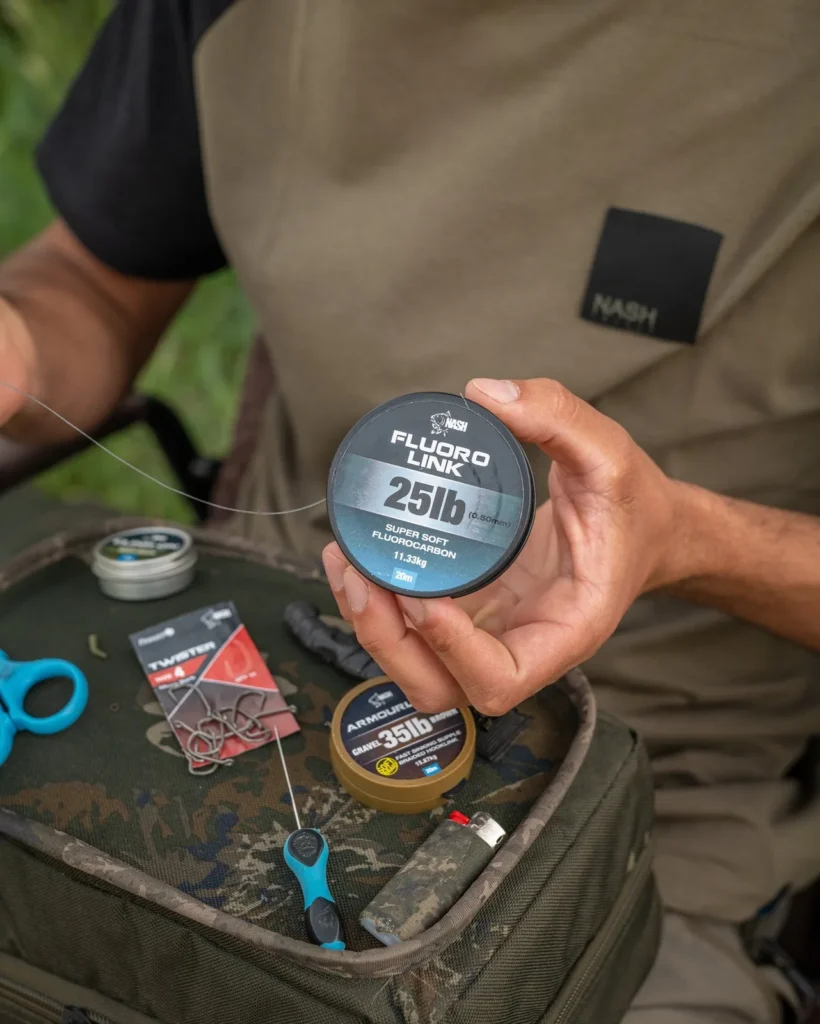
Image © Nash Tackle — used with permission (nashtackle.co.uk).
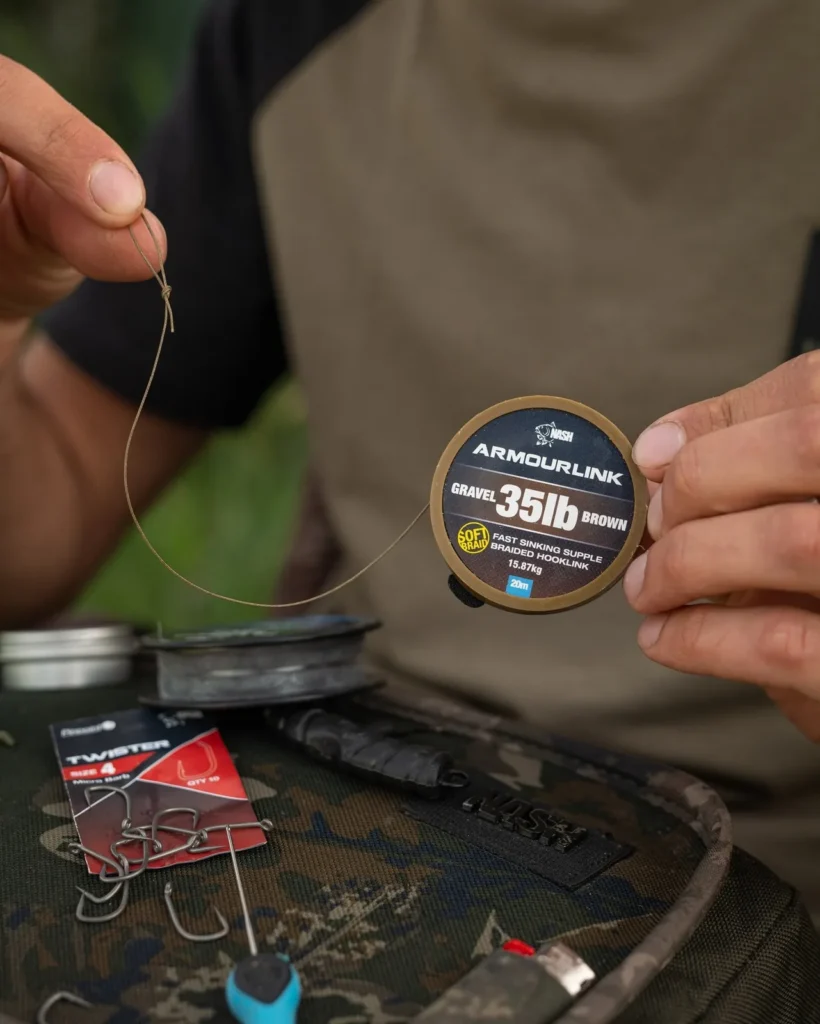
Image © Nash Tackle — used with permission (nashtackle.co.uk).
What the Combi Rig Actually Does
The stiff boom reduces tangles and helps the rig settle straight. The supple hook section lets the hook and bait react naturally when a carp picks it up. On hard spots, that combination often gives you cleaner hook holds than straight braid — especially at range.
Step-by-Step: How to Tie It
Step 1: Tie the Stiff Boom
Cut 6–9 inches of fluorocarbon (or stiff coated). Tie one end to your swivel (figure-of-eight loop or a strong knot that beds down properly). Keep it tidy — sloppy knots are where weak points start.
Step 2: Create the “Hinge” End
At the boom end, make a small loop. This is where the supple hook section will attach. Small and neat beats big and floppy every time.
Step 3: Add the Supple Hook Section
Cut 2–4 inches of braid. Loop-to-loop it onto the boom loop (or use your preferred combi join). Keep the braid short — that’s the whole point of the rig.
Step 4: Tie the Hook
Tie a simple hair rig or a compact blowback on the hook end. Don’t overcomplicate it. Focus on a sharp hook, neat wraps, and point exposure.
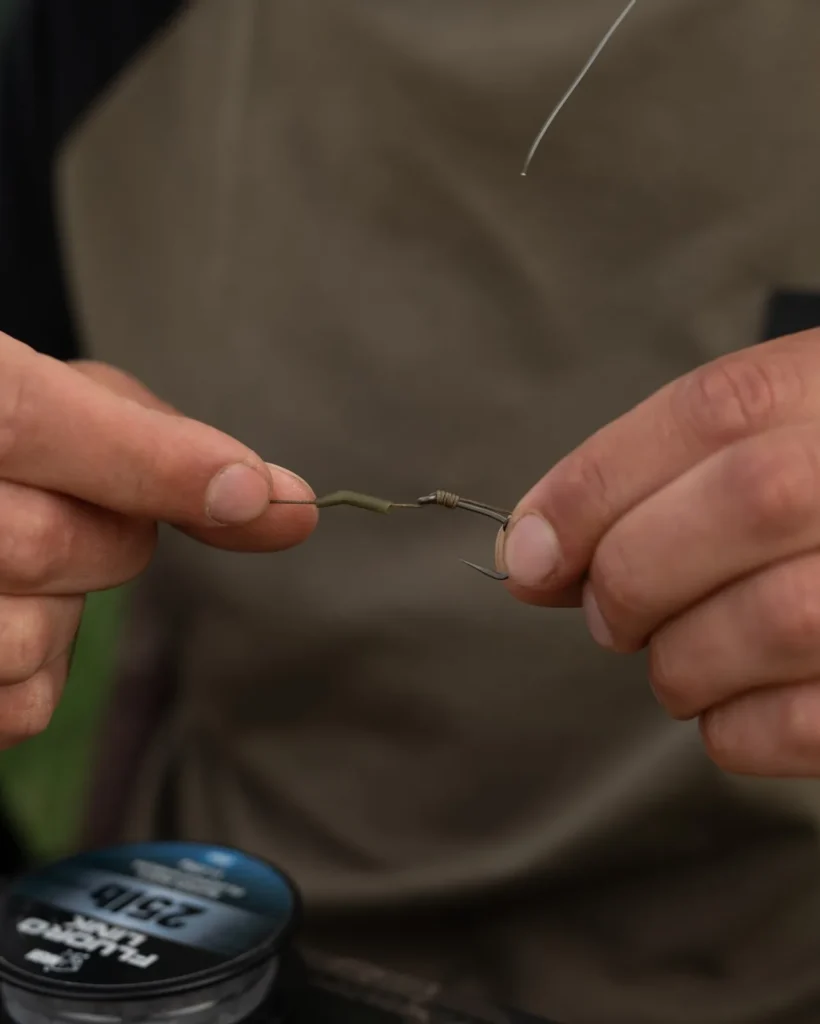
Image © Nash Tackle — used with permission (nashtackle.co.uk).
Step 5: Pin Down the Join (Stops It Looking “Odd”)
Add a small pinch of tungsten putty around the boom-to-braid area (or just behind it). This helps the hinge settle and keeps everything pinned down on clear bottoms.
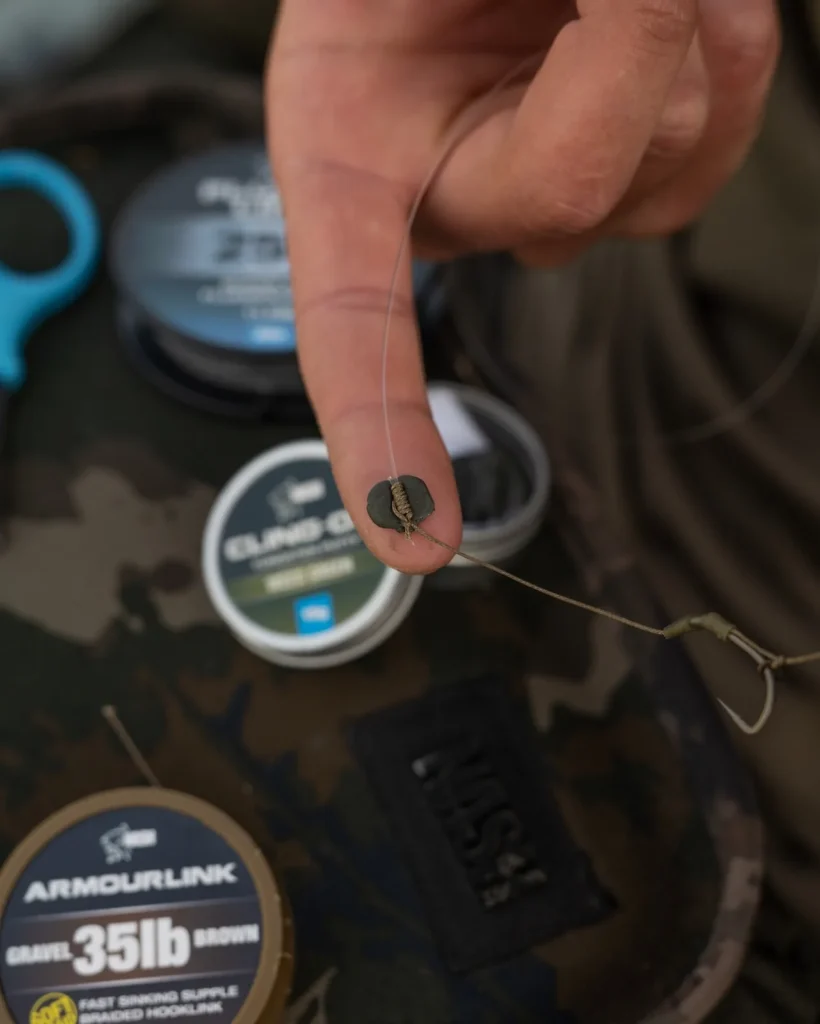
Image © Nash Tackle — used with permission (nashtackle.co.uk).
Step 6: Hookbait and Balancing
Wafters are the easy win here. Keep the hookbait compact for the hook size. If you’re using a small balanced pop-up, don’t turn it into a circus with loads of putty — keep it subtle.
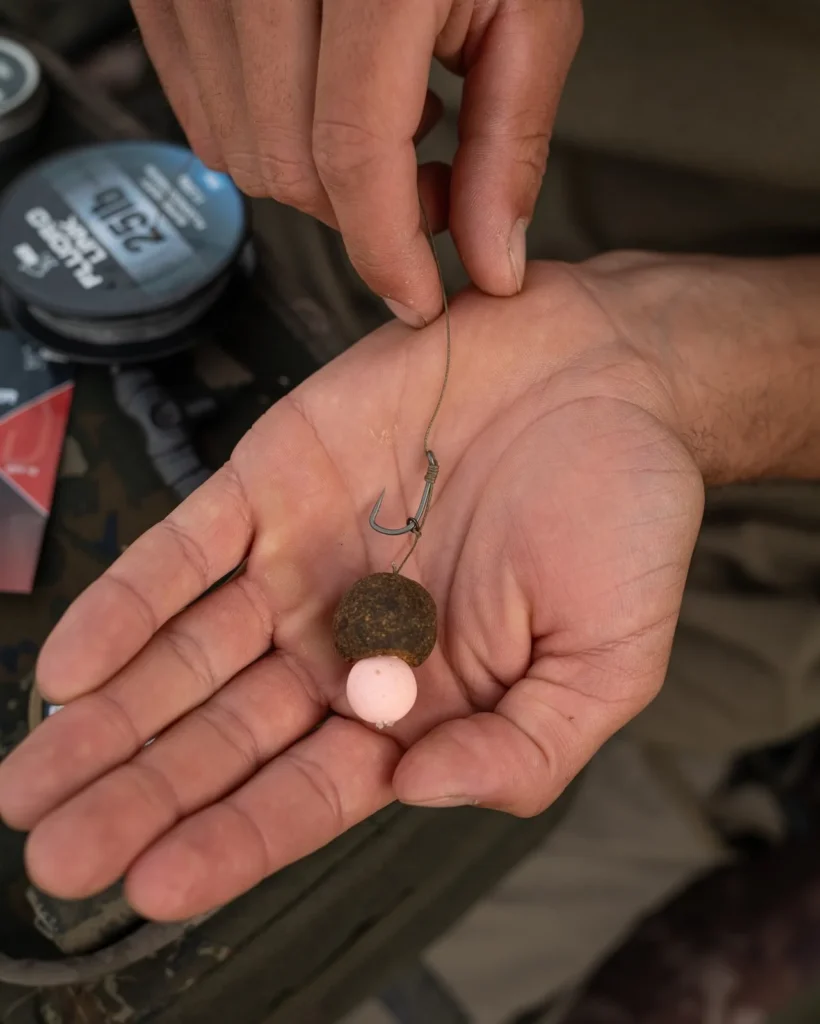
Image © Nash Tackle — used with permission (nashtackle.co.uk).
Step 7: Test It
Do a quick margin test. It should kick away, settle straight, and the hook should take hold cleanly when you pull the link. If it doesn’t behave, retie it. Don’t “hope.”
Common Mistakes
- Too long overall: more tangles, less control
- Braid section too long: defeats the point of the combi rig
- Join left “floating”: looks unnatural on clear bottoms (pin it down)
- Dull hook: the rig can be perfect and still not hold
- Unsafe lead setup: don’t fish fixed leads or jammed systems
Troubleshooting
If It Tangles on the Cast
- Shorten the rig (start around 9–10 inches total)
- Add an anti-tangle sleeve
- Straighten the boom before casting (a gentle pull does most of it)
If Hook Holds Are Poor
- Downsize the hookbait
- Sharpen/change the hook
- Try a slightly shorter braid section (more direct turning)
Michigan Notes
Clear water punishes sloppy presentations. This rig is at its best on hard spots where carp can see everything. Keep it neat, compact, and pinned down.
Check abrasion constantly. Michigan gravel transitions and mussel edges can nick hooklinks. If you feel roughness, re-tie. It’s cheaper than losing a fish — and it’s the safe thing to do.
Don’t force it in weed and chod. If the bottom isn’t clean enough for a combi rig to reset properly, switch to a rig that matches the ground.
FAQ
How long should the stiff boom be?
Start at 6–9 inches. If you’re tangling, shorten it. If you’re fishing very clean spots at range, you can go slightly longer — but keep the rig compact overall.
Can I use coated braid instead of fluorocarbon?
Yes. A stiff coated hooklink can work well as the boom. The key is that it kicks away and stays straight enough to prevent tangles.
Is the join the weak point?
It can be if it’s rushed. Tie it carefully, bed knots down properly, and test it hard in your hands before it ever gets wet.
Wafter or bottom bait?
Both work. Wafters are the easiest route because they settle naturally without dragging the hook around.
Does it work on soft silt?
Sometimes, but it’s not the first choice. If the boom is burying or the rig isn’t resetting, move to a presentation better suited to soft bottoms.
Next Steps
- Carp Rigs Guide – pick the right rig for the lakebed you’re actually fishing
- Lead Systems for Carp – safe setups that can release under pressure
- Leaders & Snag Safety – stay safe around stumps, weed, and rough ground
- Mono vs Braid Leaders – choose the right leader for the situation
- Playing Carp Near Weed & Snags – land fish without bullying them