

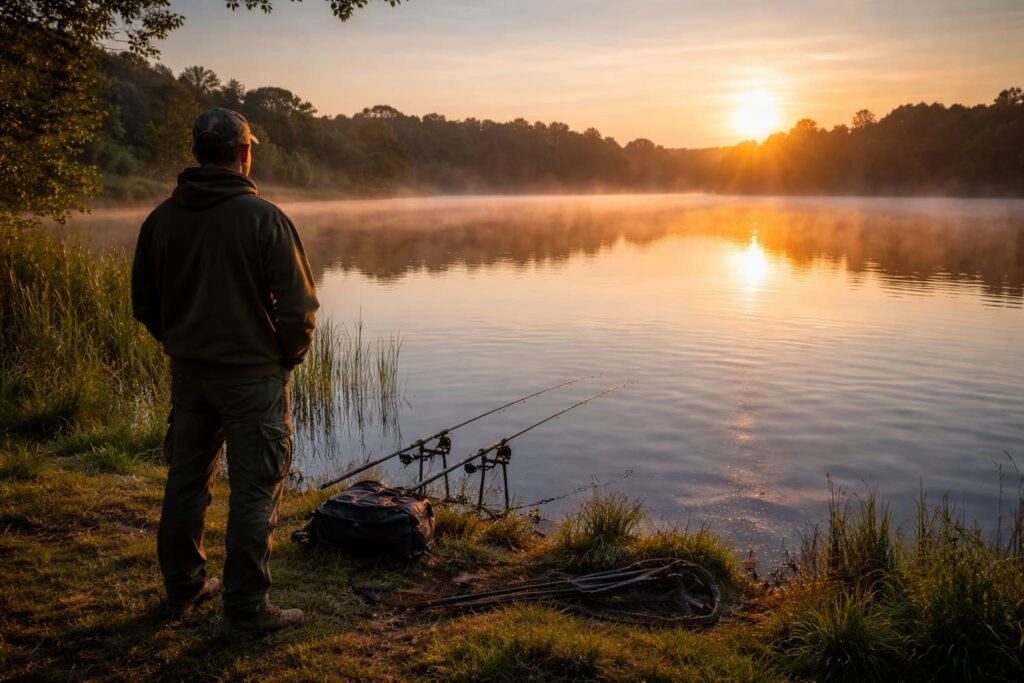
Reading a Lake for Carp (Simple System That Works)
Most anglers don’t struggle because of rigs or bait.
They struggle because they’re fishing the wrong water.
Reading a lake properly is the skill that separates anglers who blank from anglers who catch consistently.
The good news is — it’s not complicated.
You just need a simple system to break the lake down into:
- where carp live
- where they feed
- how they move
Once you understand that, everything else becomes easier.
Quick Start
If you want the simple version:
- Find shallow areas with food
- Look for signs of carp (fizz, movement, clouded water)
- Fish windward banks when conditions are right
- Focus on edges and transitions
- Ignore most of the lake
Step 1: Ignore Most of the Lake
This is the biggest mindset shift.
Carp don’t use all of a lake — they use small, specific areas.
Your job is not to fish everywhere.
Your job is to eliminate water.
Step 2: Find the Right Areas
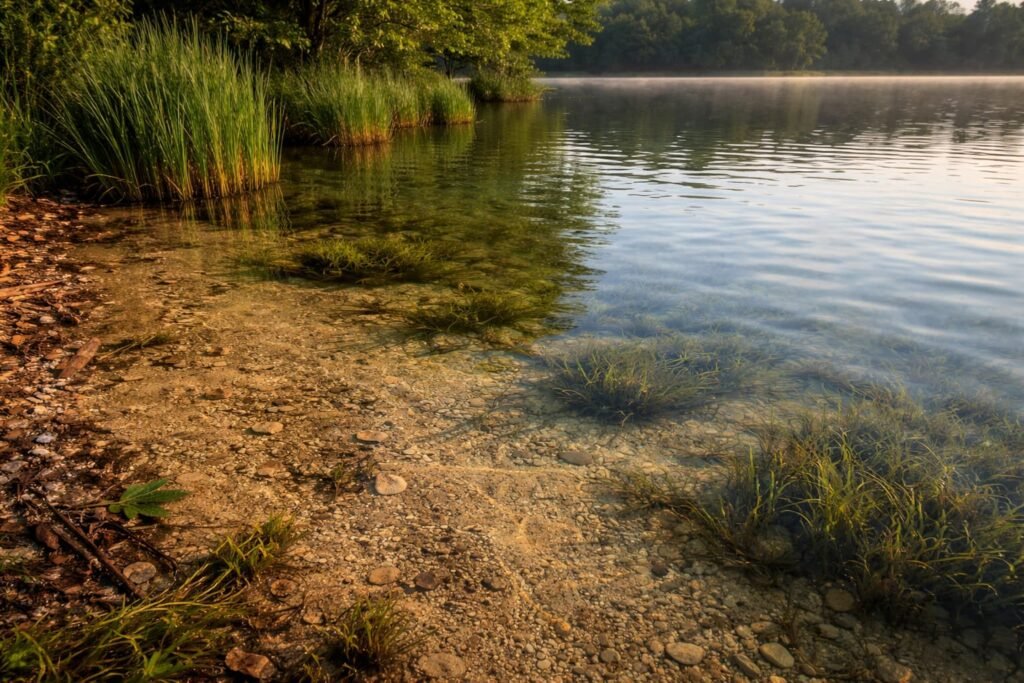
Start by identifying high-percentage zones.
Key Areas to Look For:
- shallow flats (2–6 ft)
- margins
- weed edges
- silt patches
- drop-offs
These areas hold:
- food
- warmth
- movement
This is where carp spend most of their time.
Step 3: Look for Signs (Most Important Step)
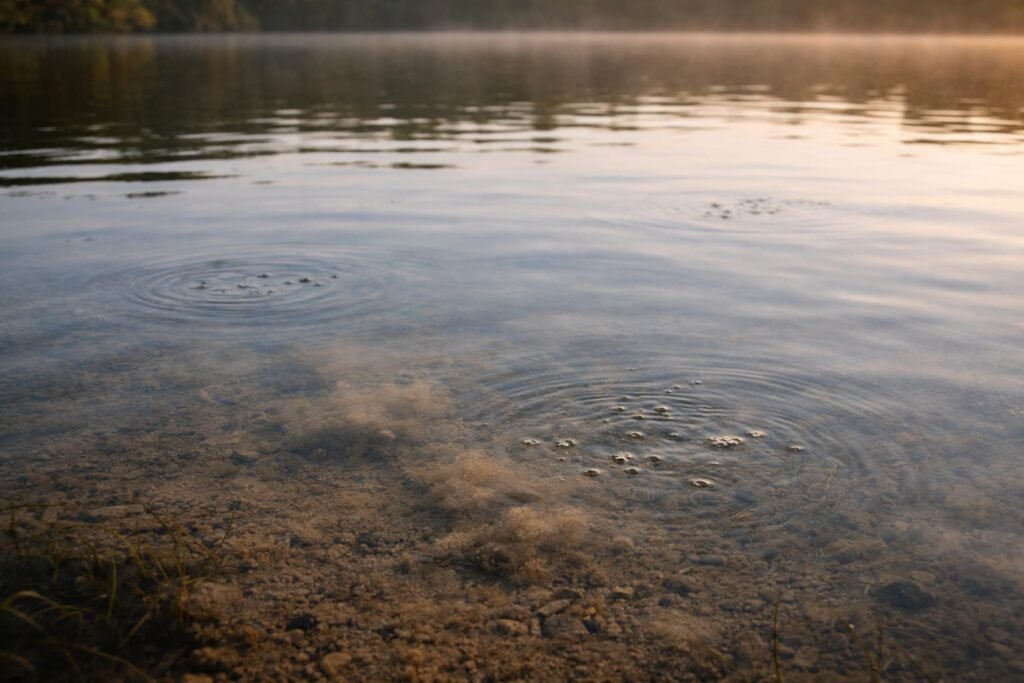
Before you cast, watch the water.
What to look for:
- small clusters of bubbles (fizz)
- cloudy water patches
- fish rolling or showing
- subtle movement in margins
If you see signs, you’re in the right area.
No signs = low confidence.
Step 4: Understand Carp Movement
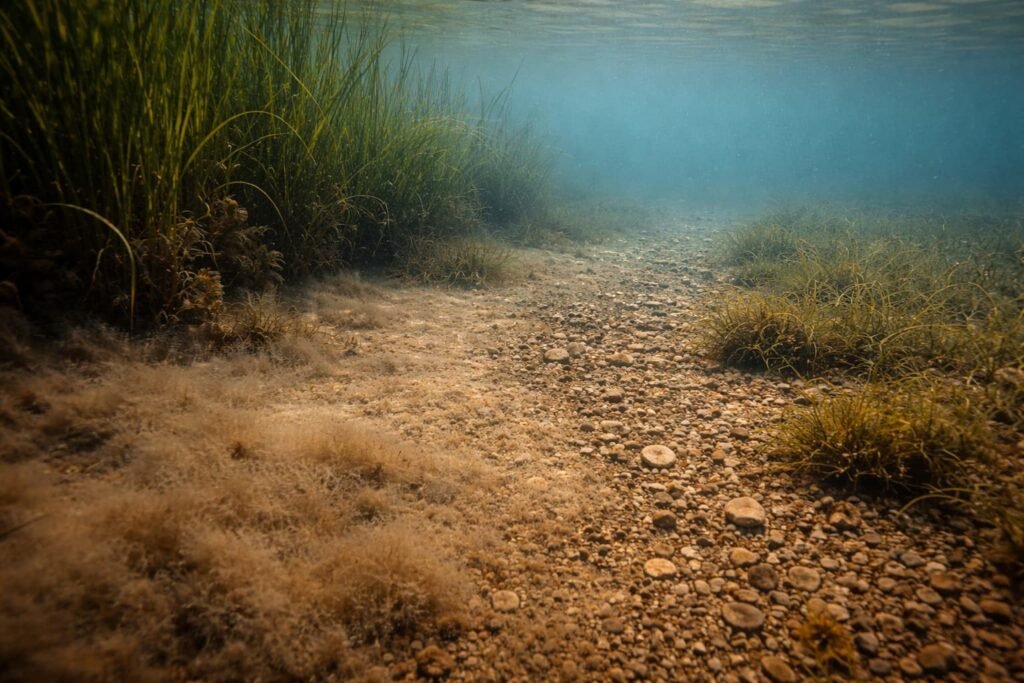
Carp don’t sit still.
They move between:
- holding areas
- feeding zones
- travel routes
Look for natural routes like:
- weedlines
- depth changes
- margins
Set up where carp are passing through, not just sitting.
Step 5: Use the Wind Properly
Wind can reposition carp quickly.
Warm wind:
- pushes food and warmer water
- carp often follow
Fish the windward bank
Cold wind:
- can push carp away
- slows activity
Look for sheltered areas
Step 6: Match the Lakebed
Knowing the bottom is critical.
Clean gravel:
- ideal for bottom bait rigs
Light weed:
- use pop-ups or wafters
Silt:
- use PVA bags or balanced baits
Your rig must match the lakebed.
Step 7: Keep It Simple
Once you’ve found the right spot:
- don’t overbait
- don’t overcast
- don’t overthink
Place your bait:
- accurately
- quietly
- with confidence
Michigan Notes
- Northern Michigan lakes often have clear water and natural food
- Carp can be cautious and slow-moving
- Margins are often underfished and very productive
- Spring = shallow water focus
- Summer = spread-out fish, rely on signs
Observation is everything in these waters.
Common Mistakes
- Fishing the “nicest looking swim” instead of signs
- Casting too far automatically
- Ignoring margins
- Not watching the water before setting up
- Staying too long in dead areas
FAQ
What is the most important part of reading a lake?
Finding where carp actually are — signs come first.
Should I always fish shallow water?
Not always, but it’s often the best starting point.
How long should I watch the water?
At least 10–15 minutes before setting up.
Is feature finding important?
Yes, but visible signs matter more.
Can you catch carp without seeing signs?
Yes, but your chances drop significantly.
Next Steps
Now you can read the lake — build on it:
- How Carp Move in Lakes (Patterns Explained)
- How Carp Feed (Underwater Behavior Explained)
- Where To Fish For Carp In Spring