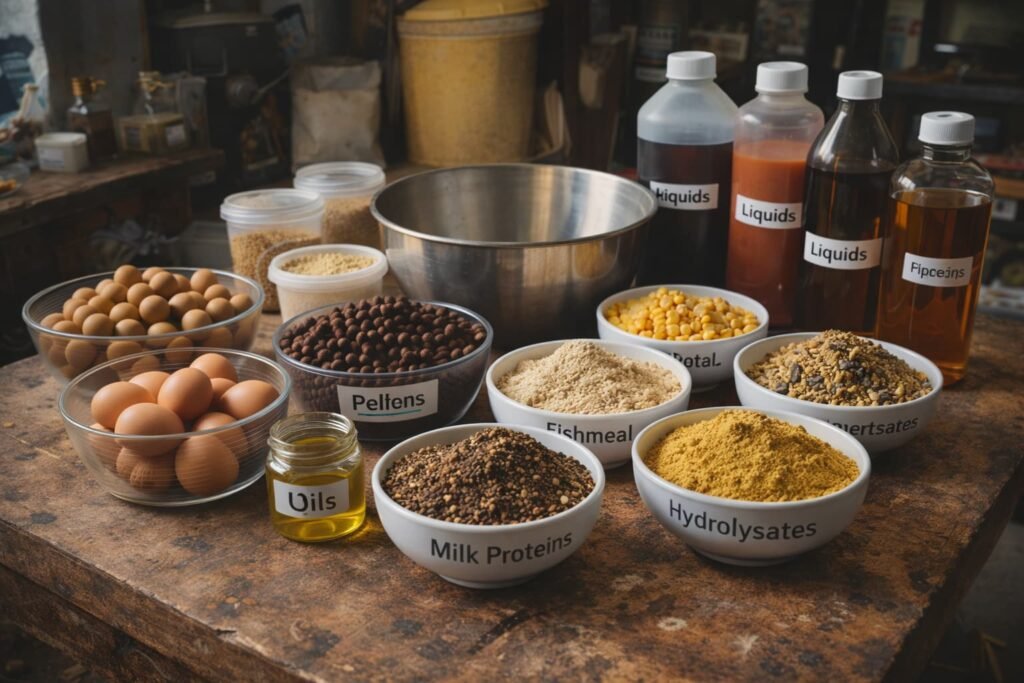
This is the science side of the bait section on Michigan Carp.
Not science for the sake of sounding clever. Not bait theory that never leaves the page. This section is here to help you understand what carp may actually detect, why some baits keep fish feeding, why others feel dead in the water, and how practical bait decisions become easier once the deeper ideas make sense.
Fermented Liquids & Hydrolysates (Bait Science Series)
If you want your bait to leak attraction properly, this is where to start. These guides break down how different liquid food signals actually work and how to use them in real carp fishing.
- Homemade Fermented Liquids and Hydrolysates for Carp Fishing in Michigan
- Fermented Liquids vs Hydrolysates for Common Carp
- Homemade CSL for Carp Fishing in Michigan
- Homemade Yeast Extract for Carp Bait
- Liver Hydrolysate for Carp Bait
That matters on Michigan waters.
Cold spring conditions, short feeding windows, natural-food-rich lakes, zebra mussel venues, and big open water all push you toward bait that is believable, digestible, and suited to the conditions rather than just impressive on the label.
This section is built to help with that.
If you want the broader overview first, start with Carp Bait Guide.
If you want the more hands-on workshop side, go to The Bait Shed.
If you want the boilie-specific learning route, use Boilie School.
Quick Start
If you are new to the science side of carp bait, do not try to read everything at once.
Use this order:
- start with attractants
- then read digestibility
- then read solubility and leakage
- then move into liquids, hydrolysates, oils, minerals, and processing
- leave enzymes and specialist topics until the core ideas are clear
That gives you a better route through the section than clicking around blindly.
What This Section Is For
A lot of bait talk online breaks down in two ways.
One type stays too vague and never explains why a bait works.
The other type disappears into jargon and specialist ingredients without enough practical value for real anglers.
Bait Science sits in the middle.
The aim is to explain:
- what creates a useful food signal
- why digestibility matters as much as attraction
- how leakage, solubility, and processing change bait behaviour
- where ingredients like hydrolysates, oils, minerals, enzymes, and vitamins genuinely fit
- how to make better bait decisions without buying every additive on the market
That is the real point of this section. Better bait thinking, not just more bait talk.
Start Here
If you are new to this part of the site, begin with these pages first:
The Complete Science of Carp Feeding Attractants
Start here if you want the clearest route into amino acids, betaine, nucleotides, organic acids, and food signals.
Carp Feeding Attractants Explained
Use this if you want the shorter and more practical version before going deeper.
The Science of Carp Bait Digestibility
Read this next so you understand why food value only matters if the bait still makes sense once eaten.
Solubility vs Nutrition in Carp Bait
This is one of the most useful bridge pages in the section because it explains why early attraction and long-term food value are not the same thing.
Michigan Notes
On many Michigan waters, the best bait is not the loudest bait.
It is the bait that fits the season, leaks useful information, stays believable around natural food, and gives you enough confidence to fish it properly over time.
That is why this section matters. It helps you sort useful bait science from expensive clutter.
Signal, Leakage, and Liquids
The Science of Carp Bait Solubility and Leakage
Why some baits wake up quickly, why others stay dead in the water, and why leakage matters so much.
Why Some Carp Baits Leak Faster Than Others
A practical follow-on piece about bait form, crumb, chops, pellets, and how to make bait start working earlier.
The Science of Fermented and Food-Signal Baits
How fermented particles, CSL, yeast, acids, and broken-down food signals fit practical carp bait.
The Truth About Yeast, CSL, and Fermented Liquid Foods
What these liquids actually do, how they differ, and how to use them properly without turning bait into sludge.
The Role of Hydrolysates in Carp Bait
Why broken-down proteins matter, where hydrolysates help, and where they are overrated.
The Science of Proteins, Peptides, and Hydrolysates in Carp Bait
A broader science page on whole proteins, peptides, hydrolysates, and why they behave differently in bait.
The Science of Minerals, Salts, and pH in Carp Bait
Why mineral-led bait thinking, savoury signals, and simple support ingredients can make more sense than hype.
Salt, Acids, and Mineral Signals in Carp Bait
A more practical look at how salt, acids, and support signals can sharpen a bait without overdoing it.
Do Carp Detect Sugars, Sweeteners, and Carbohydrates the Way Anglers Think?
A realistic look at sweeteners, sugars, carbs, and what they really do in bait.
The Science of Oils, Fats, and Energy in Carp Bait
How richer bait works, when oils help, and when they start to slow the bait down.
Processing and Ingredient Behaviour
Raw vs Processed Ingredients in Carp Bait
How processing changes bait performance, digestion, leakage, and food signal.
What Boiling and Heat Really Do to Carp Bait Ingredients
What heat improves, what it damages, and why over-boiling often dulls a bait.
Anti-Nutritional Factors in Carp Bait Ingredients
Why some ingredients look good on paper but drag a bait down if they are used badly.
The Science of Enzymes, Phytase, and Pre-Digestion in Carp Bait
An advanced guide to enzyme-treated bait, plant-heavy mixes, and where pre-digestion genuinely makes sense.
Specialist Topics
Vitamins for Common Carp
A plain-English guide to which vitamin claims may help in bait and which are usually overplayed.
How to Use This Section Properly
The best way to use Bait Science is not to treat every page like a reason to add more ingredients.
Use it to answer practical questions instead:
- does this ingredient actually do a job?
- does this bait make sense for the season?
- is this signal helping the bait or just cluttering it?
- am I improving the bait, or only making it more complicated?
That is the right mindset for this section.
Use This Section Alongside
If you want the broader practical side of bait making, ingredients, liquids, and real bank use, use these alongside the science pages:
- Carp Bait Guide — the plain-English bait overview.
- The Bait Shed — practical bait workshop, liquids, treatments, and bench-to-bank improvements.
- Boilie School — the structured boilie learning route.
- Compare Ingredients — tighten ingredient choice before changing the whole bait.
- Seasonal Baiting — match bait thinking to time of year and conditions.
- Tactics — connect bait decisions to location, conditions, and bank choices.
Common Mistakes
- reading advanced bait science before the basics are clear
- treating every interesting ingredient as something you must add
- confusing smell to the angler with useful signal to the carp
- ignoring digestibility while chasing attraction
- forgetting that location, presentation, and season still matter more than bait theory on its own
Final Word
Good bait science should make your bait simpler, clearer, and more practical.
It should help you understand what matters, what is overplayed, and what fits the waters you actually fish.
That is the goal here.
Not miracle ingredients.
Not label worship.
Not science for the sake of it.
Just better bait decisions for real carp fishing.
Next Steps
After this page, the best next reads depend on what you need help with next.
- Carp Bait Guide — go here for the broad front-door bait page.
- The Bait Shed — go here for the practical hands-on bait-making side.
- Boilie School — go here for the step-by-step boilie learning route.
- Seasonal Baiting — go here to match bait to conditions.
- Compare Ingredients — go here before changing the whole bait around.
- Tactics — go here if you want bait choices tied back to watercraft and bank decisions.