
How Carp Feed (Underwater Behavior Explained)
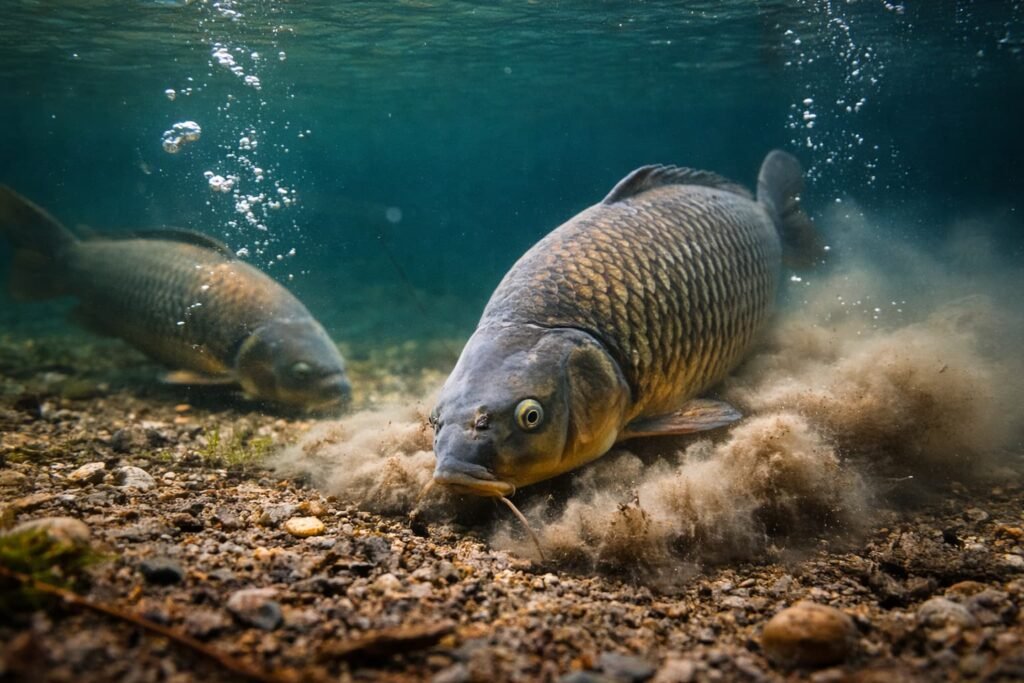
If you really want to improve your carp fishing, you need to understand one thing:
What carp are actually doing underwater.
Most anglers focus on rigs, bait, and casting distance — but carp don’t see any of that the way we do.
They are constantly:
- searching
- testing
- rejecting
- feeding cautiously
Once you understand how carp feed, everything else becomes simpler — where to fish, what bait to use, and how to present it.
This is the missing piece for most anglers.
Quick Start
If you want the simple version:
- Carp feed by grubbing along the bottom, not chasing bait
- They rely heavily on smell and taste, not sight
- They often test and reject bait before eating it
- Feeding areas are usually tight and focused
- Your rig must sit perfectly among natural food
How Carp Actually Find Food
Carp are not predators — they are natural foragers.
They move slowly, searching the bottom for:
- snails
- insect larvae
- bloodworm
- mussels
They detect food using:
- sensitive barbels (feel + taste)
- smell in the water
- subtle vibrations
This is why location matters more than anything else — your bait has to be where they’re already feeding.
The “Grubbing” Feeding Behavior
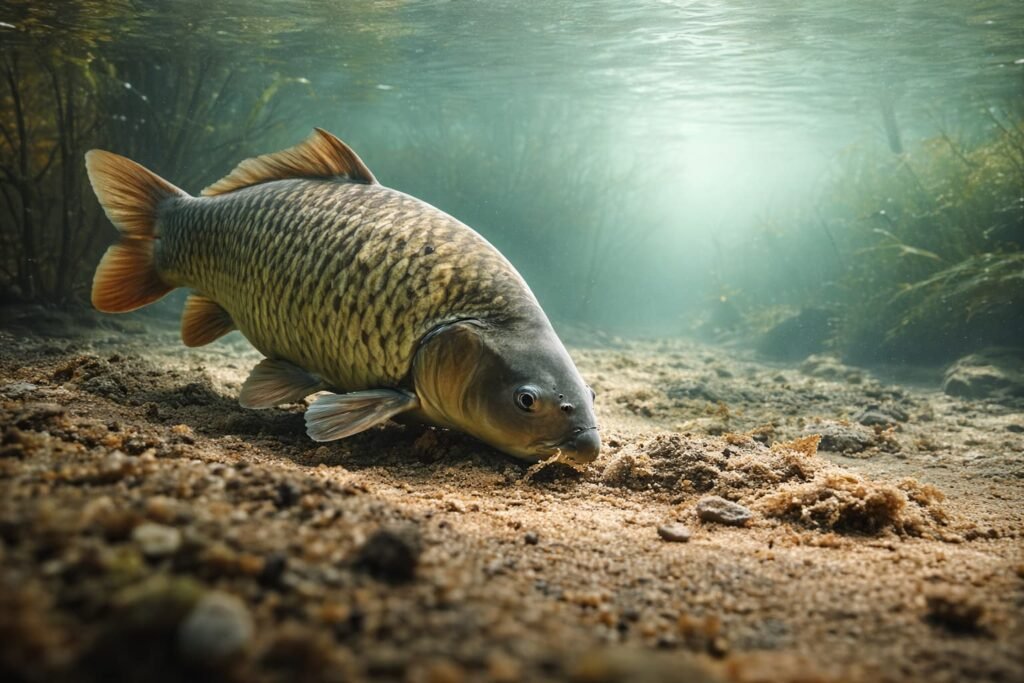
Most feeding happens like this:
Carp move along the lakebed and:
- suck in mouthfuls of silt
- separate food from debris
- expel unwanted material
This creates:
- small clouds of sediment
- tiny bubbles (fizz)
If you see fizz, fish are feeding — simple as that.
How Carp Test Your Bait
Carp don’t just eat anything they find.
They:
- Approach cautiously
- Suck in the bait
- Test it
- Either eject it or eat it
This can happen in seconds.
This is why:
- sharp hooks matter
- rig mechanics matter
- subtle presentation matters
Why Carp Reject Bait
Carp often reject bait because:
- something feels wrong
- resistance is detected
- bait is unnatural
- they’ve been caught before
In clear Michigan waters, this happens more often.
Your goal is to make your bait feel like part of the lakebed.
Feeding Zones (Not Everywhere)
Carp don’t feed randomly across the whole lake.
They feed in:
- small areas
- repeatable spots
- natural food zones
Examples:
- weed edges
- silt patches
- shallow flats
- margins
This is why finding carp comes first.
How This Affects Your Baiting
Now this is where it all connects.
Tight Feeding = Better Results
Carp feed in small zones, so:
- don’t spread bait everywhere
- keep bait tight and accurate
- create a small feeding area
Natural Feeding = Better Bites
Match natural feeding behavior:
- use particles or crumb
- avoid overloading with bait
- blend into the lakebed
Overbaiting Kills Action
Too much bait can:
- fill fish up
- reduce competition
- slow bites
Especially in Michigan lakes with natural food already present.
How This Affects Your Rig Choice
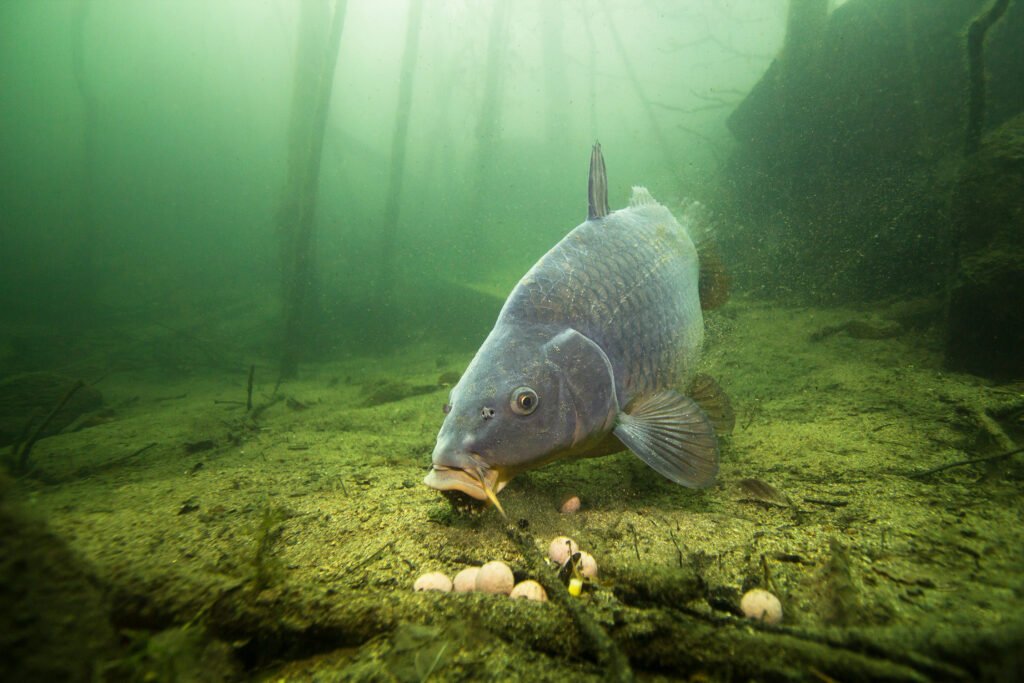
Now your rig needs to match feeding behavior.
Bottom Feeding = Bottom Baits Work
Carp are feeding on the lakebed, so:
- bottom baits are often best
- simple rigs work well
- natural presentation wins
Cautious Feeding = Efficient Rigs
Because carp test bait:
- use sharp hooks
- use proven rigs (Slip D, Spinner, PVA)
- avoid unnecessary complexity
Messy Bottom = Presentation Matters
If your rig is buried or tangled:
- carp won’t find it properly
- bites drop off
This is where PVA bags and pop-up rigs help.
Michigan Notes
- Northern Michigan lakes are rich in snails and natural food
- Carp are often slow, cautious feeders in clear water
- Spring feeding is light and focused
- Summer feeding is more aggressive but still selective
Always match what carp are already feeding on.
Common Mistakes
- Thinking carp “hunt” bait
- Spreading bait too widely
- Ignoring signs like fizz
- Using rigs that don’t match conditions
- Overcomplicating presentation
FAQ
Do carp actively hunt bait?
No. They mostly feed by grubbing along the bottom.
What are carp bubbles (fizz)?
Small bubbles caused by carp disturbing the lakebed while feeding.
Do carp see bait easily?
They can, but they rely more on smell and taste.
Why do carp pick up and drop bait?
They test food before eating — especially in pressured waters.
Is natural bait always better?
Often yes, especially in clear, natural Michigan lakes.
Next Steps
Now that you understand how carp feed, apply it to your fishing:
- How to Find Carp in Big Lakes (Complete Michigan Guide)
- What Rig Should I Use for Carp? (Simple Decision Guide)
- Best Carp Bait for Different Situations (Simple Michigan Guide)