

Intro
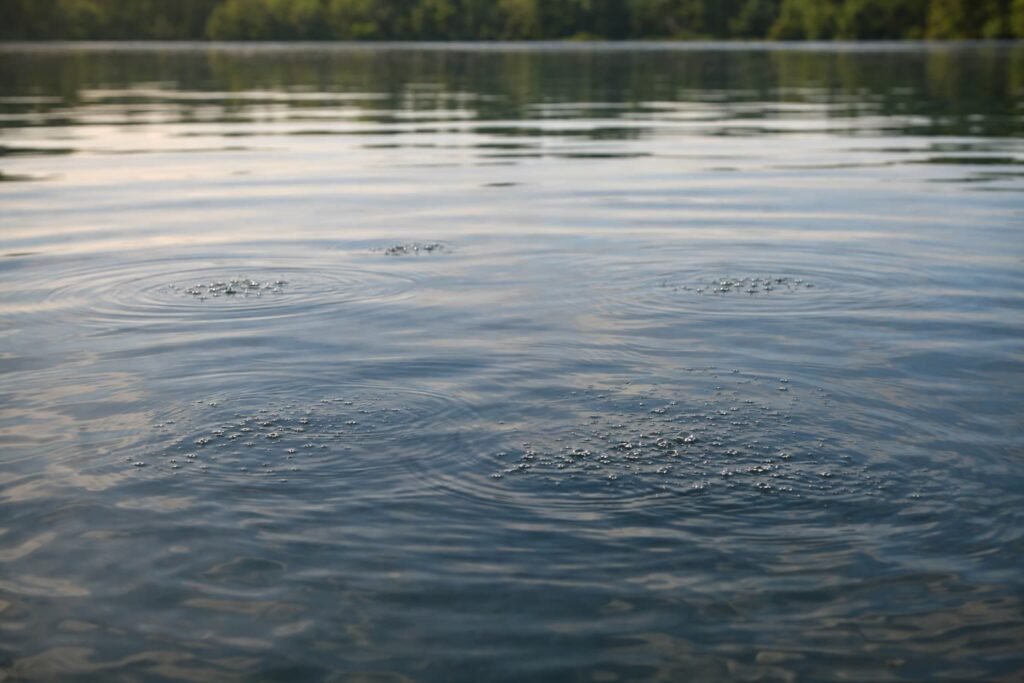
One of the oldest signs in carp fishing is fizz. You see a patch of bubbles, a little trail of pinhead fizz, or a soft area of disturbed water, and you start paying attention. Quite right too.
But not every bubble means a carp is feeding hard. Some fizz is caused by carp grubbing in soft silt. Some comes from fish moving through the bottom and releasing trapped gas. Some is just natural lake gas or other species.
The trick is not just seeing bubbles. The trick is reading them properly.
Quick Start
- Small fresh bubbles in a line or tight patch often mean carp are rooting along the bottom.
- Repeated fizz in the same area is more important than one random patch.
- Soft silt, dying weed, and shallow bays produce natural gas too, so do not assume every bubble is a feeding carp.
- Fish the edge of the activity, not right on top of it.
- In Michigan lakes, fizz is often best around soft-bottom margins, weed edges, shallow bars, and warm windblown water.
What Carp Fizz Really Is
When carp feed, they nose into the lakebed and disturb silt, debris, old weed, and trapped gas. That disturbance sends small bubbles up through the water. What you see on the surface is often not the carp “breathing.” It is the bottom giving itself away.
On rich natural waters, especially soft silty areas, this can be a very reliable clue. A feeding carp can leave a trail of bubbles that slowly moves as the fish works along the deck.
That is proper information if you know what you are looking at.
What Feeding Fizz Usually Looks Like
True feeding fizz is often subtle. It is usually lots of tiny bubbles rather than a few big ones. It may appear in a patch, then reappear a yard or two away as the fish moves.
On calm mornings you can sometimes watch it drift along a margin, a weed edge, or the back of a shallow bay. That sort of moving sign is worth far more than one random burst in open water.
The best fizz often looks understated. That is where many anglers go wrong.
When Bubbles Are Not Carp
Not every patch of bubbles is a feeding fish. Soft lakebeds can release gas on their own. Rotting weed can do the same. Turtles, tench where present, and other bottom activity can also create disturbance.
Big isolated bubbles are less convincing than a steady spread of tiny fresh fizz. If it appears once and never again, treat it with caution. If it keeps showing and creeping, that is different.
Old-school rule: one sign is interesting, repeated sign is useful.
How to Fish Bubbling Areas
Do not crash a lead into the middle of obvious fizz if the fish are close in and settled. That often kills the chance. Better to cast just beyond it, lower the rig quietly if possible, and let the spot settle.
A single hookbait with a little crumb, a small PVA bag, or a light spread of bait is often enough. If the fish are already grubbing, you do not need to feed the county. You just need a presentable rig in the right place.
On big Michigan lakes, this can be deadly in spring and early summer when carp move into softer, warmer areas to browse.
Michigan Notes
Michigan carp often show this sort of sign in sheltered bays, wind-pushed corners, shallow flats, reed-lined margins, and the soft sides of weedbeds. Large natural lakes can look empty until the water warms a touch and the fish start giving themselves away.
If you are fishing a big lake, never ignore fresh morning fizz in the first couple of feet of water. Big commons will often come in far tighter than most anglers believe.
Watch before you cast. The lake will often tell you more than the rods.
Common Mistakes
- Treating every bubble patch like a feeding carp.
- Casting right on top of showing fish.
- Using too much bait on obvious close-range activity.
- Ignoring the direction the fizz is moving.
- Leaving a dead spot too long when the bubbles have moved elsewhere.
FAQ
Do carp blow bubbles on purpose?
Not in the way many anglers think. Most visible fizz comes from carp disturbing the bottom and releasing trapped gas and air.
Do bubbles always mean feeding?
No. They often mean bottom disturbance, which can be feeding, but some bubbles are just natural gas or other activity.
Are tiny bubbles better than big bubbles?
Usually, yes. Small repeated fizz is often more convincing than a few large isolated bubbles.
Should I cast directly into fizzing fish?
Usually not. Fish the edge or the route they are working along.
Is fizz more useful in spring?
Yes. In spring, warming shallow areas and soft bottom zones often produce very readable carp activity.
Next Steps
Read Carp Water Temperature Guide, Where Carp Hold in Large Lakes, and Sessions.
Web-optimized image prompts (16:9)
Hero image prompt: Photorealistic calm Michigan lake margin at first light with subtle clusters of tiny carp fizz on the surface above a soft silty area, natural documentary fishing photography style, realistic water texture, no large bubbles, 16:9.
In-article image prompt: Photorealistic close view of a quiet lake margin with a faint moving trail of pinhead-sized bubbles over soft silt near a light weed edge, natural fishing photography style, Michigan lake setting, 16:9.
Suggested placement
- Hero image: directly below intro
- In-article image: under “What Feeding Fizz Usually Looks Like”
Alt text
- Hero: Subtle carp fizz on a calm Michigan lake margin at first light
- In-article: Tiny trail of carp bubbles moving over soft silt near a weed edge