

Sweet Corn vs Tiger Nuts for Carp: Which Is Better?
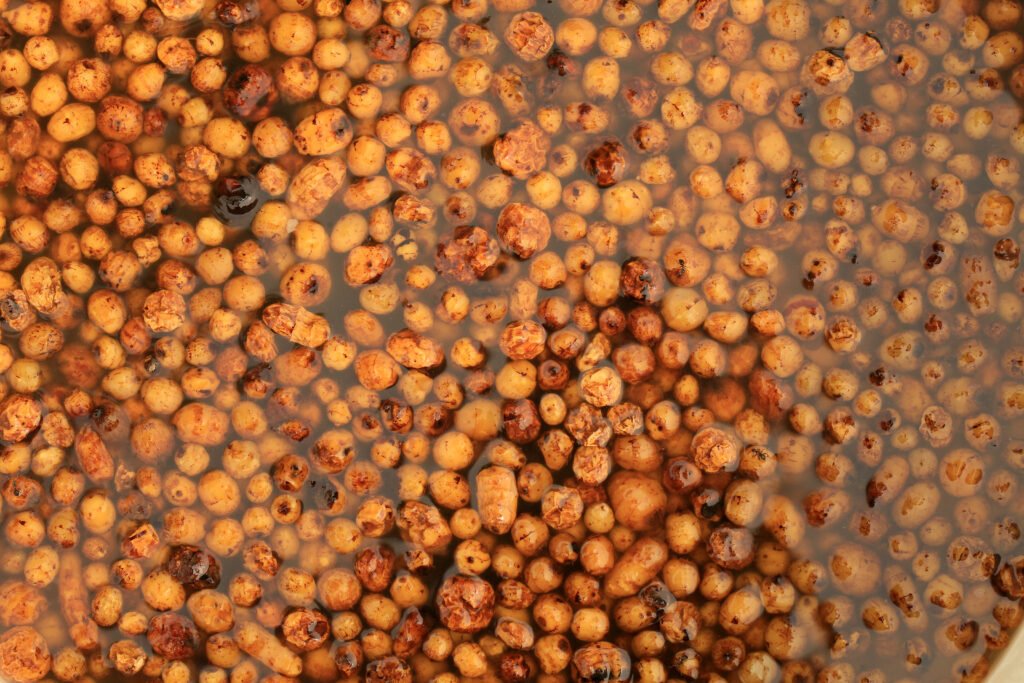
Ask most carp anglers for a simple, proven particle bait and they will usually say one of two things: sweet corn or tiger nuts.
Both have caught carp for years. Both are easy to buy. Both are easy to use. Both have plenty of confidence behind them. But once you get past that first layer, a more interesting question appears:
Why do they work?
Not which flavour to add. Not which dye to use. Not which one has the bigger reputation. The real question is what each bait is actually giving off in the water, how that fits what carp already recognize as food, and whether one of them is naturally better balanced than the other.
That is where things get interesting.
Sweet corn has long had a reputation as a cheap, instant, no-nonsense carp bait. Tiger nuts have a reputation for selectivity, durability, and that “special” edge many anglers swear by. Both reputations contain some truth. But they do not work in exactly the same way, and they are not equally strong in every situation.
This article looks at both baits through a practical bait-science lens, then brings it back to the bank where it matters.
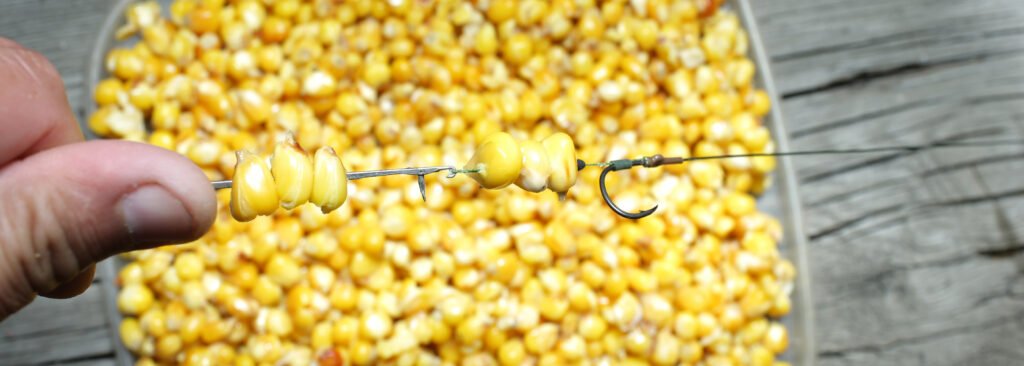
Quick Start
- Sweet corn is one of the best all-round instant particle baits for carp
- Tiger nuts are tougher, more selective, and better suited to nuisance-fish situations
- Corn appears naturally stronger on a simple attract vs deter amino balance
- Tiger nuts still work very well, but they benefit more from soaks, fermentation, and enhancement
- In many situations, the best answer is not corn or tiger nuts — it is using both properly
Sweet Corn vs Tiger Nuts in Plain English
If you stripped all the science away and just explained both baits in ordinary fishing language, it would look like this:
Sweet corn is soft, bright, sugary, easy to eat, quick to leak off, and naturally very good at producing fast interest.
Tiger nuts are harder, denser, higher in energy, much tougher on the hook, and far better at standing up to nuisance species and longer soaks.
That already tells you a lot.
Corn is usually the better quick-response bait. Tiger nuts are often the better durability and selectivity bait.
The mistake anglers make is assuming that because tiger nuts are tougher and more “specialist,” they must automatically be better in every situation. They are not. In some waters, simple corn is still one of the smartest baits you can use.
Nutritional Picture: What Kind of Food Are They?
Before getting into amino acids, it helps to see what sort of food source each bait represents.
Sweet Corn
Sweet corn is:
- low in fat
- moderate in carbohydrate
- soft and high in moisture
- easy to digest
- fast to break down and leak
That makes it a very accessible bait. Carp do not need to work hard to eat it, and it starts signaling quickly once in the water.
Tiger Nuts
Tiger nuts are:
- much higher in fat
- denser in energy
- higher in fibre
- tougher physically
- slower to break down
That gives them a different role. They are more of a long-game bait than a quick “switch fish on” bait. They can stay intact longer, release attraction over more time, and hold up well against nuisance species.
On the bank, that means corn is often better when you want quick response, while tiger nuts shine when you want lasting presence and tougher hookbait performance.
The Amino Acid Angle
This is where sweet corn becomes especially interesting.
When you look at the broad amino-acid balance through the attractant framework used in some carp taste-sensitivity research, sweet corn appears to be naturally very well suited to carp. Its main amino contributors include several compounds that line up well with what carp already respond to in natural food.
In plain English: sweet corn seems to have a naturally friendly food signal.
Tiger nuts also contain attractive compounds, but they appear to carry a heavier load of less helpful amino acids alongside them. That does not mean tiger nuts are a bad bait. Clearly they are not. Carp have proved that for years. But it does suggest that tiger nuts may benefit more from enhancement than many anglers realise.
That is the sensible takeaway.
Not:
- “tiger nuts don’t work”
But:
- “tiger nuts may work even better when corrected and improved”
That is a much more balanced and believable conclusion.
Why Sweet Corn Often Works So Quickly
Corn has several practical advantages that anglers notice even if they do not think about the chemistry.
It is:
- soft
- sweet
- bright
- easy to pick up
- easy to digest
- quick to leak into the water
That combination is ideal for instant attraction. Carp can find it, eat it quickly, and keep feeding without much effort.
It is also cheap enough that anglers actually use it with confidence.
That matters.
A bait you can afford to use regularly often becomes a better bait in real fishing than a “special” bait you keep rationing out like gold dust.
Why Tiger Nuts Still Have a Serious Place
Tiger nuts remain one of the best specialist particle baits in carp fishing for good reason.
Their strengths are real:
- very tough on the hook
- highly resistant to nuisance fish
- energy-dense
- capable of lasting attraction
- strong when prepared and fermented well
In waters with bluegill, turtles, catfish, crayfish, or other nuisance species, tiger nuts can be a major advantage. A soft grain of corn may get hammered quickly. A tiger nut often survives.
They are also excellent when you want a bait that stays in the swim and keeps working rather than disappearing too fast.
So while corn may come out better in a simple amino-acid comparison, tiger nuts still win in several very practical bankside categories.
How to Improve Sweet Corn
The good news with corn is that it does not need much help to be useful.
It is already a very good bait.
That said, it can still be improved.
Simple Corn Enhancement Soak
For each litre of sweet corn liquid:
- L-Cysteine HCl – 3g
- L-Proline – 3g
- Betaine HCl – 3g
- DMPT – 1g optional
Return the corn to the enhanced liquid and leave it 12–24 hours in the fridge.
What this does in practical terms is sharpen the bait’s already good food signal without overcomplicating it.
For hook corn, you can take selected kernels and give them a further soak in your preferred glug or amino liquid after the main soak.
How to Improve Tiger Nuts
Tiger nuts are the bait that benefit most from intelligent correction.
Because they are dense and porous once prepared properly, they are well suited to absorbing useful liquids.
Tiger Nut Correction Soak
After boiling the nuts and allowing the liquor to cool, add per litre:
- L-Cysteine HCl – 5g
- L-Proline – 8g
- L-Alanine HCl – 5g
- L-Glutamic acid – 3g
- Betaine HCl – 5g
- DMPT – 2g optional
Then return the nuts to the liquid and soak for 24–48 hours in the fridge.
This does not make tiger nuts into a different bait overnight, but it does make much better use of what they already are. You are effectively helping the food signal rather than just hoping their reputation carries the job.
The Fermentation Edge of Tiger Nuts
This is where tiger nuts really come back strongly.
They may not look as naturally balanced as corn on a simple amino-acid view, but they have one major advantage: fermentation potential.
Tiger nuts contain enough starch and sugars to produce a very useful, sour, active liquor when handled correctly. That fermented liquor can become a serious edge in itself.
Controlled Fermentation Method
- Boil tiger nuts as normal and keep the cooking liquor
- Allow to cool
- Add the amino correction soak
- Leave 24–48 hours in the fridge
- Then optionally leave at room temperature for 3–5 days
- Once the liquor thickens and turns sweet-sour, portion and freeze
That liquor is excellent for:
- spod mixes
- method mixes
- particle blends
- adding to groundbait
- boosting hookbait soaks
Used sensibly, fermented tiger nut liquor gives tiger nuts an extra angle corn cannot quite match.
When to Use Sweet Corn
Sweet corn is the better choice when:
- you want a bait that works quickly
- you are fishing a new water
- fish are feeding actively
- water is warmer
- you want cheap, simple attraction
- you are fishing over cleaner lakebed
- you want to create a feeding response fast
It is especially good for:
- quick sessions
- mobile fishing
- margin work
- spring and summer
- mixed particle feeds
When to Use Tiger Nuts
Tiger nuts make more sense when:
- nuisance species are a problem
- you want a tougher hookbait
- you are prebaiting
- you want more staying power in the swim
- you are fishing longer sessions
- you want a bait fish have to work at a bit more
- you plan to use fermentation as part of the attraction
They are especially useful in waters where you want:
- durability
- selectivity
- confidence over time
When to Use Both Together
This is often the best answer.
A very strong practical combination is:
- enhanced sweet corn as the main instant-attraction feed
- corrected tiger nuts as the longer-lasting, more selective feed element
- a tiger nut hookbait tipped with fake corn, or a balanced corn hookbait over the top
That gives you:
- corn’s fast food signal
- tiger nuts’ toughness and staying power
- more protection from nuisance fish
- a more complete feeding picture
For many anglers, that is a better strategy than choosing one side and becoming dogmatic about it.
Michigan Notes
For Michigan waters, this comparison is especially useful.
On many Northern Michigan lakes:
- carp already feed on natural grains, plant matter, snails, mussels, and lakebed food
- nuisance species can absolutely affect soft bait choice
- you often do not need huge beds of bait
- a simple, food-led approach usually outperforms overcomplication
That means:
Sweet corn is brilliant for:
- short sessions
- mobile fishing
- spring work
- mixing into particles
- quick attraction
Tiger nuts are brilliant for:
- selective hookbaits
- nuisance-fish protection
- longer baited areas
- fermented liquid support
If I were fishing a natural Michigan lake and wanted a simple practical answer, I would not choose one blindly. I would usually let the situation decide.
Common Mistakes
- Treating tiger nuts as automatically better because they seem more specialist
- Ignoring nuisance species when choosing soft bait
- Over-flavouring either bait and masking the natural food signal
- Using corn where nuisance species will destroy it instantly
- Using tiger nuts without preparing them properly
- Forgetting that location still matters more than the particle itself
FAQ
Is sweet corn better than tiger nuts for carp?
Not in every situation. Corn is usually stronger for fast attraction and ease of use. Tiger nuts are stronger for durability, selectivity, and nuisance-species resistance.
Why do tiger nuts still work so well if their profile needs help?
Because carp do not respond to only one thing. Tiger nuts also bring texture, energy density, fermentation potential, and long-lasting attraction.
Should I stop using tiger nuts?
No. That is not the lesson here. The lesson is that tiger nuts may benefit more from careful preparation and enhancement than many anglers realise.
Is sweet corn the best instant particle bait?
It is certainly one of the best. It is cheap, effective, easy to prepare, and naturally very attractive.
Can I use both together?
Yes, and in many situations that is the smartest approach.
Next Steps
Read these next to build the full bait picture: