
How Carp Feed (Underwater Behavior Explained)
If you really want to improve your carp fishing, you need to understand one thing:
How carp actually feed.
Not what bait you use. Not which rig is popular. But what the fish are physically doing underwater when they move, search, and eat.
Because once you understand that, everything else — bait, rigs, location — starts to make a lot more sense.
Carp are not random feeders. They are efficient, cautious, and highly tuned to finding natural food on the lakebed. Most of what they do happens out of sight, which is why many anglers struggle to interpret what’s really going on.
This guide breaks it down in simple terms — what carp do, why they do it, and how you can use that knowledge on the bank.
Quick Start
- Carp feed by grubbing along the lakebed
- They detect food using smell and taste, not sight
- Feeding creates fizz (bubbles) and disturbed silt
- They test food before committing
- Your bait needs to fit how they naturally feed
How Carp Actually Feed on the Bottom
Carp are bottom feeders.
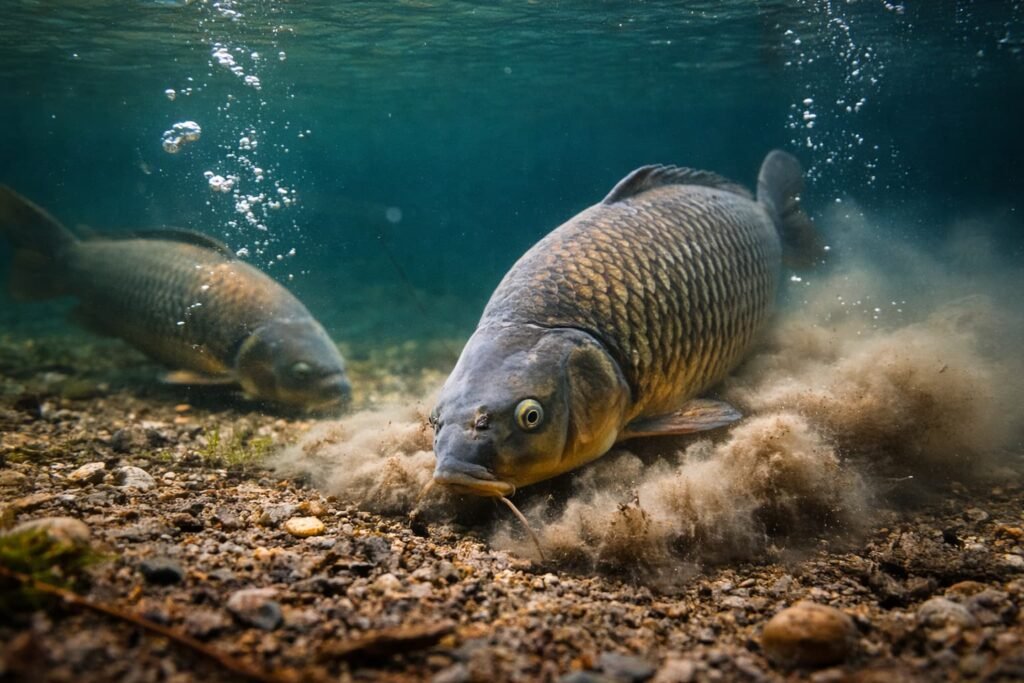
Most of the time, they feed by moving slowly along the lakebed, tilting down and using their mouths to suck in and sort through sediment.
As they do this, they:
- suck in silt, debris, and food
- separate edible items from waste
- eject anything they don’t want
This creates:
- small clouds of disturbed silt
- tiny air bubbles rising to the surface
- subtle movement in the water
This is what anglers call fizzing.
Understanding this is critical.
Carp are not “grabbing” bait like a predator. They are filter-feeding and sorting, which is why your bait presentation matters so much.
How Carp Find Food
Carp do not rely heavily on sight when feeding.
Instead, they use:
- smell (olfaction)
- taste receptors
- water movement
They can detect dissolved substances in the water at extremely low levels.
In simple terms:
carp “smell” food in the water before they see it
This is why:
- bait leakage matters
- liquids and solubles work
- natural food signals are so effective
A bait that leaks attraction into the water is far easier for a carp to find than something that just sits there.
The Role of Natural Food
Carp are constantly feeding on natural food like:
- insect larvae
- bloodworm
- snails
- small invertebrates
These food sources:
- live in the lakebed
- produce subtle chemical signals
- are found by carp through feeding patterns
Your bait works best when it behaves like something carp already recognize as food.
This is why simple baits often outperform complicated ones.
Why Carp Produce Bubbles (Fizz)
When carp feed, they disturb the lakebed.
As they dig into silt, they release:
- trapped gases
- air pockets
- decomposing organic matter
This creates small clusters of bubbles rising to the surface.
These bubbles are:
- usually very small
- often in lines or patches
- subtle rather than explosive
This is one of the best signs of feeding carp.
If you see fizzing, you are often looking at actively feeding fish.
How Carp Approach Bait
Carp do not always rush in and feed aggressively.
Often they will:
- approach cautiously
- investigate
- test the bait
- feed lightly at first
This is especially true in:
- clear water
- pressured venues
- cold water conditions
That means your setup needs to:
- look natural
- behave naturally
- hook efficiently even on cautious takes
Feeding Confidence
Carp feed more confidently when:
- they feel safe
- food appears natural
- there is no disturbance
They feed less confidently when:
- something feels wrong
- the area is heavily disturbed
- bait is unnatural or excessive
This is why:
- overbaiting can reduce bites
- heavy disturbance can kill a swim
- simple setups often work best
What This Means for Your Bait
Your bait needs to match how carp feed.
That means:
- it should be easy to pick up
- it should leak attraction
- it should sit naturally on the bottom
This is why:
- particles work so well
- well-made boilies are effective
- simple food-based bait outperforms gimmicks
What This Means for Your Rigs
Because carp feed by sucking and sorting:
- your hookbait needs to behave naturally
- your rig needs to hook efficiently
Short hooklinks and well-balanced rigs help because:
- they react quickly
- they require less movement
- they convert cautious takes
What This Means for Location
Carp feed where natural food exists.
That means:
- silt areas
- weed edges
- shallow warming zones
- transition areas
If you’re not fishing where carp are feeding, bait and rigs don’t matter.
Where to Fish for Carp in Spring
Michigan Notes
For Northern Michigan waters:
- natural food is abundant
- carp feed heavily on lakebed organisms
- shallow areas warm first in spring
- silt and weed edges are key feeding zones
This means:
- fizzing is a very reliable sign
- subtle feeding is common
- light baiting often works best
Your approach should focus on:
→ finding feeding fish
→ presenting bait naturally
→ avoiding overcomplication
Common Mistakes
- thinking carp rely on sight
- overbaiting feeding areas
- ignoring fizz and subtle signs
- using rigs that need aggressive feeding
- fishing where there are no fish
FAQ
How do carp actually eat bait?
They suck in food along with debris, then separate and eject unwanted material.
How do carp find bait?
Mainly through smell and taste, detecting dissolved substances in the water.
What do carp bubbles mean?
Usually feeding activity — fish disturbing the lakebed.
Do carp feed all the time?
No. Feeding is often in short periods, especially in spring.
Next Steps
Build your full understanding:
Why Carp Blow Bubbles
The Carp Bait Guide
Spring Carp Fishing Session Plan