

The Smart Angler’s Guide – Part 2
In The Carp Bait Guide, we looked at what carp actually detect in bait, which compounds seem to pull them in, and why plenty of expensive bait ingredients are not always as clever as the label makes out.
This article takes the next step. Rather than talking in general terms, we are building a complete boilie from the ground up and explaining why each part is there. Not because it is fashionable. Not because a forum said so. Because it has a job to do.
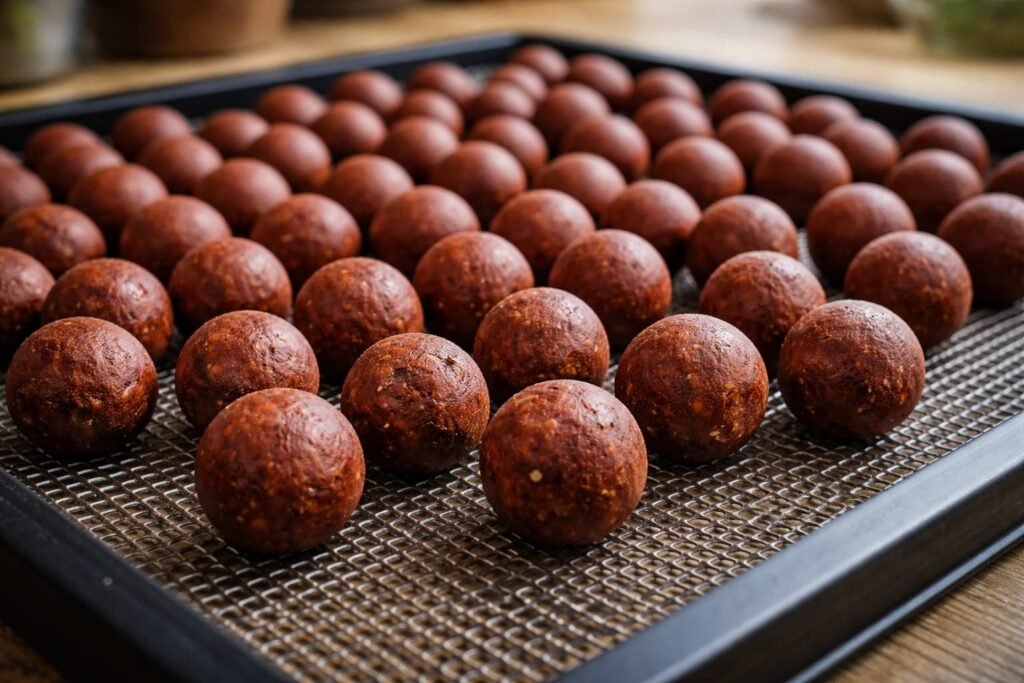
The result is the Bloodworm Koi Fusion MkII. It is a 20mm bottom-bait hookbait built around two ingredients many carp anglers would not normally combine: ground CC Moore Bloodworm pellets and ground Mazuri Koi Pond Nuggets. One gives you a strong natural bloodworm signal. The other gives you a very useful protein-and-attractor backbone at a price far lower than many specialist carp base mixes.
This is not presented as the one perfect bait for every water and every month of the year. It is a serious, well-thought-out hookbait recipe for anglers who want to understand what goes into a boilie and why. If you like making your own bait, testing ideas, and improving things over time, this is the sort of recipe worth building properly.
Quick Start
- This is a long-form hookbait article, not a quick throw-together recipe
- The bait is designed as a 20mm bottom bait hookbait
- It is built around bloodworm attraction + koi pellet nutrition + added soluble triggers
- Best used with a matching bloodworm pellet, crumb, or PVA feed approach
- Keep the boil short
- Put the most valuable surface-level amino attraction in the post-boil glug
- Treat it as a high-quality hookbait, not necessarily a cheap bulk prebait boilie
What This Bait Is Trying to Do
A good boilie is not just a ball of powders held together with egg. It is a delivery system.
You want three things from it:
- Food value
- Leak-off
- Practical fishability
If a bait has no food value at all, it can still nick a bite, but it often behaves more like a short-term flavour bait than a proper food bait. If it has plenty of food value but poor leak-off, it may be nutritionally sound yet slow to signal. If it leaks well but is too soft, too fatty, or too awkward to make consistently, it becomes more hassle than help.
The Bloodworm Koi Fusion MkII tries to sit in the sensible middle. It aims to give you:
- a useful protein level
- moderate fat
- a bloodworm-led natural food signal
- enough soluble support to make it attractive quickly
- a skin and texture suitable for casting and fishing as a proper hookbait
What Makes a Good Boilie?
Protein
Protein is the backbone of a food bait, but more is not always better. For most boilies, a sensible finished level sits somewhere around the mid-20s to low-30s as a percentage of the finished bait. That is enough to make the bait feel like genuine food without turning it into an overbuilt, expensive, or heavy-to-digest lump.
Just as important as total protein is where that protein comes from. A boilie built from useful animal and aquatic proteins, plus a few plant ingredients that help with texture and balance, usually makes more sense than simply chasing a headline number.
Fat
Fat matters because it affects both digestion and leakage. Very fatty baits can be harder work in colder water and can hold some attractors back. For a year-round hookbait, moderate fat is usually the safer play.
Carbohydrate and Binder Value
Carbs are not glamorous, but they matter. Semolina, maize flour, and similar ingredients give you structure, rolling quality, and a proper finished skin. Without them, many mixes become awkward, sticky, or too soft.
Solubility and Surface Signal
This is where many homemade baits improve or fall apart. You can build a decent base mix, then ruin the advantage by locking the best attractors too deep inside the bait or boiling them harder than necessary. A short boil and a sensible post-boil glug make a real difference.
The Bloodworm Koi Fusion MkII – Full Recipe
This recipe is designed to produce roughly 100–120 finished 20mm bottom bait hook baits, depending on your final paste consistency, rolling, and drying.
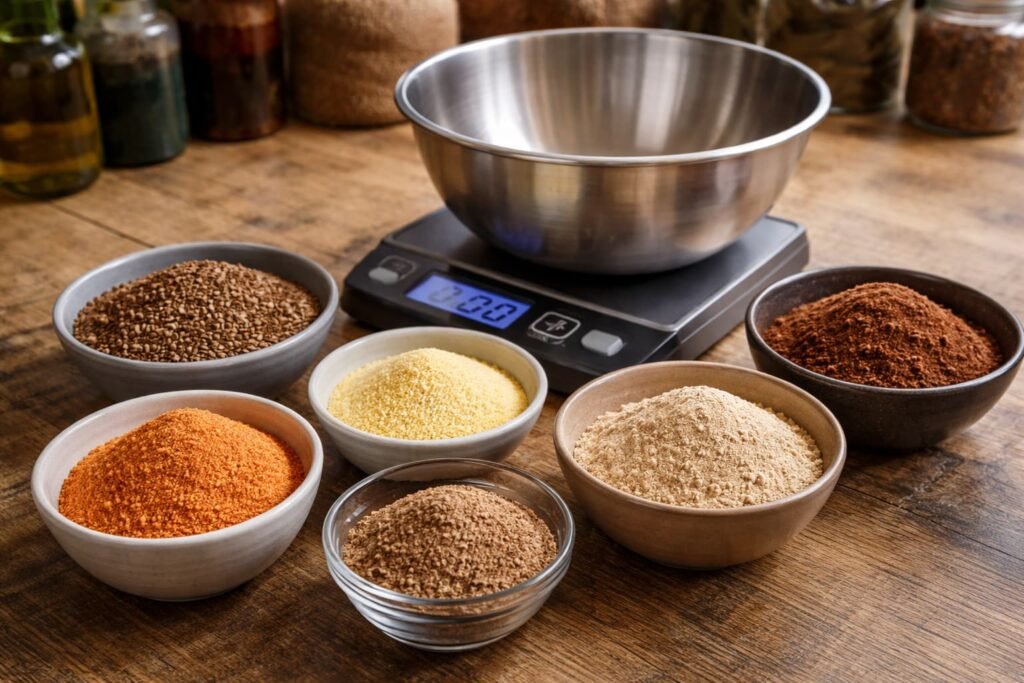
Dry Mix – 500g Total
Scenario A: With Marine Collagen Peptides
Recommended version
| Ingredient | Amount | Why it’s here |
|---|---|---|
| Ground Mazuri Koi Nuggets | 120g | The backbone of the mix. Protein, fishmeal-type nutrition, betaine, citric acid, spirulina, grain content |
| Ground CC Moore Bloodworm Pellets | 60g | Natural bloodworm signal and useful amino profile |
| Fine semolina | 80g | Main binder and rolling support |
| Full-fat soya flour | 50g | Binder, body, extra protein |
| Krill meal | 50g | Dense aquatic protein and attraction |
| Freeze-dried beef liver, ground | 30g | Strong soluble food element and rich protein source |
| Egg albumin | 30g | Hardener and skin former |
| Robin Red | 30g | Spice profile, colour, visual and food signal |
| Marine collagen peptides | 20g | Fast-leaking hydrolysed protein support |
| Maize flour | 20g | Binder and corn-type food note |
| Kelp powder | 10g | Marine/mineral background and added food complexity |
| Soy lecithin granules | 5–8g | Emulsifier to help attraction move better in water |
Scenario B: Without Marine Collagen Peptides
Replace the 20g marine collagen peptides with 20g brewers yeast powder.
Brewers yeast will not behave exactly the same, but it is still a sensible substitute. It adds nutritional attraction, B-vitamins, and useful soluble support, and it is much easier to find in the USA.
Egg Mix
Beat the eggs first, then dissolve the powders into the egg before combining with the dry mix.
| Ingredient | Amount | Why it’s here |
|---|---|---|
| Medium eggs | 6 | Main binder and moisture source |
| Blended frozen bloodworm | 15–20ml | Real bloodworm food signal |
| CC Moore Liquid Bloodworm Compound | 15ml | Extra soluble bloodworm support |
| Squid extract | 10ml | Additional marine savoury signal |
| Betaine HCl | 5g | Useful bait synergist |
| L-Cysteine HCl | 3g | Added amino support |
| L-Glutamine | 3g | Added amino support |
| Citric acid | 2g | Acid note and supporting taste signal |
| Calcium chloride | 1g | Additional supporting trigger |
| N-Butyric acid | 1ml | Fermentation-style background note |
Important: N-butyric acid is strong stuff. Wear gloves and measure carefully.
Finishing Glug
Apply after boiling and air-drying
| Ingredient | Amount | Why it’s here |
|---|---|---|
| Warm water | 100ml | Base solvent |
| Food-grade glycerine | 50ml | Carrier and cling |
| CC Moore Liquid Bloodworm Compound | 30ml | Extra bloodworm layer |
| Blended frozen bloodworm | 30–40ml | Real bloodworm signal post-boil |
| GLM-Effect Blend | 5g | Mussel-style amino background |
| Betaine HCl | 3g | Surface-level burst attraction |
| L-Cysteine HCl | 2g | Post-boil amino support |
| L-Alanine | 2g | Post-boil amino support |
| L-Proline | 2g | Post-boil amino support |
| Citric acid | 1g | Supporting acid note |
Step-by-Step Method
1) Prepare the bloodworm liquid
Buy frozen bloodworm cubes from a pet or aquarium shop. Thaw 4–6 cubes, blend to a smooth liquid, then strain through muslin or a fine sieve. Freeze the strained liquid in ice cube trays so you have easy doses ready for future batches.
Health note: Some people become sensitive to chironomid larvae after repeated handling. Wear nitrile gloves. If you notice irritation, stop handling it directly.
2) Prepare the dry ingredients
Grind the Mazuri Koi Nuggets to a fine powder.
Grind the CC Moore Bloodworm pellets separately to a coarse-to-medium powder.
If using freeze-dried liver treats, grind those too.
Weigh every dry ingredient and mix thoroughly until the blend looks even throughout.
3) Make the egg mix
Beat 6 medium eggs in a jug or mixing bowl.
Dissolve the powders into the egg mix first:
- betaine
- cysteine
- glutamine
- citric acid
- calcium chloride
Then add:
- blended bloodworm liquid
- liquid bloodworm compound
- squid extract
- N-butyric acid
Mix thoroughly.
4) Make the paste
Add the dry mix gradually to the egg mix and work it in by hand.
You want a smooth, pliable dough:
- if it is too dry, add a tiny splash of water or egg
- if it is too wet, add a pinch of semolina or a little of the reserved dry mix
Do not rush this part. A clean paste makes the rest much easier.
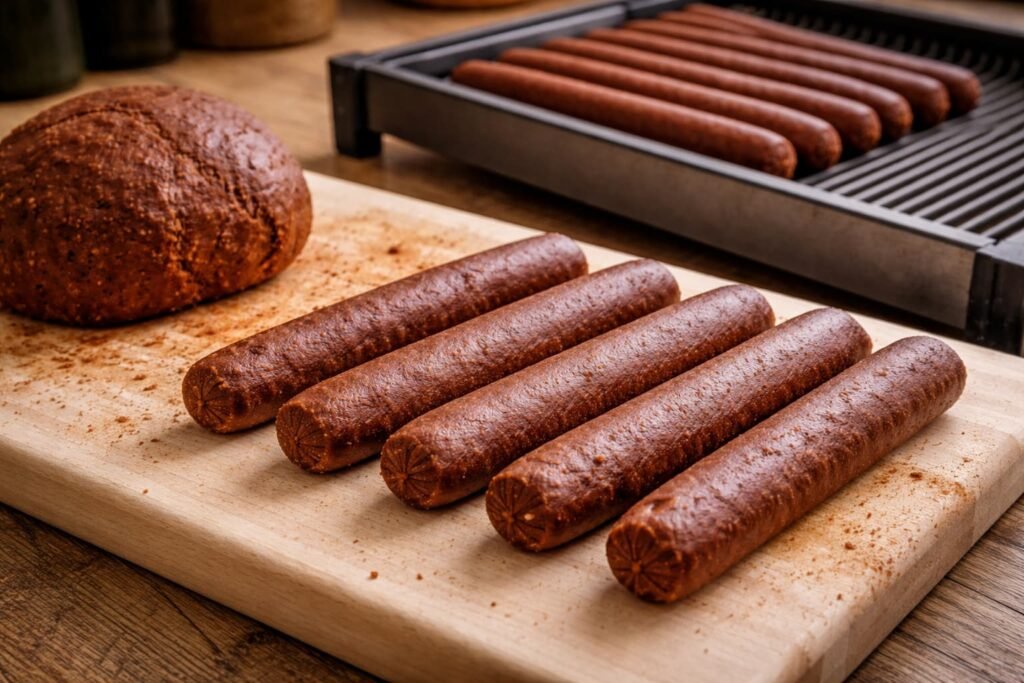
5) Roll the boilies
Roll into sausages, cut, and roll into 20mm balls.
6) Boil
Drop into rapidly boiling water.
Boil for about 75 seconds maximum, then remove as soon as they are done.
The idea here is not to cook them to death. You want to form a skin, hold the bait together, and keep the centre working for you rather than hardening the whole thing too much.
7) Air-dry
Spread on a clean towel or drying mesh.
Air-dry for 18–24 hours, turning once halfway through.
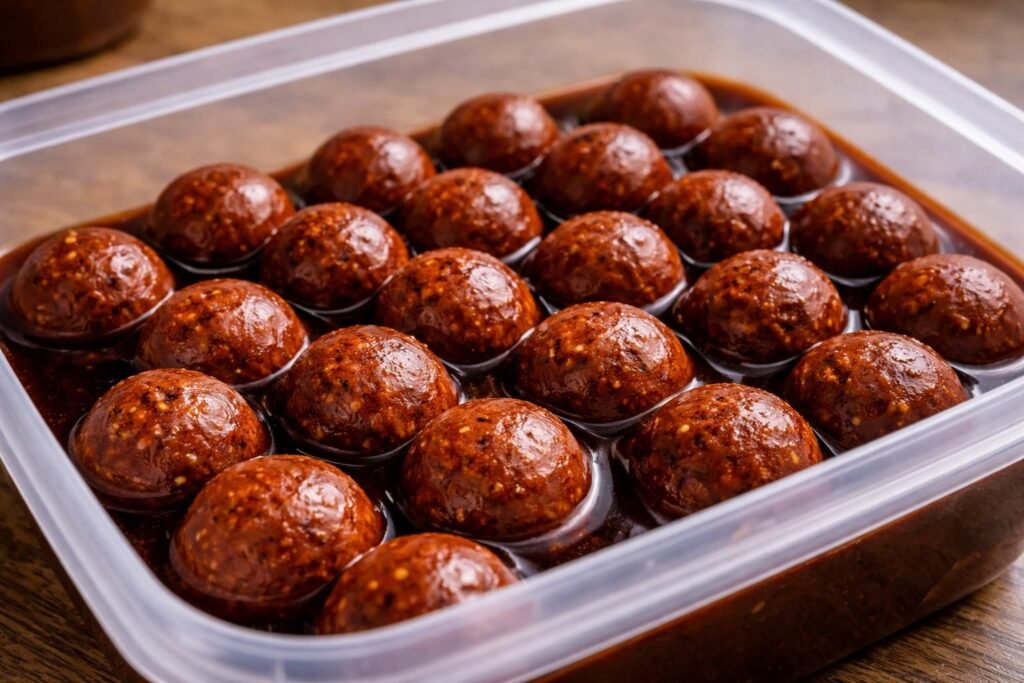
8) Apply the finishing glug
Mix the glug ingredients in a jar or tub. Dissolve the powders into the warm water first, then add the other liquids.
Submerge the air-dried boilies and leave them for 24–48 hours in the fridge.
Remove and air-dry for 4–6 hours until the outside is tacky, not wet.
9) Store
Bag in freezer bags and freeze.
Why These Key Ingredients Are In The Mix
Ground Mazuri Koi Nuggets
This is one of the clever bits in the recipe. Many carp anglers would ignore a koi food on principle, but that is missing the point. The value here is not the label. It is the ingredient profile.
Mazuri Koi Nuggets give you a cheap, accessible backbone that already contains a lot of the sort of things anglers often try to build separately:
- protein
- fish meal type input
- betaine
- yeast
- spirulina
- citric acid
- grain content
For a USA-based angler, that makes it a very practical ingredient.
CC Moore Bloodworm Pellets
This is where the bait gets its natural prey identity. Bloodworm is one of the most believable freshwater food signals you can put in a bait. Used properly, it gives the hookbait a real “lake food” feel rather than just a synthetic flavour feel.
Krill Meal
Krill gives the mix a strong aquatic backbone and helps stop the bait feeling too flat or cereal-heavy. It also gives a proven carp-bait style food signal many anglers already trust.
Freeze-Dried Beef Liver
Liver brings strong soluble food appeal and helps the bait feel richer and more complete. It is one of those ingredients that tends to add depth when used in the right amount.
Egg Albumin
You need some practical toughness in a hookbait. Albumin helps form the skin and keeps the bait usable without relying on a long boil.
Marine Collagen Peptides
These are here for fast-leaking hydrolysed protein support. They help front-load the bait with a quicker food signal than intact dry proteins alone.
Soy Lecithin
Lecithin helps the oily and less water-friendly parts behave better once the bait is in the lake. That is especially useful when you want the bait to wake up well rather than just sit there.
Real Bloodworm in the Liquids
This matters. A synthetic “bloodworm flavour” may smell right to the angler, but real bloodworm gives you actual food chemistry. Those are not the same thing.
Post-Boil Glug
This is one of the most important parts of the whole recipe.
A lot of expensive amino and attractor additions make more sense after the boil, not before it. Put simply, if you can keep premium soluble support closer to the bait surface, you get more from it.
Nutritional Picture
Calculated values will vary slightly depending on the exact products used, but the recipe sits roughly in this bracket once finished and air-dried:
| Metric | Scenario A | Scenario B | What it means |
|---|---|---|---|
| Protein | ~31–32% | ~31% | Solid food-bait territory |
| Fat | ~8% | ~8% | Moderate and sensible year-round |
| Carbohydrate | ~27–28% | ~28% | Enough for structure and balance |
| Moisture + ash + fibre | ~32–33% | ~33% | Normal remainder |
That places it in a very respectable range for a serious hookbait. It is not a low-grade filler bait, and it is not an overbuilt, impractical science project either.
Approximate Protein Contribution by Ingredient
| Ingredient | Weight | Protein (g) | Approx. % protein |
|---|---|---|---|
| Ground Mazuri Koi Nuggets | 120g | 39.6g | 33% |
| 6 medium eggs | ~300g | 37.2g | 12.4% |
| Krill meal | 50g | 30.0g | 60% |
| Egg albumin | 30g | 24.6g | 82% |
| Freeze-dried beef liver | 30g | 21.0g | 70% |
| CC Moore Bloodworm pellets | 60g | ~21.0g | ~35% |
| Soya flour | 50g | 18.5g | 37% |
| Marine collagen peptides | 20g | 18.0g | 90% |
| Semolina | 80g | 10.2g | 12.8% |
| Other ingredients | ~60g | ~13g | Varies |
How It Compares to Commercial Boilies
This is where homemade bait gets interesting.
On paper, the Bloodworm Koi Fusion MkII sits roughly in the same broad protein bracket as many well-known commercial boilies, while keeping fat at a sensible level. That does not automatically make it “better” than every shop bait ever made. Commercial baits have consistency, convenience, and a lot of real-world testing behind them.
But what it does show is this:
You are not forced to buy expensive branded bait to make something nutritionally respectable.
A homemade boilie built with decent ingredient logic can absolutely stand up well on paper, especially if your aim is to produce a high-quality hookbait rather than tonnes of cheap feed.
Ingredients and US Supply Notes
One of the strengths of this recipe is that most of it can be sourced in the USA without having to build your whole bait room around UK-only specialist imports.
Easy US-source ingredients
- Mazuri Koi Pond Nuggets
- semolina
- full-fat soya flour
- maize flour
- egg albumin
- collagen peptides
- brewers yeast
- kelp powder
- soy lecithin
- citric acid
- calcium chloride
- glycerine
- frozen bloodworm cubes
- amino powders from bulk supplement suppliers
More specialist but still manageable
- CC Moore Bloodworm pellets
- CC Moore Liquid Bloodworm Compound
- squid extract
- Robin Red or a sensible DIY substitute
- GLM-style blend materials
For MichiganCarp readers in the USA, that matters. A recipe is much more useful when a serious home bait maker can actually source the parts.
Cost Breakdown
The original bench calculation is useful, but the main real-world takeaway is this:
What matters most
- The initial buy-in feels high because several amino powders and support ingredients last many batches
- Once those are in the bait shed, the ongoing cost per batch drops a lot
- This recipe makes most sense if you are producing good hookbaits and repeat batches, not one tiny batch once a year
Approximate cost picture
- Initial ingredient investment: roughly $180–230
- Approximate batch cost after buy-in settles: much lower, especially once the long-life powders are already in stock
- Approximate finished cost per kg: can compare surprisingly well with imported commercial boilies, especially in the USA
The honest point here is not that this bait is always dirt cheap. It is that you gain:
- control
- understanding
- repeatability
- the ability to tune it for your own fishing
That is worth plenty on its own.
Seasonal Adjustments
Winter
Below about 50°F / 10°C, keep the bait signal sharp and easy.
You could:
- increase the butyric acid slightly
- increase surface betaine in the glug
- use smaller hookbaits such as 12–14mm
- keep the feed tight and restrained
Summer
The standard recipe works well as written.
You can:
- increase the bloodworm in the glug
- use larger matching bloodworm pellet bags or crumbed feed
- fish it with more confidence around heavier feeding situations
Autumn
Autumn is a good time to keep the recipe strong but food-led.
A small addition of something like fermented tiger nut liquor in the finishing stage can make sense if it suits the rest of your feed plan.
Michigan Notes
Michigan water is a good fit for this sort of bait logic because many of your better carp waters contain real natural food signals worth copying rather than ignoring.
- Bloodworm, snails, mussels, and general lakebed naturals matter on many Michigan waters
- A bloodworm-led hookbait makes more sense where carp are used to grubbing in silty or mixed-natural-food areas
- On clear northern Michigan water, a good hookbait often benefits from genuine food identity, not just loud smell
- This sort of bait is especially interesting where you are fishing with bloodworm pellets, crumb, chops, or natural-looking bag mixes
- If the lake has heavy natural food, a smart hookbait is often more useful than dumping piles of expensive boilies
For your own campaign angling, that is where a bait like this starts to make sense.
Common Mistakes
Boiling too long
Do not try to harden the bait by cooking it to death. If you need a tougher bait, adjust the mix or drying, not just the boil time.
Guessing measurements
This sort of recipe is not the place for handfuls and hope. Weigh everything properly.
Wasting good additives in the wrong place
A lot of premium soluble support is better post-boil than buried in the dry mix.
Using it as if it were bulk feed
This is a hookbait-led recipe. Fish it like one.
Ignoring the matching feed
The hookbait makes most sense when it ties into the rest of the presentation.
Making one batch and deciding the whole thing is rubbish
Homemade bait improves when you keep notes and refine small things. One batch is only the start.
FAQ
Is this a bulk freezer-bait recipe or a hookbait recipe?
Mainly a high-quality hookbait recipe. You can scale it, but its real strength is as a well-thought-out hookbait.
Can I leave out the collagen peptides?
Yes. Collagen peptides are in there as a replacement for pre-digested fishmeal. Use brewers’ yeast as the fallback option in Scenario B.
Do I need the finishing glug?
You can make the bait without it, but the post-boil glug is one of the best parts of the whole build. It is worth doing.
Is real bloodworm worth the hassle?
For this recipe, yes. It helps give the bait a genuine bloodworm identity rather than just a bloodworm label.
Can I use this bait in spring Michigan conditions?
Yes, especially where carp are feeding over softer areas, mixed naturals, bloodworm-rich ground, or silty feeding zones. It suits the sort of practical, food-signal approach that often works well in Michigan.
Should I use it on its own or with matching feed?
Best with matching feed. Bloodworm pellets, crumb, chops, or a tidy PVA approach all make more sense than fishing it in isolation with a totally unrelated feed signal.
Next Steps
To build out the full bait cluster, read these next:
- The Carp Bait Guide
- Bait Shed
- How to Find Natural Carp Feeding Areas in Michigan Lakes
- Boilie School
- Rigs
- Sessions
Suggested Internal Links to Add In The Body
You can naturally add these inside the article text where they fit:
- The Carp Bait Guide in the intro and conclusion
- Bait Shed in the ingredient/cost sections
- How to Find Natural Carp Feeding Areas in Michigan Lakes in the Michigan Notes section
- Boilie School where you mention rolling, boiling, drying, or batch making
- Rigs where you mention hookbait use
- Sessions where you mention campaign fishing or matching the hatch
Sources
This article draws on the same broad research base as Part 1 of The Smart Angler’s Guide, especially work around carp taste sensitivity, feeding stimulants, amino acid responses, and aquatic prey chemistry.
Key references include:
- Kasumyan, A.O. & Morsi, A.M.Kh. (1996). Taste sensitivity of common carp to free amino acids and classical taste substances. Journal of Ichthyology, 36(5), 391–403.
- Carr, W.E.S., Netherton, J.C., Gleeson, R.A. & Derby, C.D. (1996). Stimulants of Feeding Behavior in Fish: Analyses of Tissues of Diverse Marine Organisms. Biological Bulletin, 190, 149–160.
- Kasumyan, A.O., Kuzishchin, K.V. & Gruzdeva, M.A. (2024). Evaluation of the Effectiveness of Food Chemical Attractants for Wild Common Carp. Journal of Ichthyology.
- Czeczuga, B. & Gierasimow, M. (1973). Investigations on Protein Amino Acids in the Larvae of Chironomus Annularius. Hydrobiologia, 41, 241–246.
- Murthy, H.S., Manai, A. & Patil, P. (2016). Effect of Betaine Hydrochloride as Feed Attractant for Common Carp. J Aquac Mar Biol, 4(3).
Ingredient nutrition values were compiled from manufacturer specifications, standard food composition data, and aquaculture nutrition references where relevant.