

How you store boilies matters more than many anglers think.
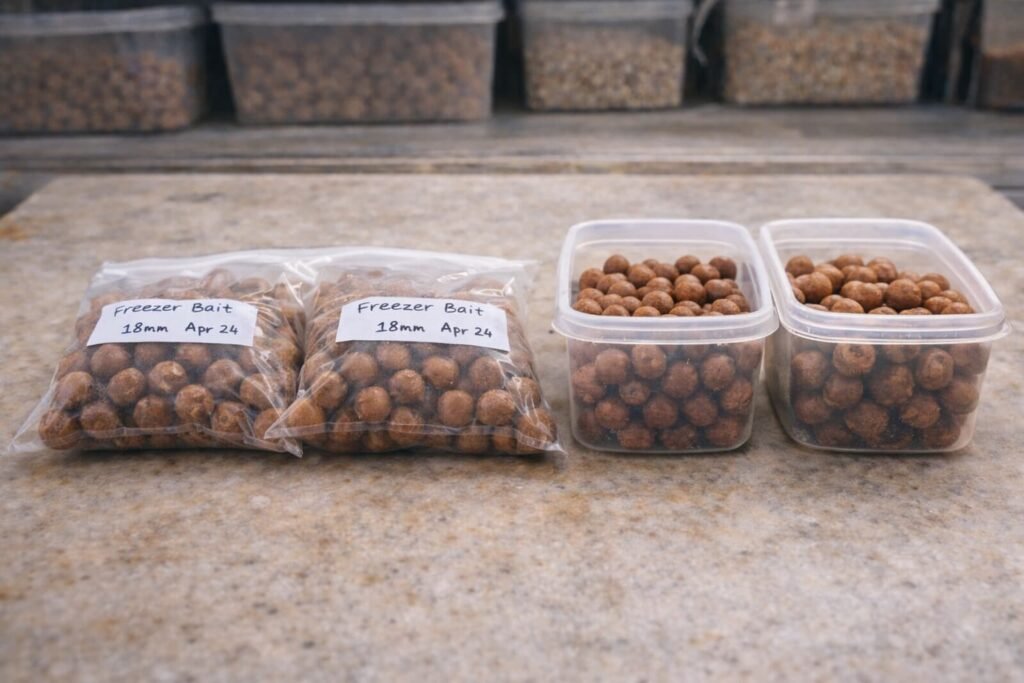
How to Store Boilies (Freezer vs Shelf Life)
You can get the recipe right, mix the paste properly, boil them well, and dry them correctly — then still reduce the quality by storing them badly.
This guide explains how to store boilies properly, the difference between freezer bait and shelf life bait, and how to decide what suits your fishing best.
If your bait still needs fixing before storage, start here:
Boilie Problems: Real Causes and Fixes That Actually Work
If you need the full making process first, read:
A Guide to Homemade Boilies for Carp
How to Boil and Dry Boilies Properly
How to Treat Boilies for Carp (Step-by-Step)
Quick Start
- freezer boilies usually keep more of the bait’s natural working character
- shelf life boilies are more convenient but depend on the preservation system being right
- dry bait properly before bagging
- store bait according to how soon you plan to use it
- never assume harder stored bait is better bait
What Is the Difference Between Freezer and Shelf Life Boilies?
Freezer boilies
These are boilies stored cold or frozen, usually with little or no heavy preservation system.
Shelf life boilies
These are boilies designed or treated to remain stable for longer at room temperature.
The real difference
The difference is not just convenience.
It is also about:
- retained moisture
- texture
- leakage
- how fast the bait wakes up in the water
In simple terms, freezer bait often feels more natural and active. Shelf life bait often trades some of that for easier storage and transport.
When Freezer Bait Makes Sense
Freezer bait is usually the better option when:
- you are making bait in sensible batches
- you have freezer space
- you want the bait to stay close to its original working state
- you care more about performance than convenience
Advantages
- usually better moisture retention
- often better texture
- often more natural breakdown
- less risk of over-hard stored bait
Watch-outs
- needs freezer space
- must be bagged properly
- repeated thawing and refreezing is a bad habit
When Shelf Life Bait Makes Sense
Shelf life bait makes sense when:
- you want grab-and-go convenience
- you need bait ready for travel
- you are carrying spare bait in the van, shed, or tackle room
- you are using a proper preservation system
Advantages
- convenient
- easy to store and transport
- good for backup bait or longer keeping
Watch-outs
- can dry harder than intended
- poor shelf life systems can make bait over-preserved or overly hard
- bad storage still causes problems
Step 1: Dry the Bait Properly Before Storage
Before storage, the bait needs to be dried correctly for the job.
If it is bagged too wet:
- it can sweat
- mould can develop
- texture can break down
If it is dried too hard:
- it can lose too much of its working character
- leakage slows down
- bait can wake up slowly later
For full process guidance, read:
How to Boil and Dry Boilies Properly
Step 2: Decide How Soon You Will Use It
This is the simplest way to make the right storage choice.
Use soon
If you will use the bait soon, freezer storage is usually the best option.
Use later
If you want ready-to-go bait kept longer, shelf life storage can make sense — but only if the bait is designed for it.
Step 3: Bag It Properly
For freezer bait
- bag in session-sized amounts where possible
- push excess air out
- label clearly
- avoid opening and re-freezing the same bag repeatedly
For shelf life bait
- use clean, dry bags or tubs
- keep it cool and out of direct heat
- do not leave it in a hot car or damp shed
Step 4: Avoid Repeated Thaw and Refreeze
This is a common mistake.
Repeated thawing and refreezing:
- stresses the bait
- changes texture
- can cause sweating and uneven moisture loss
A much better habit is to freeze in smaller bags and only take out what you need.
Step 5: Check the Bait Before You Fish With It
Before a session, look at the bait properly.
Check:
- smell
- texture
- firmness
- whether it still feels alive or overly dead
If it feels rock hard and lifeless, the storage has probably gone too far.
Freezer Bait vs Shelf Life: Which Is Better?
For many serious carp anglers, freezer bait is often the better performer.
That is because it usually keeps:
- better texture
- better moisture balance
- better water response
- better overall working feel
But shelf life bait is still useful if convenience matters and the bait has been preserved and stored properly.
The better question is not:
Which one is always best?
The better question is:
Which one suits the job, the session, and the way you manage your bait?
Common Storage Mistakes
- bagging bait too wet
- drying it too hard before storage
- repeated thawing and refreezing
- storing shelf life bait in heat
- assuming preserved bait does not need care
- storing everything in one big bag
Michigan Notes
In Michigan, a lot of anglers are dealing with:
- shorter sessions
- changing seasonal temperatures
- bait made at home and stored in sheds, garages, or freezers
That means storage needs to be practical.
For most home rollers, freezer bait in manageable session-sized bags is often the safest and best-performing route.
FAQ
Is freezer bait better than shelf life bait?
Often yes in performance terms, but shelf life bait can still work very well if it is made and stored properly.
How long can I keep freezer boilies?
That depends on the bait and how well it is packed, but good freezer management makes a big difference.
Can shelf life boilies become too hard?
Yes. If over-dried, over-preserved, or stored badly, they can become less active than intended.
Should I dry boilies extra hard before freezing?
Not usually. You want them dry enough to store properly, not dried into lifeless stones.
Can I refreeze boilies?
You can, but repeated thawing and refreezing is poor practice and usually makes the bait worse.
Next Steps
To build the full process properly, read: