

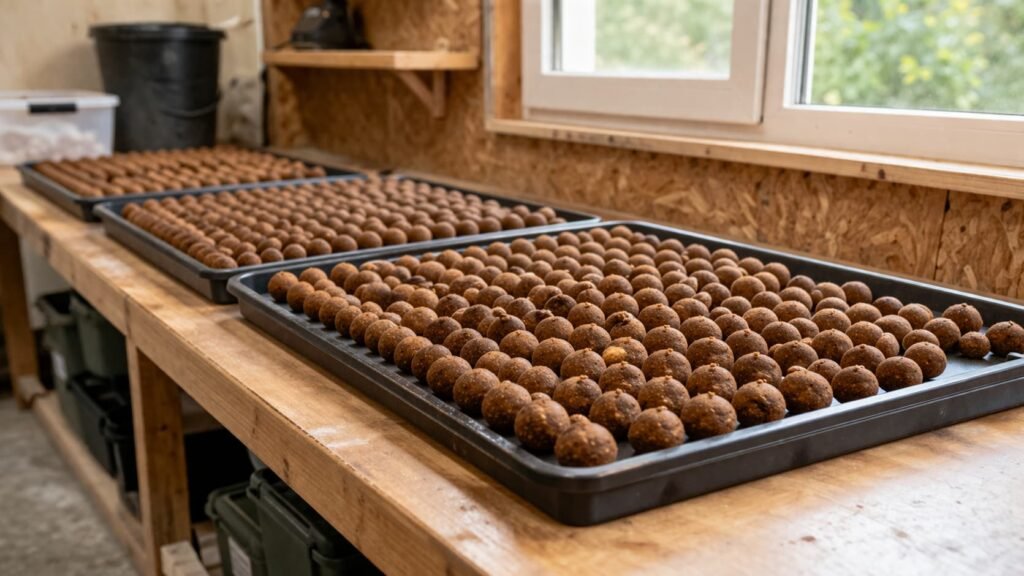
How to Boil and Dry Boilies Properly (Step-by-Step)
Boiling and drying are where good bait is either finished properly or ruined.
You can have a perfect mix and good paste, but if you boil too long, dry too fast, or handle the bait poorly after cooking, the final result will suffer.
This guide shows you how to boil and dry boilies properly, step by step, so you get consistent, effective bait every time.
If you have not already made your bait, start with A Guide to Homemade Boilies for Carp first.
If your bait is already giving you trouble, start here:
Boilie Problems: Real Causes and Fixes That Actually Work
Quick Start
- boil in small batches so the water stays hot
- do not overcrowd the pan
- drain and dry naturally
- do not rush the cooling stage
- match boil time to bait size and mix type
- avoid fan-drying unless you really need it
Step 1: Prepare Before Boiling
Before you even start boiling:
- make sure your paste is firm and consistent
- roll bait evenly
- dust off excess moisture or stickiness
- have trays, towels, and drying space ready
If you are still at the rolling stage, read:
A Guide to Homemade Boilies for Carp
Step 2: Use the Right Water Conditions
Use a properly boiling pan of water.
You want:
- a rolling boil, not weak simmering water
- enough water volume to hold temperature
- room to move the bait freely
Overloading the pan drops temperature and leads to uneven cooking.
Step 3: Boil for the Right Time
Boil time depends on:
- bait size
- mix density
- ingredient profile
Rough guide:
- 14mm boilies: around 60–90 seconds
- 18mm boilies: around 90–120 seconds
- 20mm+ boilies: around 2–3 minutes
You are aiming for bait that is:
- cooked through
- stable externally
- not rubbery or overdone
Step 4: Do Not Overcook
What happens if you overcook:
- attraction is reduced
- the bait can become tough
- leakage is slowed down
- texture becomes less natural
Key point:
You are not trying to cook the bait like food.
You are setting the structure without ruining leakage.
Step 5: Remove and Drain Properly
Once boiled:
- remove with a sieve or net
- let excess water drain off
- avoid piling them straight into a wet heap
Let them breathe before drying starts.
Step 6: Initial Cooling Phase
Spread boilies out:
- on drying trays
- on a clean towel
- in a single layer
Do not seal them while still hot.
This prevents sweating and soft spots.
Step 7: Air-Dry Naturally
What to do:
- allow plenty of movement around the bait
- keep trays off damp floors
- turn occasionally if needed
What to avoid:
- heavy direct heat
- strong fan blast
- drying in sealed containers
Step 8: Control Drying Time
Drying time depends on how you want the bait to behave.
Short drying (12–24 hours)
- softer texture
- faster breakdown
- more instant leakage
Medium drying (24–48 hours)
- balanced bait
- good all-round performance
Longer drying (48+ hours)
- firmer bait
- slower breakdown
- longer session use
Step 9: Watch for Common Problems
Cracking
Usually from drying too fast or mix too tight.
Read:
Boilie Problems: Real Causes and Fixes That Actually Work
Soft centers
Usually from undercooking or poor drying.
Over-hard bait
Usually from overcooking or excessive drying.
Step 10: Match the Process to the Job
Not all bait should be treated the same.
- cold water: slightly softer, more active bait
- long sessions: firmer, tougher bait
- heavy nuisance fish: more durable bait
The goal is always:
balance hardness, structure, and leakage
Michigan Notes
In Michigan, especially in spring and fall:
- softer, active bait can be excellent
- large natural waters reward measured drying
- bait often works best when it stays digestible and natural
- over-hard bait can reduce response
Always dry your bait for the job, rather than assuming it is right.
Common Mistakes
- boiling everything for the same time
- drying too fast
- overcrowding the boil
- sealing bait while still warm
- not adjusting for mix type or bait size
Also read:
Boilie Problems: Real Causes and Fixes That Actually Work
FAQ
How long should I boil boilies?
Long enough to set the structure, usually 1–3 minutes depending on size.
Can I overboil boilies?
Yes. Old or extra-boiled boilies can become too hard and lose leakage.
How long should I dry boilies?
Depends on your goal, but 24–48 hours is a strong all-round start.
Should I use a fan to dry boilies?
Light airflow is fine, but strong airflow can over-dry the outside.
Can boilies be too dry?
Yes. Over-dried bait often performs worse in the water.
Next Steps
To improve your bait-making fully, read: