

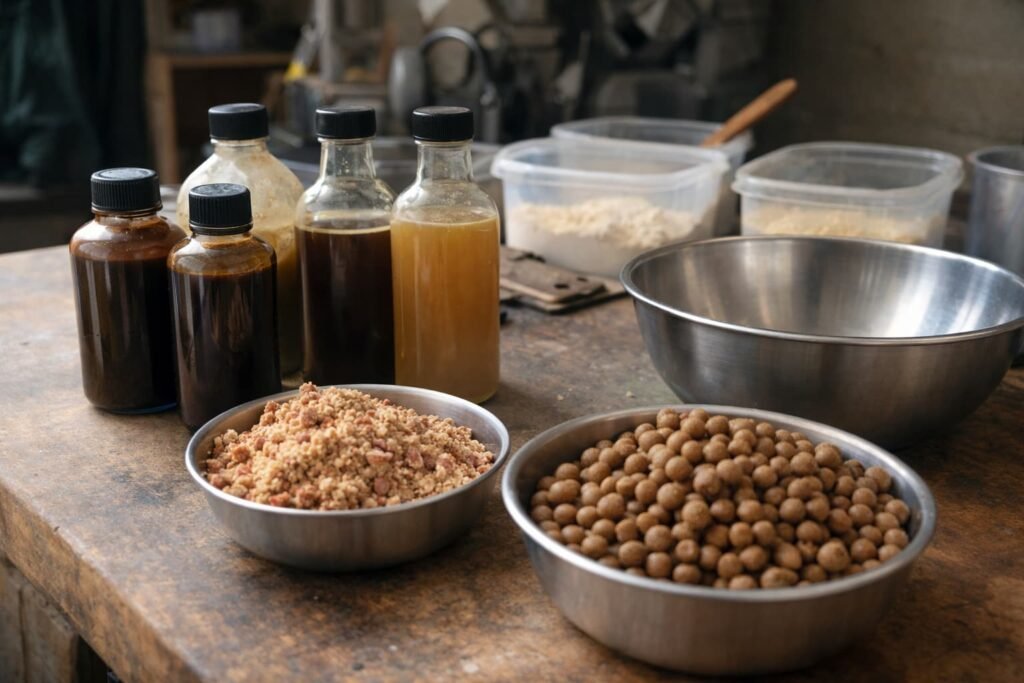
Few bait liquids get talked about more than yeast products, CSL, and fermented food liquids.
They are often sold as if they are all doing the same job. They are not. Some are rich food signals. Some are mainly soluble support liquids. Some are better in particles than boilies. Some are excellent in crumb, pellets, and hookbait treatment. And some are simply overrated because they sound clever.
That is the point of this article. Not to dress these liquids up as miracle ingredients, but to explain what they actually do and where they fit.
Used properly, these sorts of liquids can make a bait package feel alive. They can help a bait leak earlier, taste more convincing, and give off a more believable food signal. Used badly, they can turn a clean bait into a sticky, confused mess.
This article fits naturally inside Bait Shed and works well alongside Boilie School and A Practical Guide to Liquids and Glugs.
Quick Start
- Yeast products, CSL, and fermented liquid foods are mainly used to improve food signal, solubility, and bait communication.
- They are not all the same. Yeast extract, liquid yeast, CSL, and fermented grain liquor each behave differently.
- These liquids are often at their best in particles, crumb, pellets, stick mixes, bag mixes, and hookbait treatment.
- They can help boilies too, but they work best when matched properly to the bait.
- More is not always better. Overdoing them can make a bait sour, sticky, or unbalanced.
- On many Michigan waters, they are best used to sharpen a bait package rather than dominate it.
What These Liquids Actually Are
The first mistake many anglers make is lumping them all together.
Yeast extract
Yeast extract is usually a concentrated savoury product made from broken-down yeast. It is rich, food-like, and often very good at adding a deep, believable signal.
Liquid yeast
Liquid yeast tends to be looser and less concentrated than a proper extract. It can still be useful, especially in particles, loosefeed, and some boilie liquids, but it is not always as punchy.
CSL
Corn steep liquor is a by-product of corn processing. In bait terms, it is usually valued as a soluble liquid food that can add acidity, fermentation character, and a useful supporting signal. Good CSL can be very handy. Poor CSL can be thin and unimpressive.
Fermented grain liquor
This is the liquid that comes off properly prepared or fermented grains, seeds, or particle mixes. It can be very useful in the right setting, especially when it carries natural breakdown products from maize, hemp, or birdfood-style mixes.
So right from the start, these are not four identical things. They all sit in the same broad area of bait signal, but they do not all pull exactly the same way.
Why They Work
The reason these liquids work is not because they have a magical smell.
They work because they often help the bait say something useful in the water.
That useful signal may come from:
- soluble food fractions
- savoury breakdown products
- fermentation notes
- organic acids
- yeast compounds
- mineral support
- improved leakage
A bait does not need to smell wild to the angler to work well. It needs to release compounds the fish can detect and make sense of.
That is why these liquids often fit better into food-signal thinking than old-school perfume thinking. They are usually at their best when they make the bait feel more edible, more active, and more believable.
This ties in closely with Carp Feeding Attractants Explained and The Science of Fermented and Food-Signal Baits.
Yeast Extract vs Liquid Yeast vs CSL
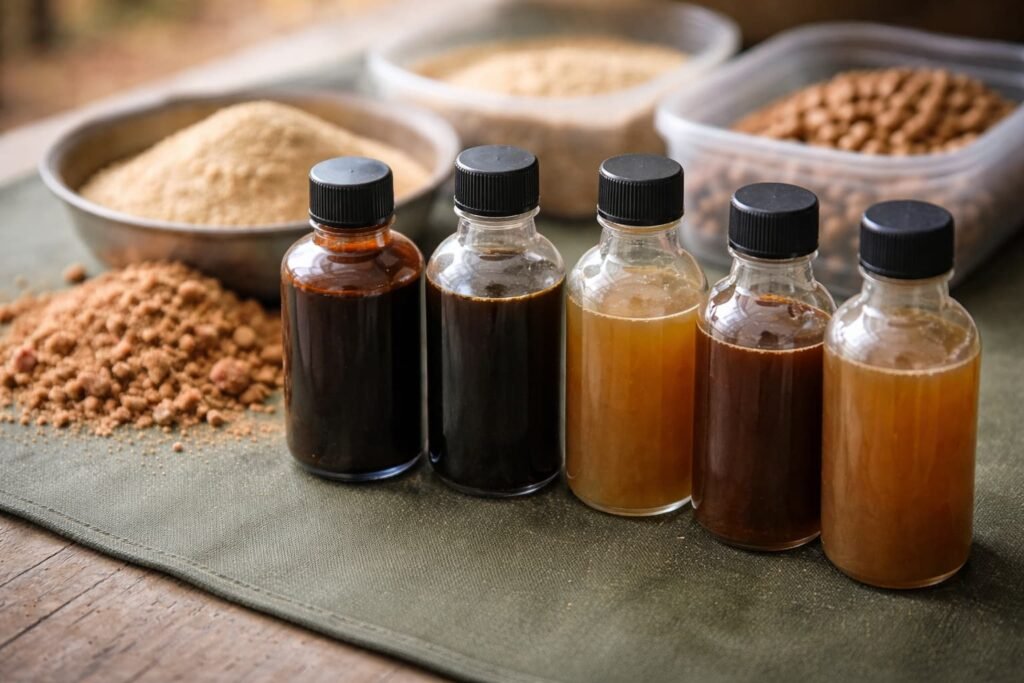
This is where anglers usually need the clearest separation.
Yeast extract is usually the most food-rich
A good yeast extract often adds the deepest savoury signal of the three. It tends to feel more purposeful and more concentrated.
This is the one I would usually look at first if I wanted a richer food-style liquid rather than just a wetting agent.
Liquid yeast is often more supportive than dominant
Liquid yeast can still be useful, but it is often milder and broader in effect. It can be a nice supporting liquid in particles, bag mixes, or general bait prep without trying to take over the whole package.
CSL is often best as part of a system
CSL often works well when paired with other sensible bait ingredients. On its own it is not always the star. But alongside crumb, particles, pellets, or a simple bait soak, it can add a useful fermented, soluble edge.
That is how I tend to look at it. Not as a wonder liquid, but as a good supporting tool when used properly.
Where They Work Best
These liquids are usually strongest in places where early leakage matters.
In particles
This is one of the best uses. Properly prepared particle mixes already carry natural attraction. Add the right yeast or fermented liquid and they can become even more active.
In crumb and chops
Crumb leaks faster than whole baits, so yeast and fermented liquids often work very well here. You get physical breakdown and soluble food signal together.
In pellets
Pellets are another good carrier. A light treatment can make them far more communicative without turning them into sludge.
In stick mixes and bag mixes
These are ideal because the whole point is compact, fast-acting attraction around the rig.
In hookbait treatment
A lightly treated hookbait can often gain a useful extra edge, especially on waters where you want it to out-signal the free bait around it.
They can also be used in boilie liquids, but I generally think they shine brightest in applications where fast signal matters most.
Where Anglers Overrate Them
This also needs saying plainly.
Yeast products and CSL are often overrated when anglers expect them to do too much.
They are not:
- a cure for poor location
- a fix for bad presentation
- a replacement for decent bait design
- proof that a bait is suddenly “high nutritional”
- an excuse to soak everything until it stinks
Some anglers use them well. Others simply pour them in because the words fermented or yeast sound clever.
A cleaner, more measured approach usually does better.
How to Use Them Properly
The best way to use these liquids is to decide what job you want them to do.
Do you want more food signal in crumb? A better particle mix? A hookbait treatment with more savoury pull? A softer fermented edge in a bag mix? Start there.
Then keep the rest of the bait simple.
A few practical rules help.
Use them to support the bait, not drown it
A light, even coating often does more than a heavy soaking.
Match the liquid to the bait form
Particles, crumb, pellets, and hookbaits usually show the benefit fastest.
Let the bait carry the signal
These liquids work best when they are absorbed, held, and released, not simply sloshing round the bottom of a tub.
Keep the package believable
A sensible food-signal bait nearly always beats a loud, sticky mess.
Fermented Liquids in Michigan Carp Fishing
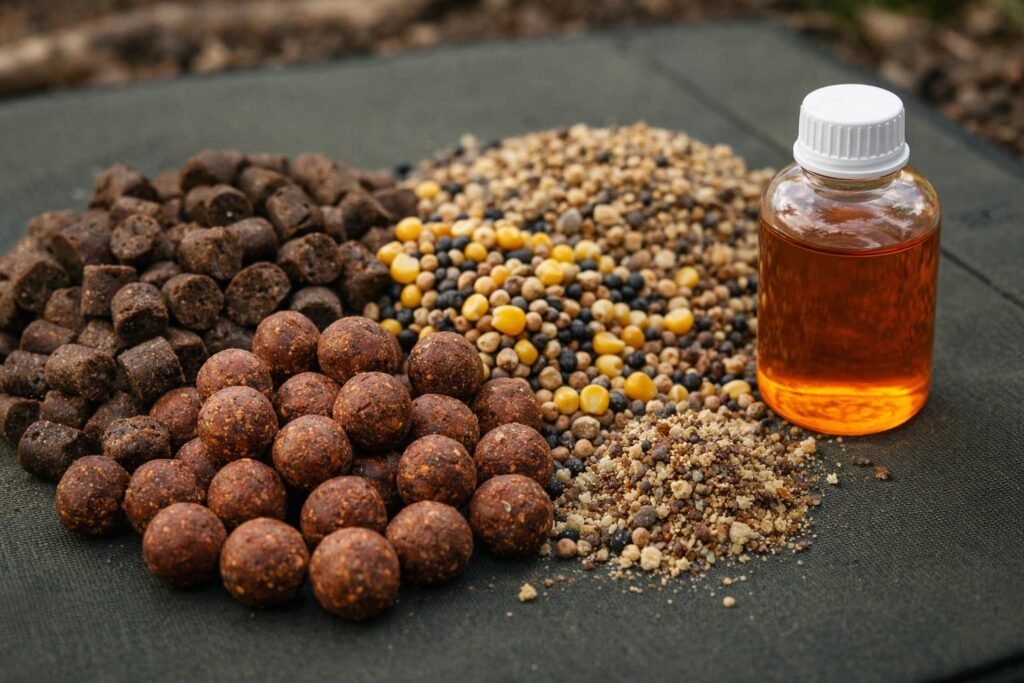
Michigan waters often suit this kind of bait thinking very well.
On many northern lakes, especially in cooler conditions, you want a bait that starts working early without becoming overblown. That is where yeast products, CSL, and fermented liquids can fit nicely.
A few practical points stand out.
In spring, they can help sharpen small baited areas when fish are moving but not really troughing feed.
On big waters, they often make more sense in compact baiting than in huge beds of feed.
On clear waters, they usually feel safer than heavy artificial overload.
In short sessions, a treated hookbait, light particle treatment, or active bag mix can be far more useful than trying to build a whole campaign around liquid hype.
For a lot of Michigan-style carp angling, I would rather use these liquids to make a simple bait package more believable than try to create some overcomplicated recipe.
This article also supports the broader session thinking in Sessions and the bait-application side of Tactics.
Common Mistakes
Treating all fermented liquids as the same
Yeast extract, liquid yeast, CSL, and grain liquor are not identical tools.
Using too much
A little used properly usually beats drenching the bait.
Expecting them to rescue poor fishing
They can sharpen a good approach, but they do not replace watercraft.
Ignoring bait form
Some liquids work far better in particles, crumb, and pellets than in hard baits.
Chasing smell instead of function
What matters is what the bait releases in the water, not how “big” it smells in the shed.
Turning the mix into sludge
A wet, sticky mess is not clever bait science.
FAQ
What does CSL do in carp bait?
CSL mainly acts as a soluble supporting liquid that can add food signal, slight acidity, and a fermented edge. It usually works best as part of a balanced bait package.
Is yeast extract better than liquid yeast?
Often, yes. Yeast extract is usually richer and more concentrated, while liquid yeast is often milder and more supportive.
Are fermented liquid foods good in cold water?
They can be very useful because they help with early leakage and food signal, especially in crumb, pellets, bags, and hookbaits.
Can I use these liquids in boilies?
Yes, but they often shine even more in particles, crumb, pellets, and hookbait treatment where leakage matters most.
Can you overdo yeast and CSL?
Yes. Too much can make the bait messy, sour, or unbalanced.
What is the easiest way to use them?
Start with crumb, pellets, particles, or hookbaits. That is usually the simplest place to see what they actually do.
Next Steps
Read these next:
- Bait Shed
- Boilie School
- A Practical Guide to Liquids and Glugs
- Carp Feeding Attractants Explained
- The Science of Fermented and Food-Signal Baits
- The Role of Hydrolysates in Carp Bait
- Tactics
- Rigs
- Sessions
- Salt, Acids, and Mineral Signals in Carp Bait
- Do Carp Detect Sugars, Sweeteners, and Carbohydrates the Way Anglers Think?
- Why Some Carp Baits Leak Faster Than Others