

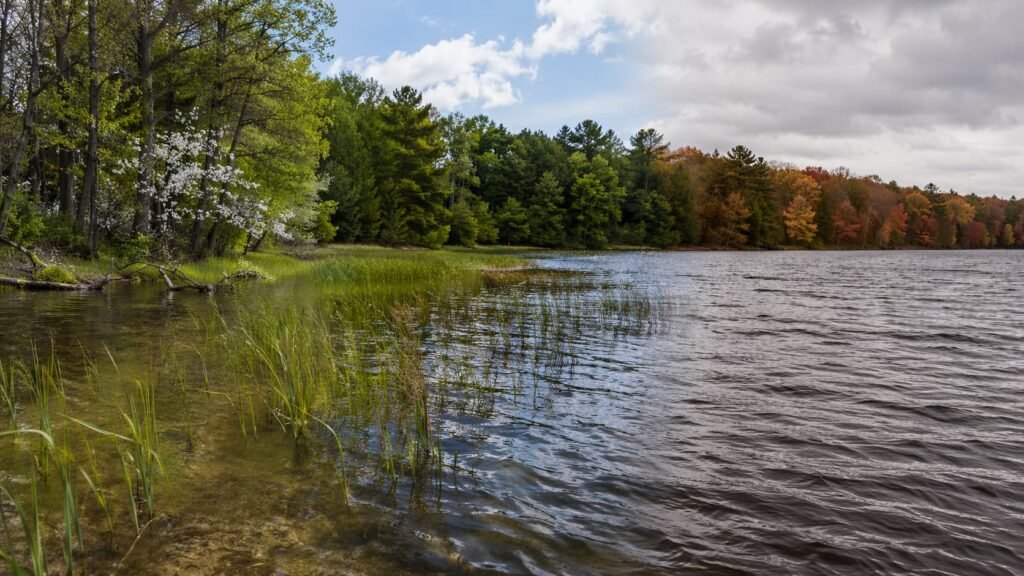
Carp do not use a lake the same way all year, and anglers who ignore that usually end up fishing yesterday’s water.
That is one of the biggest truths in carp fishing. A swim that produced in spring may be poor in midsummer. A bank that looked dead in early April may become one of the best areas on the lake in late May. A shallow feeding zone that held carp confidently in September may feel empty and pointless by late November.
This is why seasonal movement matters so much. It helps you stop thinking of the lake as one fixed map and start thinking of it as a changing system. Carp move as temperature changes, as food shifts, as spawning approaches, as weed grows, as pressure builds, and as comfort water changes through the year.
Once you start understanding that, the lake becomes far easier to read.
This page works best alongside Carp Water Temperature Guide for Michigan Lakes and The Spawning Cycle — Before, During & After.
Quick Start
- seasonal movement is about where carp are going next, not just where they were last week
- temperature usually opens or closes movement before it changes feeding properly
- spring movement is often route-based and warmth-driven
- summer movement is broader, but still follows comfort, food, oxygen, and pressure
- fall movement often tightens again around feeding routes and stable water
- the angler who understands seasonal movement usually finds carp faster and wastes less time
Why Seasonal Movement Matters So Much
Carp are not random. Even in very large lakes they usually move between certain types of areas at certain times of year.
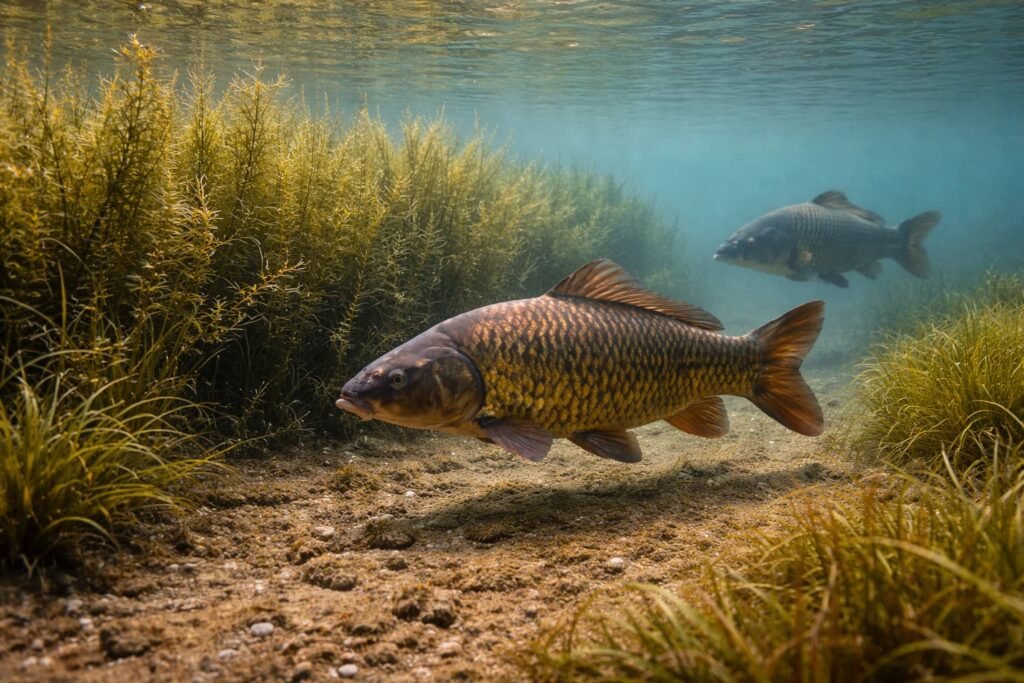
Those areas often include:
- deep or stable comfort water
- warming spring shallows
- pre-spawn staging areas
- summer patrol routes
- weed-rich feeding zones
- safer post-pressure holding areas
- fall feeding lines and stable access routes
If you know how those seasonal shifts work, you stop relying on one lucky swim and start understanding the lake at a much higher level.
Late Winter and Very Early Spring
In late winter and very early spring, carp are usually more interested in comfort and stability than aggressive feeding. On many Michigan lakes, they are still in deeper or more stable areas, moving less, feeding lightly, and not yet behaving like true spring fish.
This is where a lot of anglers get carried away. A warm day arrives, the sun feels good, and they assume the fish should be piled into the shallows. Sometimes they are not. The air temperature may have changed far faster than the lake.
At this stage, movement is often limited and practical. Fish may begin edging toward slightly more favourable water, but they are usually still thinking in terms of safety and comfort first.
Early Spring — The First Real Shift
The first useful spring warming trend usually triggers the first meaningful movement of the year.
Now carp begin shifting toward areas that offer a little more warmth, a little more life, and a little more possibility. That often means:
- sheltered bays
- dark-bottom areas
- sun-facing banks
- soft silty shallows with early natural food
- shallow areas with easy access back to deeper water
They are not necessarily feeding heavily yet, but they are often far easier to locate because their movement is no longer spread across the whole lake. It begins to concentrate around the first genuinely useful spring zones.
Spring Route Types That Matter
In Michigan, early and mid-spring carp movement often follows a few common route types:
- deeper winter water into nearby shallow shelves
- open water into quiet bays
- drop-offs into dark soft-bottom margins
- channels into reed-lined or weedy shallows
- main-lake edges into protected corners
That matters because bank anglers do not need to understand every square yard of the lake. They need to understand which routes are opening first.
If you can identify the access line between stable water and warming spring water, you are already far ahead.
Mid to Late Spring — Movement Becomes More Confident
As the water continues to build, carp usually begin moving more confidently between holding zones, feeding zones, and staging areas. This is the point where routes really start to matter.
Now you should pay close attention to:
- shelves near deeper water
- bars and their inside edges
- points and inside turns
- reed lines and emerging weed edges
- entry-and-exit lines into likely spawning water
At this stage, many anglers catch one or two fish and start believing in magic spots. In reality, they are often intercepting a seasonal route that fish are using because the whole lake is transitioning.
Pre-Spawn Staging
As the lake warms properly, movement often begins narrowing again around staging and spawning-related water.
This is where carp can become very visible without necessarily being in a clean feeding pattern. They may use warmer margins, hold in groups, patrol obvious shallow areas, or spend time in places that look full of life. But the reason for that movement may be spawning preparation rather than straightforward feeding.
That distinction matters. You do not just want to see fish. You want to understand why they are there.
That is why this page links directly into The Spawning Cycle — Before, During & After. Seasonal movement and spawning behaviour overlap heavily, but they are not the same thing.
During the Spawn
During the actual spawning period, movement may look dramatic, but much of it is not useful in the normal angling sense. Fish can push shallow, bunch up, show heavily, and spend long periods in areas that seem incredible but are not really about feeding in a normal way.
Good watercraft here means understanding the difference between fish movement that suggests feeding opportunity and fish movement that simply reflects spawning behaviour.
Post-Spawn Recovery
Once spawning is over, movement changes again.
Some fish recover quickly and begin feeding with purpose. Some drift back into safer water and take longer to settle. Some lakes bounce back fast, others remain patchy for a while. This is one of those periods where rigid rules often fail.
Look for:
- stable zones with easy access to safety
- recovery water near natural food
- quiet areas with less pressure
- routes linking shallow recovery water back to feeding areas
Fish often do not jump straight from spawning behaviour into full summer feeding. There is usually a transition.
Summer — Broad Movement, But Not Random Movement
Summer movement is broader than spring movement, but it is not random.
In summer, carp often move according to a mix of:
- weed growth
- natural food availability
- oxygen
- comfort depth
- boat traffic and angling pressure
- light levels
- daily feeding windows
Some fish will patrol shallow at low light and drop back by day. Some will use windward banks when conditions suit them. Some will avoid the obvious areas completely once pressure builds. This is why summer can feel easier and harder at the same time: carp may use more of the lake, but the pressure and complexity often increase too.
Summer Patrol Routes
In summer, patrol routes become very important.
These are not always dramatic features. Often they are simple movement lines such as:
- weed edges
- clean strips between growth
- drop-offs close to feeding shelves
- reed lines with depth nearby
- points that intercept moving fish
- windward margins with enough comfort and cover
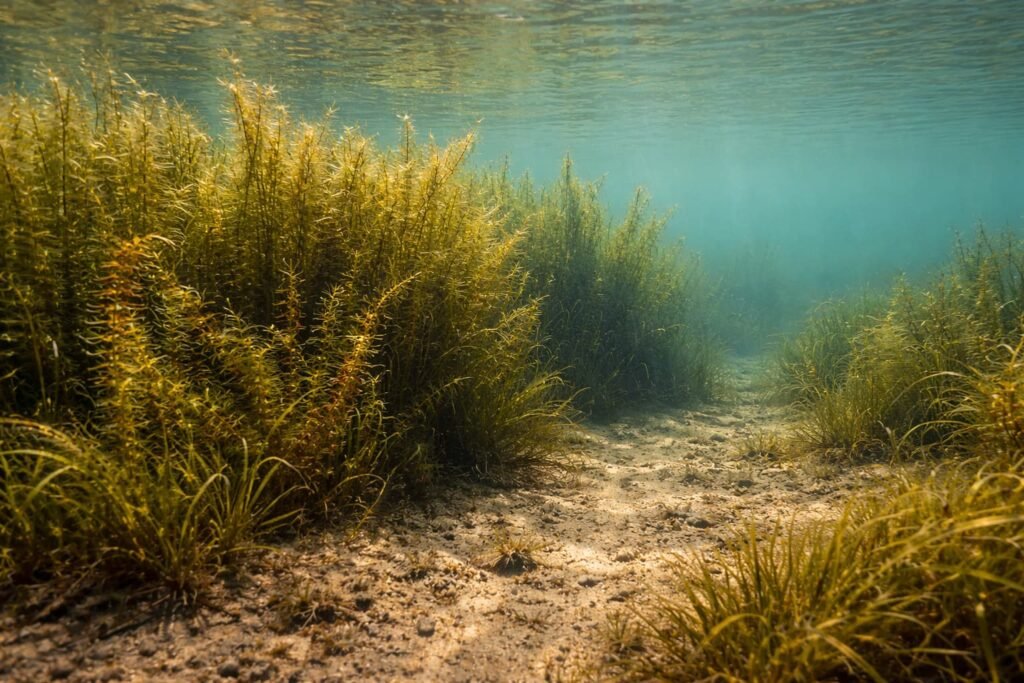
A big mistake in summer is assuming fish are either “in the weed” or “out in open water.” Often they are travelling between both and using the edges far more predictably than anglers realise.
Late Summer Pressure Shifts
By late summer, pressure often begins shaping movement more heavily.
Fish on obvious banks or known spots may begin using safer routes, feeding later, or shifting away from the most predictable water. This is where good anglers stop fishing where carp should be and start fishing where carp still feel comfortable.
Quiet water, awkward banks, less obvious patrol lines, and safer holding areas often become much more valuable at this point.
For the bank-only side of this, use Finding Carp in Big Michigan Lakes: A Bank Angler System.
Early Fall — One of the Best Seasonal Windows
As lakes begin cooling, movement often tightens again around sensible feeding lines and stable routes. Fish may still cover water, but they frequently become easier to track because temperature, food, comfort, and location begin to make more sense together.
This can be one of the most rewarding seasonal shifts for anglers who understand movement properly. Areas that looked too broad and loose in summer may now hold more predictable feeding lines.
This is also where careful campaign baiting can become very powerful, which is why Prebaiting Big Lakes: The 4-Week Blueprint fits naturally into this seasonal movement discussion.
Late Fall — Movement Simplifies Again
As temperatures continue to slide, carp often become more conservative again. They may still feed well in the right windows, but their use of the lake usually becomes tighter and more practical.
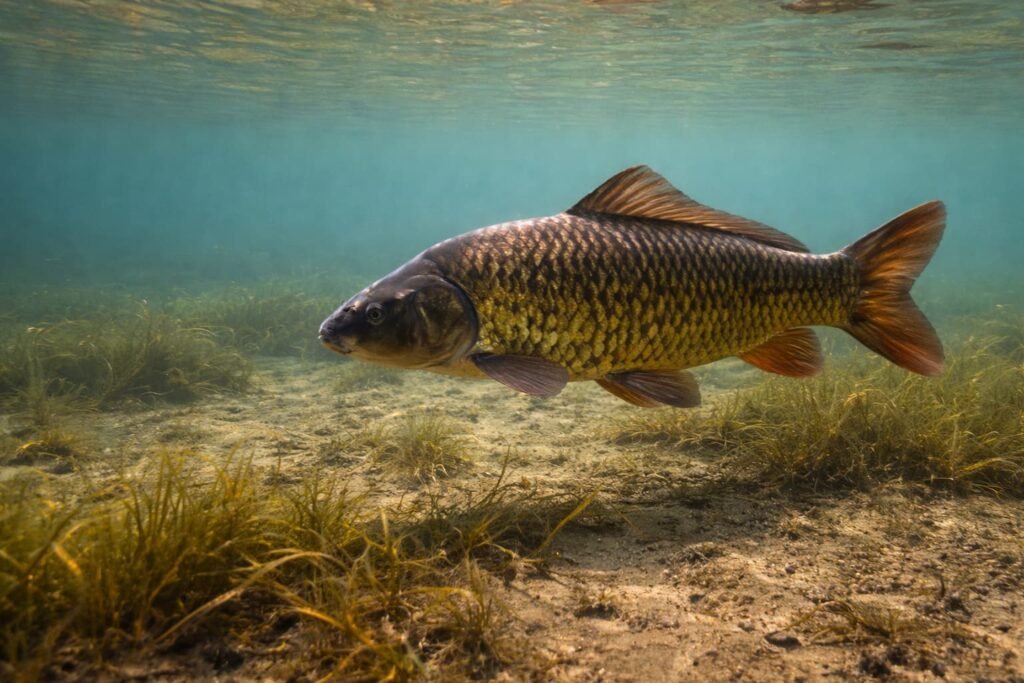
That usually means:
- fewer pointless miles of movement
- greater value in stable water
- more importance on useful access routes
- less reward in fishing empty shallow water just because it looked good in September
Late fall is where a lot of anglers get caught fishing memories. Seasonal movement helps stop that.
How Weather Speeds Up or Slows Down Seasonal Movement
One of the biggest things missing from many seasonal articles is the speed of change.
The season sets the background, but weather often controls how quickly carp react inside that season.
For example:
- a mild spring stretch can suddenly accelerate movement into shallower water
- a cold snap can stall that shift hard
- a warm stable fall period can keep fish active on broader routes longer than expected
- a hard temperature drop can tighten movement very quickly
This is why the season gives you direction, but the current weather tells you how far along the fish really are.
What Actually Drives Seasonal Movement?
Seasonal movement is driven by several things working together:
- Water temperature — often the main background driver
- Spawning urge — especially in late spring
- Natural food — which changes with the lake and the season
- Oxygen and comfort — especially in warmer conditions
- Fishing pressure — which can change where fish feel safe
- Light and security — which affect how confidently fish use certain zones
The more of those you can line up in your thinking, the easier the lake becomes to read.
How Bank Anglers Should Use This
From the bank, seasonal movement should tell you where to start before you ever think about rigs.
Ask these questions:
- what stage of the year are the fish really in?
- are they moving toward warmth, food, spawning water, or safer comfort water?
- which bank intercepts that route best?
- is this area a holding zone, a patrol line, or a feeding area?
That sort of thinking saves a huge amount of wasted time.
It also links directly into How to Find Carp in Big Lakes and Finding Carp in Big Lakes (Michigan Strategy Guide).
Michigan Notes
Michigan makes this topic especially important because seasonal movement can be sharp and uneven. Big inland lakes, northern waters, shallow dark-bottom waters, and clearer open lakes can all move through the same season at different speeds.
That means copying last year’s dates is risky. Copying another state’s timing is worse. Read the water in front of you. Use the season as a guide, not a script.
Northern Michigan in particular can show big differences between one lake and another. Small dark-bottom waters may wake faster than larger clear lakes. Wind exposure can change the pace of warming. Weed growth can change summer patrol routes. The season is always the same on the calendar, but not always the same in the water.
Common Mistakes
- fishing the same swim all year because it produced once
- following the month instead of the water
- confusing pre-spawn visibility with easy feeding
- missing the shift from broad summer patrols to tighter fall routes
- failing to connect movement with temperature and pressure
- trying to force baiting plans onto areas fish have already moved away from
FAQ
Do carp really follow similar seasonal routes each year?
Often yes, though not always in exactly the same way. Good routes tend to stay good because the lake’s structure, access, warmth, and food do not change much.
Is spring the easiest season to read movement?
In many ways yes, because warming trends often narrow fish into clearer zones and routes.
Is summer movement random?
No. It is broader and more variable, but still shaped by comfort, food, oxygen, pressure, and safety.
Should I prebait based on movement?
Yes, but only when you are confident fish are repeatedly using that route or feeding area.
What should I read next?
Go next to Carp Water Temperature Guide for Michigan Lakes, then The Spawning Cycle — Before, During & After, then How to Find Carp in Big Lakes.