

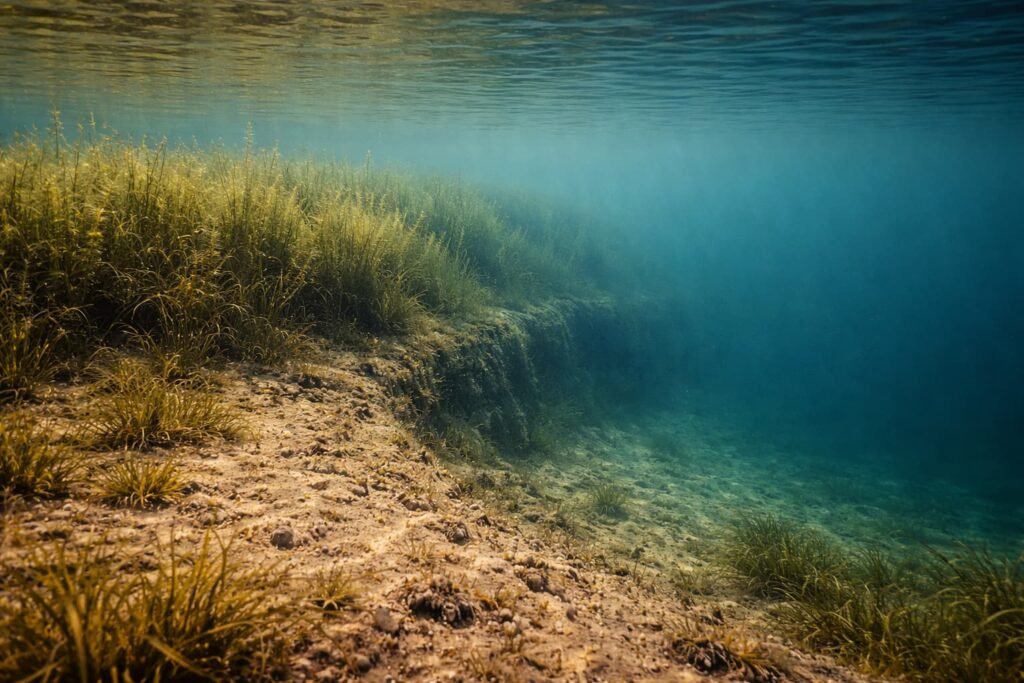
One of the most common carp questions is simple: what depth should I fish?
The honest answer is that there is no single magic depth.
Carp move between shallow feeding water, comfortable mid-depth holding areas, and deeper resting zones depending on season, water temperature, light, oxygen, weather, and natural food. In Michigan lakes, the best depth is usually the one that lets fish move easily between comfort and feeding.
That is why this guide is not about one number. It is about understanding where carp are likely to feed, where they are likely to hold, and how depth changes help you find both.
If you want the short version, start here:
- Spring: 2–8 feet often produces the most feeding activity
- Summer: 6–15 feet is often a strong holding range, with fish moving shallower to feed
- Fall: 5–12 feet is often a productive working range
- Winter: 10–25+ feet often holds resting fish, though feeding windows may still happen shallower
If you are new to locating carp, read Reading a Lake Like a Carp Angler and How to Locate Carp Before You Cast after this page.
Quick Start
If you just want the practical answer, use this as your starting point:
- Fish shallow when water is warming, natural food is active, and carp are clearly feeding
- Fish mid-depth transitions when carp are holding close to feeding zones
- Fish deeper during very hot summer periods, cold winter periods, or bright clear daytime conditions
- Focus more on depth changes than flat, featureless areas
- Treat depth as part of location, not as a separate trick
What Depth Do Carp Feed In Most Often?
In many Michigan situations, carp do a lot of their obvious feeding in shallow water between 2 and 8 feet.
That is especially true when:
- spring sun is warming the edges
- wind is pushing food onto a bank
- weed beds and reed lines hold natural food
- silt flats contain bloodworm, snails, or other feed items
- fish are moving confidently in low light
This is why so many carp anglers see bubbling, muddy water, rolling fish, and feeding signs in relatively shallow areas.
But that does not mean carp live shallow all day.
Very often they feed shallow, then slide back into slightly deeper water nearby.
For more on spotting feeding activity, read Signs Carp Are Feeding.
Why Depth Matters
Depth changes more than just how far the lakebed is below the surface.
It affects:
- water temperature
- oxygen
- light levels
- weed growth
- natural food
- angling pressure
- fish confidence
That is why depth only makes sense when you link it to conditions.
A shallow flat that looks lifeless in one week can be the best area on the lake a few warm days later. A deeper edge that looks unremarkable on paper can hold fish day after day because it gives them security and easy access to nearby food.
If you want to understand that side better, read Watercraft & Conditions and Carp Water Temperature Guide for Michigan Lakes.
Shallow Water Feeding Areas
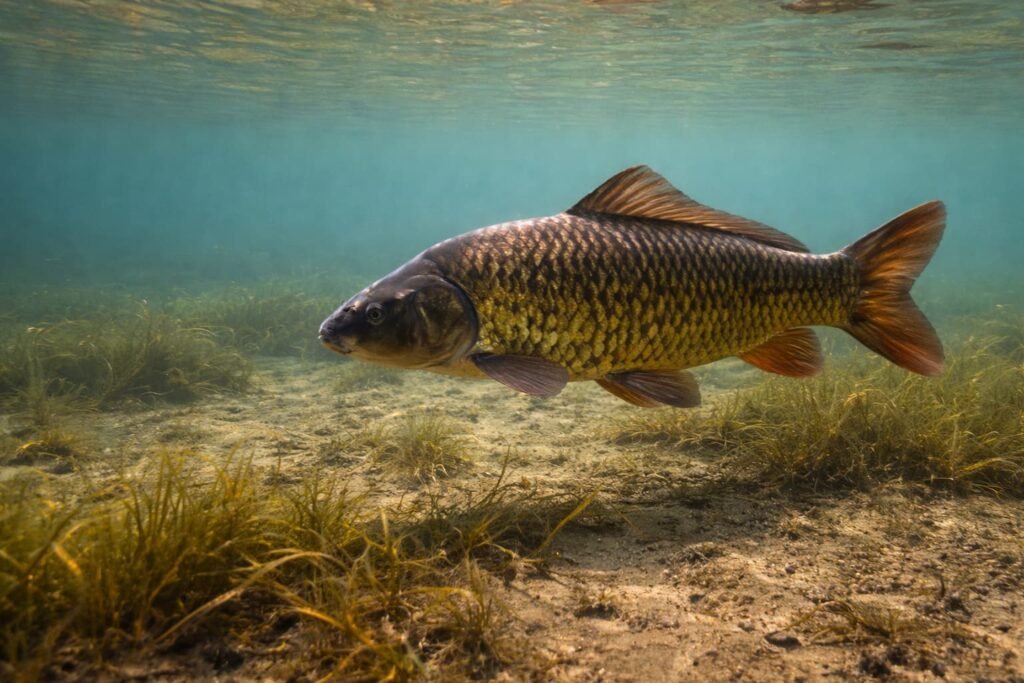
Shallow water is often where the most visible carp activity happens.
In Michigan, shallow feeding water becomes especially important when:
- spring bays warm faster than the main lake
- wind pushes food into the margins
- fresh weed growth attracts natural food
- carp feel safe enough to move in and grub about
- low light or coloured water gives them confidence
Common shallow feeding areas include:
- warming bays
- reed-lined margins
- shallow flats with soft silt
- wind-blown banks
- shallow weed beds
- plateaus close to deeper water
This is where you often see fizzing, cloudy patches, rolling fish, tailing fish, or liners.
The key is not just “fish shallow.” It is fish shallow where carp have a reason to be.
Mid-Depth Holding Areas
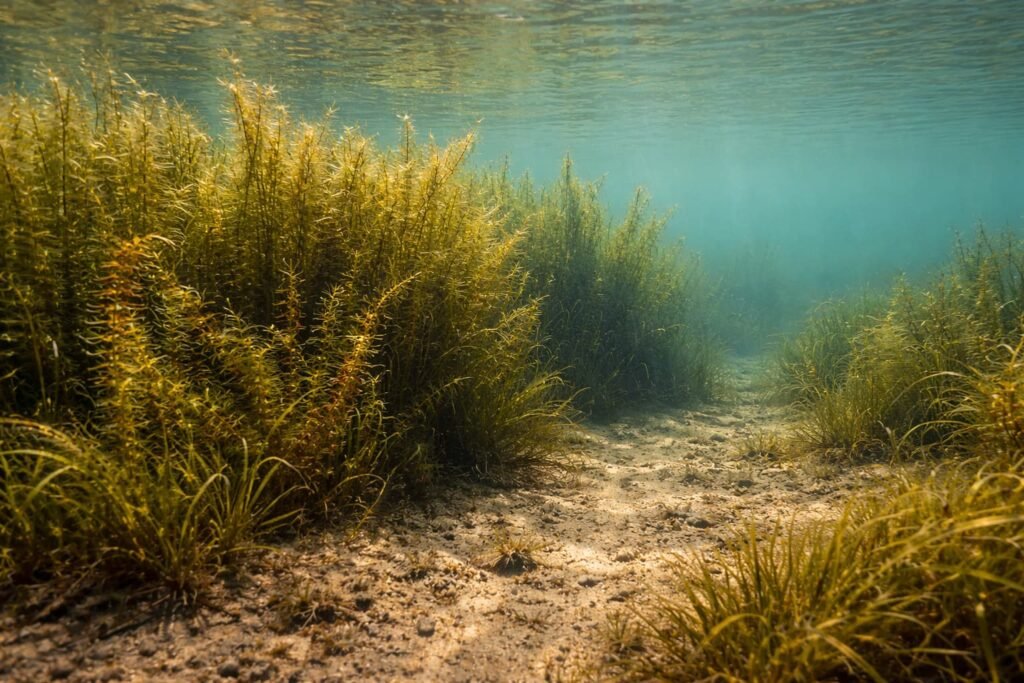
A lot of carp spend much of the day in mid-depth water, especially on big natural lakes.
Depths around 6 to 15 feet often give carp a comfortable compromise:
not too shallow, not too deep, and close enough to feeding water that they can move when conditions improve.
These areas often include:
- the back edge of shallow flats
- weed edges
- gravel bars dropping into deeper water
- shelves and ledges
- slopes leading off productive margins
- underwater highways between feeding areas
These are often better than featureless open water because carp use them as patrol routes.
If I had to choose one general rule for most anglers, it would be this:
Do not only fish the shallow flat itself. Also fish the edge that lets carp move on and off it.
That is where a lot of takes come from.
Deeper Water in Summer and Winter
During extremes, deeper water matters more.
Summer
In hot weather, deeper water can offer cooler, more stable conditions.
That does not mean carp stay deep all day, but it often means they hold deeper and move shallower only when feeding conditions improve.
Look at:
- deeper weed edges
- channels
- drop-offs
- basin edges
- deeper water close to productive flats
Winter
In winter, carp often spend longer periods in deeper, more stable water.
They are usually not spread all over the lake. They tend to hold where conditions are comfortable and then move only when they have a reason.
Look at:
- deeper basins
- channels
- sheltered deeper areas
- deeper water close to any available winter food
For the seasonal picture, read Michigan Carp Seasons Guide, Spring Carp Fishing in Michigan, and Winter Carp Fishing in Michigan.
Depth Changes Matter More Than Exact Depth
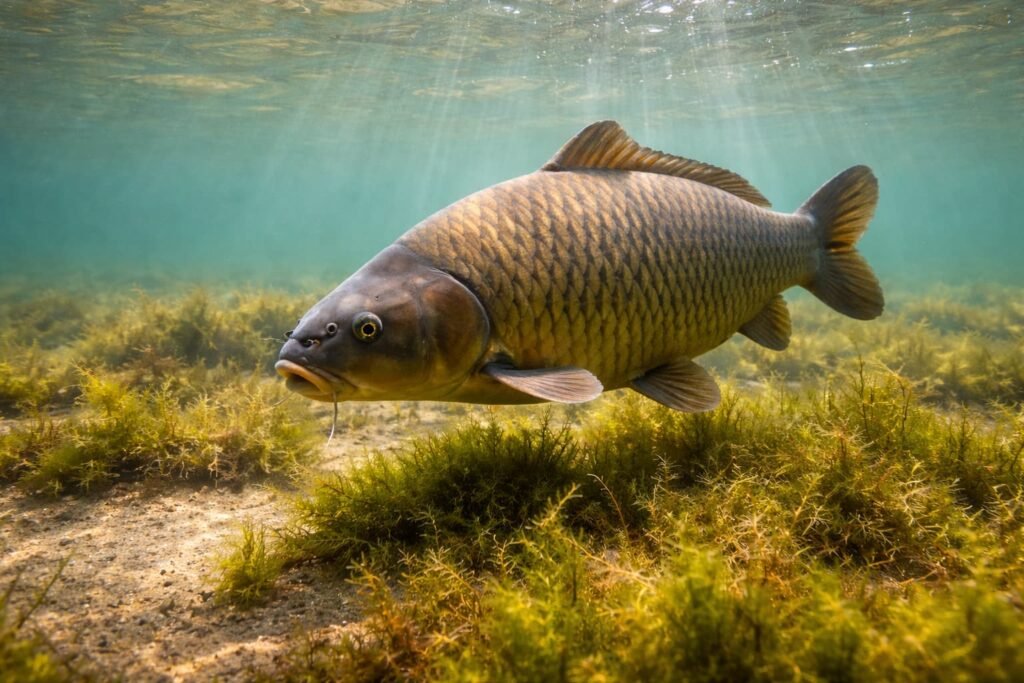
This is the part many anglers miss.
The most productive areas are often not “eight feet” or “twelve feet” on their own. They are the change between one depth and another.
Look for:
- shelf edges
- drop-offs
- ledges
- channels cutting through flats
- points tapering into deeper water
- shallow-to-deep transitions beside weed
Carp use these features because they let fish move between feeding water and resting water without travelling far.
That is why a bland-looking depth change often outfishes a beautiful flat that has no route, no cover, and no reason for fish to use it.
If you want to sharpen that part of your location game, read:
Best Depth by Season in Michigan
Spring
Spring often means the best feeding depth is shallow.
Fish commonly move into 2–8 feet to use warmer water, feeding flats, and margins with active natural food.
Start by checking:
- north-facing or protected bays
- shallow silty areas
- first new weed growth
- wind-blown margins
- soft-bottom flats close to deeper escape water
Summer
Summer usually spreads carp out more.
A lot of fish will hold in mid-depth water, but feed shallower during the right windows.
Start by checking:
- weed edges in 6–15 feet
- deeper margins with cover
- shelves leading off shallow plateaus
- cooler water close to natural food
Fall
Fall often brings strong movement and heavy feeding.
Depths around 5–12 feet can be very productive, especially near routes between deep water and feeding areas.
Start by checking:
- edges of larger flats
- drop-offs
- feeding shelves
- areas close to wintering water
Winter
Winter usually pushes the main holding areas deeper.
That does not mean all winter bites come from the deepest water, but deeper stable areas often become the center of the fish’s world.
Start by checking:
- basin edges
- channels
- stable deeper pockets
- deeper water near any reliable food source
Michigan Notes
A lot of Northern Michigan waters are clear, structured, and full of natural food.
That means carp often behave in a very sensible way:
- feed shallow when conditions are right
- hold deeper when comfort matters more
- use weed edges and drop-offs as routes
- avoid sitting in dead water with no reason to stay there
In practice, that means the best depth in Michigan is usually tied to movement, not just a number on a feature map.
If you are on a clear lake, do not assume fish will stay in skinny water all day.
If you are on a rich, silty, natural-food water, do not ignore the shallows just because the lake has deep water nearby.
Common Mistakes
Fishing only shallow water
Carp may feed shallow, but they often rest deeper nearby.
Fishing only the deepest water
Deep water is not automatically best. It often holds fish, but feeding windows may happen elsewhere.
Ignoring depth changes
A featureless flat is often less useful than a clear transition.
Using one depth all year
Season, light, weather, and water temperature all change where carp want to be.
Forgetting nearby comfort water
The best feeding area is usually stronger when carp can slip in and out of it easily.
FAQ
What depth do carp feed in most often?
A lot of visible feeding happens in shallow water, often around 2 to 8 feet, especially in warmer periods and on productive margins.
Do carp prefer deep or shallow water?
They use both. They often feed shallow and hold deeper, depending on conditions.
Should I fish the deepest part of the lake?
Not automatically. Transition zones between shallow and deep water are often better than the deepest hole itself.
Are carp deeper in clear lakes?
They often spend more time deeper during bright daylight on clear lakes, then move shallower when conditions suit them.
What is the best depth in spring?
Very often the best spring feeding depth is shallow, especially on warming flats and margins with natural food.
Next Steps
To improve your location work, read:
- Reading a Lake Like a Carp Angler
- Signs Carp Are Feeding
- How to Locate Carp Before You Cast
- Where Carp Hold During the Day
- Watercraft & Conditions
If you want the full seasonal picture, read:
- Michigan Carp Seasons Guide
- Spring Carp Fishing in Michigan
- Summer Carp Fishing in Michigan
- Fall Carp Fishing in Michigan
- Winter Carp Fishing in Michigan