
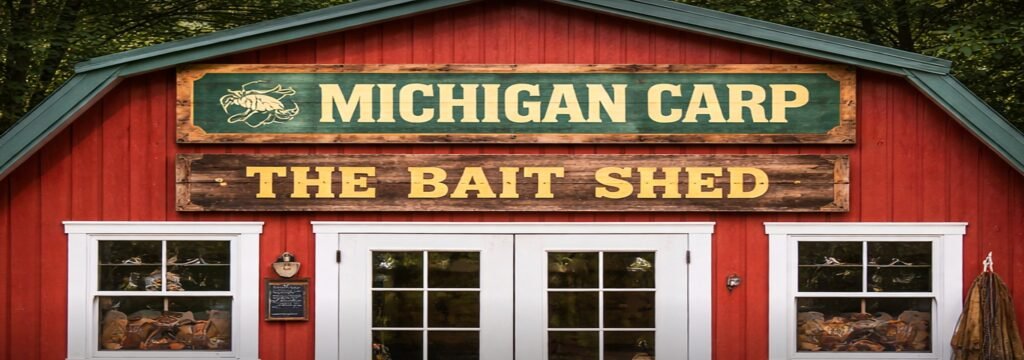
The Bait Shed is the practical bait workshop section on Michigan Carp.
If Carp Bait Guide is the structured entry point to the whole bait section, The Bait Shed is where the bait gets built, tested, tightened, and actually made useful on the bank.
This is not the place for hype, miracle ingredients, or endless shopping lists.
It is the place for practical bait work:
- choosing ingredients properly
- understanding how liquids change a bait
- building better boilies
- improving hookbait behaviour
- making bait more active when the situation calls for it
- keeping the whole thing realistic for Michigan carp fishing
A bait can sound brilliant on paper and still be awkward to make, too rich for the season, too locked up in the water, or too complicated to repeat with confidence. The Bait Shed is here to stop that happening.
On This Page
- Quick Start
- What The Bait Shed Is For
- Start Here
- Core Workshop Routes
- How to Use This Section
- Michigan Notes
- Common Mistakes
- Use This Section Alongside
- Final Word
- Next Steps
Quick Start
If you are new to this section, do this:
- start with Bait Ingredients
- then read Liquids & Glugs
- then move into Boilie School
- then use the deeper workshop and bait science articles only when you need them
That gives you a clean route through the practical side of bait without getting lost in theory.
What The Bait Shed Is For
The Bait Shed sits between the broad bait guides and the deep science pages.
It is here for anglers who want to make better bait decisions in real terms:
- what should I actually add?
- what should I leave out?
- how should this bait behave in the water?
- is this helping the bait or just cluttering it?
- what can I improve without rebuilding everything from scratch?
This section is not only about homemade boilies either.
It is also about crumb, chops, pellets, liquids, hookbait treatments, leakage, digestibility, active outer layers, and the practical things that often make more difference than another expensive powder.
Start Here
Bait Ingredients
Start here if you want the broad ingredient workshop page before comparing specific ideas or changing a recipe blindly.
Liquids & Glugs
Use this page if you want a practical guide to liquid attraction, outer treatments, soak ideas, and how to sharpen bait without turning it into a mess.
Boilie School
Go here if you want the full lesson route through boilie basics, ingredients, base mixes, liquids, rolling, drying, and bank use.
Building a Better Boilie
Use this if you already understand the basics and want a more worked example of bait design in practice.
Core Workshop Routes
Ingredient choice and comparison
Use these when you are deciding what belongs in the bait and what does not:
- Compare Ingredients
- Bait Ingredients
- Milk Proteins vs Fishmeal in Carp Bait
- Raw vs Processed Ingredients in Carp Bait
- Anti-Nutritional Factors in Carp Bait Ingredients
Liquids, leakage, and active bait behaviour
Homemade Bait Liquids (Practical Guides)
If you want to improve your bait without overcomplicating things, these are the key homemade liquids to understand and use.
- Homemade CSL for Carp Fishing in Michigan
- Homemade Yeast Extract for Carp Bait
- Liver Hydrolysate for Carp Bait
- Fermented Liquids vs Hydrolysates for Common Carp
Use these when the bait needs to wake up faster, communicate better, or work harder in short sessions and cooler water:
- Liquids & Glugs
- Why Some Baits Leak Faster
- The Role of Hydrolysates in Carp Bait
- Yeast, CSL, and Fermented Liquid Foods
- Salt, Acids, and Mineral Signals
Bait design and practical boilie work
Use these when you want to build or tighten the bait itself:
- Boilie School
- Building a Better Boilie
- Solubility vs Nutrition in Carp Bait
- Oils, Fats, and Energy
- Proteins, Peptides, and Hydrolysates
Hookbait, session, and bank-use thinking
Use these when you want to turn workshop bait into practical fishing bait:
- Seasonal Baiting
- The Smart Angler’s Guide to Carp Bait
- Particles 101
- Prebaiting Big Michigan Lakes
- Sessions
How to Use This Section
The best way to use The Bait Shed is to treat it like a workshop bench.
Do not try to learn everything at once.
Start with the actual problem you are trying to solve.
For example:
- bait too rich for the conditions
- bait too hard and too slow to wake up
- hookbait not standing out properly
- too many ingredients doing the same job
- unsure whether an ingredient really earns its place
- wanting a more active bait for short sessions or cool water
Then read the page that fits that problem, make one sensible change, and test it properly.
That is how this section should work.
Michigan Notes
This matters on Michigan waters because bait often has to work under changing, awkward, or less-than-perfect conditions.
Cold spring water, natural-food-rich lakes, zebra mussels, big open water, short feeding windows, and moving fish all push you toward bait that is believable, digestible, and practical rather than flashy.
That is why this section matters.
On many Michigan waters, the best bait improvement is not making the bait more complicated.
It is making it more suitable.
A cleaner mix.
A better outer signal.
A more active crumb.
A better hookbait.
A smarter liquid.
A more sensible level of richness.
That is often where the real gains come from.
Common Mistakes
- adding ingredients because they sound advanced rather than because they do a job
- building bait that is too rich for the season
- treating liquids like magic rescue tools
- overcomplicating the mix before the basics are sound
- ignoring bait form and focusing only on the recipe
- forgetting that hookbait behaviour and leakage often matter as much as the base mix
- changing too many things at once and learning nothing from the result
Use This Section Alongside
Read Carp Bait Guide if you want the broader overview first.
Read Bait Science if you want the deeper why behind digestibility, leakage, food signals, processing, oils, and hydrolysates.
Read Boilie School if you want the structured beginner-to-practical boilie route.
Read Tactics, Rigs, and Sessions if you want to connect bait decisions to actual fishing situations instead of treating bait in isolation.
Final Word
The Bait Shed is where bait ideas either become useful or get exposed.
That is the point of it.
Not more clutter.
Not more products.
Not more labels.
Just better practical bait decisions, better workshop thinking, and bait that makes more sense for the way you actually fish.
Next Steps
If you are new, begin with Bait Ingredients and Liquids & Glugs.
If you want the full structured route, move into Boilie School.
If you want the bigger picture behind all this, go back through The Smart Angler’s Guide to Carp Bait and Bait Science.
Then come back to The Bait Shed whenever you need to solve a practical bait problem rather than just read more bait theory.