
How to Prepare, Store, and Fish Corn, Seeds, Nuts & Beans
Carp Particles: The Foundation of the Michigan Carp Bait System
Particles are the backbone of consistent carp fishing in big Michigan waters.
Carp particles are small natural baits like corn, seeds, beans, and nuts that keep carp feeding for longer and are especially effective in Michigan’s clear lakes when prepared safely (soak → boil → rest).
This is the main MichiganCarp.com guide to carp particles. It covers safe preparation, storage, and how to fish corn, seeds, nuts, and beans without harming carp. If you only read one particles page, start here — then use the links below to go deeper on specific baits and tactics.
Particles:
- Build feeding confidence
- Keep carp grubbing for long periods
- Teach fish that an area is safe to feed
- And form the base layer that boilies, hookbaits, and PVA presentations are built on
This guide covers everything you need to know about preparing, storing, and using particles safely and effectively in Northern Michigan.
Below this intro is the full, in-depth particles guide.
If you spend enough time around pressured carp, one thing becomes obvious: they learn fast. They learn what boilies look like. They learn what danger feels like. And, sooner or later, they start treating big, obvious hookbaits with suspicion.
That is exactly where particles come into their own.
Particles don’t just catch carp — they change how carp feed. Instead of picking up one big bait and drifting away, fish start grubbing, sifting, competing, and settling into the swim. And once carp start feeding like that, their caution drops and your chances go up dramatically.
In many clear, natural waters — especially lakes like we have across Northern Michigan — a properly used particle approach will outfish boilies more often than most anglers realise.
However, there is a catch: particles only work when they are prepared properly, stored safely, and used intelligently.
Get that right, and they become one of the most powerful tools in carp fishing.
Table of contents
Particles: Start Here
This guide is the foundation of the Michigan Carp particle system. It covers what particles are, how to prepare them safely, and how to use them in big Michigan lakes.
But particles are a broad category, and some deserve their own deeper guides. Use this page as your base, then branch out to the focused articles below.
The Particles System (Read in This Order)
1) The Core Guide (this page)
The Ultimate Carp Particles Guide (Michigan Edition)
→ Covers preparation, safety (soak → boil → rest), storage, baiting amounts, and how to use particles in real sessions.
2) How to Use Sweetcorn for Carp
A simple, Michigan-friendly system for prepping, storing, and feeding corn without overdoing it.
Read: How to Use Sweetcorn for Carp
3) Tiger Nuts (Selective Particle Fishing)
Tiger Nuts for Carp Fishing: Preparation, Storage, Rigs & Tactics
→ A selective, big-fish particle that needs special prep and careful use.
Read: Tiger Nuts for Carp Fishing
4) Storage & Freezing Particles
Carp Bait Storage & Preparation: The Complete Guide (Michigan Edition)
→ How to store cooked particles safely, freeze them, and avoid sour or dangerous bait.
Read: Carp Bait Storage & Preparation
5) Using Particles with PVA & Tight Feeding
PVA Bag Fishing for Carp
→ How to combine crushed particles, pellets, and groundbait for ultra-accurate feeding.
Read: PVA Bag Fishing for Carp
How This Guide Should Be Used
If you’re new to particle fishing:
- Read this page fully first
- Learn the safety rules (they matter)
- Then branch out into the focused guides above
- Keep it simple and consistent
Particles are one of the most powerful tools you can use in big Michigan waters — if they’re prepared and used properly.
Read: Tiger Nuts Guide)
Read: Bait Storage & Prep Guide
What are “particles” in carp fishing?
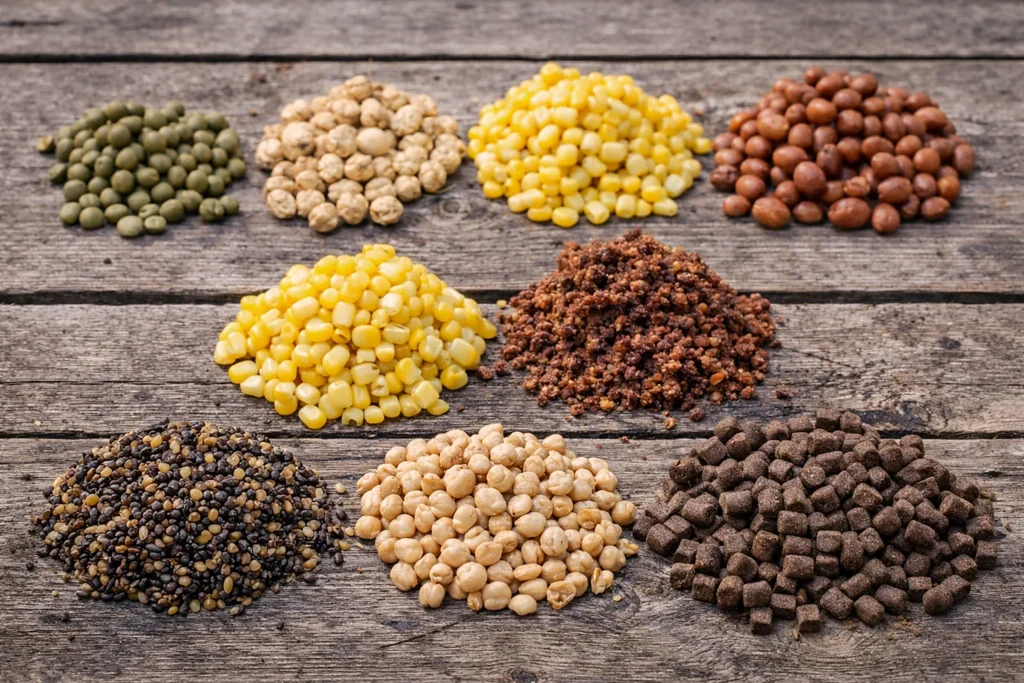
In carp fishing, the word particles refers to small natural food items you can feed in numbers to create prolonged feeding. These include:
Grains & corn
- Yellow maize / field corn
- Sweetcorn
- Giant white corn (large maize / hominy-style)
Seeds
- Hempseed
- Wheat
- Barley
- Birdseed blends
Pulses (peas/legumes)
- Chickpeas (garbanzo beans)
- Maple peas
- Pigeon peas
- Black-eyed peas
Beans
- Lima beans
- Kidney beans
- Navy / cannellini / black beans
Nuts (use with care)
- Tiger nuts
- Peanuts
- Brazil nuts (mainly hookbait use)
Particles combine perfectly with good rig presentation Read: Hair Rig Setup and they also work extremely well in tight, accurate approaches Read: PVA Bag Fishing Guide.
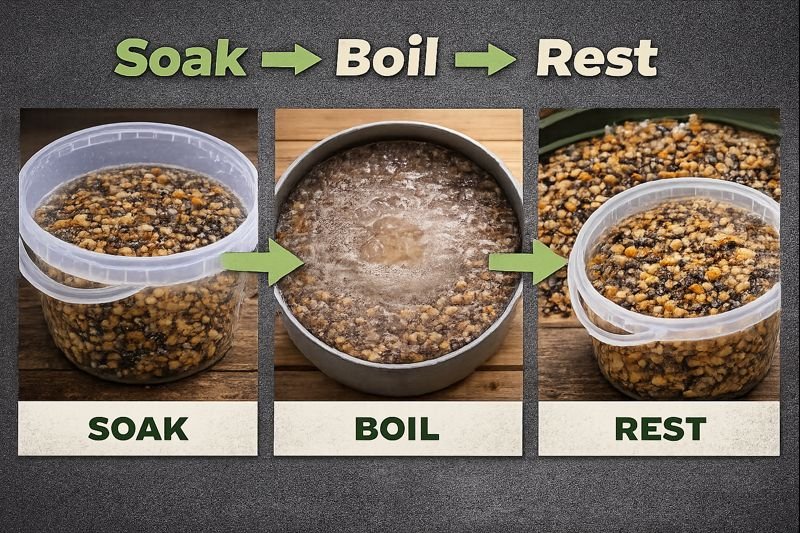
The Golden Rule: Soak → Boil → Rest (No Exceptions)
Never feed dry or undercooked particles. Not a handful. Not “just to try them”. Not ever.
Your universal protocol is:
- Soak (rehydrate fully)
- Boil / simmer (cook completely through)
- Rest in the liquor (cool and develop attraction)
This applies to all grains, seeds, pulses, beans, and nuts.
(Read: Bait Storage & Prep Guide)
Why particles work so well (especially on pressured carp)
Particles change carp behaviour because:
- Carp can’t eat them quickly
- They keep fish searching
- They create competition
- They reduce caution
- They hold carp in the swim longer
This is especially effective in clear water, shallow lakes, pressured waters, and natural venues with lots of invertebrate life — in other words, exactly the kind of waters many of us fish in Michigan and the northern US.
The Universal Preparation Method
Step 1 — Soaking (12–48 hours depending on item)
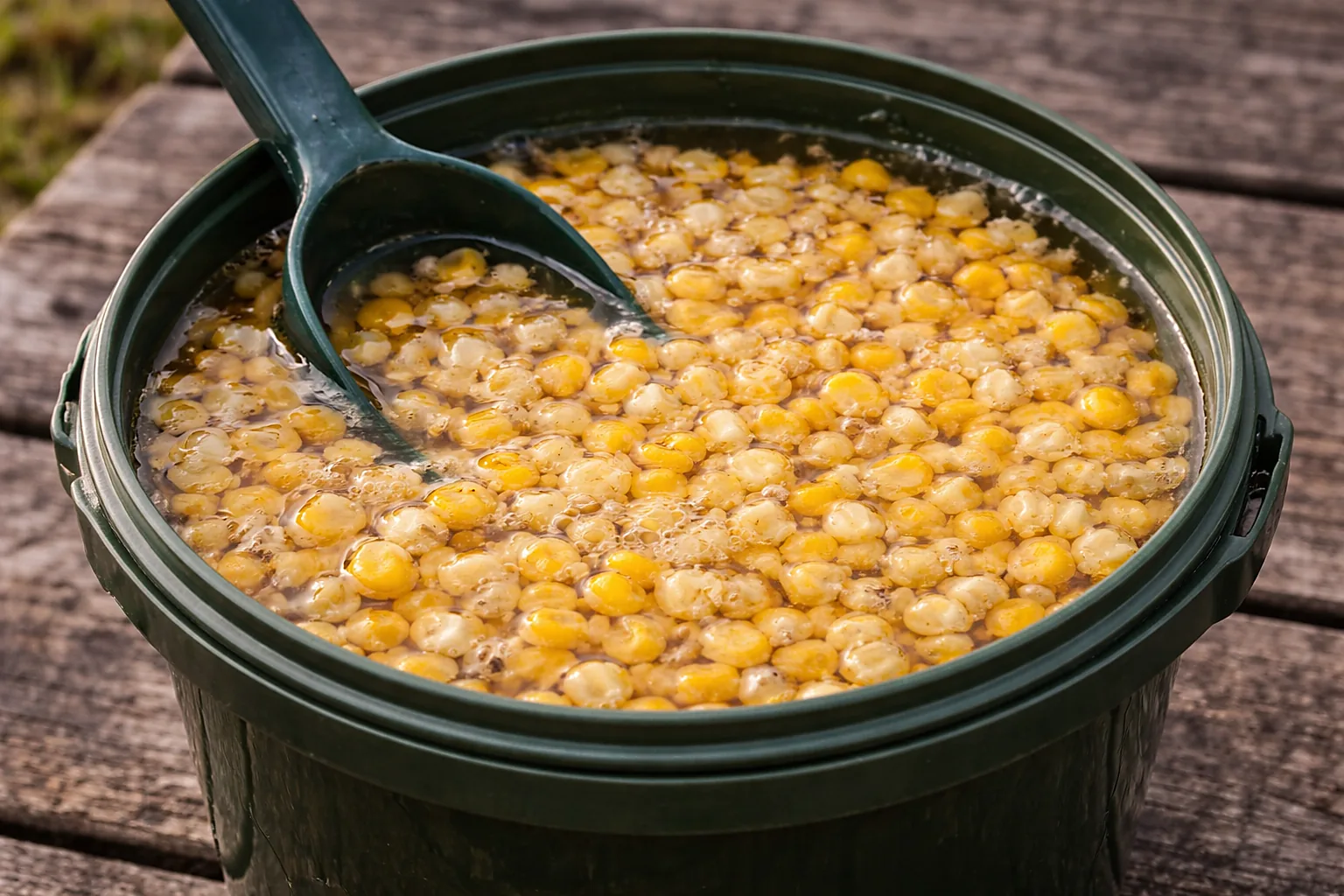
- Always use plenty of water (particles swell a lot)
- Keep covered
- For big items (corn, nuts, beans), lean toward the longer end
Step 2 — Boiling / simmering
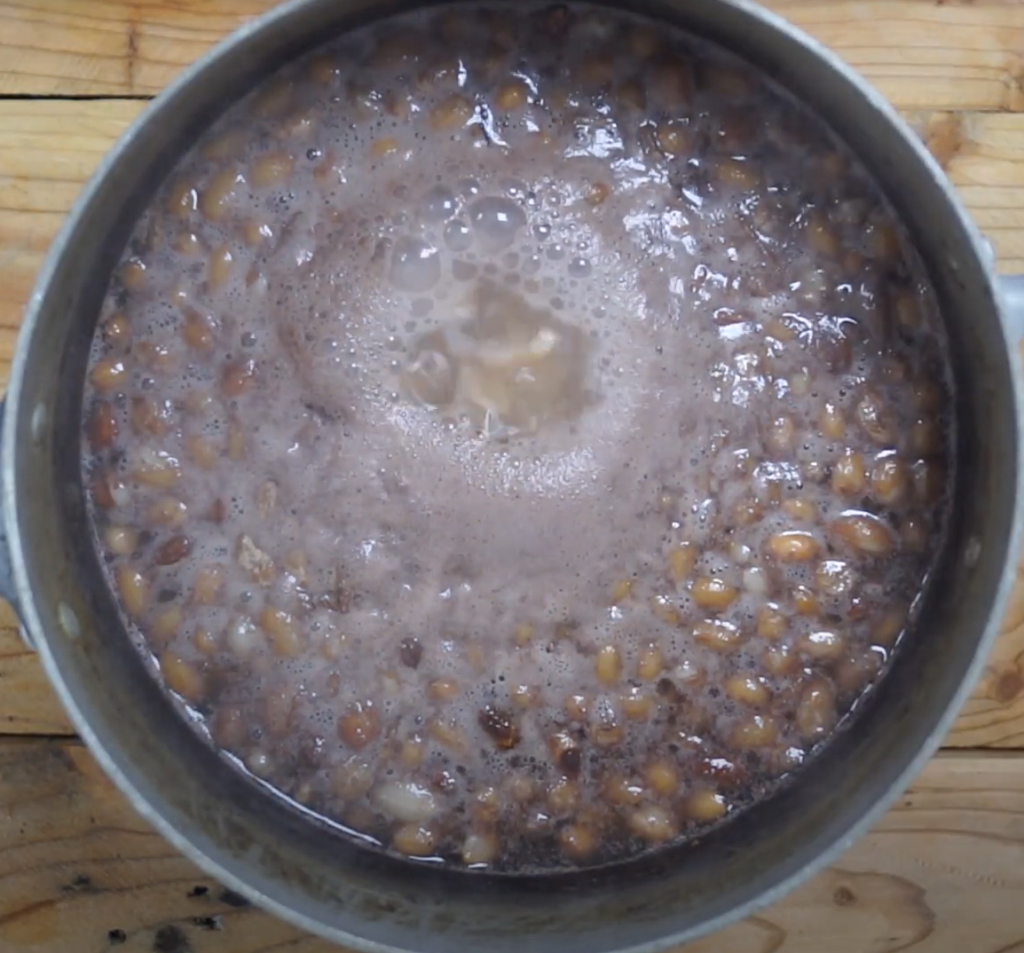
Bring to the boil, then simmer until fully cooked and consistent.
Step 3 — Resting in the liquor
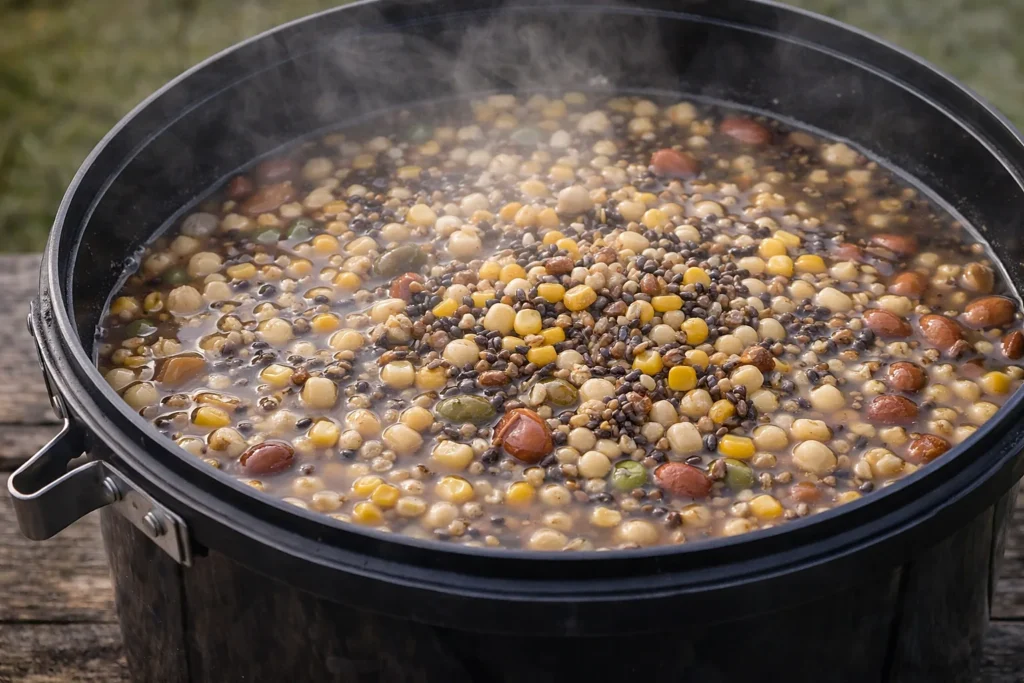
Turn off the heat and let everything cool in the same water. This is where sugars, starches, and soluble attractors develop. Don’t rinse it all away — that liquid is part of the bait.
Preparation Times & Notes (By Ingredient)
These are safe baseline ranges. Always cook until the inside is soft and consistent.
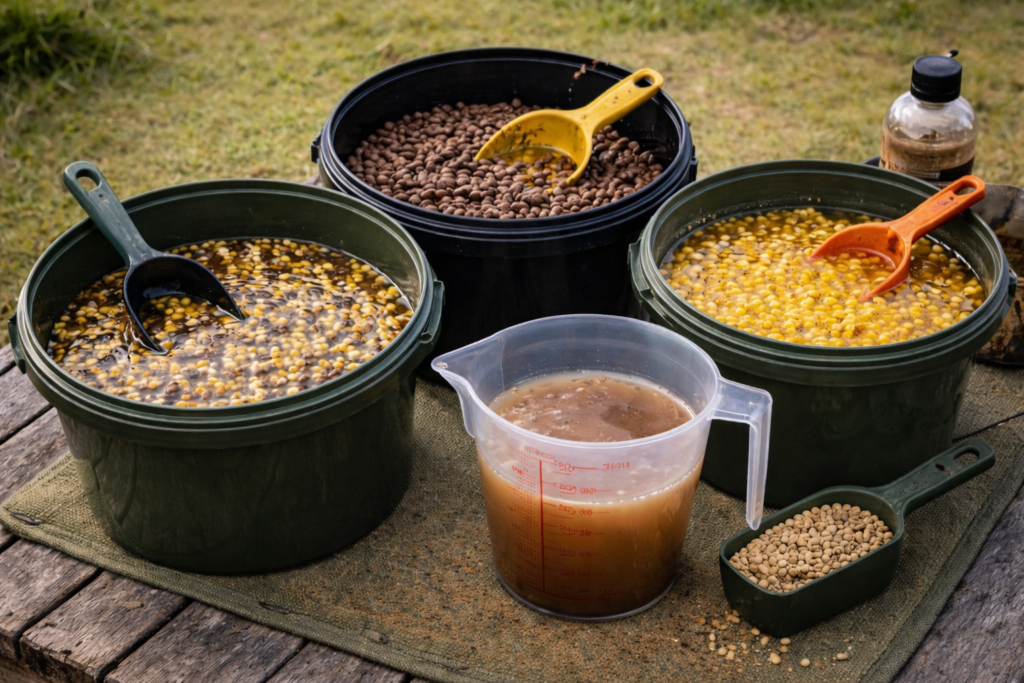
Yellow maize / field corn
- Soak: 24h
- Boil: 30–60 min
- Rest: overnight
Giant white corn (big maize)
- Soak: 24–36h
- Boil: 45–75 min
- Rest: overnight
Use: brilliant selective hookbait and visual stand-out over normal corn.
Hempseed
- Soak: 12–24h
- Boil: 20–30 min (until white shoots appear)
- Rest: yes
Wheat / barley
- Soak: 12–24h
- Boil: 20–30 min
- Rest: yes
Maple peas
- Soak: 12–24h
- Boil: 30–45 min
- Rest: yes
Also excellent as a hookbait.
Chickpeas
- Soak: 24h
- Boil: 30–45 min
- Rest: yes
Peanuts (use responsibly)
- Soak: 24h
- Boil: 30–45 min
- Rest: yes
Rules:
- Use mainly as hookbait or 5–10% of a mix
- High-fat = don’t carpet-feed
Brazil nuts
- Soak: 24h (if raw)
- Boil: gentle simmer until softened
- Rest: yes
Best use: single hookbait or half nut as an “oddball”.
Beans (lima, kidney, etc.)
- Soak: 24h
- Boil: 45–90 min until fully cooked
- Rest: yes
How to Use Particles on the Bank (This Is Where Results Are Made)
Particles are not a “more is more” bait. They work best when you use them with restraint, accuracy, and a reason. Most particle success comes from feeding the right amount in the right place, then topping up only when the swim tells you to.
Strategy 1 — Quick session / new swim
Keep it simple and tight.
- 1–2 small handfuls
- single hookbait in the middle
- treat it like a trap, not a bed of bait
This is the best starting point when you are learning a swim, fishing a short window, or trying to get quick feedback without overcommitting.
Strategy 2 — Day session
Feed enough to build confidence, but not enough to lose control.
- start with a modest patch
- watch for signs, liners, bubbling, and fish movement
- top up after activity, not by the clock
Particles are excellent here because they let you build interest without turning the swim into a gamble.
Strategy 3 — Campaign fishing
This is where particles can really shine.
- little and often
- build confidence over time
- small seeds hold them, bigger items reward them
The goal is not to dump bait in. The goal is to make the area feel safe and worth visiting repeatedly.
Michigan-Specific Strategy (April–October)
This is where particles really shine in our waters.
Early spring (cold water)
- Focus on: hemp, wheat, small corn
- Very light baiting
- One standout hookbait (chickpea or giant corn)
Late spring to summer
- Carp feed harder and digest better
- You can introduce maize, maple peas, tiger nuts
- Still: keep it tight and accurate
Fall
- Carp still feed, but don’t overdo high-fat items
- Lean back toward maize, wheat, hemp
- Use peanuts/Brazil nuts mainly as hookbaits only
Hookbaits: Turning Particles Into Fish-Catchers
Best particle hookbaits:
- Giant corn
- Chickpea
- Tiger nut
- Maple pea
- Peanut (balanced)
- Bean hookbait
- Brazil nut piece
Balanced hookbaits are a huge edge. That’s because they’re easier to inhale, they sit more naturally, and they reduce the “weight signature” of the hookbait.
Particles in PVA Bags
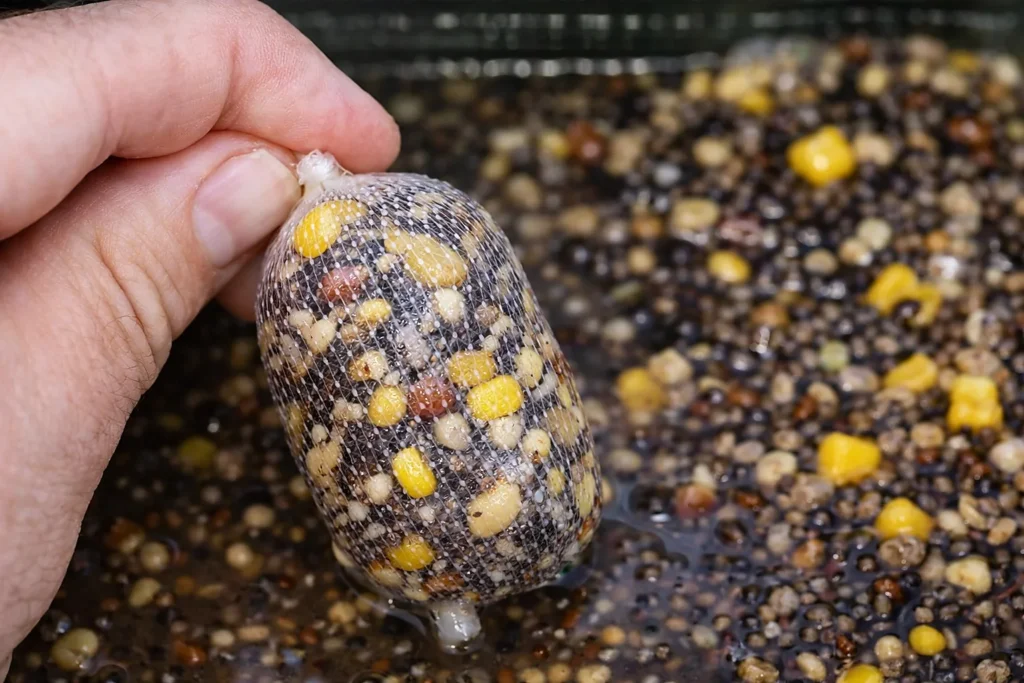
Yes — it works extremely well, especially for short sessions and pressured fish.
- Towel dry particles
- Mix with dry powders
- Compress tight
- Avoid wet liquids
Read: PVA Bag Fishing Guide
Storage
- Best: freeze in session bags with liquor
- Short term: fridge in liquor
- Hookbait tub: separate working tub
If it smells rotten, bin it.
Common Mistakes
- Undercooking
- Overfeeding
- Too many big items
- Wrong hookbait
- Fishing too wide
Three Proven Particle Mixes
All-round
- maize
- wheat
- hemp
Best for: general Michigan sessions, public water, and anglers who want one dependable mix they can repeat.
Hookbait idea: sweetcorn, giant corn, or a simple balanced corn-style bait.
Why it works: maize gives you the base, wheat keeps the mix busy, and hemp keeps fish grubbing longer.
Selective
- maize + some giant corn
- maple peas
- hemp
Best for: cleaner feed response, stronger hookbait matching, and situations where you want to avoid just feeding plain broad bait.
Hookbait idea: giant corn, maple pea, or tiger nut where appropriate.
Why it works: the base still feeds fish confidently, but the bigger or more distinct items add a more selective angle.
Pressured-water
- maize/hemp base
- few chickpeas
- few peanuts
- giant corn as hookbait
Best for: cautious fish, clear water, and situations where you want a little more thought in the baiting without turning it into a circus.
Hookbait idea: giant corn, chickpea, or a neat balanced stand-out bait.
Why it works: the mix stays grounded in proven feeding items, but gives wary fish something slightly different to home in on.
Do not overdo the “extras.” The base still matters more than the clever bits.
Final Thoughts
Particles are not just cheap bait. They are a feeding system. Used properly, they hold carp in the swim, reduce caution, and create repeatable opportunities on the kind of waters many of us fish across Michigan.
The big lesson is simple: safe prep first, sensible baiting second, and consistency always. You do not need a dozen ingredients. You need a few particle options you understand properly, and a way of using them that matches the season and the water in front of you.
If you are new to particle fishing, start with a simple corn-based approach, learn the prep rules properly, and then build outward only when you have a reason.
Read next: Corn for Carp • Hemp for Carp • Tiger Nuts • Simple Particle Mixes
Different particles trigger carp feeding for different reasons. For a deeper explanation of the science behind bait attraction, see our carp bait guide.
FAQ’S
How much particle bait should I start with?
Less than you think. Start with a small, controlled amount and only build if fish activity tells you the swim is earning more bait.
Can carp be caught on peanuts and beans?
Yes — peanuts, chickpeas, maple peas, and certain beans can all work as hookbaits when properly soaked and cooked. Use nuts/beans mainly as hookbaits or small mix additions.
What is the safest way to prepare particles?
Use the soak → boil → rest in liquor method for every particle. Never feed dry or undercooked items.
Is giant white corn good for carp?
Yes. It’s a great selective hookbait because it’s large, visual, and different from standard sweetcorn.
Can I freeze prepared particles?
Yes — freezing in session bags with some liquor is the best storage method for consistency and convenience.
Can I use particles in PVA bags?
Yes. Dry the particles first and mix with dry powders, then compress the bag tight.