

Intro
Fermented liquids and hydrolysates both have a place in carp bait, but they are not the same thing and they do not always do the same job.
That is where many anglers get muddled. They know both types can work, but they are not always clear on when to use one, when to use the other, and how each one should fit into a sensible baiting approach.
In plain terms, fermented liquids are usually broader, steadier, and better for building a food signal through the baited area. Hydrolysates are usually sharper, faster, and better when you want a stronger signal close to the hookbait or around the little trap you are fishing.
Once you understand that difference, it gets much easier to use them properly.
Quick Start
If you want the short version, start here:
- Fermented liquids are usually better for free bait, particles, pellets, and building a baited area.
- Hydrolysates are usually better for hookbait treatment, sharper boilie soaks, and stronger short-range attraction.
- Fermented liquids often feel broader and steadier.
- Hydrolysates often feel stronger and faster.
- The best practical approach is often to use fermented liquids on the freebies and hydrolysates on or near the hookbait.
That simple split will get most anglers a long way.
What Fermented Liquids Are
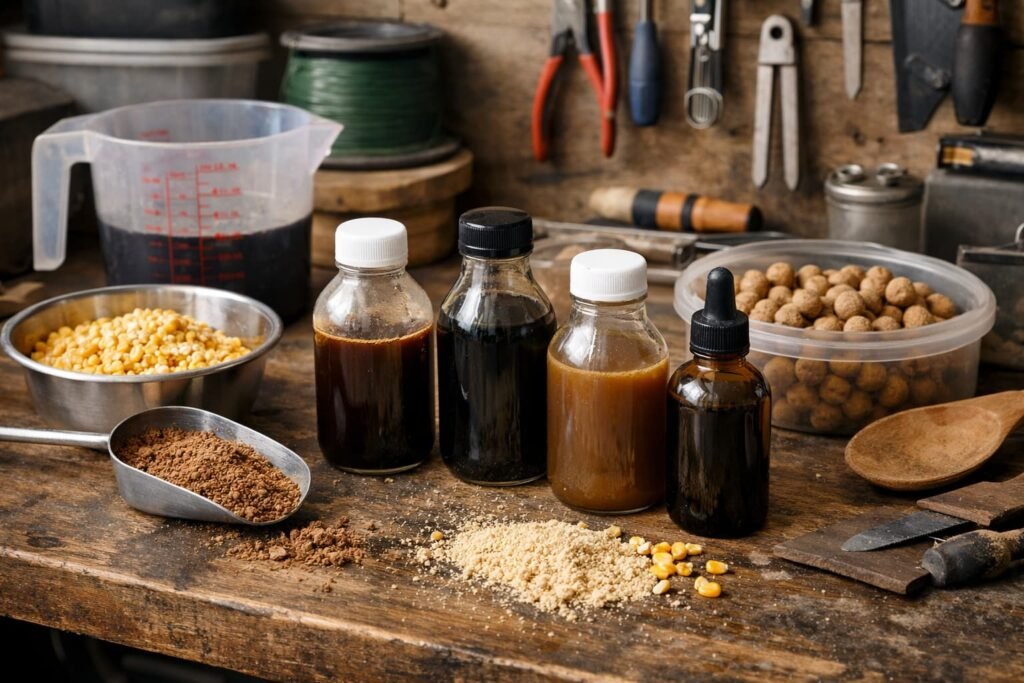
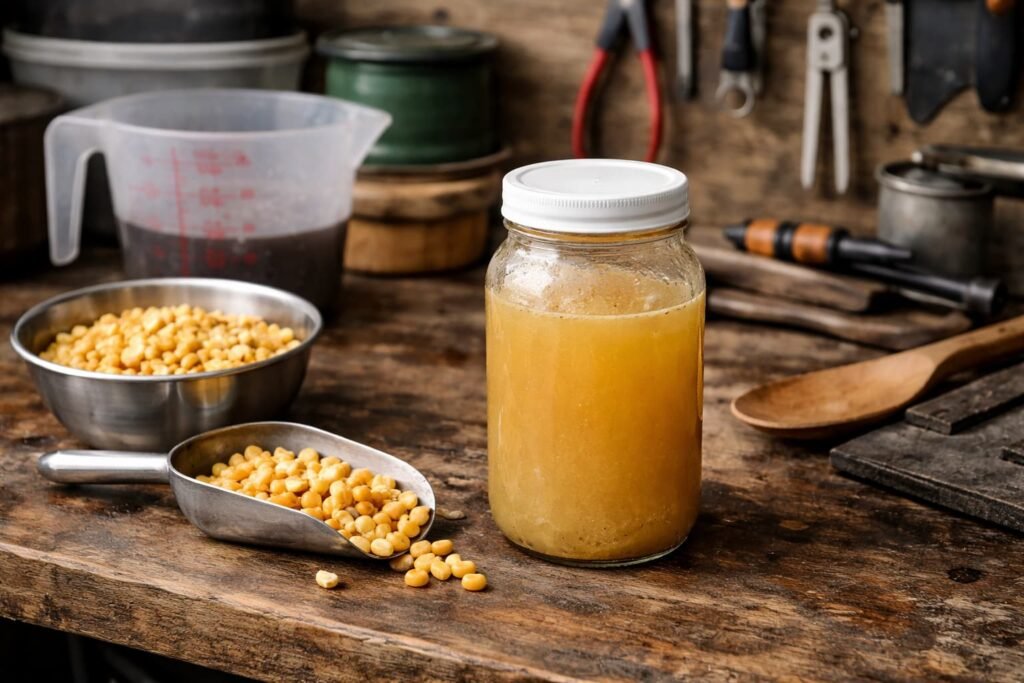
Fermented liquids are made through microbial action over time. In simple terms, ingredients like corn, wheat, yeast, or particle liquids are allowed to develop and break down gradually.
The result is usually a liquid that is:
- sourer
- broader in smell
- food-like rather than aggressive
- good for larger baited areas
- useful in free bait treatment
Common carp bait examples include:
- homemade CSL
- fermented particle liquids
- fermented wheat liquids
- yeast-based fermented liquids
For the main guide, see Homemade Fermented Liquids and Hydrolysates for Carp Fishing in Michigan.
What Hydrolysates Are
Hydrolysates are made by breaking proteins down into more soluble liquid form. That usually means a stronger, more direct liquid with a sharper food signal.
The result is usually a liquid that is:
- richer
- more direct
- faster leaking
- more concentrated
- better suited to hookbait treatment or stronger bait spots
Common examples include:
- liver hydrolysate
- fish hydrolysate
- shellfish hydrolysate
- enzyme-treated richer food liquids
In practical carp bait terms, hydrolysates are often the stronger option when you want one bait to stand out.
The Main Difference in Plain English
This is the easiest way to think about it.
Fermented liquids usually do a better job of helping the whole baited area smell and feel like food.
Hydrolysates usually do a better job of making the hookbait or the little pile around it feel like the strongest food item in the swim.
That is not a scientific definition. It is the practical bank-side version.
And for most anglers, that is the version that matters.
Fermented Liquids: Strengths and Weaknesses
Where fermented liquids shine
Fermented liquids are especially good when you want:
- better free bait attraction
- a softer, more natural background signal
- particles, pellets, and spod mixes to work harder
- a low-cost liquid for regular use
- a more natural style of bait treatment
Where they are less strong
They are usually less effective when you want:
- one bait to stand out sharply
- a strong direct hookbait boost
- a more concentrated hit from a small amount of liquid
That does not mean they are weak. It just means their strength is usually broader rather than sharper.
For a good example, read Homemade CSL for Carp Fishing in Michigan.
Hydrolysates: Strengths and Weaknesses
Where hydrolysates shine
Hydrolysates are especially good when you want:
- a strong hookbait edge
- faster leak-off
- a sharper food signal
- a stronger boilie soak
- a small trap around the hookbait to stand out
Where they are less strong
They are usually less suited when you want:
- cheap large-scale free bait treatment
- bulk particle use at volume
- a softer background baiting approach
Again, that does not mean they cannot be used on freebies. It just means that is not usually where they offer the best value.
For a good example, read Liver Hydrolysate for Carp Bait.
Fermented Liquids vs Hydrolysates on Free Bait
If you are treating:
- particles
- pellets
- spod mixes
- maize
- hemp
- tiger nuts
- general freebies
then fermented liquids usually make more sense.
Why?
Because they are often:
- cheaper to make or use
- easier to apply in volume
- broader in food signal
- better for building attraction through the whole area
This is where something like CSL earns its keep.
Fermented Liquids vs Hydrolysates on Hookbaits
If you are treating:
- hookbaits
- small boilie traps
- little stick mixes around the lead
- small pellet patches near the hook
- high-attraction short-session spots
then hydrolysates often make more sense.
Why?
Because they are often:
- stronger in smaller amounts
- faster leaking
- richer and more direct
- better at making one bait stand out
This is where liver hydrolysate or another richer hydrolysate can be very useful.
Where Yeast Extract Sits
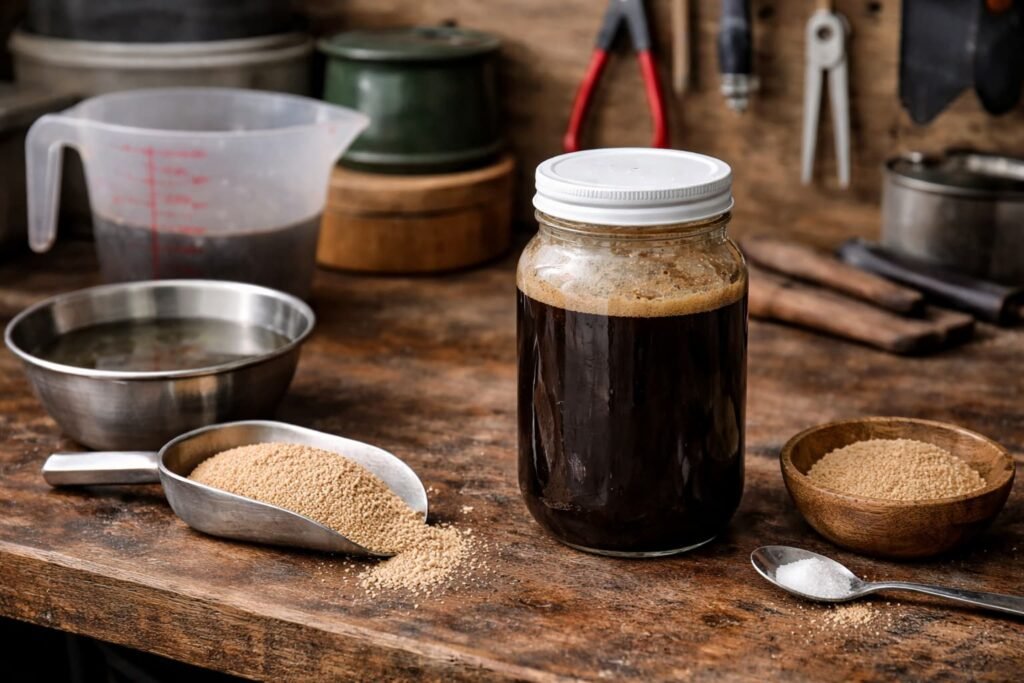
Yeast extract sits somewhere between the two in practical use.
It often behaves more like a richer savoury liquid than a broad fermented free-bait liquid, but it is usually not as hard-hitting or meaty as liver hydrolysate.
That makes it useful when you want:
- more savoury depth in boilies
- a stronger food profile in crumb or stick mixes
- a more rounded hookbait treatment
- a middle ground between broad and aggressive
For that companion post, read Homemade Yeast Extract for Carp Bait.
Best Practical Use: Layering Them Properly
For most anglers, the best answer is not choosing one forever. It is using both properly.
A very practical approach is:
- use fermented liquids on the freebies
- use hydrolysates closer to the hookbait
- keep the overall baiting approach simple
- let the hookbait be the strongest food signal in the area
That might mean:
- CSL on particles or pellets
- yeast extract in the boilie mix or crumb
- liver hydrolysate on the hookbait or little trap around it
That is a clean, sensible, old-school practical way to do it.
Which One Is Better in Spring?
In spring, both can work well, but they often play different roles.
Fermented liquids are useful because they help the baited area feel active and food-like without needing heavy baiting.
Hydrolysates are useful because they can make the hookbait stand out when fish are moving, investigating, and not necessarily settling down for a big feed.
So the better question is not always which one is better.
It is which one is better for which job.
On many Michigan spring waters, a fermented liquid on the freebies and a stronger hydrolysate near the hookbait is a very sensible starting point.
Which One Is Better on Big Michigan Waters?
On big Michigan lakes, the answer often depends on how you are fishing.
If you are trying to build a baited area with particles, pellets, or treated freebies, fermented liquids are often the better starting point.
If you are trying to make one rod, one trap, or one hookbait stand out on a vast water, hydrolysates can be very useful.
That is why both types still matter.
One helps the area. The other helps the target bait.
Michigan Notes
Big natural waters need clarity of purpose
On large Michigan lakes, it helps to know exactly what each liquid is doing. Do not just pour everything in and hope for the best.
Spring and autumn suit soluble approaches
Both fermented liquids and hydrolysates can make sense in cooler periods because they help you add attraction without relying too heavily on oils.
Pressured fish often see the same sweet liquids
A more savoury or food-led approach can sometimes give you something a bit different from the usual bottled glugs.
Budget matters
If you are treating larger amounts of bait regularly, fermented liquids usually make more financial sense.
Hookbait focus matters
If you want the hookbait to be the obvious prize in the swim, hydrolysates usually make more sense.
For wider seasonal thinking, read Spring Carp Fishing in Michigan and Tactics.
Common Mistakes
Treating them like the same thing
They are not the same. They can overlap, but they usually have different strengths.
Using hydrolysates like cheap bulk liquids
You can do it, but it is often wasteful and not the best use of them.
Expecting fermented liquids to give a huge direct hookbait hit
That is not usually their main strength.
Overcomplicating the bait
You do not need six liquids in one bucket. Give each one a clear job.
Ignoring cost versus role
Some liquids make more sense for freebies. Some make more sense for the business end. Use them accordingly.
FAQ
Are fermented liquids and hydrolysates the same?
No. Fermented liquids are built through gradual microbial action. Hydrolysates are made by breaking proteins down into more soluble liquid form.
Which is better for free bait?
Usually fermented liquids.
Which is better for hookbaits?
Usually hydrolysates.
Can I use both together?
Yes. In fact, that is often the best practical approach.
Is yeast extract a fermented liquid or a hydrolysate?
In practical bait use, it sits somewhere between the two. It is a richer savoury liquid, but not usually as hard-hitting as liver hydrolysate.
Which is better for spring carp fishing?
Usually both, used properly. Fermented liquids for the freebies, hydrolysates for the hookbait area is a sensible starting point.
Next Steps
Read these next to go deeper into bait building and practical bait use on Michigan waters: