

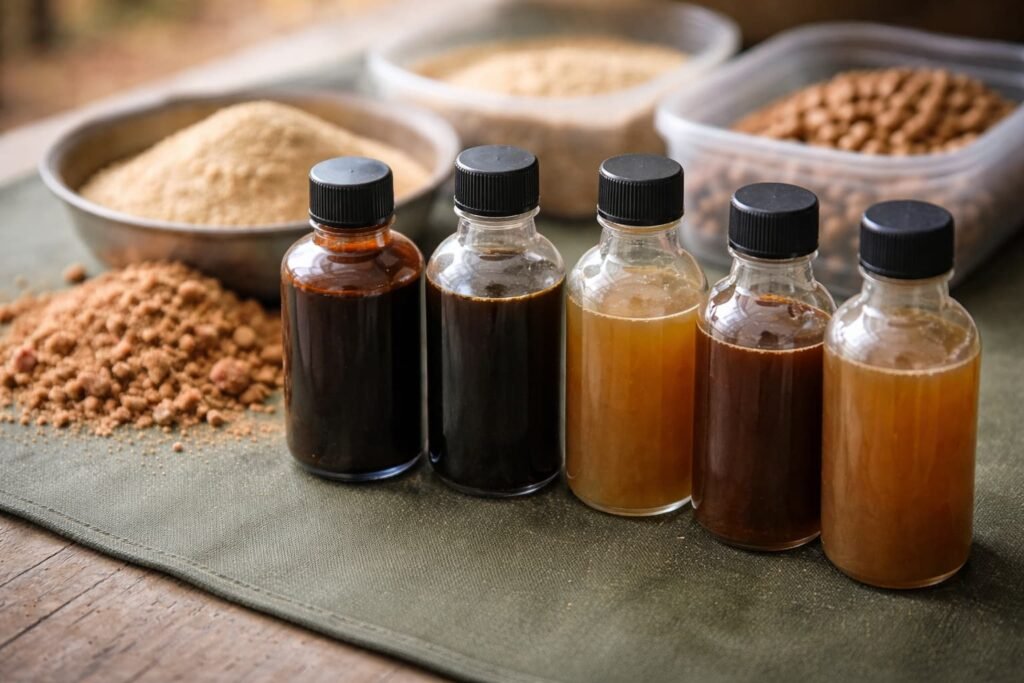
A lot of anglers spend far too much money on bait liquids.
That usually happens because liquids are sold as shortcuts. One bottle promises instant attraction. Another claims to switch fish on in cold water. Another sounds so advanced that anglers assume it must be worth the money.
The truth is simpler. A good bait liquid does not need fancy branding or carp-tax pricing. It just needs to do a useful job on the bait.
That job is usually one of three things:
- adding a sharper food signal
- helping the bait leak faster
- making a hookbait, crumb mix, pellet mix, or short-session trap feel more alive
That is where the cheap liquids win. If they are chosen properly and used sensibly, they can do just as much practical work as many expensive bottles.
This page is about the cheap bait liquids that actually earn their place, how to use them, and where they fit on Michigan waters.
If you want the broader bait picture first, read Carp Bait Guide.
If you want the workshop side, use The Bait Shed.
If you want the deeper why behind liquids and leakage, go to Bait Science.
Quick Start
If you want the short version:
- use one liquid at a time
- add it lightly, not heavily
- match the liquid to the season and bait form
- think in terms of signal, not just smell
- treat hookbaits, crumb, pellets, and chop differently
- keep the whole thing believable
A very simple starting point is:
- CSL or liquid yeast in cooler water
- hydrolysate-style liquid when you want richer food signal
- light sweet liquid when you want a softer top note or simpler hookbait edge
If you are unsure, start with a light fermented-style liquid and keep the application neat.
What Makes a Cheap Liquid Worth Using?
A bait liquid does not need to be expensive to be useful. It just needs to improve the bait in a clear way.
A good cheap liquid should do one or more of these jobs:
- help the bait leak faster
- add natural food-type signals
- improve smell and taste without making the bait messy
- sharpen a hookbait or crumb trap
- make a simple bait feel more convincing
What does not make a liquid worth using is fancy wording, strong smell on the bench, or the fact that it came from a carp-branded bottle.
A lot of cheap liquids work because they are food-based, soluble, and easy for fish to read once they hit the water. That matters far more than marketing language.
The 3 Cheap Liquid Types That Actually Work
1. Fermented-Style Liquids
Examples:
- CSL (corn steep liquor)
- liquid yeast
- Marmite-style or savoury yeast blends
- simple fermented grain-style liquids
These are often the best cheap starting point because they add a lively, food-signal-rich outer layer without making the bait too heavy.
Why they work:
- they usually contain useful soluble breakdown compounds
- they smell and taste more like active food than flat flavour
- they often wake bait up quickly
- they work especially well in crumb, pellets, chopped boilies, and on hookbaits
Where they shine:
- short sessions
- cooler water
- neat traps
- light baiting
- improving an already decent bait
Where anglers get it wrong:
- using too much
- assuming every fermented liquid is the same
- trying to soak everything in it
A light fermented liquid usually works better than a drowned bait.
2. Hydrolysate-Style Liquids
Examples:
- liquid liver
- fish protein hydrolysates
- soluble predigested protein-style liquids
- enzyme-treated savoury liquids
These are often richer than fermented-style liquids and tend to give a stronger savoury food cue.
Why they work:
- they add soluble food signal
- they often give more depth than a simple flavour liquid
- they can make hookbaits and feed feel more substantial without adding bulk feed
Where they shine:
- hookbait treatment
- chopped boilie and crumb mixes
- pellet coatings
- warmer-water baiting
- richer food-led bait approaches
Where anglers get it wrong:
- using them too heavily in conditions that call for a cleaner bait
- letting them swamp the bait rather than sharpen it
- assuming “richer” automatically means “better”
A hydrolysate can be excellent. Too much of it can make the bait feel overdone.
3. Light Sweet Liquids
Examples:
- diluted molasses
- light corn syrup blends
- simple sugar-based liquids
- cheaper sweet flavour carriers used lightly
Sweet liquids still have a place, even though many anglers dismiss them too quickly.
Why they work:
- they can add a lighter top note
- they can smooth a bait profile out
- they can help in warmer water or on simpler hookbait approaches
- they are easy to use lightly and cheaply
Where they shine:
- summer baiting
- particles
- lighter hookbait treatment
- balancing a more savoury bait
- simple visual or flavour-led traps
Where anglers get it wrong:
- using them as a replacement for food signal
- assuming sweet automatically means instant attraction
- overdoing sticky liquids on bait that already struggles to leak
Sweet liquids are usually best as a light edge, not the whole plan.
The Cheapest Liquids I’d Actually Bother With
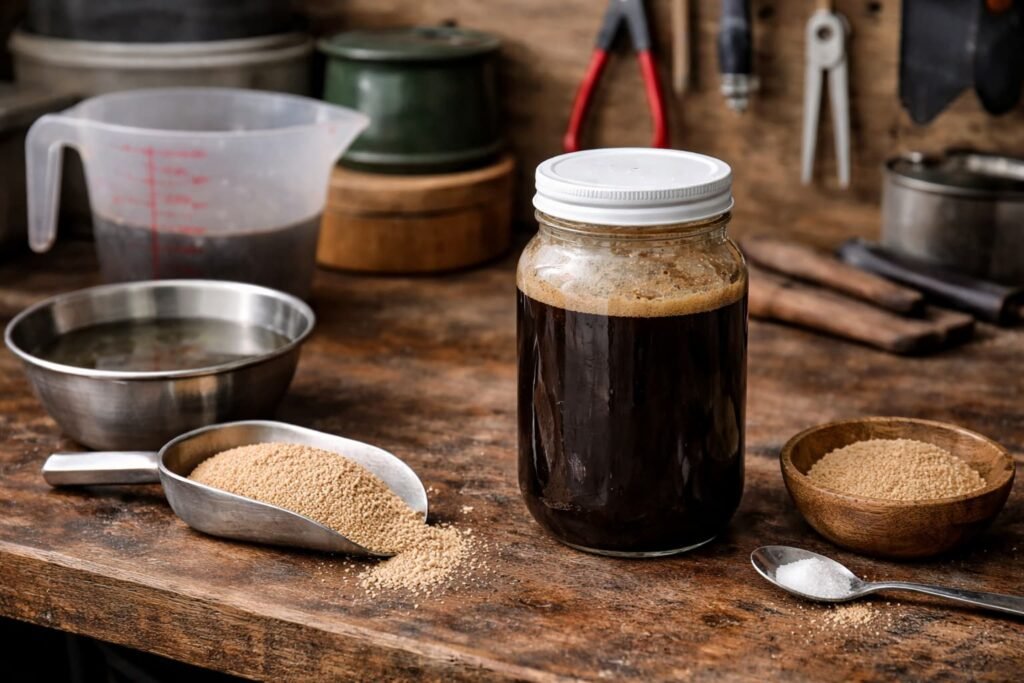
If I were keeping it practical and low-cost, these are the types I would focus on first:
CSL
Still one of the best practical bait liquids around. Cheap, useful, proven, and easy to apply. Great in crumb, pellets, and short-session bait.
Liquid yeast or savoury yeast-style liquid
Very useful when you want a more active, savoury, food-type signal without spending heavily.
Simple hydrolysate-style liquid
Useful when you want a richer food signal, especially on hookbaits and chopped bait.
Diluted molasses
Good in the right place, especially in warmer conditions or particle-style baiting, but usually better as support than as the main liquid.
Marmite-style mix
Cheap, practical, savoury, and often useful in small amounts when you want a strong food-note edge.
Which Cheap Liquid Fits Which Job?
For hookbaits
Use something neat and controlled.
Best choices:
- liquid yeast
- CSL
- hydrolysate-style liquid
- light sweet liquid if you want a softer top note
Hookbaits should be sharpened, not drowned.
For chopped boilies and crumb
This is where cheap liquids often shine.
Best choices:
- CSL
- yeast-style liquids
- hydrolysate-style liquids
- blends that help a small patch wake up quickly
This is one of the best ways to get value from a cheap liquid.
For pellets
Use enough to coat lightly and add signal, not enough to create sludge.
Best choices:
- CSL
- hydrolysate-style liquid
- lighter savoury liquids
For particles
Sweeter or fermented liquids can both work here depending on conditions.
Best choices:
- diluted molasses
- CSL
- light savoury grain-style liquids
For short sessions
Cleaner, faster liquids make the most sense.
Best choices:
- CSL
- yeast-style liquids
- lighter fermented-style liquids
How to Use Cheap Liquids Properly
This is where many anglers waste a good liquid.
Do this instead:
- add gradually
- mix thoroughly
- stop when the bait is lightly coated
- let the liquid absorb before adding more
- think about the bait form you are treating
For example:
Hookbaits
Just enough to lightly coat and wake them up.
Crumb and chop
Enough to carry through the mix and improve the outer signal.
Pellets
Enough to add attraction without turning them into a sticky mess.
Boilies
Enough to sharpen the outside, not to drown the bait.
A cheap liquid works best when it improves the bait without taking over it.
For the practical step-by-step side, read
How to Treat Boilies for Carp (Step-by-Step)
Cold Water vs Warm Water
Cold Water
In cooler water, I would usually lean toward:
- cleaner liquids
- lighter application
- soluble food signals
- fermented-style liquids or light yeast/CSL use
That is often a better fit than a very heavy rich coating.
Warm Water
In warmer water, you can usually use:
- richer liquids
- slightly heavier treatment
- more food-led depth
- hydrolysate-style liquids more confidently
Sweet liquids can also fit better once fish are feeding more freely.
A Simple Michigan Setup That Works
If you want a no-fuss setup for a lot of Michigan situations:
- small pile of crumb and pellets
- light fermented-style liquid
- matching hookbait with a neat coat
- fish it in the right place, not just the nearest clear patch
That gives you:
- quick signal
- believable bait
- no unnecessary clutter
- a setup that still works on big natural waters and shorter feeding windows
Michigan Notes
Michigan waters often punish overcomplicated bait.
You are often dealing with:
- cool spring conditions
- natural food already in the lake
- zebra mussels
- short feeding windows
- moving fish on bigger waters
- water that rewards subtlety more than noise
That is why cheap practical liquids often do so well here. A neat fermented or yeast-style liquid, used properly, can be more useful than an expensive bottle that is too rich, too oily, or too overhyped for the actual conditions.
On many Michigan waters, a clean little signal trap beats a soaked bait every time.
Common Mistakes
- using several liquids at once
- using too much liquid
- choosing by smell alone
- assuming expensive means better
- trying to fix poor location with bait treatment
- using richer liquids when the bait really needs a lighter edge
- copying complicated baiting ideas instead of starting simple
FAQ
Do I need expensive branded carp liquids?
No. Many cheap liquids do just as much practical work when they are chosen and used properly.
Is CSL still worth using?
Yes. It is still one of the best cheap practical liquids, especially in cooler conditions and short-session baiting.
Are hydrolysates better than fermented liquids?
Not automatically. Hydrolysates are often richer. Fermented liquids are often sharper and cleaner. It depends on the job.
Can sweet liquids still work?
Yes. They are not useless at all. They just work best when they fit the bait and are used lightly.
What is the best cheap liquid for a beginner?
Usually CSL or a simple yeast-style liquid. Both are practical, effective, and easy to use without making a mess of the bait.
Should I soak all my bait in liquid?
No. Most of the time, less is better.
Next Steps
After this page, the best next reads depend on what you want to improve next.
- The Bait Shed — practical bait improvements, treatments, and workshop-style use
- Bait Science — understand why liquids, leakage, and food signals work
- Best Liquids for Carp Fishing in Cold Water — where lighter liquids fit when water is still cool
- What Fermented Bait Liquids Really Do — the practical fermented-liquid starting point
- Tactics — connect bait treatment back to watercraft and bank decisions