

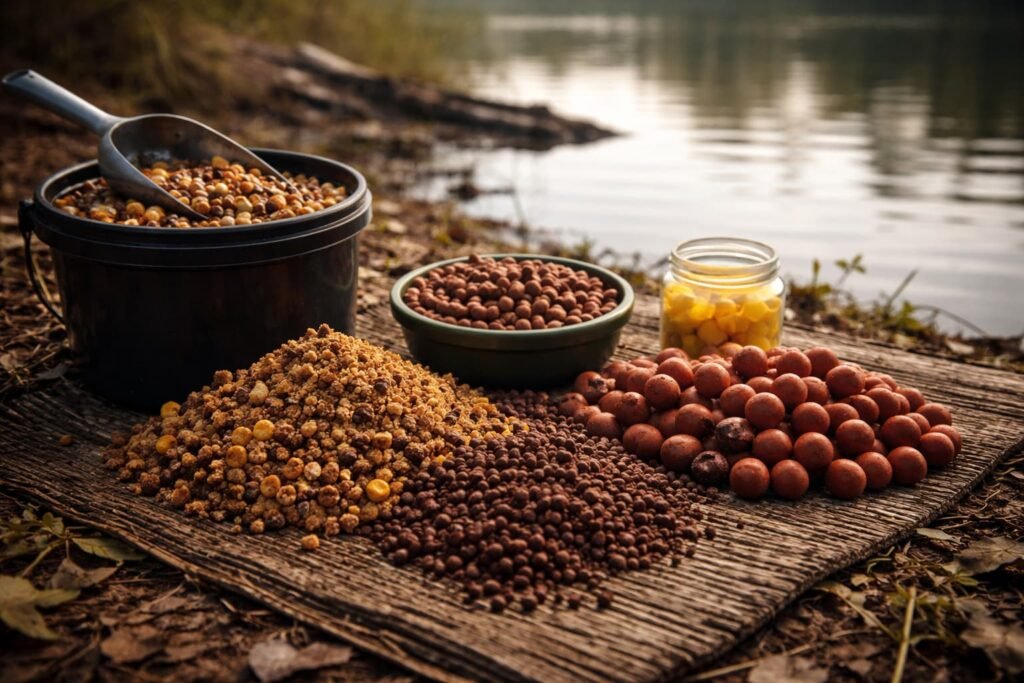
Best Digestible Carp Baits for Cold Water
Cold water changes everything.
The fish move differently, feed differently, and process food differently. That is why a bait that works nicely in June can be far too much in April or winter. The old mistake is to keep fishing as if the season never changed. Same bait, same quantity, same logic. On colder water, that can easily put you one step out of tune with what the fish are actually prepared to deal with.
Cold-water bait does not have to be weak. It just has to be sensible. That usually means lighter structure, easier digestion, better leakage, lower oil, and more restraint in how much food goes in. Carp can still eat in cold water. They can still get their heads down. But the bait usually needs to make more sense as food and less sense as a summer-style campaign bait.
This is especially important on Michigan waters, where cold spring fishing is a major part of the season and where many lakes already contain plenty of natural food. In those conditions, a small amount of the right bait often makes more sense than a lot of the wrong bait.
Quick Start
- Keep bait light, simple, and easy to process.
- Lower oil is usually better.
- Smaller baiting is usually better.
- Leakage matters more than richness.
- Hookbaits, crumb, pellets, and prepared particles can be very useful.
- Milk-protein support, wheat carriers, and soluble ingredients often make good cold-water sense.
What Makes a Bait “Digestible” in Cold Water?
Cold-water digestibility is not just about whether a bait contains good ingredients. It is about whether the whole bait makes sense once it is in the lake and once it is eaten.
In practical terms, a more digestible cold-water bait is usually:
- less heavily oiled
- less overbuilt
- less over-hardened
- more open in structure
- easier to soften and leak
- based around ingredients that do not feel too heavy for the conditions
This does not mean every cold-water bait has to be ultra-soft or ultra-soluble. It means you should stop asking, “How rich can I make this?” and start asking, “How sensible is this bait for cold conditions?” That is the much better question.
Best Cold-Water Bait Types
Softer boilies
A sensible cold-water boilie does not need to be mushy, but it usually does better when it is not too hard, not too oily, and not too overcomplicated. A bait that still feels open and alive in the water often makes more sense than one that has been boiled and dried into a little brown stone.
This is one reason why softer or more open boilies often earn more confidence in spring. They wake up faster, leak more naturally, and seem to fit the season better.
Soluble hookbaits
Soluble hookbaits can be excellent in cold water, especially for singles, light traps, and cautious feeding situations. They give you a concentrated little signal without forcing you into heavy baiting. In many early-season situations, that is exactly what you want.
Pellets and crumb
Pellets and crumb can be very useful when you want easy local attraction without piling in large amounts of food. They help build a small baited area with a bit of life and food signal, especially when used around the hookbait in moderation.
This is one of the best cold-water habits: thinking in terms of a small active patch rather than a heavy bed of feed.
Prepared particles
Prepared particles can still be excellent in cold water, but the key phrase is prepared and the second key phrase is in moderation. Small amounts of well-prepared maize, hemp, or similar bait can work very well when the presentation is right and the overall baiting is restrained.
This is not usually the time to introduce heavy, sloppy, overfed particle beds. It is the time to use them carefully as part of a more sensible cold-water approach.
Best Cold-Water Ingredient Style
When conditions are cold, the best bait ingredients are usually the ones that help the bait stay useful rather than simply rich.
- Wheat carriers: useful for openness and sensible structure.
- Milk proteins: often help create a cleaner, more digestible bait profile.
- Egg: still useful, but the overall boilie structure must stay sensible.
- Yeast extract: a useful way to support food signal without needing a heavy bait.
- Betaine: often a sensible support ingredient in cold water.
- Modest attractor support: enough to help the bait speak, not enough to turn it into a gimmick.
- Low to modest oils: enough to support the bait, not enough to slow it down.
Cold-water ingredients usually do best when they support simplicity rather than fight it.
What to Avoid
- Heavy rich baiting. Too much food can easily work against you.
- Too much oil. Rich summer logic often does not translate well to cold water.
- Over-hard boilies. A bait that is too tight and sealed can feel lifeless in the water.
- Massive beds of food. Cold water usually rewards restraint, not dumping.
- Harsh raw plant-heavy mixes. If it does not make sense as food, it does not suddenly become good because it is in a boilie.
Why Leakage Matters More in Cold Water
In cold water, leakage often matters more because the fish are usually less willing to move hard and less willing to eat a lot. That means the bait often has to do a better job of creating a useful local signal quickly.
A bait that is rich but slow and sealed can feel dead. A bait that is simpler but more open can create a clearer little food signal around the hookbait and make much more sense in the conditions. This is why crumb, pellets, softer boilies, and soluble hookbaits often feel right in cold water. They are not necessarily “better” in every season, but they often wake up better when it matters.
Michigan Notes
This is a very important subject for Michigan because cold spring fishing is a big part of the season. On big natural waters, a little digestible bait often makes more sense than throwing in kilos of the wrong stuff.
Many Michigan venues are not empty bowls. They contain natural food, changing temperatures, and fish that do not always need much encouragement to ignore awkward bait. That is why lighter, cleaner, more digestible bait often fits these waters better in spring than trying to fish like it is midsummer.
In my experience, this is one of the easiest ways to get more in tune with cold-water carp: stop trying to force the season and start matching it.
Common Mistakes
Fishing like it is summer
That is the classic error. Too much bait, too much richness, too much confidence in a warm-water baiting approach.
Too much bait
Cold water usually rewards restraint. Often the problem is not the bait itself. It is the amount.
Confusing richness with quality
A simpler bait can be the better bait. Cold-water quality often looks quieter, not louder.
Ignoring bait structure
A bait can contain decent ingredients and still be too hard, too tight, or too slow in the conditions.
FAQ
What is the best cold-water carp bait?
A light, digestible, leakage-friendly bait that suits the conditions and does not ask too much of the fish.
Are boilies still worth using in cold water?
Yes, if they are built sensibly. A more open, less overdone boilie can still be an excellent cold-water bait.
Do particles still work?
Yes, in moderation. Well-prepared particles can still be very effective when used sensibly.
Should I use less bait in cold water?
Often yes. Smaller amounts of more sensible bait usually make more practical cold-water sense than heavy baiting.
Next Steps
Read The Science of Carp Bait Digestibility
Read The Complete Science of Carp Feeding Attractants
Read Seasonal Baiting
Read Building a Better Boilie