

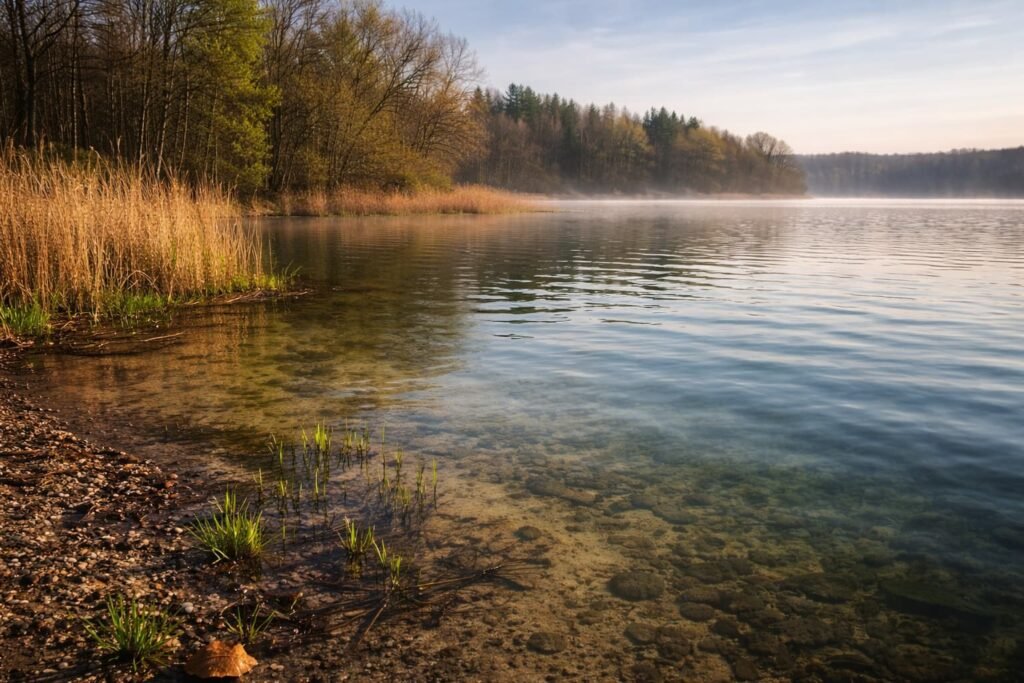
Carp do not just go where the water looks nice to us. They go where the water feels right to them.
That is one of the biggest reasons anglers waste time on dead water. A swim can look good, cast well, and tick all the visual boxes, yet still be poor because the fish do not actually feel comfortable there. Oxygen, temperature, stability, and the way the lake layers itself can all affect whether carp want to hold, patrol, or feed in an area.
This is where oxygen and thermal stratification matter.
They are not glamorous subjects, but they explain a huge amount of carp behaviour, especially in summer and during stable warm periods. They also help explain why fish sometimes ignore apparently perfect deep water, why wind can suddenly improve a bank, and why certain areas become much more fishable once the water starts moving.
This page works best alongside Carp Water Temperature Guide for Michigan Lakes, Wind, Waves & Current — How Water Movement Drives Carp Location, and Seasonal Carp Movement in Michigan.
Quick Start
- carp need more than food and cover — they need water they feel comfortable living in
- oxygen and temperature often work together, but they are not the same thing
- deep water is not always the best water, especially in warm stable periods
- summer layering can make parts of a lake much less useful than they appear
- wind and moving water often improve oxygen and make zones more attractive
- weed can help or hurt depending on time of day, water quality, and lake type
Why Oxygen Matters So Much
Oxygen affects how comfortable carp feel, how long they stay in an area, and how actively they move and feed.
That sounds simple, but it matters in practical ways:
- a fish may pass through poor water but not settle in it
- a feeding area may lose value if oxygen crashes
- a bank can improve sharply when moving water freshens it up
- deep water can be less attractive than anglers assume if it is stale or poorly mixed
This is why comfortable water matters so much. Carp are not just looking for food. They are looking for food in water that suits them.
Oxygen and Temperature Are Linked — But Not The Same
A lot of anglers treat temperature as the whole story. It is not.
Warm water affects carp, but warm water can also affect oxygen. That means the “warmest” water is not always the “best” water once conditions get properly established, especially in summer. A fish may like the temperature in one part of the lake but still avoid it if the oxygen picture is poor or unstable.
That is why this page is a companion to Carp Water Temperature Guide for Michigan Lakes, not a repeat of it.
What Thermal Stratification Actually Means
In simple terms, thermal stratification is when a lake separates into layers during stable warm periods.
Instead of the whole water column mixing freely, you can end up with:
- a warmer upper layer
- a middle transition zone
- a lower layer that may be cooler but less refreshed and less attractive
For the angler, the important point is this:
not all deep water stays equally good just because it is deep.
Sometimes the lower water is fine. Sometimes it is less comfortable than anglers imagine. Sometimes the better water is higher in the column or nearer zones where movement, wind, and oxygen keep conditions healthier.
Why Deep Water Is Not Always Best
Many anglers assume deep water is automatically the safe, reliable answer. In some periods it is. In others, it is not.
When a lake has layered up and not mixed properly for a while, some deeper areas may become much less attractive than they look on paper. Fish may still use nearby depth, but they often prefer water that gives them a better comfort balance rather than simply the greatest depth.
This is why summer carp are often not sitting exactly where lazy angler logic says they should be. They may want access to depth, but they also want usable water.
Spring — Oxygen Usually Matters Differently
In spring, many lakes are still mixing more freely and the oxygen picture is often less problematic than it can become later. That does not mean oxygen stops mattering. It means that temperature and seasonal movement usually dominate more obviously in the angler’s thinking.
Still, even in spring, water that feels fresher, more active, and more alive can be better than stale, dull-looking areas.
Spring carp often want:
- warming water
- easy movement routes
- shallow access with nearby safety
- zones where food and comfort line up properly
Oxygen is part of that comfort picture even when it is not the first thing people mention.
Summer — This Is Where Stratification Really Matters
Summer is usually where this subject starts separating anglers.
By now, many waters have been warm long enough for their layers and comfort zones to matter more clearly. Fish may still use shallow water, but they often do so at the right times and with access to more comfortable nearby water. Big deep basins may not all fish equally well just because they are there.
In summer, carp often balance:
- comfort
- oxygen
- food
- weed growth
- light levels
- pressure
That is why a warm stable lake can fish brilliantly in one part and strangely poorly in another.
The Upper Layer, The Better Layer, and The Dead-Looking Layer
You do not need to think in strict scientific diagrams on the bank. What matters is learning the practical version.
On many warm waters, there is usually:
- an upper active zone where life, wind, light, and feeding opportunity interact
- a more comfortable band where fish may patrol or settle
- deeper water that may still have value, but not always in the way anglers assume
This is why some fish seem to be “missing” from the obvious deep water. They are not missing. They are often holding where the oxygen-comfort picture makes more sense.
Weed and Oxygen — Helpful, But Not Always Simple
Weed is one of the most misunderstood parts of this subject.
Anglers often say weed equals oxygen, and sometimes that is broadly true. Healthy weed can absolutely help a lake. It can create life, support natural food, and make water feel more active and useful. But weed is not a magic guarantee in every condition at every hour.
Thick weed, dying weed, low movement, and nighttime conditions can all change the oxygen picture around weedbeds. That means you should think of weed as part of the answer, not the whole answer.
Why Weed Edges Often Matter More Than The Thickest Weed
Edges often give you the best of both worlds:
- access to life and food
- access to slightly more open, comfortable water
- better routes
- safer patrol lines
This is one reason weed edges are such reliable summer carp areas. They often let fish hold close to useful water without forcing them into the thickest or least practical part of the growth.
Wind Can Improve The Oxygen Picture Fast
This is where oxygen links directly to water movement.
Wind can improve a bank by pushing and mixing water, increasing oxygen, disturbing margins, and making the zone feel more active and livelier overall. Sometimes the whole value of a bank changes because the wind freshened it up.
That is why wind is so much more than just a direction on the weather app. Use this page with Wind, Waves & Current — How Water Movement Drives Carp Location.
Current, Inflows, and Better Water
Moving water often means fresher water.
Inflow areas, outflows, creek mouths, narrowed sections, and channels can all create more attractive oxygen conditions, especially during warmer periods. Carp often respond because those areas feel more alive, more practical, and more useful than water that has sat static for too long.
That does not mean every inflow is good, only that moving, refreshed water often deserves serious attention.
What Comfortable Carp Water Usually Looks Like
On the bank, comfortable water often looks more like this than people think:
- water with gentle life and movement
- weed edges rather than dead flat basins
- areas with access to both feeding and comfort
- wind-improved banks with sensible structure
- active but not chaotic zones
- parts of the lake fish can use for longer than just one quick visit
That last point matters. Comfortable water is often the water fish can actually live in properly, not just pass through.
How Bank Anglers Should Use This
For a bank angler, this subject is not about standing there trying to imagine invisible oxygen charts. It is about asking better questions.
Ask:
- where is the lake likely most comfortable right now?
- which areas have been improved by movement or freshness?
- where do fish have food, comfort, and access all together?
- which water looks alive rather than just deep?
This is where the subject becomes practical. Oxygen and stratification help explain why some spots feel “right” and others never really switch on.
Big Lakes vs Smaller Lakes
On smaller lakes, the comfort-water picture can sometimes shift more quickly because there is less water volume and the whole system reacts faster.
On bigger open lakes, comfort often matters most where movement meets something useful — a weedline, bar, point, shelf, inside turn, or channel edge. Big lakes often reward anglers who stop thinking only in terms of depth and start thinking in terms of usable water.
Michigan Notes
Michigan waters can exaggerate all of this. Big inland lakes, open shorelines, shallow bays, connecting waters, and summer weed can all make comfort water one of the strongest location clues on the lake.
On many Michigan waters, you can catch very well by fishing where the lake feels good to the carp, not where it merely looks good to the angler. That often means areas with life, movement, sensible depth access, and cleaner comfort than the dead-looking basin everyone assumes must be the answer.
That is why oxygen and comfort water matter so much here. Use them together with temperature, wind, and seasonal movement, not in isolation.
Common Mistakes
- assuming deep water is always best
- thinking temperature alone explains everything
- fishing stale water because it “should” hold fish
- ignoring how wind and movement refresh zones
- treating all weed the same
- failing to think about where carp actually feel comfortable
FAQ
Do carp need high oxygen water all the time?
They need water that feels comfortable and usable. Oxygen is a big part of that, especially in warmer stable periods.
Is the deepest water always the best in summer?
No. Deep water can be useful, but not all deep water stays equally attractive once a lake layers up.
Are weedbeds always full of oxygen and carp?
No. Weed can help a lot, but its value depends on the lake, the condition of the weed, time of day, and the wider comfort-water picture.
Does wind improve oxygen?
Often yes. That is one reason wind can improve a bank so quickly and make it more attractive to carp.
What should I read next?
Go next to Carp Water Temperature Guide for Michigan Lakes, then Wind, Waves & Current, then How to Find Carp in Big Lakes.
Next Steps
- Carp Water Temperature Guide for Michigan Lakes
- Wind, Waves & Current — How Water Movement Drives Carp Location
- Seasonal Carp Movement in Michigan: How Carp Travel Through the Year
- How to Find Carp in Big Lakes
- Finding Carp in Big Lakes (Michigan Strategy Guide)
- Finding Carp in Big Michigan Lakes: A Bank Angler System