
The Slipped D Rig: A Clean, Effective Setup for Michigan Carp
If you fish pressured Michigan waters and want one rig that’s hard for carp to eject, easy to tune, and handles wafters or small pop-ups without drama, the Slipped D Rig works. It keeps the hookbait “free” on a sliding ring swivel behind the hook, so the hook can turn and take hold without the bait levering it out.
You’ll get the most from it when you’re fishing single hookbaits, small PVA bags, or tight margin traps—especially on lakes where carp have seen every basic hair rig a thousand times.
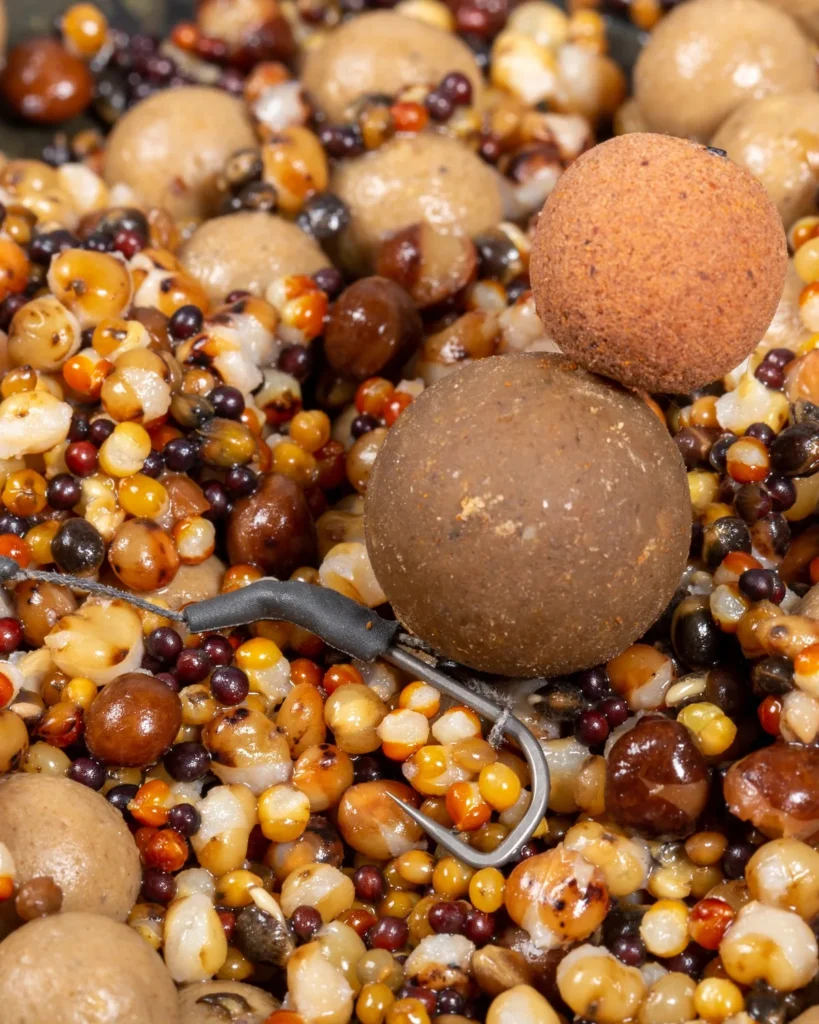
Image © Nash Tackle — used with permission (nashtackle.co.uk).
Quick Start
Best use: Bottom baits and wafters (also small, low-buoyancy pop-ups)
Hook sizes: 4–8 (most anglers settle on size 6)
Hooklink length: 6–9 inches for general work; 4–6 inches for solid bags and margins
Materials: Coated braid (stiff-ish), or supple braid with a small boom section if needed
What You Need
- Wide-gape or curve-style carp hook (in-turned eye helps)
- Coated braid (15–25 lb is sensible)
- Micro ring swivel or bait ring
- Hook bead or small piece of silicone (to control the D)
- Size 11 ring swivel or quick-change swivel for your lead system
- Anti-tangle sleeve (optional but useful)
What a Slipped D Rig Actually Does
A normal hair rig fixes the bait on a hair coming straight off the shank. The Slipped D puts the hookbait on a ring swivel that can slide on a D-loop behind the hook. That sliding movement does two things:
- Better turning: The hook can flip and catch as the bait moves out of the way
- Less ejection leverage: Carp can’t use the weight of the bait as easily to push the hook out
If you’ve been getting liners, beeps, or suspicious “tap-tap-nothing” bites on pressured water, this is one of the first rigs I’d swap to. The mechanics work in your favor.
Do This / Avoid This
Do This
- Use a sharp, strong hook and change it often
- Match bait buoyancy: use a true wafter if you want it to sit light and settle naturally
- Keep the D small and neat (it’s not a lasso)
- Fish it with a safe lead system—lead clip or inline setup that can dump the lead if needed
- Test it in the margins: it should flip and catch when you pull the hooklink
Avoid This
- Oversized pop-ups that “tow” the hook around
- A big, floppy D that tangles or masks the point
- Hooklinks that are too soft everywhere (they fold back on themselves)
- Dull hooks “because it looks fine”
- Unsafe rigs—fixed leads, jammed tubing, or anything that can’t release under pressure
Step-by-Step: How to Tie the Slipped D Rig
Step 1: Choose the Hook
Start simple. A wide-gape pattern with an in-turned eye if you can get it. Size 6 is a safe default for most Michigan bank fishing. Barbless or micro-barb—your call—but fish safety comes first, so keep pressure steady during the fight.
What matters most is point shape and strength. You want a hook that stays sharp, doesn’t open, and doesn’t roll easily.
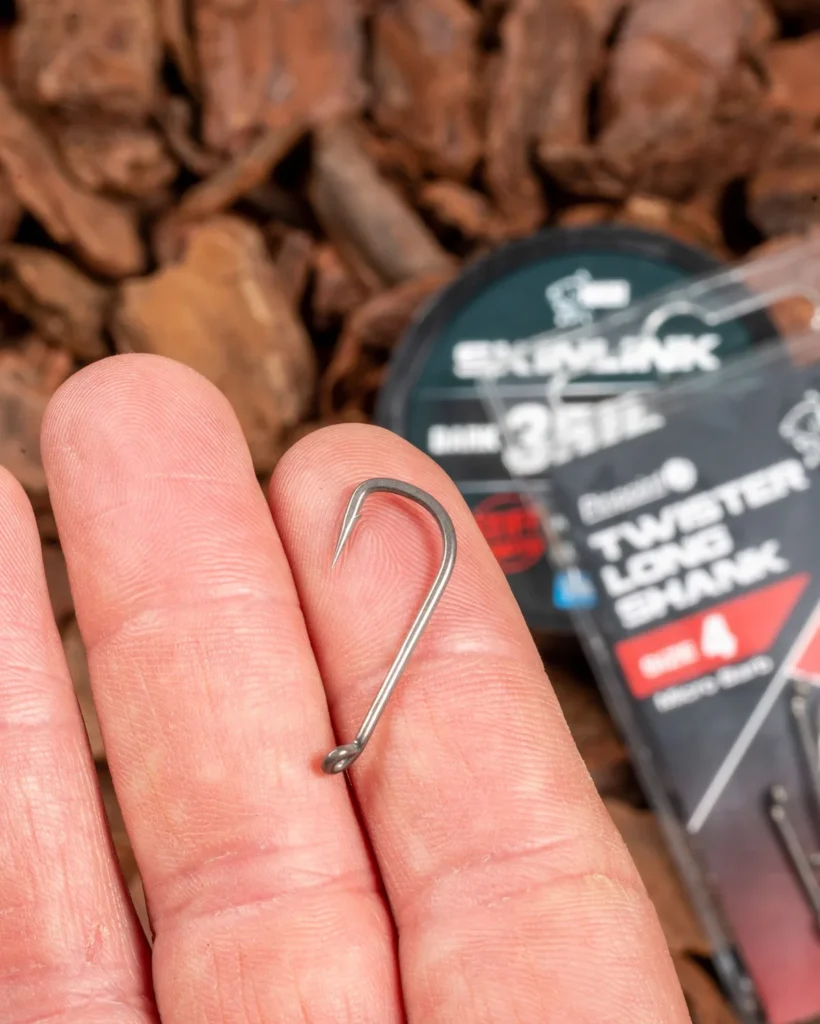
Image © Nash Tackle — used with permission (nashtackle.co.uk).
Step 2: Cut and Strip Your Hooklink
Cut 8–10 inches of coated braid, then strip back 1–2 inches at the hook end—just enough to let the hook move naturally. If the hooklink is very soft, keep more coating on. If it’s very stiff, strip a touch more. You’ll figure out what works for your water after a few casts.
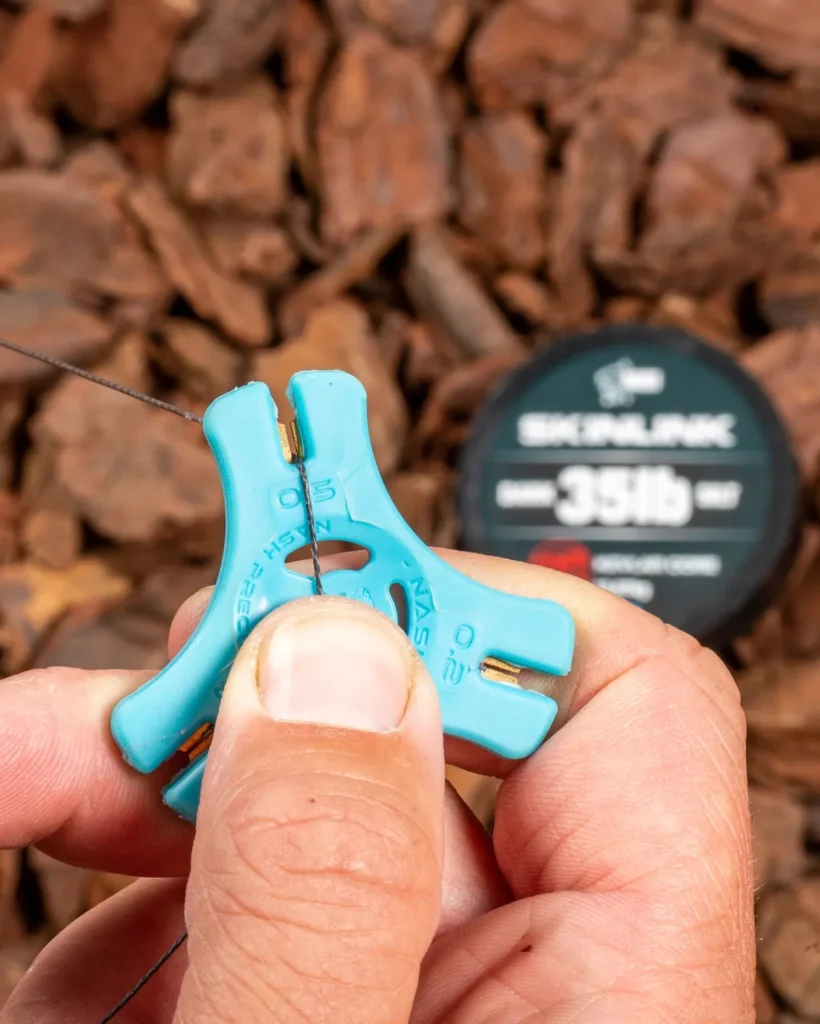
Image © Nash Tackle — used with permission (nashtackle.co.uk).
Step 3: Add the Ring Swivel (the “Slip” Part)
Slide a micro ring swivel (or small rig ring) onto the stripped section. This is what your bait will mount on. A ring swivel moves better than a plain ring and tends to reset cleaner after a fish brushes the rig.
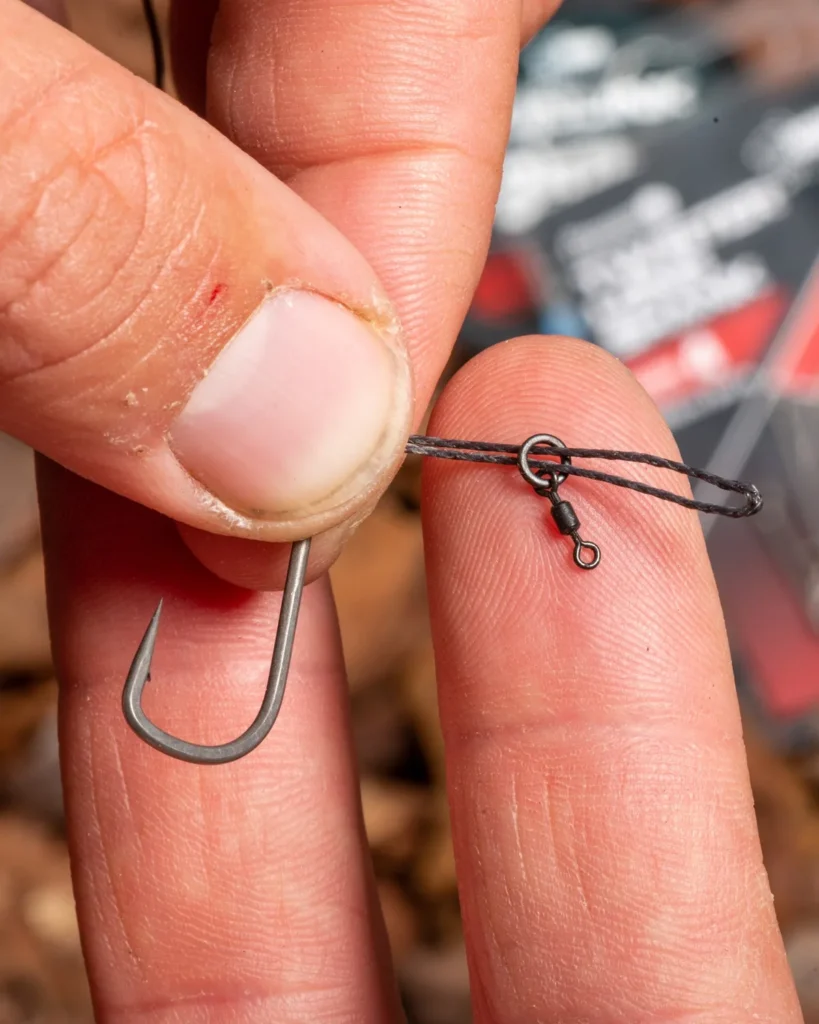
Image © Nash Tackle — used with permission (nashtackle.co.uk).
Step 4: Form the D and Lock It in Place
Take the tag end and pass it behind the hook shank to form a small D on the back of the hook. Then use a whipping-style or knotless-knot wrap to secure the D down the shank—6 to 8 turns is usually plenty.
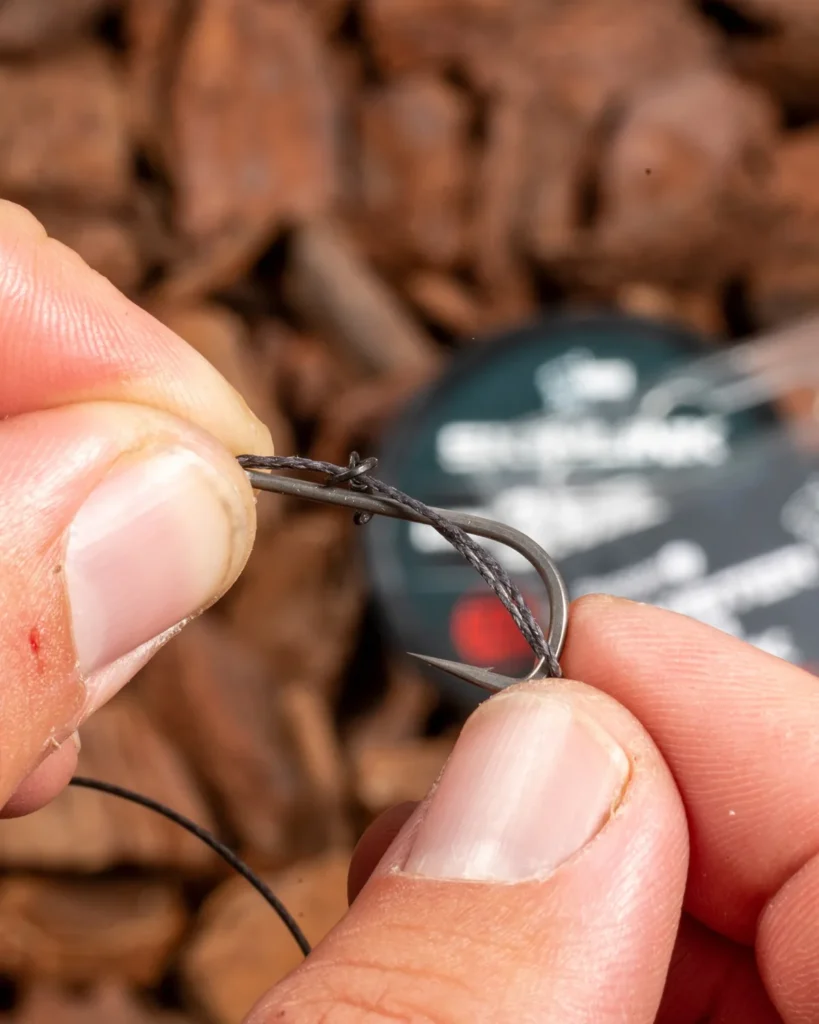
Image © Nash Tackle — used with permission (nashtackle.co.uk).
Before you fully tighten, position the D so the ring swivel sits neatly behind the shank, not hanging half a mile off. Control the slide: Add a tiny hook bead (or a speck of silicone) on the D so the ring swivel can move, but not so far that it can reach and foul the point. This is where neatness matters.

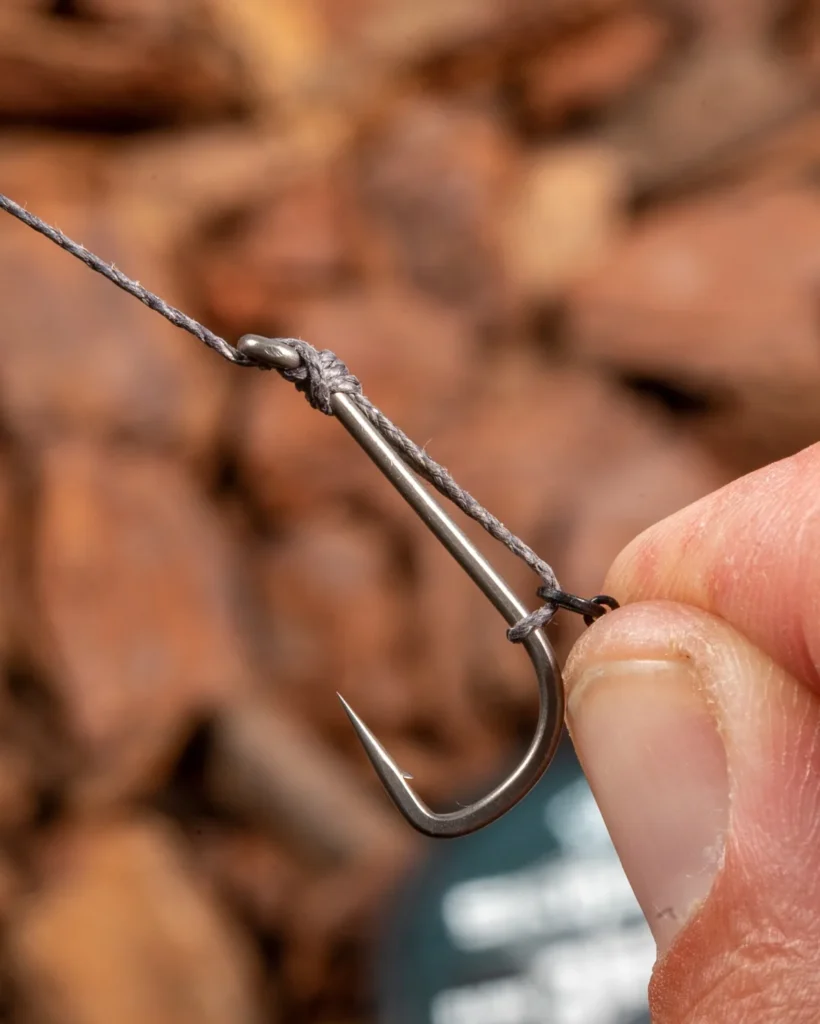
Image © Nash Tackle — used with permission (nashtackle.co.uk).
Step 5: Finish the Rig and Attach to Your Swivel
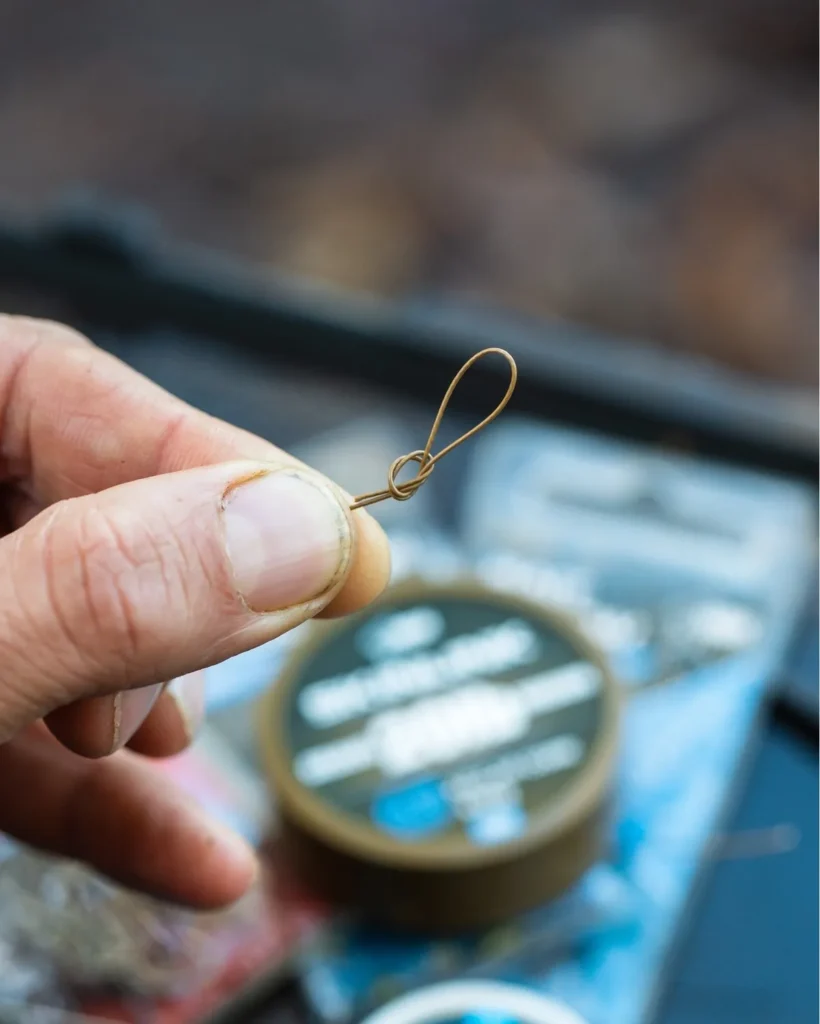
Tie a figure-of-eight loop at the other end, or tie direct to a swivel—either works fine. If you’re using a lead clip or quick-change, a loop is tidy and quick.
Step 6: Baiting
Put your bait on the ring swivel with a bait screw or bait floss stop. For wafters, keep it compact. For bottom baits, same thing. Simple rule: if the bait is big enough to interfere with the point, it’s too big for that hook size.
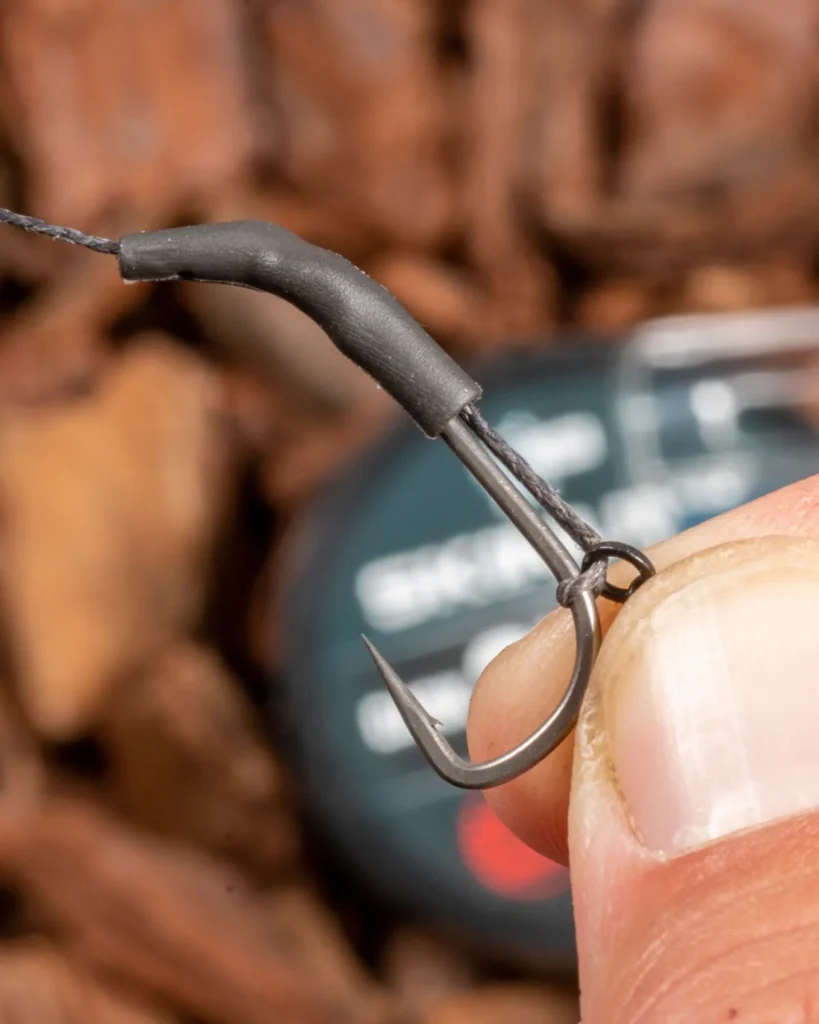
Image © Nash Tackle — used with permission (nashtackle.co.uk).
Best Hooks, Knots, Hooklink Material, and Why
Hooks That Suit the Slipped D Rig
You’re looking for turning power and point exposure. Good hook styles include:
- Wide gape: Great all-rounder
- Curve shank / “kicker-style” shapes: Often aggressive turning, but watch how they sit
- In-turned eye versions: Help the hook flip without extra plastic
Sizes to start with:
- Size 6: For most Michigan situations
- Size 4: If you’re fishing bigger baits or heavy weed/snags (and you can control the fight)
- Size 8: For small hookbaits and shy bites on clear, pressured water
Knots That Make Sense Here
Keep it boring and reliable:
- Knotless knot / whipping to tie the D onto the shank
- Figure-of-eight loop for the swivel end (quick-change friendly)
- If tying direct to hardware: a Palomar is strong on braid; a grinner-style knot is common too
If a knot slips in your tests, don’t “hope.” Retie.
Hooklink Material
For beginner-proof results, coated braid is the workhorse. It kicks away from the lead, resists tangles, and still has softness where you strip it.
If you’re getting tangles in flight, go stiffer or leave more coating on. If you’re fishing super clear, calm water and need more natural movement, strip a little more coating at the hook end—just don’t turn it into spaghetti.
Length:
- 6–9 inches: Strong starting range
- 4–6 inches: For solid PVA bags and tight margin traps
- 9–12 inches: If fish are spooky and you want a gentler presentation (depends on bottom and fish mood)
What Bait It Suits Best
Best Matches
- Wafters (this is where the rig shines)
- Trimmed bottom baits (especially in cold water)
- Small balanced pop-ups (low buoyancy, not balloon-style)
Less Ideal
- Big pop-ups that need heavy putty and end up awkward
- Oversized hookbaits on small hooks (you’ll lose hook holds)
Balancing tip: Add a tiny pinch of putty on the hooklink near the hook if needed. You’re aiming for the bait to settle gently and not drag the hook around.
How to Fish It: Beginner Setups That Work
Solid PVA Bag Approach (Quick Bites)
- Short hooklink (4–6 inches)
- Small wafter or trimmed bottom bait
- Bag mix: crushed boilie, pellets, corn—keep it fine so it melts fast in cooler water
This is a “drop it and wait” approach for short sessions. It works.
Light Baiting Approach (Pressured Fish)
- Single hookbait with a few freebies
- Keep everything tight and neat—no long spaghetti hooklinks
- Recast if you’re unsure it landed clean
Example Michigan Short-Session Scenario
You’ve got 90 minutes after work on a pressured Michigan lake. Water’s clear, carp are cruising but not feeding hard. You find a quiet corner with deeper water off the margin and signs of light bubbling.
Go in simple:
- One rod, one spot
- Size 6 wide gape, short coated braid hooklink
- Small wafter on the Slipped D
- A small solid bag so it lands tidy and doesn’t need piles of bait
If you get liners but no commitment, swap the hook, check sharpness, and consider a slightly smaller bait or a longer hooklink. Sometimes it’s that simple.
Common Mistakes
- D too big: It tangles, masks the point, and kills the mechanics
- Ring swivel reaches the hook point: You’ll foul the rig—use a bead to limit travel
- Hook too small for the bait: The bait dominates the hook and you get poor hook holds
- Too-soft hooklink everywhere: It wraps around the hook on the cast
- Not testing in the edge: If it doesn’t flip and catch in a bucket or margin test, it won’t magically work out there
Troubleshooting and Seasonal Tweaks
If You’re Missing Bites
- Downsize the hookbait (or switch to a true wafter)
- Shorten the hooklink slightly
- Change the hook—sharpness is everything
If It Tangles on the Cast
- Use coated braid and leave more coating on
- Add an anti-tangle sleeve
- Shorten the hooklink a touch
Cold Water (Early Season)
In my experience, Michigan carp in cold water often respond better to:
- Smaller hookbaits
- Less bait overall
- Neat presentations—bags, light scattering, or single hookbait traps
When the water’s cold, subtlety wins. When it stabilizes and they start feeding properly, you can open up baiting and still use the same rig.
Michigan Notes
Short sessions matter. A Slipped D with a small bag is a proper “get a bite” setup when you don’t have time to build a swim. You can fish smart in 90 minutes if you keep it simple.
Pressured lakes punish sloppy rigs. If carp have seen a hundred hair rigs, a clean Slipped D with a balanced bait can nick you an extra bite. It’s the details that count on pressured water.
Margins are underused. When the sun has any warmth—even in cooler months—carp will nose around edges. Keep your rig short, quiet, and safe. No locked-up setups, no drama.
Temperature swings change everything. When water is still cold, keep it subtle. When it stabilizes and they start feeding properly, you can open up baiting and still use the same rig. Pay attention to what the water’s telling you.
What I Do
I fish the Slipped D more than any other rig on pressured Michigan lakes. Most of the time I’m running a size 6 wide gape with 6–8 inches of coated braid and a small wafter. If I’m doing a quick evening session, I’ll go with a solid bag. If I’ve got more time and want to be precise, I’ll fish it as a single with a handful of freebies.
I test every rig in the edge before I cast it. If the hook doesn’t flip and catch cleanly when I pull the hooklink, I retie it. That 30 seconds of testing has saved me more blank sessions than I can count.
FAQ
Can I use the Slipped D Rig with a normal bottom bait?
Yes. It works well with bottom baits, especially if you trim them slightly or balance them lightly. The key is keeping the bait compact so it doesn’t interfere with the hook.
Is a ring swivel better than a rig ring?
Generally, yes. Ring swivels tend to move and reset cleaner. But either can work if the D is neat and the point stays clear.
What hooklink is best for beginners?
Coated braid. Strip just enough at the hook end to let the hook work. It’s tangle-resistant and easy to repeat.
Do I need shrink tube or a kicker?
Not always. If your hook pattern turns well (wide gape, in-turned eye), you can keep it simple. Add a kicker only if your tests show poor turning.
How do I know the rig is balanced right?
Do a quick margin test. The bait should settle naturally, and when you pull the hooklink, the hook should flip and “catch” without the bait blocking the point.
Next Steps
If you want to dig deeper into carp rigs, hookbaits, or Michigan-specific tactics, check out these:
- Carp Rigs Guide – A full breakdown of rigs that work in Michigan
- Best Carp Baits – What to use and when
- Michigan Carp Fishing Tips – Tactics for pressured lakes and short sessions
- Lead Systems for Carp – Safe setups that dump the lead when needed
- Leader & Snag Safety – Keep it fish-safe around weed and wood
- Hook Sharpening Guide – The fastest way to improve hookholds