

The Multi Rig: One Setup for Pop-ups, Wafters, and Bottom Baits
Carp Rigs Guide – Full breakdown of rigs that work in Michigan
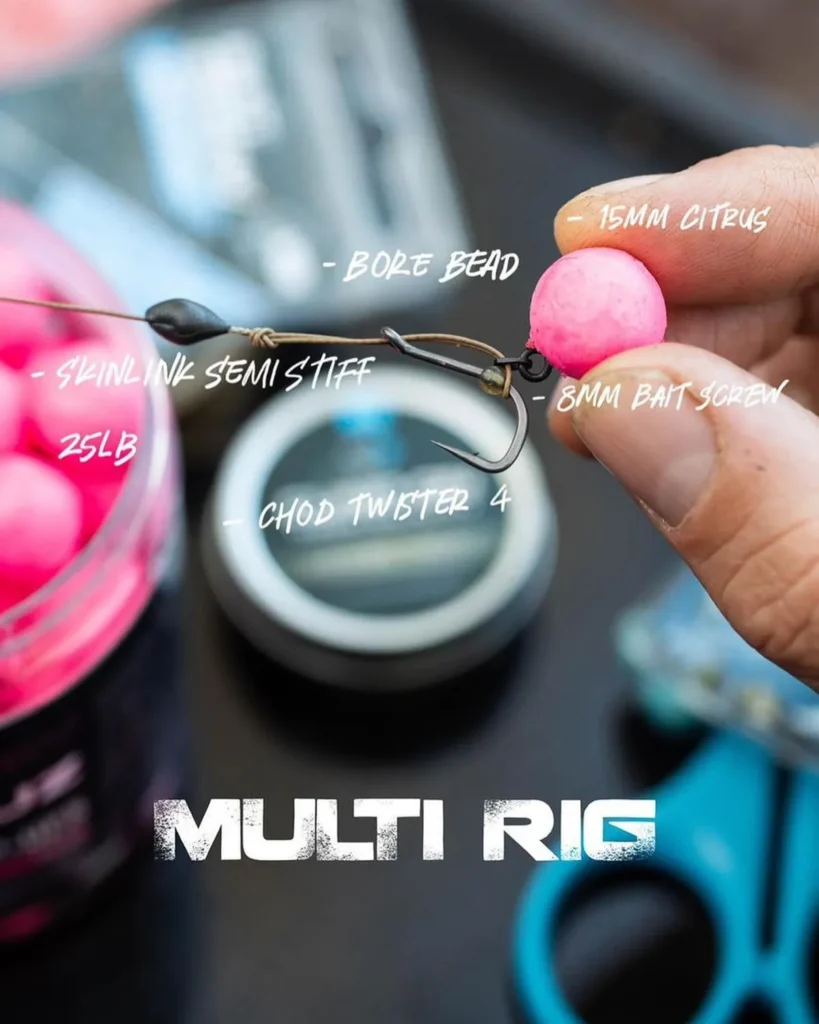
The Multi Rig is about versatility. You can swap between pop-ups, wafters, and bottom baits without retying the whole rig—just change the bait and adjust a small ring. That’s it. For Michigan anglers who fish different conditions across a single session or want to adapt quickly when carp change their feeding pattern, this rig earns its keep.
It’s not the simplest rig to tie the first time, but once you’ve got the mechanics down, you can tie one in a couple of minutes. And the payoff is real: aggressive hooking, clean presentation, and the ability to fine-tune your hookbait on the bank without scissors or a new rig.
Why the Multi Rig Works
The Multi Rig uses a small loop of stiff material (usually fluorocarbon or stiff coated braid) that sits on the back of the hook shank. Your hookbait mounts on a ring that sits in this loop. By sliding the ring up or down the loop, you control how the bait sits relative to the hook.
Pop-up? Slide the ring toward the eye so the bait lifts the hook point up.
Wafter? Position the ring mid-loop for a balanced presentation.
Bottom bait? Slide the ring toward the bend so the bait settles below the hook.
The hook stays free to turn and take hold. The stiff boom section kicks the rig away from the lead. And because you’re not tying the bait directly to the shank or a fixed hair, you get clean, repeatable mechanics every time.
When to Fish It
I fish the Multi Rig when I’m not sure what presentation will work best, or when I know conditions might change during the session. Michigan spring sessions are a good example—water temperature swings, fish feeding windows shift, and you might need a pop-up in the morning and a bottom bait by afternoon.
It’s also solid for fishing over weed, silt, or debris where you want the hookbait sitting visibly above the bottom. And on pressured water, the ability to change your presentation without retying gives you an edge when carp start ignoring one setup.
Best situations:
- Fishing over soft silt, weed, or leaf litter
- Sessions where you’re testing different hookbait presentations
- Pressured lakes where you need to adapt quickly
- Pop-up work in general (this rig handles pop-ups extremely well)
Less ideal:
- Fishing tight to snags where you need ultra-short, simple rigs
- Solid PVA bags (a shorter, simpler rig like a Slipped D or basic hair makes more sense)
What You Need
- Hook: Wide-gape or curve-shank pattern, size 4–8 (size 6 is the workhorse)
- Hooklink material: Coated braid (15–25 lb) for the main section
- Stiff boom material: Stiff fluorocarbon (20–25 lb) or stiff-coated braid for the loop
- Rig ring: Small (usually 2–3 mm)
- Shrink tube or kicker material: Optional, but helps with aggressive turning
- Swivel: Size 11 ring swivel or quick-change for attaching to your lead system
- Bait screw or hair stop
The key is having genuinely stiff material for the boom section. If it’s floppy, the rig won’t kick away from the lead and the mechanics fall apart.
How to Tie the Multi Rig: Step-by-Step
Step 1: Prepare Your Materials
Cut about 8–10 inches of coated braid for your main hooklink. Cut 2–3 inches of stiff fluorocarbon or stiff-coated braid for the boom loop. Have your rig ring / bait screw ready.
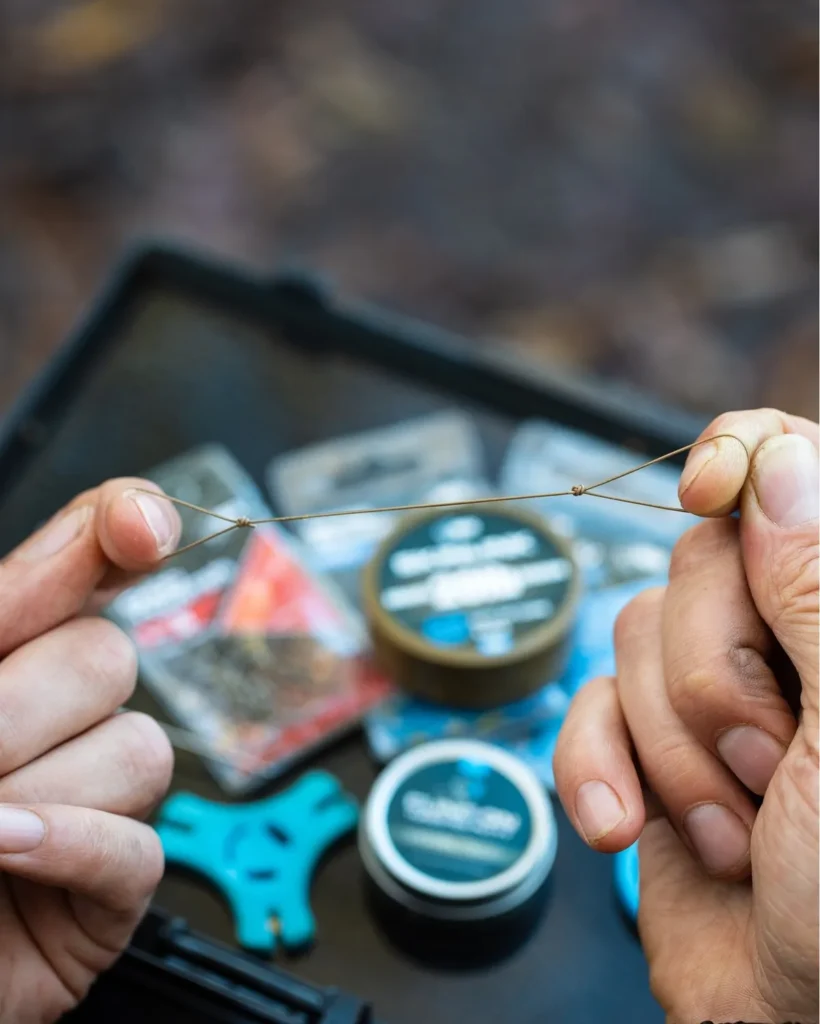
Step 2: Tie the Boom Loop
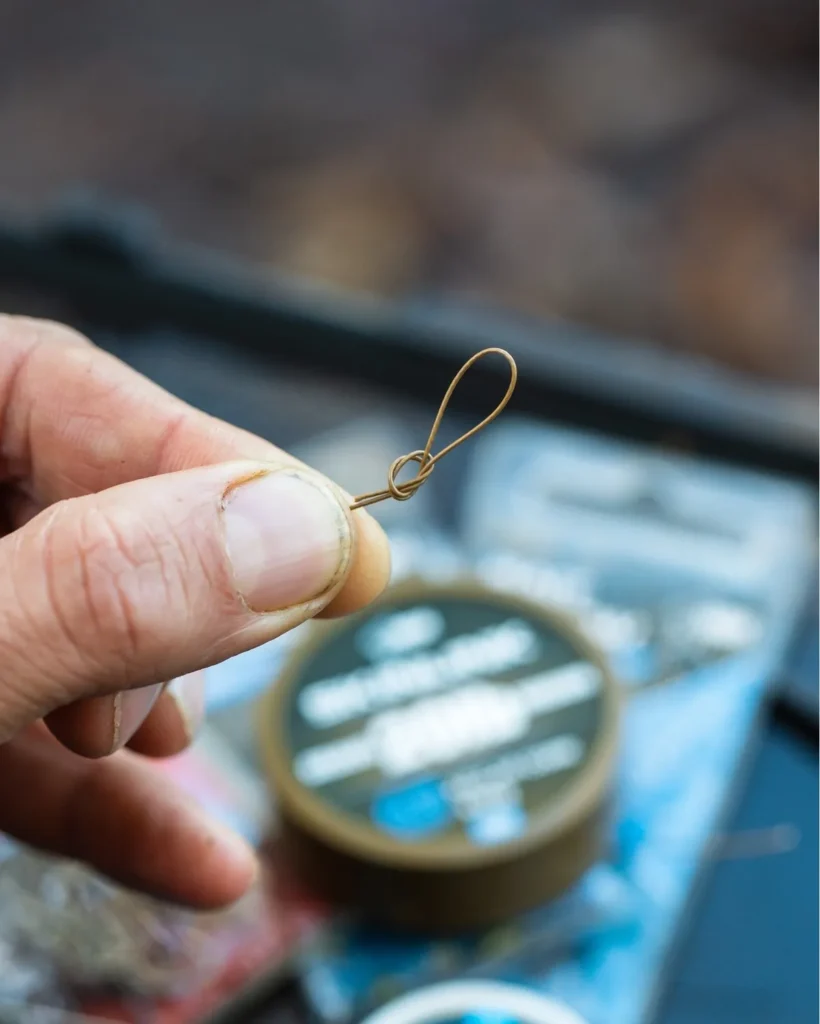
Take your stiff material and form a small loop—about the size of a thumbnail. Tie an overhand knot or figure-of-eight to secure the loop. Trim the tag end close, but leave enough so it doesn’t slip.
Critical: This loop needs to be stiff enough to stand out from the hook shank. If it’s collapsing or folding, your material isn’t stiff enough. Use stiffer fluorocarbon or go with a coated braid that has a solid core.
Step 3: Slide the Ring / Bait Screw onto the Loop
Thread your rig ring onto the loop before you attach it to the hook. This is what your hookbait will sit on. You want the ring to move freely along the loop—not too tight, not falling off.
Using the stripper tool remove a little bit of the coating below the loop intended for the hook
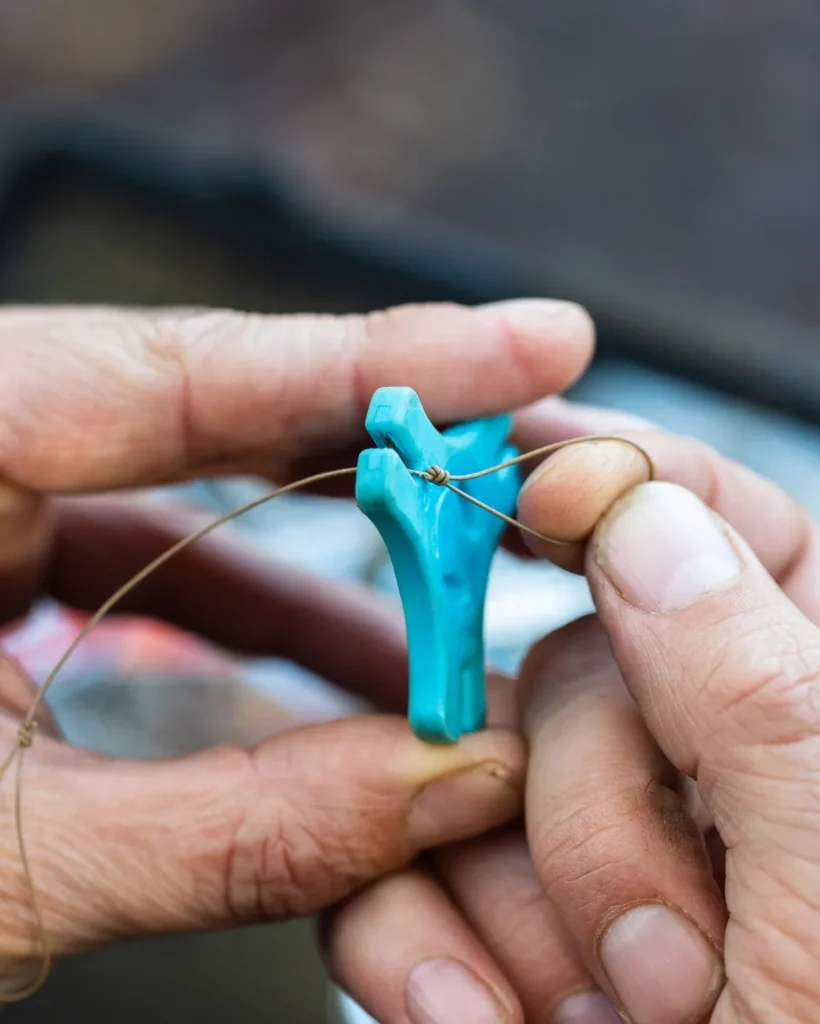
Step 4: Attach the Loop to the Hook
There are two common methods:
Method 1 – Knotless Knot Style: Strip back about 1 inch of coating from your main hooklink. Trap the loop against the back of the hook shank and whip it down using a standard knotless knot. 6–8 wraps, nice and tight. The loop should sit cleanly on the back of the shank, standing out perpendicular to it.
Method 2 – Direct Tie: Some anglers tie the loop directly to the hook eye using a simple overhand knot, then secure it down the shank with a small blob of putty or shrink tube. This gives you a slightly different angle. I prefer the knotless knot method—it’s cleaner and more consistent.
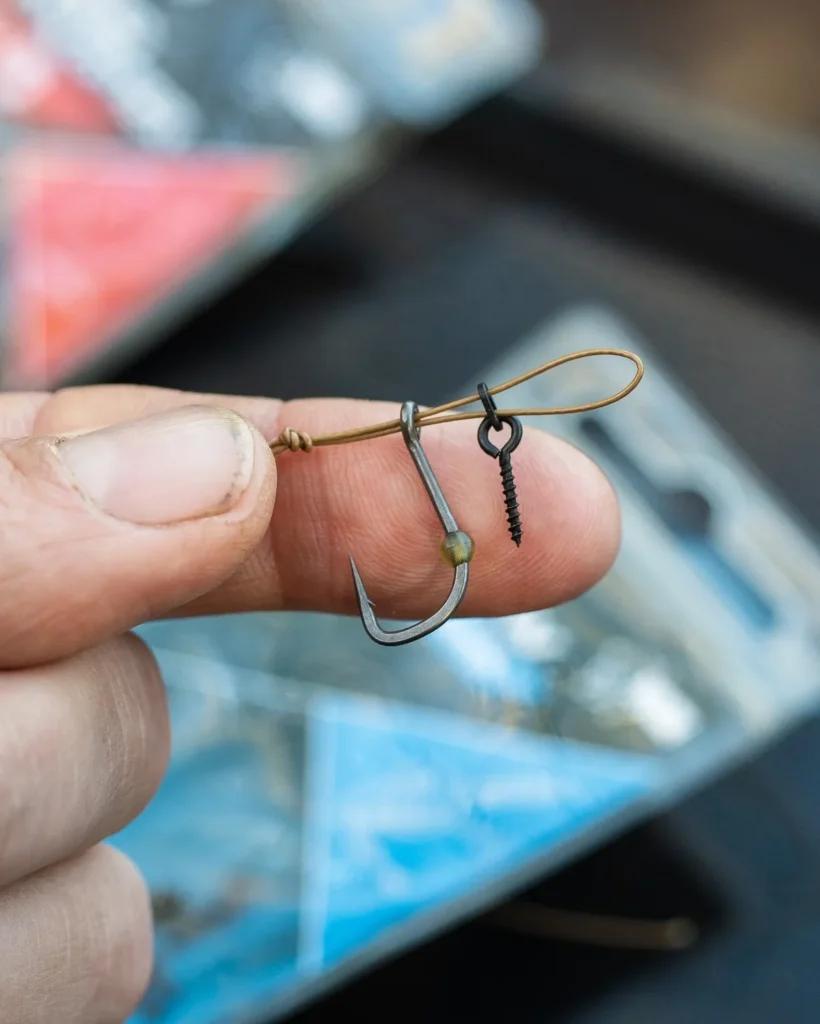
Step 5: Add Shrink Tube (Optional)
If you want more aggressive hook turning, slide a small piece of shrink tube over the eye of the hook before you tie on the loop. Heat it gently so it shrinks down, creating a slight downward angle. This “kicker” effect helps the hook flip and catch faster. Not essential, but it helps on pressured fish.
Step 6: Finish the Hooklink
Tie a figure-of-eight loop at the other end of your hooklink for attaching to your lead system. If you’re using a lead clip or quick-change swivel, this is the cleanest connection.
Step 7: Mount Your Bait
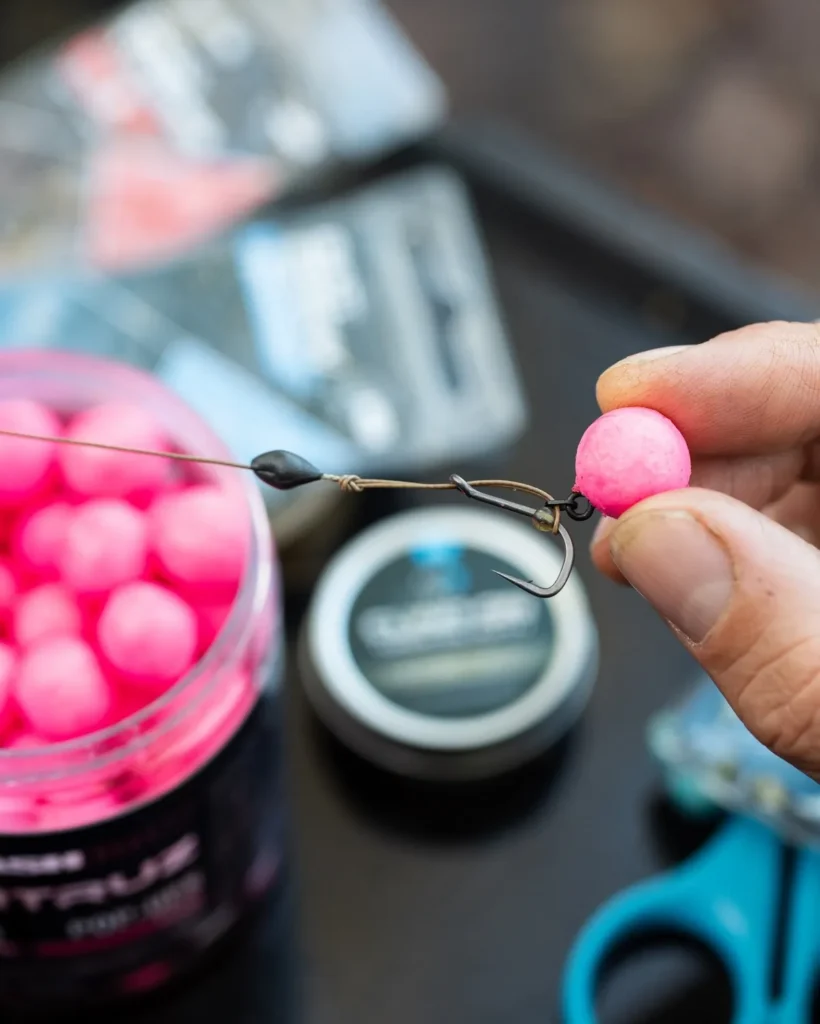
Put your hookbait on a bait screw, then thread the screw through the rig ring. Adjust the ring position on the loop depending on what you’re fishing:
- Pop-up: Ring near the eye
- Wafter: Ring mid-loop
- Bottom bait: Ring toward the bend
Test it in the edge or a bucket. The bait should sit the way you want it, and the hook should flip cleanly when you pull the hooklink.
Hooklink Length and Material
Length: 6–9 inches works for most situations. Go shorter (4–6 inches) if you’re fishing tight to features or need a compact setup. Go longer (9–12 inches) if fish are spooky or you’re fishing over clean, hard bottom.
Material: Coated braid is reliable. Strip just enough at the hook end to let the stiff loop sit naturally. If you want maximum stiffness and separation from the lead, leave most of the coating on. If you want a softer presentation, strip a bit more—but don’t go too soft or it’ll tangle.
For the boom loop itself, use 20–25 lb stiff fluorocarbon or a dedicated stiff-boom material. This is not negotiable. If the loop is soft, the whole rig fails.
Balancing Your Hookbait
The Multi Rig is especially good with pop-ups, but you need to balance them properly. An unbalanced pop-up will drag the hook around or sit at a weird angle.
For pop-ups: Add a small amount of tungsten putty to the base of the hook shank—just enough so the hookbait suspends the hook at the angle you want. You’re not trying to make it neutrally buoyant; you’re controlling the angle of presentation.
For wafters: Usually no putty needed. The wafter should sit naturally with the hook resting lightly on the bottom.
For bottom baits: Definitely no putty. The bait settles, the hook sits naturally, and you’re good.
Test everything in the margins. If the hook is rolling over or the bait is sitting crooked, adjust your putty or ring position.
Common Mistakes
Loop too soft: The boom collapses and the rig doesn’t kick away from the lead. Use stiffer material.
Rig ring too big or too small: Too big and it slides around chaotically. Too small and it binds on the loop. 2–3 mm is the sweet spot for most setups.
Not testing the hookbait balance: You cast it out hoping it’s right, then wonder why you’re not getting bites. Test it in a bucket first.
Over-complicating the tie: Keep it simple. Loop, ring, knotless knot, done. Don’t add unnecessary components.
Using dull hooks: This applies to every rig, but it’s worth repeating. Sharp hooks matter more than fancy rigs.
How I Fish It
I use the Multi Rig most often when I’m fishing pop-ups over silt or weed. Michigan lakes with soft bottoms are perfect for this—the pop-up sits up visibly, the hook is ready to catch, and I don’t worry about the bait sinking into the muck.
I’ll usually start with a 12–15 mm pop-up, balanced with a small pinch of putty, and a 7-inch hooklink. If I’m getting liners but no takes, I’ll swap to a wafter by adjusting the ring position and removing the putty. If that doesn’t work, I’ll try a bottom bait. All without retying.
On pressured lakes, this ability to adapt quickly has saved me more than once. Carp get conditioned to certain presentations. Being able to change yours in 30 seconds gives you a real advantage.
Seasonal Adjustments
Spring (Cold Water): Use smaller hookbaits and keep the presentation subtle. A small wafter or trimmed bottom bait often works better than a big pop-up when the water’s still cold. Michigan spring water is unpredictable—be ready to adjust.
Summer (Warm Water): Pop-ups shine here. Fish are more aggressive, feeding windows are longer, and a bright pop-up over weed or silt gets noticed. I’ll often fish this rig with a bright yellow or white pop-up in summer.
Fall (Cooling Water): Back to subtlety. I’ll usually fish wafters or small bottom baits. The rig still works, but the hookbait choice changes with the fish’s mood.
Winter: Honestly, I don’t fish the Multi Rig much in deep winter. I go simpler—basic hair rigs with small baits. But if you’re fishing a mild winter day and want versatility, it’ll still do the job.
Troubleshooting
Tangles on the cast:
Usually the boom loop is too long or the material isn’t stiff enough. Shorten the loop slightly or step up to a stiffer fluorocarbon. Sometimes simply trimming the hooklink back a touch makes a big difference.
You can also firm things up by adding a short section of blowback tubing between the bait screw and the hook eye. This helps to keep the rig intact on the cast .
Most of my fishing is around the 70-yard mark, and I generally keep the Multi Rig for short to medium range work where it flies straight and settles properly.
Hook not turning well: Add a small kicker (shrink tube over the eye) or check your hook pattern. Wide-gape hooks with in-turned eyes work best. Curve-shank hooks can be tricky—test them carefully.
Bait sitting wrong: Adjust the ring position on the loop. For pop-ups, you might also need to add or remove putty. Don’t guess—test it in the edge.
Losing hook holds: Could be several things. Check hook sharpness first. Then check your hookbait size—if it’s too big for the hook, it interferes with penetration. Finally, make sure your putty placement isn’t masking the point.
Michigan-Specific Notes
Pressured public lakes: The Multi Rig’s adaptability is a weapon here. When every other angler is fishing the same bottom-bait hair rig, you can switch to a pop-up or wafter without leaving your swim. That difference gets noticed.
Soft-bottom lakes: Michigan has a lot of silty lakes, especially in the southern part of the state. Pop-ups on a Multi Rig sit up clean and visible. This matters more than most anglers realize.
Short sessions: If you’ve got 2–3 hours after work, you don’t have time to mess around. The Multi Rig lets you adapt quickly if your first choice isn’t working. I’ve had sessions where I switched from pop-up to wafter after 45 minutes and started catching immediately.
Weed fishing: When you’re fishing over cabbage or other weed, a pop-up on a Multi Rig keeps your hookbait sitting above the vegetation. It’s visible, it’s clean, and it works.
What I’ve Learned
I didn’t always fish the Multi Rig. For years I stuck with basic hair rigs because they were simple and I understood them. But once I started fishing more pressured water and dealing with soft bottoms, I needed something more versatile.
The Multi Rig took me a few attempts to tie correctly. The first couple times, my boom loop was too soft and the whole thing tangled. Once I switched to stiffer fluorocarbon and got the loop size right, it clicked. Now I can tie one in about two minutes, and I trust it completely.
The biggest lesson: test everything in the margins. I don’t care how good your rig looks on the bank—if it doesn’t flip and catch cleanly in a bucket or shallow water, it won’t work out there. That 30-second test has saved me countless blank sessions.
The video below features a variation of the Multi Rig, called the “Slipped “D” Multi Rig”
Video © Nash Tackle — used with permission (nashtackle.co.uk).
FAQ
Is the Multi Rig better than a Ronnie Rig?
They’re similar in function. The Ronnie uses a ring swivel on a curved shank hook, while the Multi uses a rig ring on a loop. I find the Multi Rig easier to tie and more adjustable. The Ronnie can be slightly more aggressive on the turn. Both work—use whichever you’re more comfortable tying.
Can I use the Multi Rig with a snowman presentation?
Yes, but it’s not ideal. A snowman (pop-up over a bottom bait) works better on a simple hair rig. The Multi Rig’s strength is single hookbaits that you can adjust quickly.
Do I need shrink tube?
Not always. If your hook turns well on its own, skip it. If you’re getting mouth pulls or losing fish, add a small kicker. Test first, then decide.
What’s the best hook for this rig?
Wide-gape patterns work great. Curve-shank hooks can work too, but they’re more finicky—you need to test them carefully. I usually stick with a size 6 wide-gape with an in-turned eye. Simple, reliable, effective.
How often should I replace the boom loop?
After every few fish or whenever it starts to lose stiffness. Fluorocarbon can weaken with use. If the loop is looking kinked or soft, cut it off and tie a new one. It takes 30 seconds.
Next Steps
If you want to learn more about carp rigs, hookbaits, and Michigan tactics, check these out:
- Carp Rigs Guide – Full breakdown of rigs that work in Michigan
- Best Carp Baits – What to use and when
- Michigan Carp Fishing Tips – Tactics for pressured lakes and short sessions