
Spinner Rig vs Ronnie Rig vs 360 Rig — What’s the Difference (Michigan Guide)
If you’ve Googled “Spinner Rig” in the last few years, you’ve probably been served three different rigs with the same name. In plain English: Spinner, Ronnie, and 360 are all part of the same “rotating hook” family — but they are not identical, and they don’t behave the same on Michigan bottoms.
This page is the quick reference I wish existed for Michigan: what each rig actually is, when to use it, and which one you should default to across silt, weed, mussels, current, and mixed lakebeds.
If you just want the step-by-step build: go straight to the Ronnie Rig (Michigan setup). That’s the practical “tie it and fish it” page.
So what’s the difference, really?
There isn’t one single “official” definition that everyone agrees on, because anglers and brands have used the names differently over the years. The easiest way to think about it is this: all three are pop-up presentations built around a hook that can rotate, but they achieve that rotation in different ways. A Ronnie Rig is the modern, widely used “spinner-style” setup where a hook sits on a spinner swivel at the end of a stiff boom and is locked at an aggressive angle with a kicker/shrink tube. A Spinner Rig is often used as a catch-all name for this same swivel-mounted, rotating hook concept (some anglers use “Spinner” as the umbrella term and “Ronnie” as the common modern version). A 360 Rig is the older, more extreme design where the hook is able to rotate more freely around the hook eye via a ring/connection method — very effective on clean bottoms, but more “aggressive” in how it can hook and, depending on the setup, can be harder on fish than a Ronnie/Spinner style rig. In practical Michigan use: think Ronnie/Spinner = the safe all-rounder pop-up rig, and 360 = a specialist clean-bottom option.
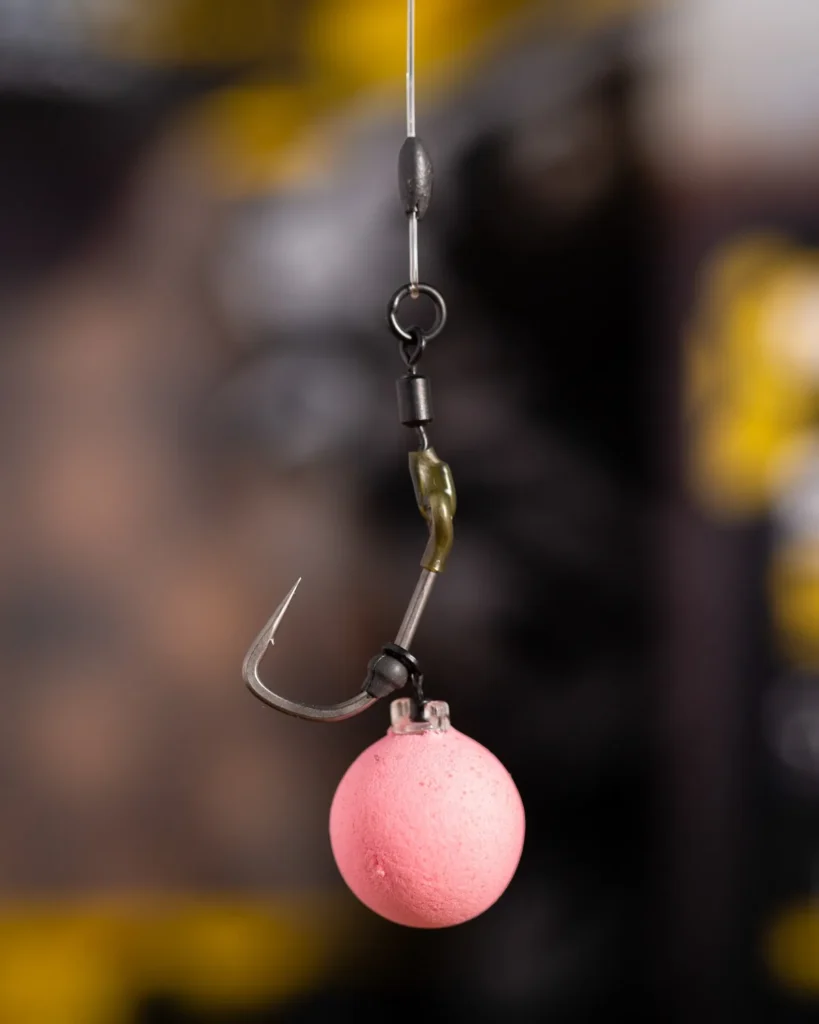
Image © Nash Tackle — used with permission (nashtackle.co.uk).
Quick definitions (no nonsense)
Spinner Rig (the “family name”): A pop-up/wafter rig where the hook can rotate freely on a swivel-style connection, so it can find a hold from awkward angles. In modern carp talk, many anglers say “spinner” but actually mean a Ronnie-style build.
Ronnie Rig (modern spinner / most common version): The most practical, widely used “spinner-style” rig today. The hook is mounted on a spinner-style swivel, locked with a kicker/aligner so it flips aggressively, and it’s fished on a boom (fluoro, coated braid, or stiff mono). For Michigan, this is the default because it copes with mixed bottoms and resets well after nuisance fish/turtles.
360 Rig (older, specialist, more aggressive): A rotating-hook concept taken to the extreme. It can be brutally effective on clean, hard bottoms — but it’s less forgiving in weed/silt/current and it can be harder on fish mouths if you’re not careful. In Michigan, treat it as a specialist tool, not a daily driver.
Michigan translation: If you only fish one of these rigs across our waters, fish a Ronnie (spinner-style) build and keep the 360 concept as “only when the bottom is perfect and you’re set up safely.”
Chart 1: Which one should I use?
| Rig | Best for (Michigan) | Where it struggles | Michigan default setup |
|---|---|---|---|
| Ronnie (modern spinner) | Mixed bottoms; light weed; light–medium silt; “unknown” spots; nuisance fish disturbance; long sessions | Very thick weed unless you go heli + longer boom; extreme snags if you’re under-gunned | Helicopter most of the time; 6–8″ boom on clean ground, 10–12″ over silt/weed; size 4–6; pop-up or wafter balanced with putty |
| Spinner (classic label) | Same family as Ronnie; great to understand the concept and mechanics | Name confusion (people mean different builds) | Use this page to understand the “why”; fish the Ronnie page for the “how” |
| 360 (specialist) | Hard, clean gravel/clay/sand; very high pickup-to-hooked ratio when the rig lands perfectly | Weed, silt, debris, current; can be harsher on mouths; more “fussy” | Only on known clean spots; keep it simple and safe; consider alternatives if fish welfare is a priority |
The real difference: how they move when a carp tests the bait
All three aim to do the same job: when the carp sucks and blows, the hook keeps turning until it finds the bottom lip. The difference is how they create that turning motion.
- Ronnie (modern spinner): controlled rotation + aggressive “kick” (kicker/aligner). It’s fast, tidy, and it resets well after a liner or a nuisance fish.
- Spinner (as a concept): the rotating hook idea — various builds exist. In 2026, most “spinner rigs” you see online look like a Ronnie-style rig.
- 360: maximum freedom of movement. When it’s perfect, it’s deadly. When it’s not perfect (weed/silt/current), it can become unpredictable.
Michigan rule: our lakebeds are often mixed (silt + weed + debris + mussels + rock), so a rig that remains effective when conditions aren’t perfect tends to outfish “specialist perfection rigs” over a season.
Fish safety + welfare (important, especially for 360)
Michigan carp are powerful. We often fish heavy mainline and around weed/snags/mussels, so fish safety matters more than “rig cleverness.” Whatever you use:
- Use a fish-safe lead system that can dump the lead if needed (especially in weed/snags).
- Test the rig in the margins: the hook should hang and flip correctly, and the bait should sit exactly how you intend.
- Keep hook points sharp, avoid needlessly aggressive setups, and unhook carefully on a proper mat.
360 rigs: they can hook very efficiently, but that efficiency can come with a higher risk of mouth wear if you’re rough, under-matted, or using overly aggressive components. If you’re unsure, choose a Ronnie-style spinner build instead — you’ll still hook loads of fish and you’ll be kinder to them.
Chart 2: Michigan “what to tie” by bottom
| Bottom / situation | Best pick | Lead system | Notes |
|---|---|---|---|
| Unknown spot / mixed bottom | Ronnie (spinner) | Helicopter | Safest “covers everything” option; lengthen boom if you feel it settling into silt/weed |
| Light weed / choddy debris | Ronnie (spinner) | Helicopter | Pop-up or wafter; keep it balanced so it settles on top |
| Hard clean gravel/clay/sand | Ronnie (or 360 if you insist) | Lead clip or helicopter | Ronnie is simpler and kinder; 360 only if you’re confident and the spot is perfect |
| Current (rivers/channels) | Ronnie (spinner) | Heavier lead, stable setup | Shorter boom often behaves better; make sure the rig isn’t rolling in flow |
My recommendation for your rigs section (simple and clean)
To keep your Rigs section tidy (and stop people getting lost), do it like this:
- Keep this page as the “reference / confusion buster” (Spinner vs Ronnie vs 360).
- Use your Ronnie page as the main practical build guide: Ronnie Rig for Carp Fishing.
- Do NOT make a separate full 360 rig tutorial unless you’re getting lots of search traffic for it. If you do add one later, keep it short and emphasize safe, clean-bottom use only.
This approach gives you the best of both worlds: you cover the three names people search for, but you only maintain one “how-to” rig page that actually catches carp everywhere in Michigan.
Next steps
Reference: Complete Michigan Carp Rig Guide
Go tie it: Ronnie Rig (Michigan step-by-step)
Hub: Pop-Up Rigs
Back to: Rigs