

Finding carp is often more important than the bait or rig you use. Carp are constantly moving through a lake looking for food, and when you learn to recognize the signs of feeding fish you dramatically increase your chances of catching them.
In Northern Michigan lakes, feeding carp often reveal themselves through subtle clues on the surface and along the margins. Learning to read these signs allows you to place rigs directly in active feeding areas rather than fishing blind.
Quick Start
If you’re trying to quickly locate feeding carp, watch for:
• bubbling or fizzing patches on the surface
• cloudy water or disturbed lakebed
• tails or backs breaking the surface
• subtle rolling fish at dawn or dusk
• carp moving along wind-blown banks
These signs usually indicate fish actively feeding on the bottom.
Why Carp Reveal Themselves When Feeding
Carp feed by rooting through the lakebed searching for natural food like insect larvae, snails, mussels, and plant material. As they dig into the sediment they release trapped gases and disturb silt, which creates visible surface clues.
In many Michigan lakes carp also feed on:
• bloodworm beds
• snail colonies
• zebra mussels
• insect larvae
• decaying plant matter
When multiple carp feed in one area, the disturbance becomes much easier to spot.
Bubbling (Fizzing Carp)
One of the most reliable indicators of feeding carp is bubbling, sometimes called fizzing.
When carp dig into soft lakebed sediment they release gas trapped in the bottom. This creates a steady stream of bubbles rising to the surface.
Typical feeding bubbles:
• appear in clusters or patches
• slowly move across the swim
• continue for several minutes
• often appear over soft silt areas
Large patches of fizzing usually mean multiple carp feeding together.
Mud Clouds and Disturbed Bottom
Another common sign is cloudy water near the bottom.
When carp root through the sediment they stir up silt and debris which creates visible clouds in the water. This is especially easy to see in shallow water or along the margins.
Look for:
• milky or cloudy patches in otherwise clear water
• drifting silt plumes
• disturbed weed beds
• sediment lifting off the bottom
These areas often hold actively feeding fish.
Tailing Carp
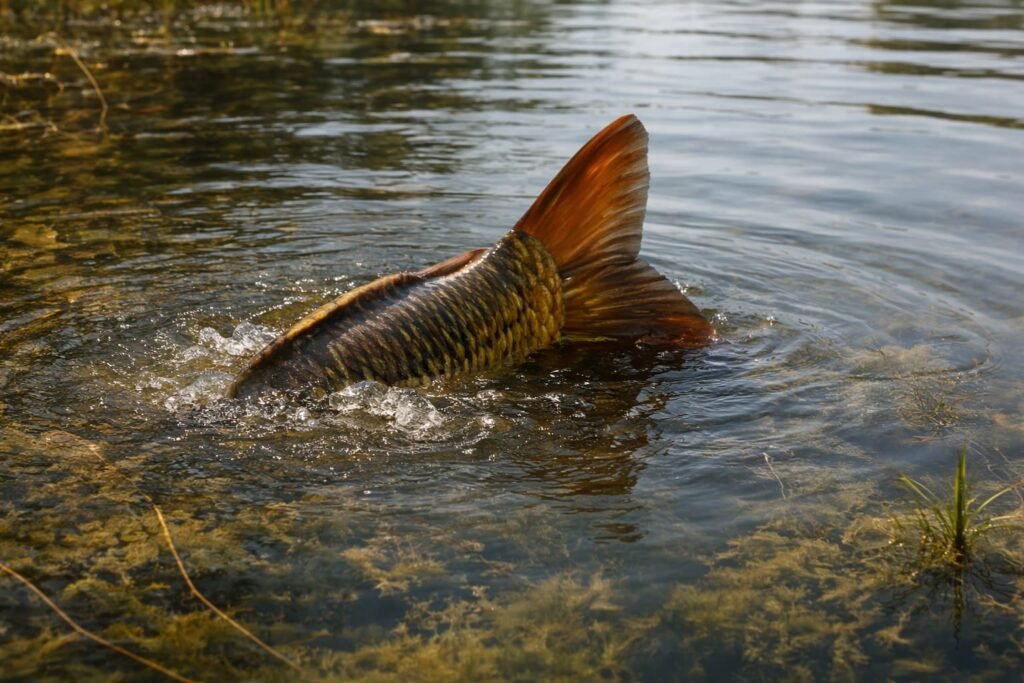
Sometimes carp will tilt downward while feeding, causing their tails to break the surface.
This behavior is known as tailing carp and usually happens in shallow water where fish are feeding on natural food items.
You may see:
• tails waving above the surface
• backs briefly breaking the water
• fish rocking while digging in the bottom
This is one of the easiest ways to visually locate carp close to shore.
Rolling Carp
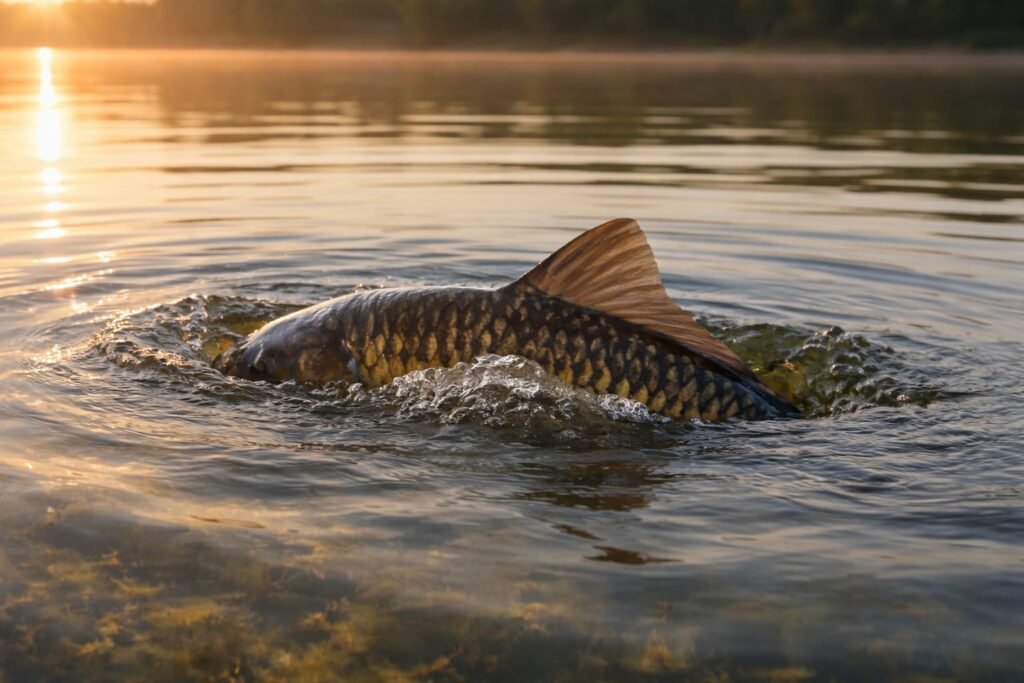
Carp also roll near the surface, especially during early morning and evening.
Rolling fish are not always feeding, but they often indicate carp moving through the area.
Typical rolling behaviour:
• slow surface rolls
• brief dorsal fin or back showing
• fish surfacing and submerging again
If rolling fish appear repeatedly in one area, it’s often worth placing a rig nearby.
Wind-Blown Banks
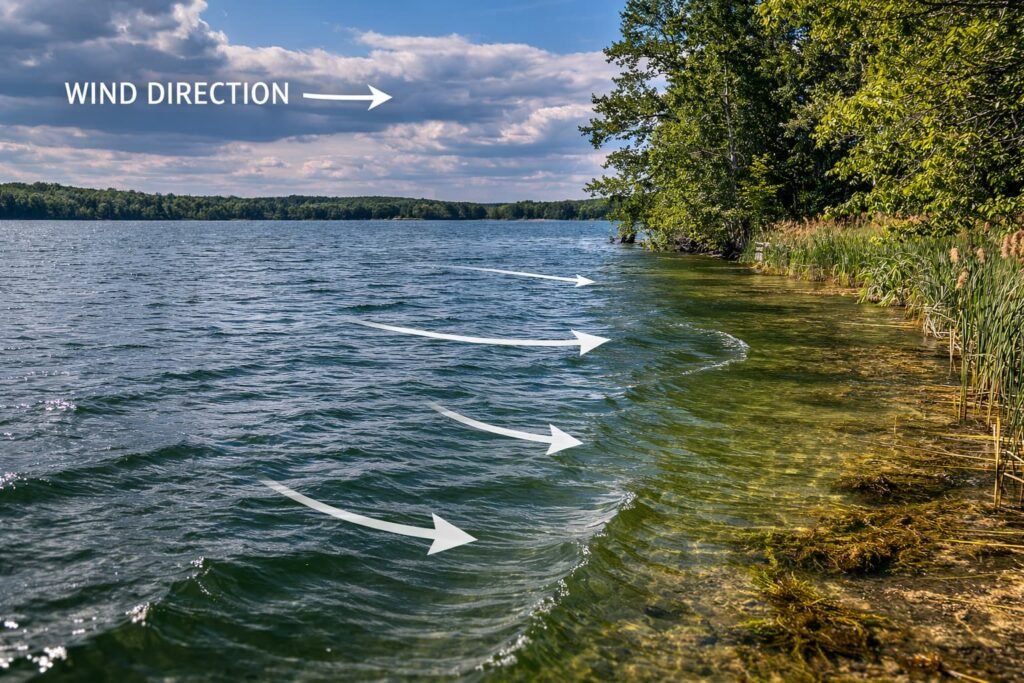
Wind plays a huge role in carp location.
Warm winds push food and oxygen into one bank of a lake, attracting natural food and active carp. Fishing the windward bank can often put you closer to feeding fish.
Learn more in How Carp Use Wind.
Best Areas to Look for Feeding Carp
Certain areas naturally hold more feeding fish.
Common carp feeding zones include:
• shallow flats
• silt beds
• reed beds and weed edges
• wind-blown shorelines
• bays and sheltered corners
These areas often hold natural food sources carp regularly visit.
Michigan Notes
Many Northern Michigan lakes contain large populations of snails and zebra mussels. Carp frequently patrol these areas looking for easy meals.
During spring and early summer you will often see:
• bubbling along weed lines
• feeding carp in shallow warming bays
• fish moving onto flats during warm afternoons
These patterns can be extremely predictable once you learn to recognize them.
Common Mistakes
Fishing where carp aren’t present
Even the best bait will not catch fish if carp are not nearby. Spend time watching the water before casting.
Ignoring subtle signs
Small bubbles, slight clouding, or occasional rolling fish may indicate carp activity.
Casting directly onto feeding fish
Casting too close can spook carp. Often it’s better to place your rig slightly beyond the activity.
FAQ
Do bubbles always mean carp?
Not always. Gas bubbles from decaying vegetation can occur naturally, but feeding bubbles usually appear in moving patches.
What time of day do carp feed most?
Early morning and evening are often the most active periods, but carp can feed at any time.
Are surface signs more common in shallow water?
Yes. Feeding signs are easier to see in shallower areas.
Should I cast directly into bubbling fish?
It’s usually better to cast slightly beyond the bubbles and let the fish move onto the baited spot.
Next Steps
• Reading a Lake Like a Carp Angler
• Particles for Carp Fishing
• Method Feeder Rig for Michigan Carp
• Sweetcorn for Carp Fishing
Learn More About Finding Carp
* How to Find Carp in Lakes
* Reading a Lake Like a Carp Angler
* Where Carp Hold During the Day
* How to Locate Carp Before You Cast