
You’ve now learned about temperature, pressure, wind, oxygen, clarity, structure, seasonal movement, and feeding windows.
Here’s the truth:
None of it matters unless you can apply it when you arrive at the water.
This final article shows you how to turn information into fish.
Where Carp Feed in Lakes
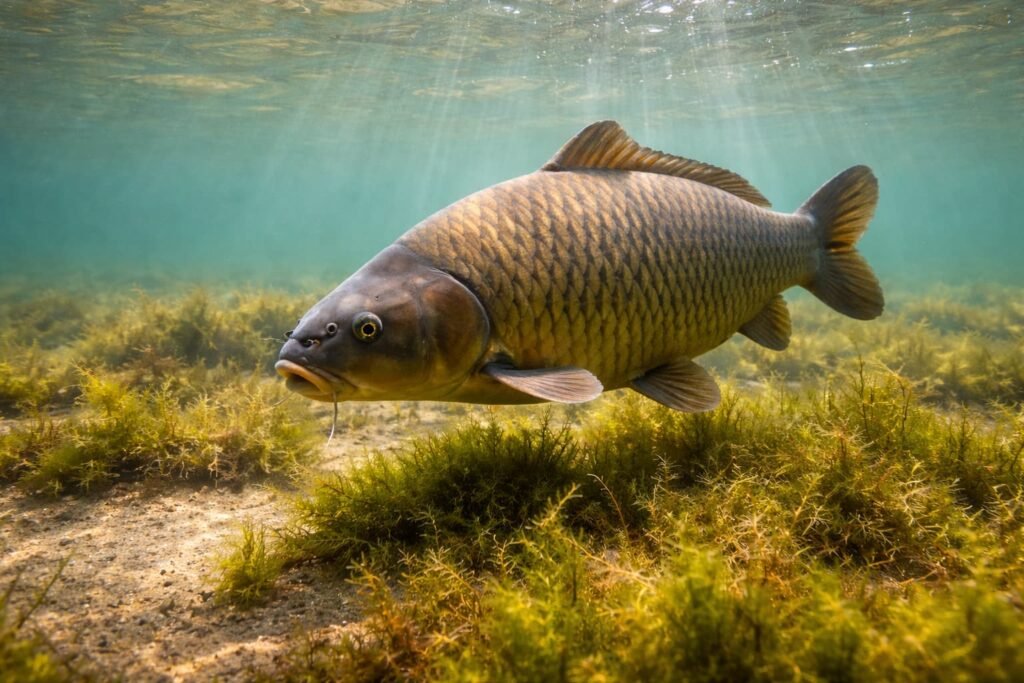
Carp do not roam randomly across a lake. Most of their movement is driven by food and comfort.
When trying to locate carp, focus on areas where natural food collects.
Common feeding areas include:
• shallow flats that warm quickly in spring
• weed beds holding insects and snails
• soft silt areas where bloodworm live
• windblown banks where food is pushed by waves
• margins where natural food accumulates
Large carp often move between deeper resting water and these feeding zones.
Finding these feeding areas is usually far more important than choosing the perfect rig or bait.
The Carp Location Triangle
Carp location usually comes down to three things:
• Food
• Comfort
• Safety
When these three factors overlap, carp tend to spend time in that area.
Food sources might include snails, seeds, insects, or bait introduced by anglers.
Comfort usually means stable water temperature, oxygen levels, and depth.
Safety means areas where carp feel protected, such as weed beds, drop-offs, or deeper water nearby.
When trying to locate carp, always look for places where these three factors meet.
Signs Carp Are Feeding
Carp rarely announce themselves clearly, but experienced anglers learn to watch for subtle signs.
Common indicators include:
• bubbling or fizzing in the water
• cloudy patches on the bottom
• subtle rolling fish
• movement in weed beds
• birds feeding over disturbed areas
These signs often reveal feeding fish before you ever make a cast.
Finding Carp in Big Lakes
Large lakes can feel intimidating, but carp still follow predictable patterns.
Start by focusing on:
• shallow warming areas in spring
• windblown banks
• natural feeding flats
• transition zones between shallow and deep water
Carp often travel predictable routes between feeding areas and deeper holding water.
Learning these routes is one of the most valuable skills a carp angler can develop.
Step One: Read the Conditions Before You Unload
Before you even grab a rod, pause.
Ask yourself:
• What direction is the wind blowing?
• Has pressure been rising or falling?
• Is water clear or colored?
• What season is it?
• What time of day?
These five questions instantly narrow down where carp should be.
Not might be.
Should be.
Step Two: Identify Comfort Zones
Carp prioritize comfort first, food second.
Comfort means:
• Correct temperature
• Adequate oxygen
• Security from disturbance
Look for:
• Windward banks
• Creek mouths
• Weed edges
• Harbor basins
• Depth changes
• Shade and structure
These are starting points.
Step Three: Find Food
Once comfort zones are located, find food:
• Silt = bloodworm
• Weed = shrimp and snails
• Rock = crayfish and mussels
• Current = drifting insects
Food tells you where carp will linger.
Comfort tells you where they arrive.
Step Four: Understand Daily Movement
Carp don’t sit still.
They rotate:
Morning → shallow feeding
Midday → deeper holding
Evening → shallow return
Night → roaming routes
If you’re fishing one depth all day, you’re missing fish.
Adjust with time.
Step Five: Match Presentation to Conditions
Clear water:
• Fluorocarbon
• Smaller hooks
• Natural baits
• Longer leaders
Colored water:
• Bright hookbaits
• Pop-ups
• Heavy scent
• Shorter leaders
Weeds:
• Pop-ups
• Heavy leaders
• Immediate pressure
Open water:
• Bottom baits
• Balanced wafters
• Normal leaders
Step Six: Use Wind as Your Ally
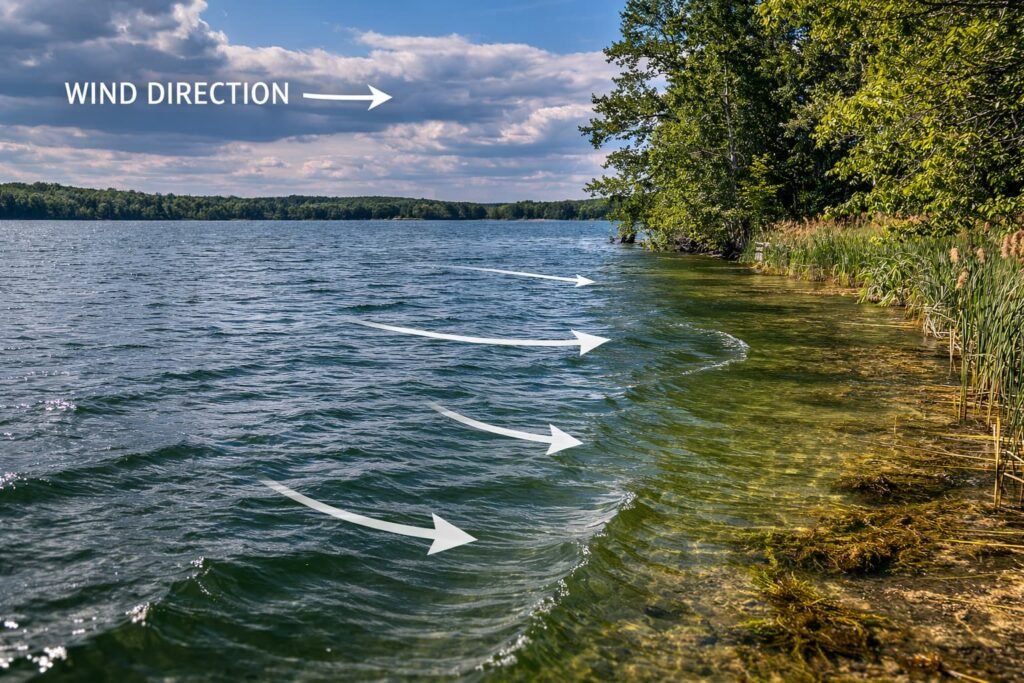
Wind pushes:
• Warm water
• Oxygen
• Food
Fish where wind hits.
Avoid where it leaves.
This single adjustment catches more carp than most rigs ever will.
Step Seven: Think in Paths, Not Spots
Carp move.
They follow routes between:
• Holding water
• Feeding zones
• Spawning areas
Your goal isn’t to find a magic spot.
It’s to intercept movement.
That’s watercraft.
Step Eight: Build a Mental Map
Every session teaches you something:
• Where fish showed
• What depth worked
• Which wind produced
• When bites occurred
Log it mentally or physically.
Patterns repeat.
Carp are predictable once you listen.
The Biggest Mistake Anglers Make
They fish where it’s easy.
Instead of where carp actually are.
Comfortable swims rarely produce consistent results.
Hard-to-reach areas often do.
Final Truth
Watercraft beats bait.
Location beats rigs.
Understanding beats luck.
Once you learn to read a lake, carp fishing stops being random.
It becomes repeatable.
Key Takeaways
• Read conditions before fishing
• Find comfort zones first
• Food confirms location
• Adjust depth through the day
• Match rigs to clarity and weed
• Follow wind
• Think movement, not spots
• Build mental maps
• Let patterns guide decisions
This is how experienced carp anglers consistently catch fish.
Not by magic.
Watercraft & Conditions
By observation.
What To Do When You Find Carp
Once you locate feeding fish, keep the approach simple.
• present rigs carefully
• avoid excessive bait
• place rigs where carp are already feeding
Often the difference between blanking and catching carp is simply fishing where the fish already are.
More Carp Location Guides
* How to Find Carp in Lakes
* Signs Carp Are Feeding
* Where Carp Hold During the Day
* Best Depth for Carp Fishing