
Liver hydrolysate is one of the strongest homemade bait liquids you can make for carp. It is rich, meaty, highly soluble, and especially useful when you want a sharper feeding signal around the hookbait.
In simple terms, a hydrolysate is made by breaking proteins down into a more available liquid form. With liver, that gives you a dark savoury liquid that leaks quickly and carries a strong food signal through the water.
This is not a neat little sweet glug. It is a proper food-based bait liquid. Used sensibly, it can be a very good edge.
Quick Start
If you want the short version, start here:
- Liver hydrolysate is best used as a hookbait booster, boilie soak, pellet treatment, or stick mix liquid.
- It is stronger and sharper than many simple bait liquids.
- It works best when you want fast leak-off and a strong food signal.
- It is especially useful on shorter sessions or when you want the hookbait to stand out.
- Start light. You do not need much.
A sensible starting point is around 30–60 ml per kilo in mixes, around 50–100 ml per kilo for boilie soaking, and a light dip or coating on hookbaits.
What Liver Hydrolysate Actually Is
Liver hydrolysate is a liquid made by breaking down liver proteins into smaller, more soluble fractions.
That matters because the end result is:
- more water-soluble
- faster leaking
- more food-like in the water
- stronger in savoury profile
- better suited to direct bait attraction than plain raw liver on its own
A proper liver hydrolysate is usually dark brown, rich in smell, and obviously meaty rather than sweet.
For the wider picture on bait liquids, read Homemade Fermented Liquids and Hydrolysates for Carp Fishing in Michigan.
Why Carp Respond Well to Liver Hydrolysate
Liver is one of those ingredients that has kept earning its place over the years because it brings a proper nutritional-style bait signal.
A good liver hydrolysate can add:
- a strong savoury food signal
- soluble protein breakdown products
- a deeper bait profile
- fast leak-off
- a more direct hookbait edge
That is why it makes sense in practical carp bait. It feels like food, not just smell.
Why Liver Hydrolysate Is Worth Making
It is a strong hookbait liquid
This is probably its best role. If you want the hookbait to carry a richer, faster food signal than the freebies around it, liver hydrolysate is a very good way to do that.
It works in small amounts
You do not need to soak everything for days. Even moderate use can add plenty.
It suits practical bait well
Liver sits naturally with savoury boilies, pellets, fishmeal-style mixes, and richer food baits.
It gives you a homemade option instead of buying expensive bottles
A decent home batch can do the same practical job without paying tackle-shop prices.
For more bait-building help, see Bait Shed and Boilie School.
How to Make Liver Hydrolysate at Home
This is a practical home-bait-maker version.
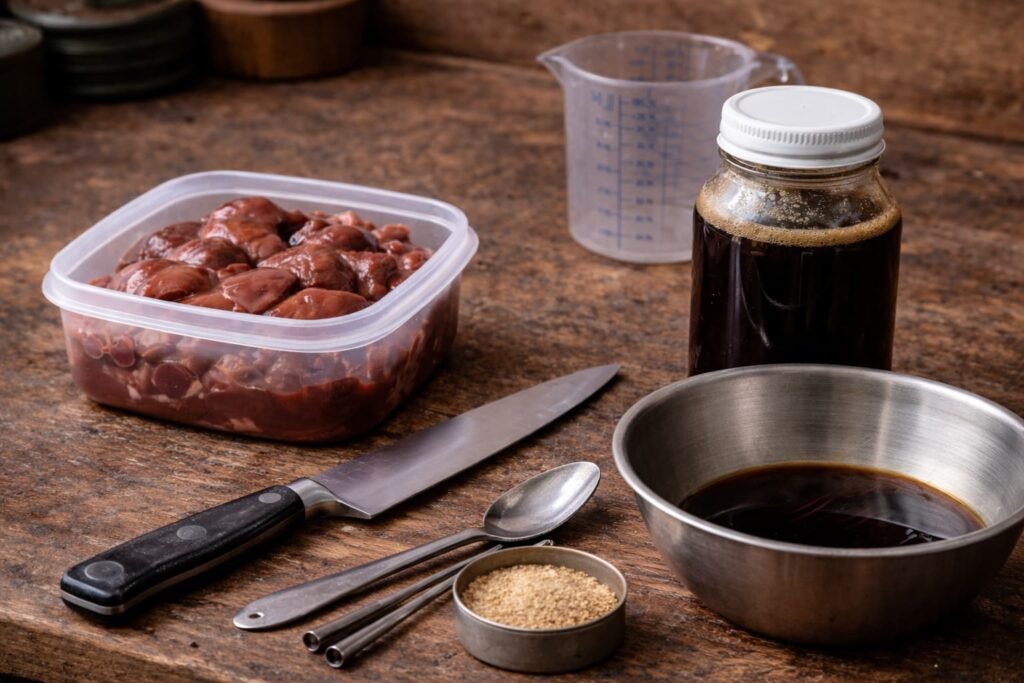
What you need
- 500 g chicken livers
- 500 ml water
- 2 tablespoons fresh pineapple juice or 1 teaspoon meat tenderiser
- 1 teaspoon non-iodized salt
- blender or food processor
- jar or heat-safe container
- fine strainer or cloth
- a way to hold gentle heat
Step 1: Blend the liver
Blend the liver with the water until smooth.
Step 2: Add the enzyme source
Add pineapple juice or meat tenderiser. This helps break the liver proteins down into a more soluble liquid form.
Step 3: Add the salt
Stir in the salt. This helps with the process and storage.
Step 4: Hold it warm
Keep the mixture warm for around 12 to 24 hours. You are encouraging breakdown, not hard cooking.
Step 5: Heat-finish it
Bring it up hotter at the end to stop the enzyme activity and make the liquid safer to store.
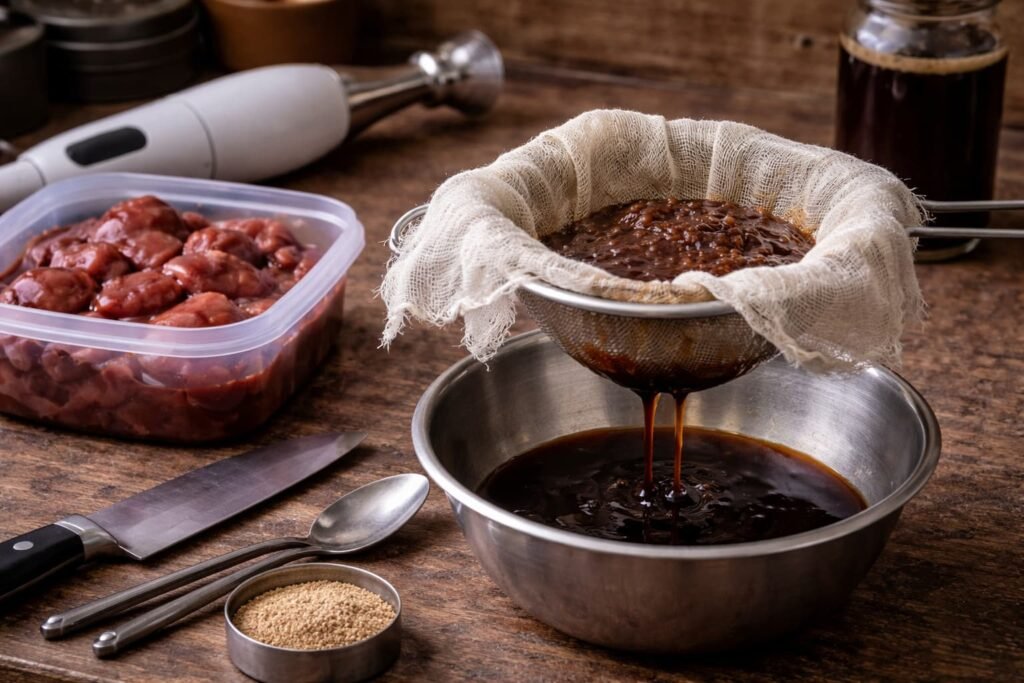
Step 6: Strain it
Strain it well. What you want is the dark liquid, not the heavier solids.
Step 7: Store it properly
Keep it chilled and use common sense. Freeze portions if needed.
What a Good Batch Should Look and Smell Like
A good liver hydrolysate should usually be:
- dark brown
- rich and meaty
- strong but not rotten
- smooth enough to mix and soak with
- clearly more developed than raw blended liver
If it smells badly spoiled rather than rich and savoury, bin it.
Fresh raw materials and decent temperature control matter here.
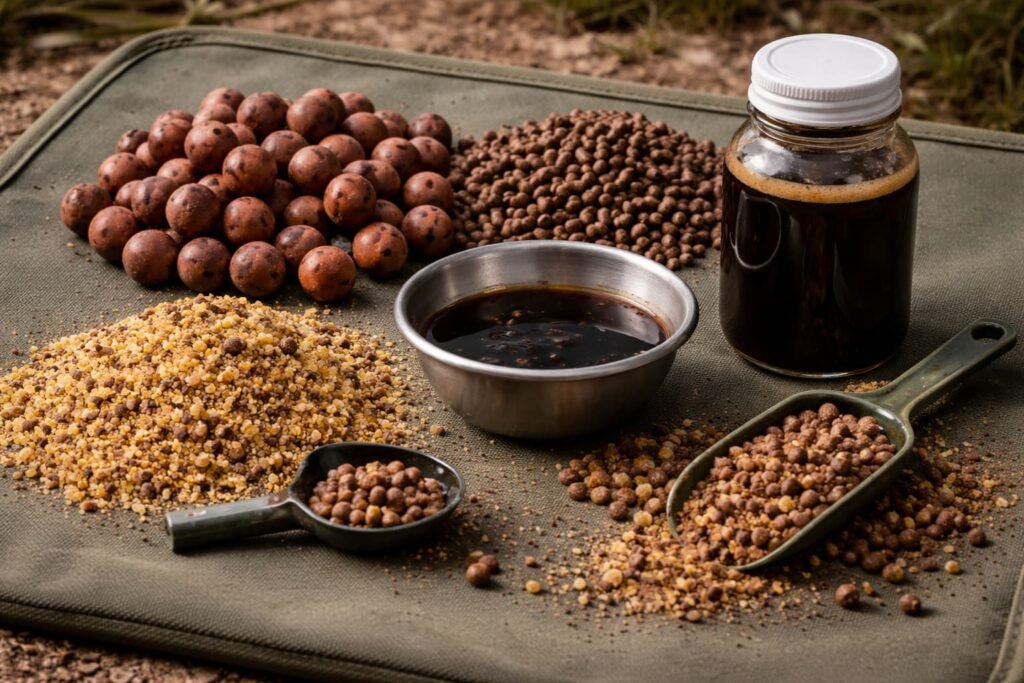
Best Ways to Use Liver Hydrolysate
On hookbaits
This is one of the best uses. A light dip, glaze, or short soak can give a hookbait a much stronger food signal.
On boilies
Liver hydrolysate works very well as a boilie soak, especially when you want a stronger savoury profile.
In stick mixes and crumb mixes
A little in pellet dust, crumb, or crushed boilie mix can sharpen the attraction around the hookbait.
On pellets
Pellets take liver hydrolysate well, especially for short-session work.
In paste
If you are making a richer savoury paste, this liquid fits naturally.
For a more general free-bait liquid, also read Homemade CSL for Carp Fishing in Michigan.
How Much Liver Hydrolysate to Use
Do not overdo it.
A sensible starting point is:
- 30–60 ml per kilo in dry mixes
- 50–100 ml per kilo for boilie soaking
- a light coating on pellets
- a quick dip or glaze on hookbaits
- 10–20 ml in a PVA bag or stick mix if the mix stays workable
If it starts overpowering the bait or making everything too wet and heavy, back it off.
Liver Hydrolysate vs CSL
These two liquids do different jobs.
CSL is usually better for:
- bulk free bait treatment
- particles
- spod mixes
- pellets in volume
- a softer background food signal
Liver hydrolysate is usually better for:
- hookbait treatment
- stronger boilie soaks
- stick mixes
- short-session attraction
- making one bait stand out
A very practical approach is to use CSL on the freebies and liver hydrolysate closer to the hookbait.
Liver Hydrolysate vs Yeast Extract
This is also worth understanding.
Yeast extract is usually the more rounded savoury liquid. It gives bait depth and a food-like background profile.
Liver hydrolysate is usually the stronger direct hit. It is more aggressive in meaty profile and often better when you want the hookbait or the little pile around it to stand out fast.
That means:
- yeast extract is often better for overall bait character
- liver hydrolysate is often better for sharp attraction around the business end
For the companion post, see Homemade Yeast Extract for Carp Bait.
When Liver Hydrolysate Works Best
Liver hydrolysate is useful year-round, but especially handy when:
- you are fishing short sessions
- you want a strong hookbait signal
- you want a richer savoury bait treatment
- you are using boilies, pellets, or crumb around the hookbait
- you want something stronger than a standard sweet glug
It is a very good liquid for making the business bait feel like the prize in the swim.
Michigan Notes
Good for short-session work
On Michigan waters, liver hydrolysate makes a lot of sense when you are fishing a quick overnighter, a short day session, or moving between spots.
Good on big lakes
On larger waters, a stronger hookbait signal can help when the baited area needs one obvious focal point.
Good when fish have seen sweet liquids
A darker meaty liquid can sometimes show pressured fish something different from the usual sweet, fruity, or bright bottled treatments.
Good in spring and warm periods
Because it is such a direct food signal, it fits well whenever you want strong response and quick leak-off.
Keep it controlled
This is not the sort of liquid I would splash everywhere just because I can. It is better used with purpose.
For more seasonal thinking, see Spring Carp Fishing in Michigan and Tactics.
Common Mistakes
Using too much
Too much liver hydrolysate can overpower a bait or make the mix messy and heavy.
Poor storage
This is a richer perishable liquid. Handle it properly and keep it chilled.
Using poor raw materials
Fresh liver gives better results than poor old liver. Start with decent ingredients.
Treating all bait the same way
This liquid usually shines most on the hookbait, the boilie soak, or the little trap around the hook. It does not need to drown the whole bucket.
Confusing strong with effective
A really harsh smell is not the goal. Rich, soluble, and food-like is the goal.
FAQ
Is liver hydrolysate good for carp bait?
Yes. It is one of the stronger homemade savoury bait liquids and works especially well for hookbait treatment and richer bait applications.
Can I make liver hydrolysate at home?
Yes. A simple homemade version can be made with liver, water, salt, and an enzyme source like pineapple juice or meat tenderiser.
Is liver hydrolysate better than CSL?
Not across the board. CSL is usually better for bulk free bait use. Liver hydrolysate is usually better when you want a stronger direct bait signal around the hookbait.
Is liver hydrolysate better than yeast extract?
They do slightly different jobs. Yeast extract is often the rounder savoury liquid. Liver hydrolysate is often the stronger meaty hit.
Can I use liver hydrolysate on boilies?
Yes. It works very well as a boilie soak when used sensibly.
What should liver hydrolysate smell like?
Rich, dark, meaty, and food-like. Strong is fine. Rotten is not.
Next Steps
Read these next to go deeper into bait building and practical bait use on Michigan waters: