

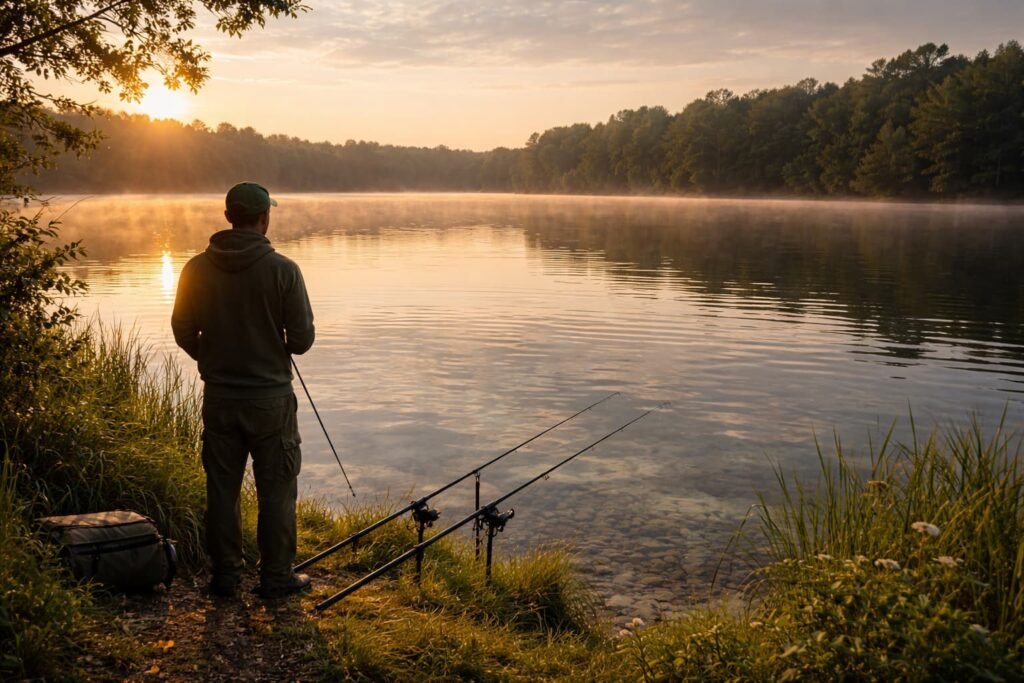
How to Find Carp in Big Lakes (Complete Michigan Guide)
Big lakes intimidate a lot of anglers. Too much water, too many options, and no obvious starting point.
But carp don’t use all of a big lake — they use specific zones based on food, safety, and conditions. Once you understand how they move, finding them becomes much simpler.
This guide breaks down how to locate carp in large Michigan lakes using practical watercraft, not guesswork.
Quick Start
If you’re short on time, do this:
- Start in margins and shallow flats (2–6 ft)
- Fish the windward bank if there’s a warm wind
- Look for signs: fizz, clouded water, movement
- Avoid featureless open water early on
- Move if you don’t see signs within a few hours
Where Carp Actually Spend Time in Big Lakes
Margins (The Most Overlooked Zone)
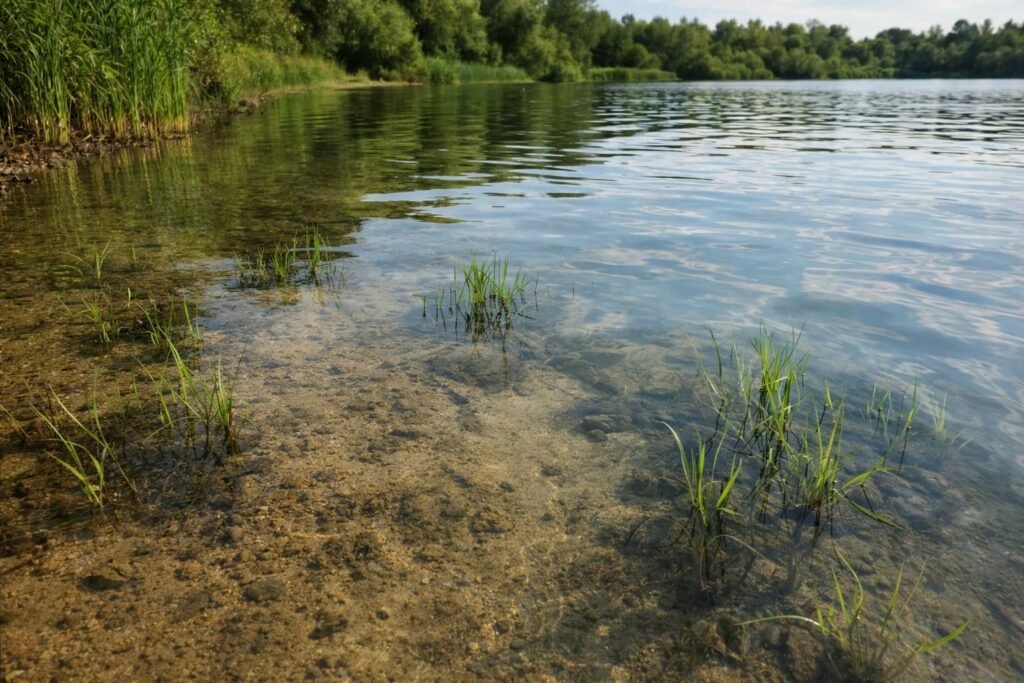
Most anglers cast too far.
Carp spend a huge amount of time in the margins, especially in Michigan lakes with:
- weed growth
- natural food
- less disturbance
Margins warm faster and hold food. They’re often your highest-percentage starting point.
Even in big lakes, always check the first 10–20 yards.
Shallow Flats
Shallow water is key, especially in spring and early summer.
Look for:
- 2–6 ft depth
- soft bottom
- light weed growth
These areas hold:
- insect life
- snails
- feeding carp
This is where fish move to feed confidently.
Drop-Offs and Depth Changes
Carp often patrol edges.
Key areas:
- shelf drops
- weedline edges
- transitions from soft to firm bottom
These act like underwater highways.
Open Water (When It Works)
Open water is often overfished blindly.
Use it only when:
- fish are visibly moving through
- you’ve seen activity offshore
- weather pushes fish out
Otherwise, it’s usually low percentage.
How Wind Affects Carp Location
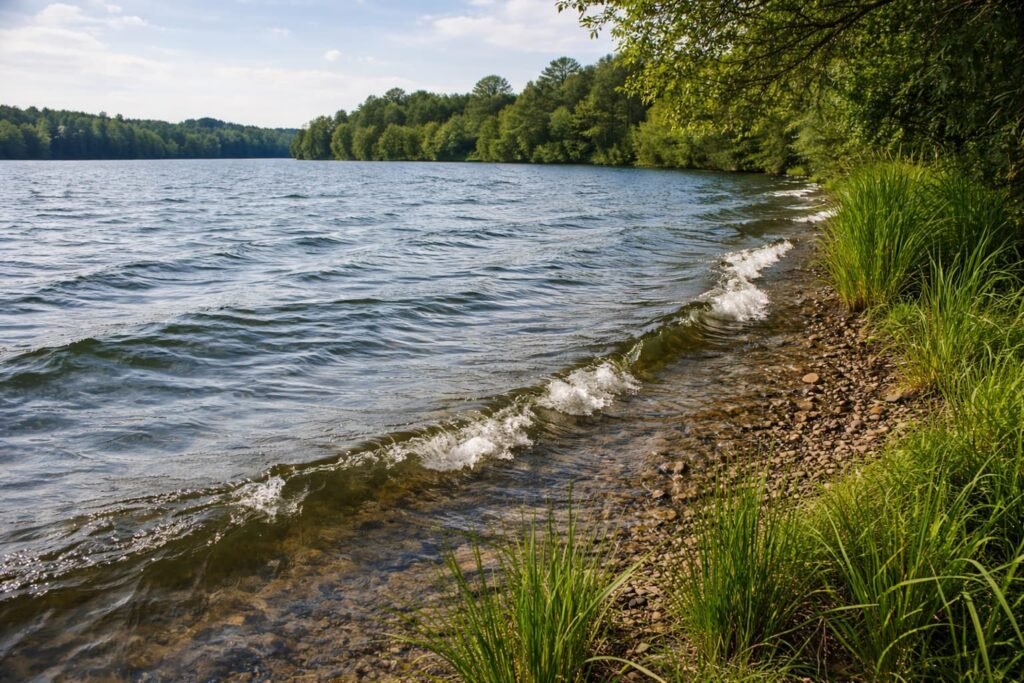
Wind is one of the biggest factors on big water.
Warm Wind (South / Southwest in Michigan)
- pushes warm water and food
- carp often follow it
- focus on windward banks
Cold Wind (North / East)
- can push fish off an area
- slows activity
- look for sheltered zones
Don’t just fish a spot — fish what the wind is doing to that spot.
Finding Carp Fast (What to Look For)
Visual Signs
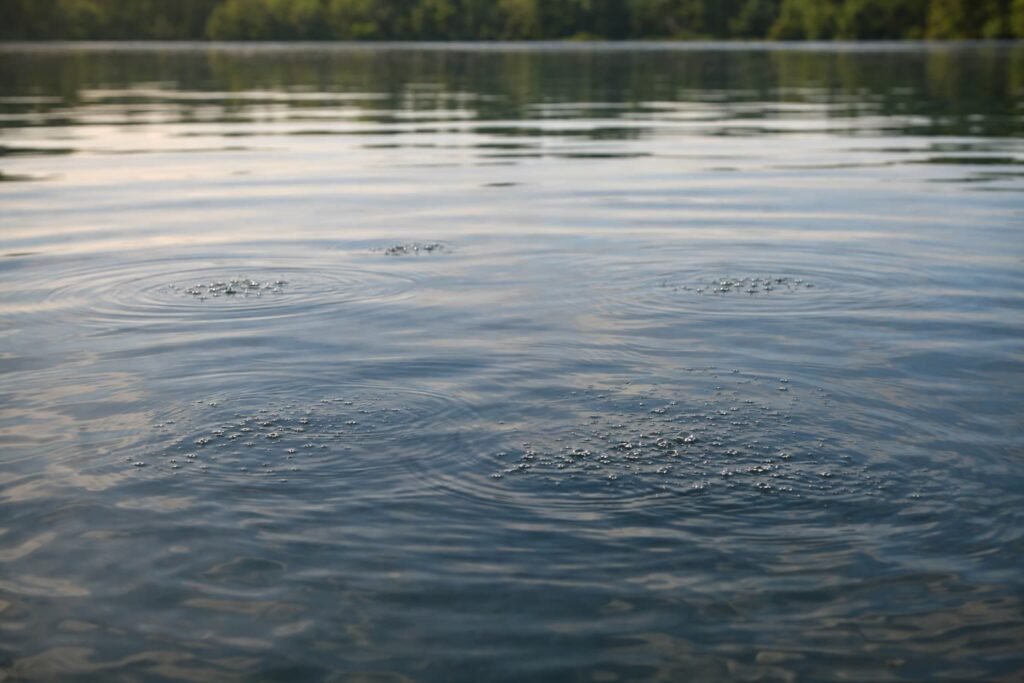
The best anglers watch more than they cast.
Look for:
- fizz (small pinhead bubbles)
- clouded water
- subtle movement or backs showing
- reeds or weed movement
If you see signs, fish there.
Quiet Water vs Busy Water
Carp prefer:
- quiet margins
- less pressured areas
- consistent food sources
Avoid:
- heavy disturbance
- constant boat traffic
Time of Day Movement
Carp often move:
- early morning
- late afternoon
- into evening
But in big lakes, location matters more than the clock.
Baiting Strategy for Big Lakes
You don’t need to pile bait in.
Keep it simple:
- small beds of bait
- tight areas
- accurate placement
Good options:
- particles (corn, hemp, tigers)
- boilie crumb + whole baits
You’re trying to intercept fish, not feed the lake.
Session Approach (Big Lake Mindset)
Big lakes reward anglers who think, not just sit.
Approach it like this:
- Walk and observe first
- Pick the most likely zone
- Fish for signs, not just features
- Give it time — but not forever
- Be willing to move
Mobility beats stubbornness on big water.
Michigan Notes
- Northern Michigan lakes often have strong snail populations — carp will stay near them
- Clear water means carp can be more cautious
- Spring: focus on warming shallow areas
- Summer: rely on signs and wind
Common Mistakes
- Casting too far by default
- Fishing empty water
- Ignoring margins
- Overbaiting
- Staying too long in the wrong spot
FAQ
Do carp always stay shallow in big lakes?
No. They move between zones, but shallow areas are often the best starting point.
How far out should I cast?
As far as needed — but always check close in first.
Is prebaiting needed on big lakes?
Not always. Location matters more.
What’s the best depth for carp?
Often 2–10 ft depending on conditions.
Should I fish the wind every time?
Warm winds often help. Cold winds can push fish away.
Next Steps
Now you know where to find carp — next, make sure you’re presenting the right rig and bait for the situation: