
Fish Care & Safety
Fish care is not optional. This hub is the Michigan Carp routine from net to release — bank setup, safe photos, and the gear that prevents damage.
Quick Start (do this every session)
- Mat/cradle wet and ready before the fish is in the net
- Forceps + sling + scales ready before you lift the fish
- Wet hands, keep the fish low over the mat, no standing holds
- Photos last (or skip them) — release is the priority
- Support the fish in the edge until it kicks away strong
Jump to: Quick Start • Net to Release • Common Mistakes • Safe Photos • Release • Start Here • FAQ
Start Here (Core Guides)
- Getting It Right From Net to Release
- Fish Care & Bank Setup: The Michigan Carp Standard
- Catch & Release Carp Care: Safe Photos
Minimum Gear (don’t overthink it)
Fish Care & Safety
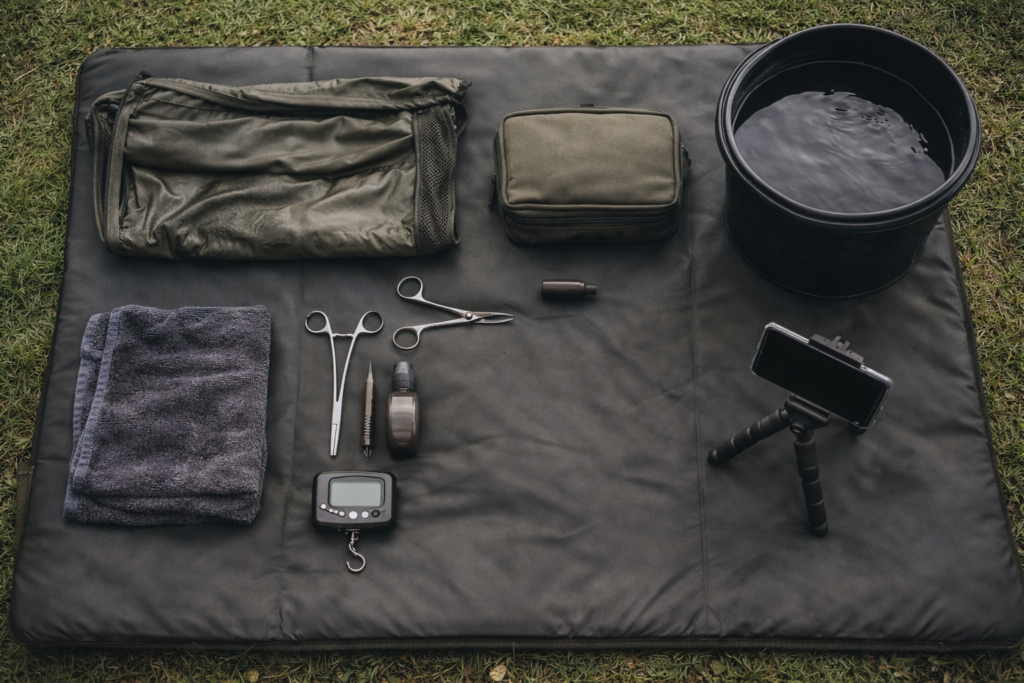
Fish care is not optional. It’s a routine you run automatically the moment a carp hits the net.
If you’re organised, the fish is calm, protected, and back swimming strong — every time.
Quick Start (60 seconds before you cast)
- Mat/cradle out and already wet
- Sling wet and clipped to scales (or ready)
- Forceps + carp care kit on the mat (not in your bag)
- Water bucket filled (or a shallow edge spot picked for sling release)
- Camera ready BEFORE the fish comes out (or skip photos)
The Michigan Carp Routine (Net to Release)
Step 1 — Net stays in the water
- Let the fish settle in the mesh
- Sort the mat, sling, forceps, camera
- Only lift the fish once everything is ready
Step 2 — Onto the mat (low, wet, calm)
- Wet hands every time you touch the fish
- Keep the fish low over the mat
- Unhook fast and clean (no wrestling)
Step 3 — Weigh (only if you’re ready)
- Fish straight into a wet sling
- Get the weight quickly
- Back on the mat only if needed for a fast photo
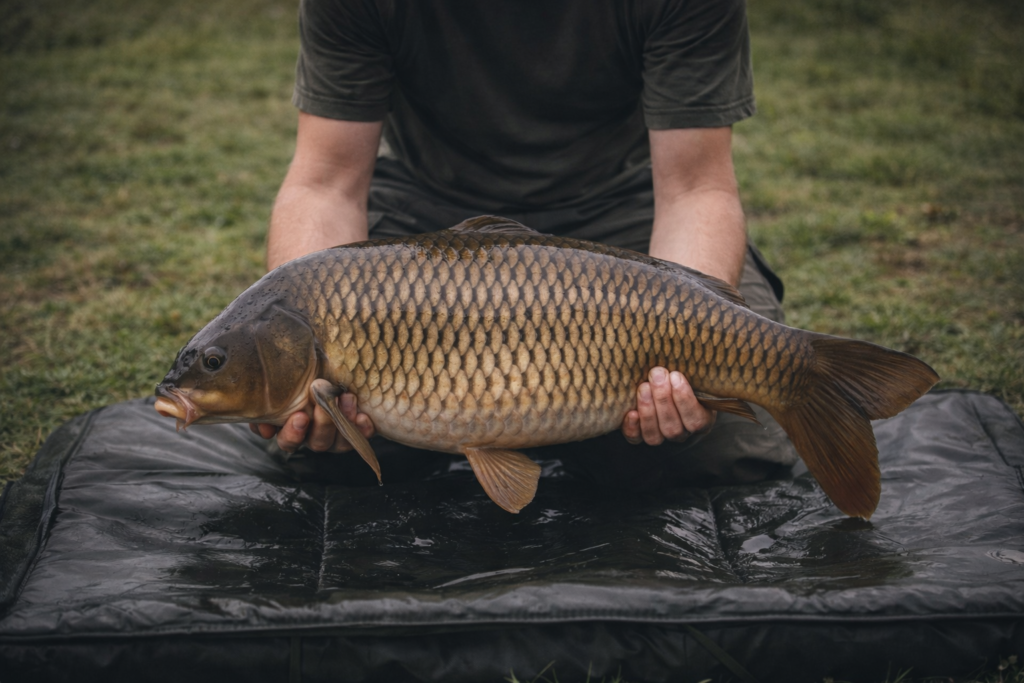
Step 4 — Photos (optional, last)
- Kneeling only, fish low over the mat
- Two hands, control the fish, no standing holds
- One quick shot is enough — then straight to release
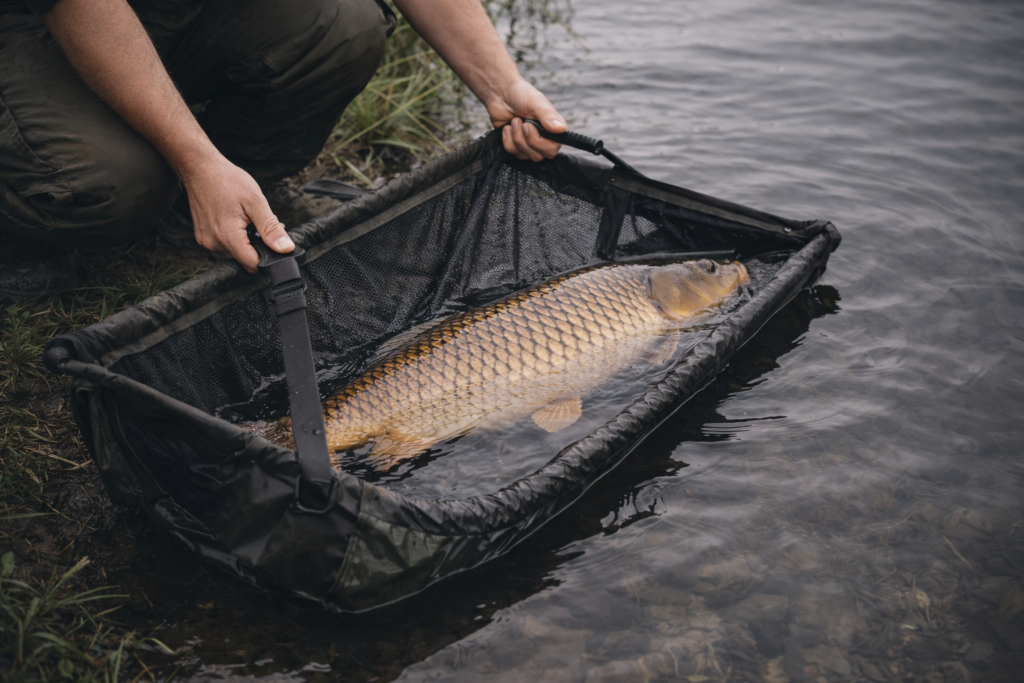
Step 5 — Release properly
- Support the fish in the edge (in the sling is safest)
- Wait for the tail kick
- Let it go under its own power
Common Mistakes (what actually causes damage)
- Mat/cradle is dry (or you “wet it later”)
- You lift the fish before your camera/scales are ready
- You stand up with the fish
- You rush because the second rod is screaming
- You drag a fish over stones/grass to get to a photo spot
- You don’t re-wet hands between steps
Michigan Notes
- Cold air + wind dries a carp fast. Wet gear and quick routine matter more than summer.
- Weed and snags mean quicker landings and better control — long fights do more harm than good.
- If you’re not prepared, you’ll rush. Rushing is where injuries happen.
Start Here (Core Guides)
- Carp Fish Care: Getting It Right From Net to Release
- Bank Setup & Fish Care: The Michigan Carp Standard
- Catch & Release Carp Care: Safe Photos
FAQ
- How long should a carp be out of the water?
As little as possible. If you’re organised, you can unhook, weigh, and release in a couple of minutes. - Do I have to weigh and photograph every fish?
No. If conditions are bad (wind/cold) or the fish is lively, skip it. Do the right thing. - What’s the safest way to weigh?
A wet sling, quick weigh, then release support in the shallows. - What’s the biggest “hidden” mistake?
Getting everything ready after the fish is already on the mat.
Next Steps
Snag Safety (fish care starts before the take)
Carp Fish Care in Michigan: Unhooking, Photos, Weighing, and Safe Returns
Gear hub: Landing Gear → /landing-gear/ Direct answer: landing gear isn’t about looking “pro.” It’s about…
Carp Fish Care: Getting It Right From Net to Release
If you’ve been around carp fishing for any length of time, you’ll have heard the phrase…