
Large lakes can feel intimidating when you first start carp fishing. With hundreds or even thousands of acres of water, it’s easy to believe carp could be anywhere.
In reality carp usually concentrate in relatively small areas of a lake where conditions provide food, comfort, and protection. Learning how to narrow down a big lake into a few high-percentage zones is one of the most important skills a carp angler can develop.
If you’re new to locating carp, start with Reading a Lake Like a Carp Angler. That guide explains how carp use lake structure and water conditions.
Quick Start
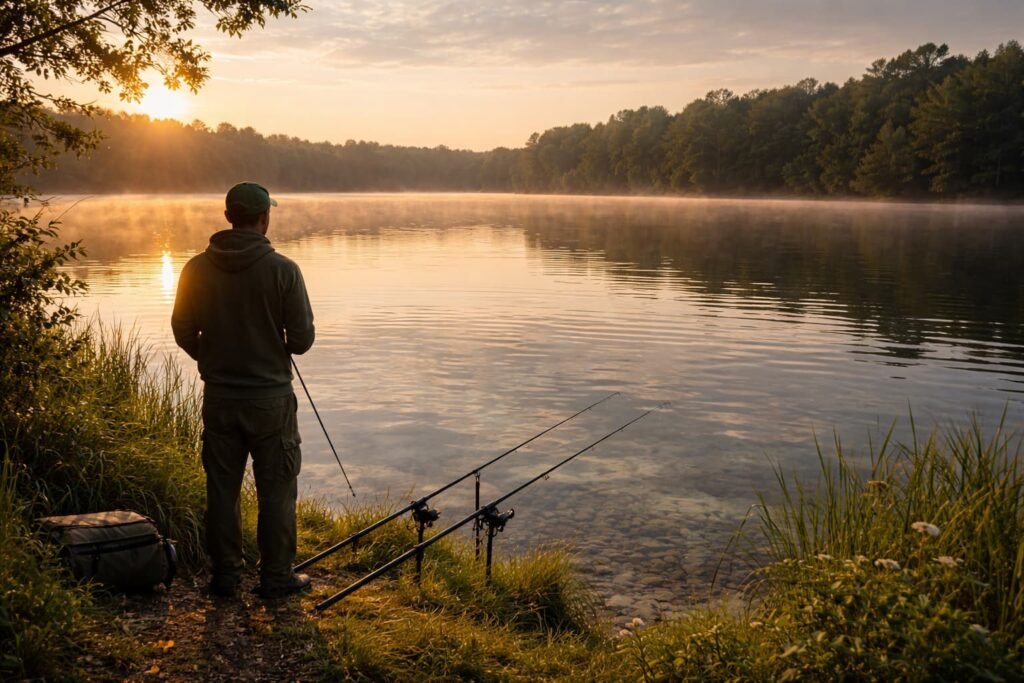
When approaching a large lake, start by identifying:
• shallow bays that warm quickly
• wind-blown shorelines
• weed beds and reed lines
• drop-offs and underwater ledges
• areas with natural food sources
These features dramatically increase your chances of finding carp.
Focus on High-Percentage Areas
The biggest mistake anglers make on large lakes is trying to fish too much water.
Instead of thinking about the entire lake, focus on small sections that naturally attract carp.
Good starting locations include:
• sheltered bays
• shallow flats near deeper water
• areas with visible carp activity
• natural feeding zones
Often carp will repeatedly visit the same productive areas.
Follow the Wind
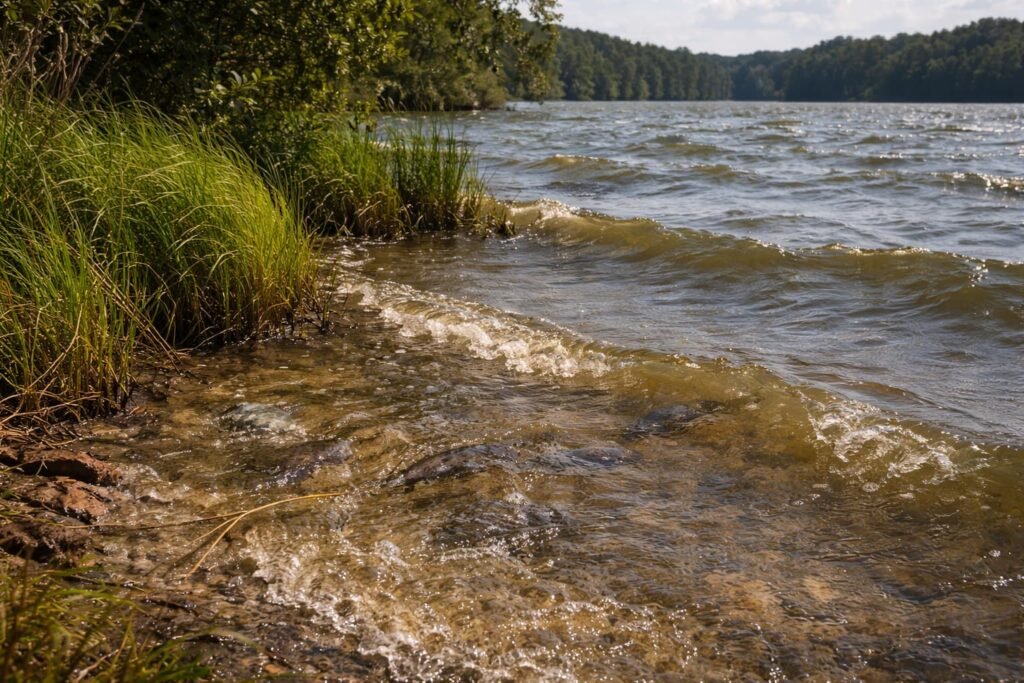
Wind is one of the most important factors influencing carp location.
Wind pushes food, oxygen, and warmer surface water toward one side of the lake. This often attracts both natural food and feeding carp.
Look for:
• wind-blown shorelines
• banks receiving consistent warm winds
• shallow areas where food collects
Even moderate wind can concentrate carp activity.
Look for Natural Food
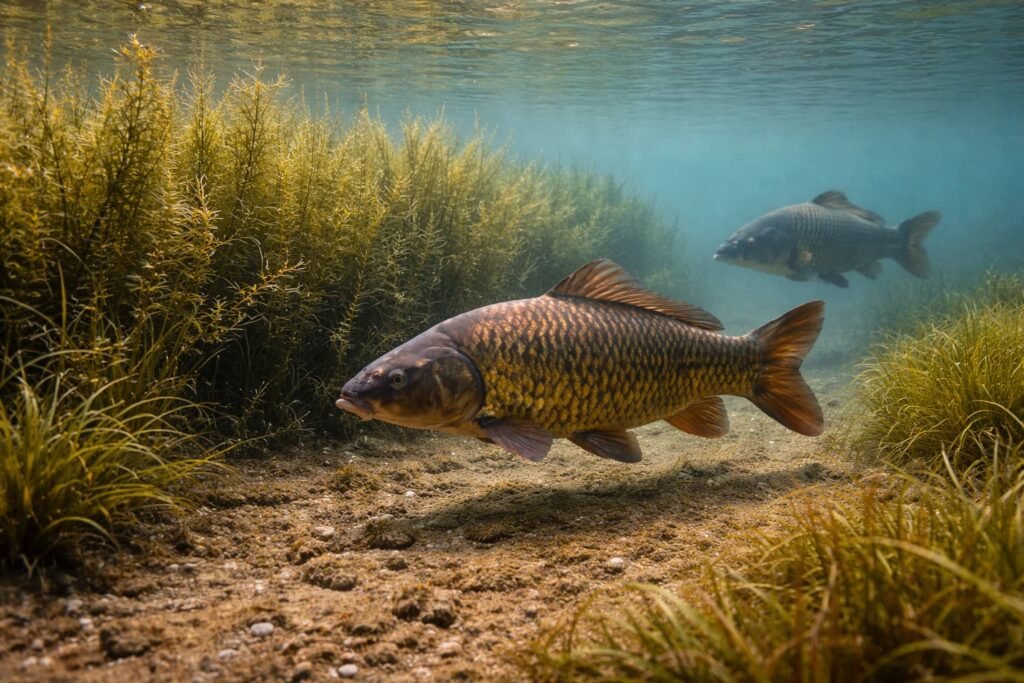
Carp rarely stay in areas that lack natural food.
In many Michigan lakes carp feed heavily on:
• snails
• insect larvae
• bloodworm
• zebra mussels
• aquatic vegetation
Areas containing these food sources often hold carp consistently.
Watch the Water Before Casting
Observation is one of the most valuable tools in carp fishing.
Before setting up rods, spend time watching the water for:
• bubbling patches
• cloudy or disturbed bottom
• rolling fish
• carp cruising along margins
These signs often reveal where carp are actively feeding. Learn how to recognize them in Signs Carp Are Feeding.
Use Lake Structure to Your Advantage
Carp frequently travel along underwater features.
Look for:
• drop-offs
• gravel bars
• weed edges
• submerged points
• channel edges
These areas often act as travel routes between resting and feeding zones.
Fishing along these transitions can produce consistent action.
Michigan Notes
Many Northern Michigan lakes are large natural waters with extensive weed beds and shallow bays.
Typical carp locations include:
• shallow flats warming in spring
• weed edges holding natural food
• sheltered bays protected from wind
• drop-offs beside feeding areas
Understanding these features will help you narrow down large lakes quickly.
Common Mistakes
Trying to fish the whole lake
Carp rarely spread evenly across large lakes.
Ignoring wind direction
Wind often concentrates carp activity on one side of a lake.
Setting up too quickly
Spending time observing the water can reveal feeding fish before you cast.
FAQ
Are carp harder to find in big lakes?
Not necessarily. Carp often gather in predictable feeding areas.
Should I fish near the deepest water?
Deep water can hold carp, but feeding areas nearby are usually more productive.
Do carp stay in one part of a big lake?
Carp move around but often revisit the same productive zones.
Is prebaiting helpful on large lakes?
Yes. Introducing small amounts of bait over time can attract carp to a specific area.
Next Steps
• Reading a Lake Like a Carp Angler
• Signs Carp Are Feeding
• Where Carp Hold During the Day
• Best Depth for Carp Fishing