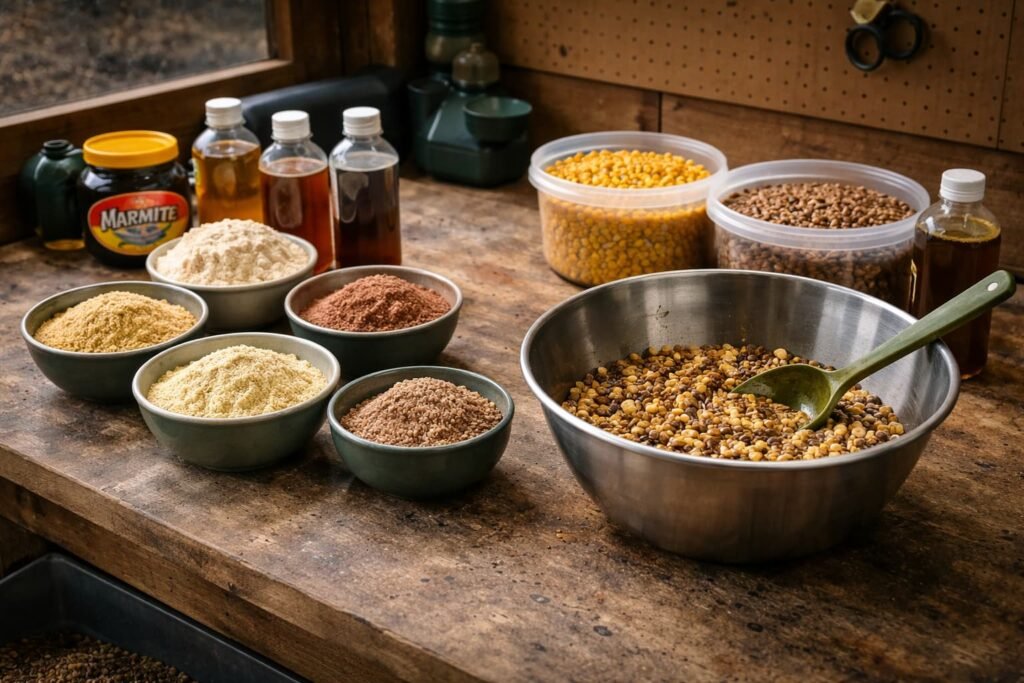
Can enzymes and pre-digestion really improve carp bait, or is it just another layer of bait-making hype? This guide explains what enzymes actually do, where phytase helps, why heat matters, and how to use enzyme ideas sensibly in practical carp bait.
The Science of Enzymes, Phytase, and Pre-Digestion in Carp Bait
What They Do, When They Help, and Where Anglers Get It Wrong
This page is part of the Carp Bait Guide.
If you want the broader digestion picture first, read [The Science of Carp Bait Digestibility].
If you want the attraction side too, read [The Complete Science of Carp Feeding Attractants].
If you want the practical bait-building side, read [Building a Better Boilie].
Enzymes are one of those bait topics that can either make you think you have found the future, or make you think the whole thing is overcomplicated nonsense.
The truth is somewhere in the middle.
Used properly, enzyme ideas can help open up nutrients, soften ingredients, reduce some of the problems in plant-heavy bait, and create a more active outer food signal. Used badly, they become another expensive layer of bait fussing that adds more complication than value.
This page is about getting that balance right.
The aim is simple: explain what enzymes actually do, where phytase really helps, how pre-digestion works, why heat is the big limiting factor, and how to use these ideas sensibly in hookbaits, particles, liquids, and advanced bait making.
On This Page
- Quick Start
- What Enzymes Actually Do
- Why Phytase Matters
- Protease and Pre-Digested Protein
- Cellulase and Amylase
- The Heat Problem
- Best Practical Uses
- Michigan Notes
- Common Mistakes
- FAQ
- Next Steps
Quick Start
If you only want the practical version, it is this:
- Enzymes are not magic. They are tools.
- Phytase matters most when your bait contains meaningful plant material.
- Protease matters when you want protein broken down into smaller peptides and amino-rich outer leakage.
- The biggest practical problem with enzymes is heat. Boiling destroys the active enzyme effect.
- Enzymes make more sense in:
- post-boil soaks
- paste baits
- method mixes
- particle pre-treatment
- specialist hookbait work
- They make less sense as “just add to the base mix and boil it” solutions.
- If you use them, use them with purpose. Do not just throw them in because the label sounds clever.
Practical Rule:
Enzymes are best treated as specialist bait-building tools, not as universal must-have additives.
A Simple First Test
If you want to try enzyme-style bait work without overcomplicating it, start with one of these:
- treat hookbaits after boiling rather than the full base mix
- pre-treat particles, not finished boilies
- test one paste or stick-mix idea first
- compare one treated bait against one untreated bait
What Enzymes Actually Do
Enzymes are biological catalysts. In bait terms, that means they help break bigger food structures into smaller, easier-to-use ones.
That matters because bait ingredients are not all equally available to the fish. Some are already quite open and useful. Others are locked up, resistant, or slower to become available.
What Enzymes Will Not Do
Enzymes will not rescue a poor bait.
They will not replace good structure, digestibility, attraction, or location.
They will not survive ordinary boilie treatment unchanged.
They are advanced tools, not magic dust.
The three practical enzyme ideas for anglers
1. Open up nutrition
Some enzymes help free up nutrients that are otherwise tied up inside plant material or complex food structures.
2. Improve outer bait leakage
Some enzymes help turn larger proteins into smaller peptides and amino-rich material, which can improve the food signal leaking from the bait.
3. Pre-digest the bait surface
This is where the subject becomes very practical. A bait does not always need to be fully transformed. Sometimes a partially broken-down outer skin is enough to make the bait more interesting and easier to process.
Why Phytase Matters
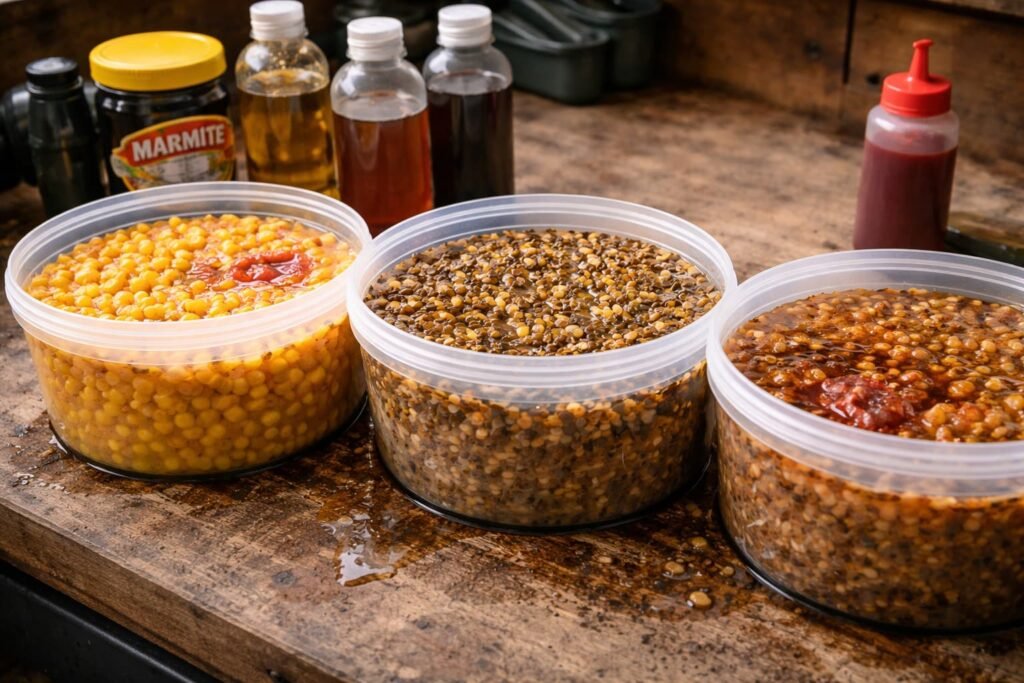
Phytase is the first enzyme many bait makers should understand because it directly addresses one of the main weak points in plant-heavy bait.
Plant ingredients often contain phytic acid, which ties up minerals and reduces nutrient availability. Phytase helps break that hold.
In plain English
If you are using ingredients such as:
- soybean meal
- wheat-based meals
- maize products
- hemp
- rapeseed meal
- other plant-derived materials
then phytase is one of the most relevant enzyme tools because it helps make that side of the bait less nutritionally awkward.
What that means on the bank
Phytase is not an “instant bite” additive.
It is a bait-improvement tool.
Its value sits more in:
- improving plant-heavy bait
- helping long-term food-bait quality
- reducing the locked-up side of some ingredients
That makes it more relevant to serious bait making than to one-off throwaway hookbait gimmicks.
Protease and Pre-Digested Protein
This is the part many carp anglers will find most interesting.
Protease breaks proteins down into smaller peptides and amino materials. That matters for two reasons:
1. Easier processing
Smaller protein fractions can be easier for carp to deal with.
2. Better food signal
This is the real bait-maker’s angle.
As protein is broken down, the outer layer of the bait can begin releasing smaller compounds that fit much more closely with the kinds of food signals carp detect well.
This is why pre-digested fish proteins, hydrolysates, and enzyme-treated liquids have such a strong practical reputation.
Pre-digestion in plain English
Pre-digestion does not mean turning the bait into sludge.
It means partially breaking down some of the harder-to-access material before the fish eats it, or at least beginning that process on the bait surface.
That can make the bait:
- more active
- more food-like
- easier to leak from
- potentially easier to process once eaten
Natural protease ideas
Some food ingredients already bring this kind of thinking into play.
For example:
- pineapple-derived bromelain
- papaya-derived papain
- fermented food liquids
- hydrolysed protein liquids
These are often more practical for anglers than trying to source highly technical industrial enzyme blends.
Cellulase and Amylase
These are more specialist, but still worth understanding.
Cellulase
Cellulase helps break down cellulose-heavy plant material.
This matters more when a bait contains a meaningful amount of fibrous plant content. It is not something every bait needs, but it makes sense in plant-heavier bait ideas.
Amylase
Amylase helps deal with starch.
That makes it potentially relevant in baits built around:
- cereals
- maize products
- flours
- starch-heavy carriers
- some particle treatments
Practical reading
These are useful tools, but not usually where I would tell most anglers to start.
If you are just stepping into advanced bait making, phytase and protease are the more important two to understand first.
The Heat Problem
This is the most important practical section in the whole article.
Most digestive enzymes are heat-sensitive. That means if you add them to a normal boilie base mix and then boil the bait, you are very likely destroying the active effect you paid for.
What that means
A lot of enzyme marketing sounds impressive until heat enters the picture.
If the bait is cooked hard, the live enzyme action is mostly gone.
That does not always mean the ingredient was pointless, because some enzyme-treated materials may already have done useful work before cooking. But it does mean anglers need to stop thinking of enzymes as a simple “throw it in the mix” solution.
The three practical strategies
1. Post-boil application
This is one of the best uses.
Apply enzyme-based liquids or dissolved enzyme material to the outside of finished bait after it is cooked and dried. That lets the outer bait surface begin changing without the enzyme being boiled to death first.
2. Uncooked paste or method use
This is where enzymes can stay active much more effectively.
Paste baits, doughs, method mixes, and some hookbait coatings are natural homes for enzyme work.
3. Pre-treatment of ingredients
This is the most advanced but often the smartest approach.
Treat the ingredient first, let the enzyme do its work, then use the altered ingredient in the bait build.
That way the enzyme has already delivered the useful change before heat becomes a problem.
Best Practical Uses
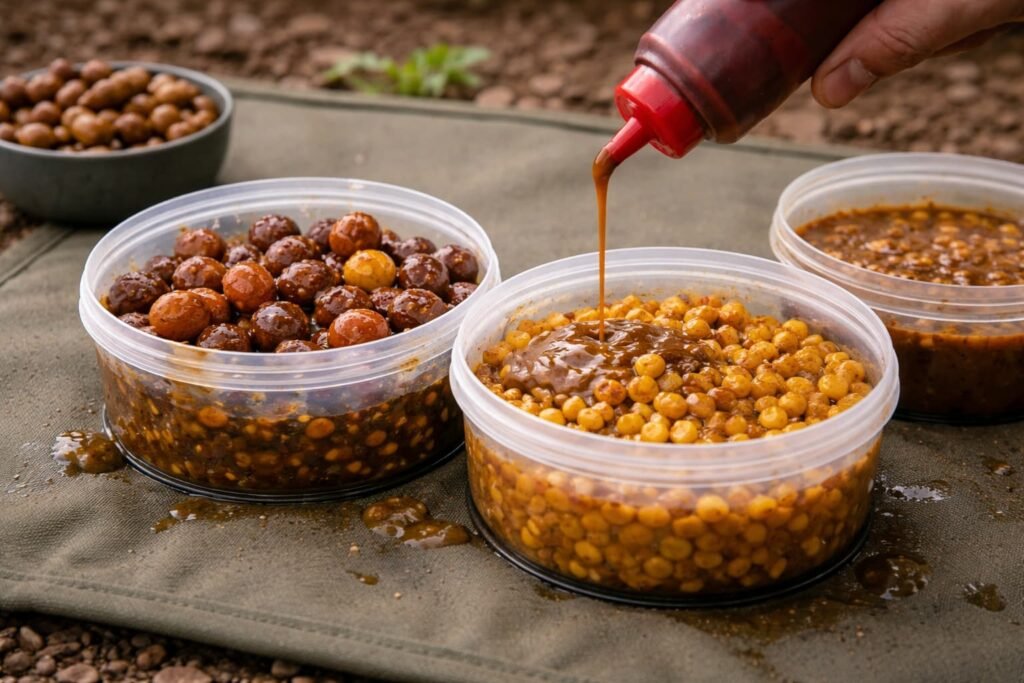
This is where I think enzyme thinking makes the most real-world sense.
Hookbaits
Very good use.
A hookbait can justify:
- specialist treatment
- stronger outer activity
- more complicated preparation
- concentrated value
Post-boil boilie treatment
Very good use.
A post-boil soak or controlled enzyme coating makes far more sense than pretending an enzyme survives normal boiling unchanged.
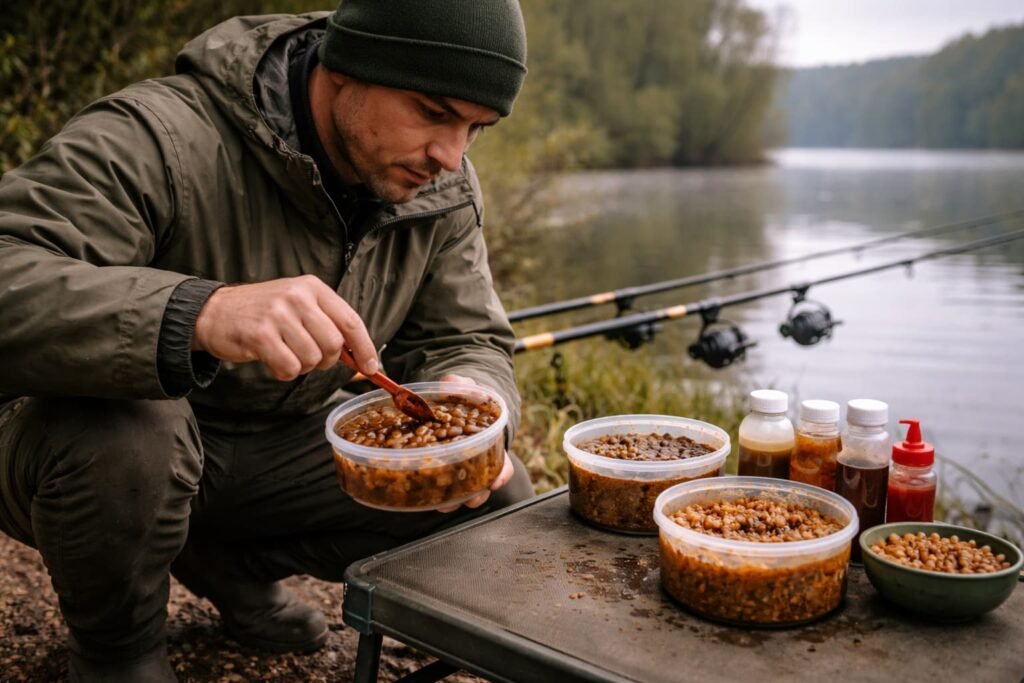
Particle pre-treatment
Excellent use.
This is one of the most natural places for enzyme and pre-digestion thinking, especially in plant-heavy baiting.
Paste and method mixes
Excellent use.
These give you active, uncooked, highly practical applications without forcing the whole idea through a boiling process that ruins it.
Base-mix boilies
Only useful if:
- the ingredients were pre-treated first
- the enzyme effect happened before the boil
- you understand you are not expecting live enzyme action after cooking
Michigan Notes
For Michigan carp fishing, I would keep enzyme thinking specialist and purposeful.
Spring
In cold spring water, enzyme-treated outer leakage can make sense because you want activity without overfeeding.
Summer
Summer is the best season for richer bait, but also the easiest season to waste time overcomplicating things. Use enzyme ideas where they genuinely improve the bait, not because the concept sounds advanced.
Autumn
This is a very good time for pre-digested and active food-signal bait thinking, especially where carp are feeding hard but the water is moving toward colder conditions.
Winter
Keep it simple. If you use enzyme thinking at all, use it lightly in hookbaits, pastes, or outer coatings. Do not turn winter bait into a laboratory exercise.
Common Mistakes
1. Thinking enzymes are magic
They are tools, not miracles.
2. Boiling them and expecting full activity
This is the classic mistake.
3. Using them without a reason
Every advanced additive should have a job.
4. Confusing pre-digestion with bait breakdown disaster
You want controlled activity, not rotten mush.
5. Forgetting the rest of the bait still matters
Structure, digestibility, attraction, and confidence still come first.
FAQ
Do enzymes help carp bait?
They can, when used properly and in the right place.
Is phytase worth using?
Yes, especially in plant-heavier bait concepts.
Does protease improve attraction?
It can help by increasing smaller peptide and amino-rich leakage.
Can I just add enzymes to a boilie mix and boil it?
That is usually the wrong way to think about them.
Where do enzymes make the most sense?
Hookbaits, post-boil treatments, particle pre-treatment, and uncooked applications.
Are enzymes essential?
No. They are advanced tools, not basic necessities.
Next Steps
Read [The Science of Carp Bait Digestibility]
Read [The Complete Science of Carp Feeding Attractants]
Read [Building a Better Boilie]
Read [Guide to Liquids and Glugs]
Read [Particles for Michigan Carp]