
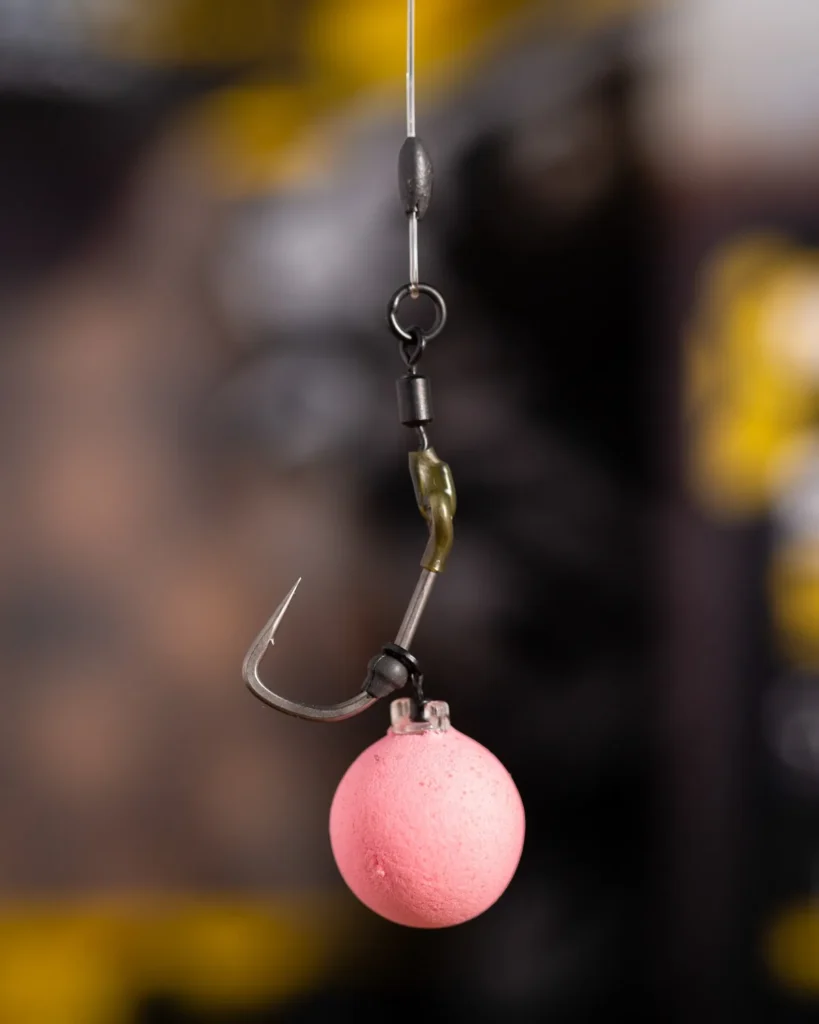
Image © Nash Tackle — used with permission (nashtackle.co.uk).
Best Spring Carp Rigs (Cold Water Setups That Work)
Spring carp fishing is not the time to overcomplicate your rigs.
In cold water, carp are slower, more cautious, and often feeding lightly. That means your rig needs to work efficiently with minimal movement and maximum reliability.
You don’t need fancy setups. In fact, simple rigs often perform best — provided they are presented properly.
Get your rig right, and you convert chances into fish. Get it wrong, and you miss the few opportunities spring gives you.
Quick Start
- Keep rigs simple and reliable
- Use sharp hooks — critical in spring
- Short to medium hooklinks work well
- Match rig to baiting approach
- Presentation matters more than complexity
Why Spring Rigs Need to Be Different
In warmer months, carp feed aggressively.
In spring:
- bites can be slower
- pickups can be softer
- fish are more cautious
That means your rig must:
- hook efficiently with minimal movement
- reset properly if disturbed
- present naturally
A rig that relies on aggressive feeding can underperform in cold water.
The Slip-D Rig (Bottom Baits)
A very good choice for your style of fishing.
Why it works:
- excellent hook movement
- strong hooking potential
- suits larger boilies (20–24mm)
In spring, it works best when:
- fished over light baiting
- paired with a clean lakebed spot
- kept simple (no over-complication)
For your setup — big boilies and size 2 hooks — this is a solid option.
The Multi Rig (Versatile and Reliable)
One of the most adaptable rigs for spring.
Advantages:
- quick hook changes
- excellent presentation
- works with wafters and bottom baits
In cold water, the Multi Rig:
- turns well
- hooks cleanly
- performs with minimal feeding pressure
It’s a very good “confidence rig” when bites are limited.
The Ronnie Rig (Pop-Ups)
Still one of the best pop-up rigs available.
Why it works in spring:
- aggressive hooking
- sits well over debris
- presents clearly
Best used when:
- fishing over light bait
- targeting single bites
- fishing slightly softer bottoms
Keep pop-ups subtle rather than overly bright in clear spring water.
The Solid PVA Bag Rig
One of the most reliable spring setups.
Advantages:
- perfect presentation every time
- small, tight bait area
- ideal for cautious fish
In spring conditions, this rig:
- creates a controlled feeding zone
- avoids overbaiting
- ensures your hookbait is always positioned correctly
For tough conditions, it’s hard to beat.
Hook Choice Matters More in Spring
Hook sharpness is critical.
Because bites are often softer:
- hooks need to take hold quickly
- penetration must be instant
Your choice (size 2 long shank claw style) is ideal for:
- bigger baits
- strong hook holds
- reliable penetration
Check and sharpen regularly — it makes a big difference.
Hooklink Length and Material
In spring, shorter to medium hooklinks tend to work best.
Typical range:
- 4–7 inches
Why:
- quicker hooking
- less movement needed
- better efficiency
Stiffer materials can help:
- reduce tangles
- improve reset
- keep presentation clean
Lead Setup: Keep It Simple
You don’t need complicated lead systems.
Effective spring setups:
- inline leads
- simple lead clips
- running rigs (in some situations)
Inline leads are particularly good for:
- direct contact
- efficient hooking
- PVA bag setups
Match Rig to Baiting Style
This is where everything comes together.
Light baiting / single hookbait:
- Multi Rig
- Ronnie Rig
- Slip-D Rig
Small baited area (PVA bag):
- Solid Bag Rig
Scattered bait:
- Slip-D or Multi Rig
Your rig should match how you are feeding — not just what you prefer.
Michigan Notes
For your Northern Michigan spring fishing:
- water is often clear
- fish are cautious
- feeding is limited
This means:
- simple rigs outperform complex ones
- subtle presentation is key
- sharp hooks are critical
Given your fishing style:
- Slip-D for bottom baits
- Multi Rig as backup
- Ronnie for pop-ups
- PVA bag when bites are hard
That’s a very strong, well-balanced setup.
Common Mistakes
- overcomplicating rigs
- using dull hooks
- fishing rigs that rely on aggressive feeding
- not matching rig to baiting approach
- ignoring presentation
FAQ
What is the best rig for spring carp?
Simple, reliable rigs like the Multi Rig, Slip-D, and PVA bag rigs work best.
Should I change rigs in cold water?
Not drastically — but simplify and focus on efficiency.
Are pop-ups good in spring?
Yes, but keep them subtle and natural.
Do I need long hooklinks?
Usually no. Shorter hooklinks often hook fish better in spring.
Next Steps
Combine rigs with bait and strategy:
Spring Carp Bait Guide
How Much Bait Should You Use for Carp?
The Carp Bait Guide