

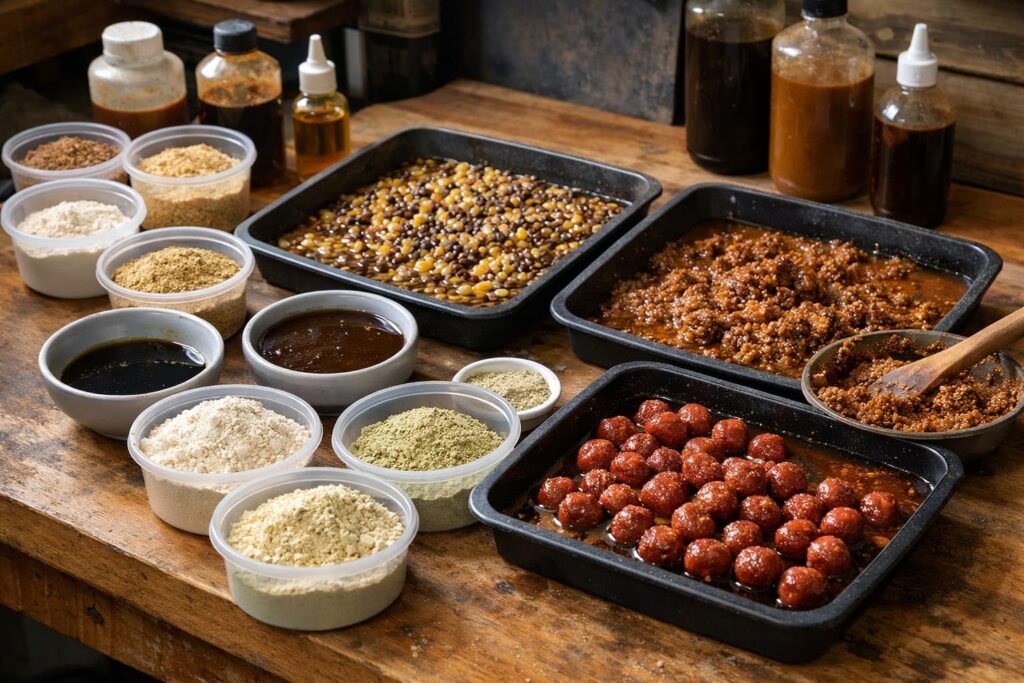
Enzymes and phytase are one of those bait topics that sound very advanced very quickly.
That is usually where the trouble starts.
Because once a bait subject starts sounding technical, plenty of anglers assume it must be important. A few powder names get mentioned, a few clever-sounding claims get repeated, and before long it all starts to feel like the sort of thing you should be using if you want to build a better bait.
Sometimes that is true.
Sometimes it is not.
The honest answer is that enzymes and phytase can help, but only when they are doing a real job. They are not miracle dust. They are not a shortcut to turning a weak bait into a brilliant one. And they are certainly not worth adding blindly just because they sound more scientific than the next bloke’s mix.
Used properly, they can improve the way certain ingredients behave. They can help unlock plant-heavy materials, improve pre-digestion, and make some baits more active and food-like. Used badly, they do very little, especially if you simply boil them into a base mix and expect magic afterwards.
That is the key point.
These tools make most sense when you understand three things:
- what problem you are trying to solve
- whether the bait actually needs solving
- whether the enzyme will still be active after the way you prepare the bait
For carp anglers making their own bait, this matters because it sits right in the gap between theory and reality. On paper, enzymes and phytase sound clever. On the bank, they only earn their place if they improve the finished bait in a practical way.
This article fits naturally with Anti-Nutritional Factors in Carp Bait Ingredients, The Science of Fermented and Food-Signal Baits, Boilie School, and the wider ingredient work in Base Ingredients and the Bait Shed.
Quick Start
- Enzymes are specialist tools, not everyday essentials.
- Phytase matters most in plant-heavy bait where phytate is locking up part of the nutritional value.
- Protease matters most where you want more broken-down protein signal or a more active bait surface.
- Enzymes need the right conditions to work: moisture, time, and reasonable temperature.
- Heat is the big problem. Boiling often destroys much of the active effect.
- Hookbaits, paste, soaks, pre-treatment, and post-boil use usually make more sense than putting enzymes into a boil-and-dry base mix.
- A sensible bait rarely becomes brilliant just because you added enzymes.
- A badly designed bait usually stays badly designed, with or without them.
What enzymes actually do in carp bait terms
An enzyme is a biological tool that speeds up a specific reaction.
That sounds very laboratory. In bait terms, it is much simpler.
An enzyme helps break something down.
Depending on the enzyme, that may mean:
- protein into smaller peptides and amino-rich fractions
- starches and carbohydrates into smaller parts
- plant-bound compounds into more available forms
- awkward ingredients into more active, more digestible material
That is why enzymes attract attention in carp bait. In theory, if you can partly break the bait down before the carp eats it, the bait may leak better, smell and taste more like food, and be easier for the fish to process.
That theory is not wrong.
But the practical catch is this: enzymes only work properly if they are still alive and active under the conditions you give them. They need water. They need time. They usually need moderate temperatures. They often need a suitable pH range. And once you expose them to the wrong heat, you can knock most of that benefit dead.
That is why this topic is not really about whether enzymes are “good” or “bad.” It is about whether they are being used in the right place.
Why phytase gets mentioned so often
Phytase is probably the most interesting enzyme for bait makers who use a lot of plant material.
The reason is simple.
Many seeds, grains, legumes, and plant meals contain phytate. That is one of the anti-nutritional issues covered in Anti-Nutritional Factors in Carp Bait Ingredients. Phytate can bind minerals and reduce how available some of that nutrition really is.
So when anglers talk about phytase in bait, what they are really talking about is this: can phytase help make plant-heavy ingredients behave more like useful food and less like locked-up bulk?
In the right situation, yes.
If you are using cereal-heavy, seed-heavy, or legume-heavy materials, phytase can help chip away at part of that locked-up problem. Not by transforming rubbish into gold, but by improving how the bait functions. It is more relevant in plant-heavy bait than in a mix that is already built mainly around digestible milk proteins, soluble fish products, yeasts, or better-quality animal-derived ingredients.
That is why phytase is not an across-the-board must-have.
Its value depends on what sort of bait you are building in the first place.
Where phytase can genuinely help
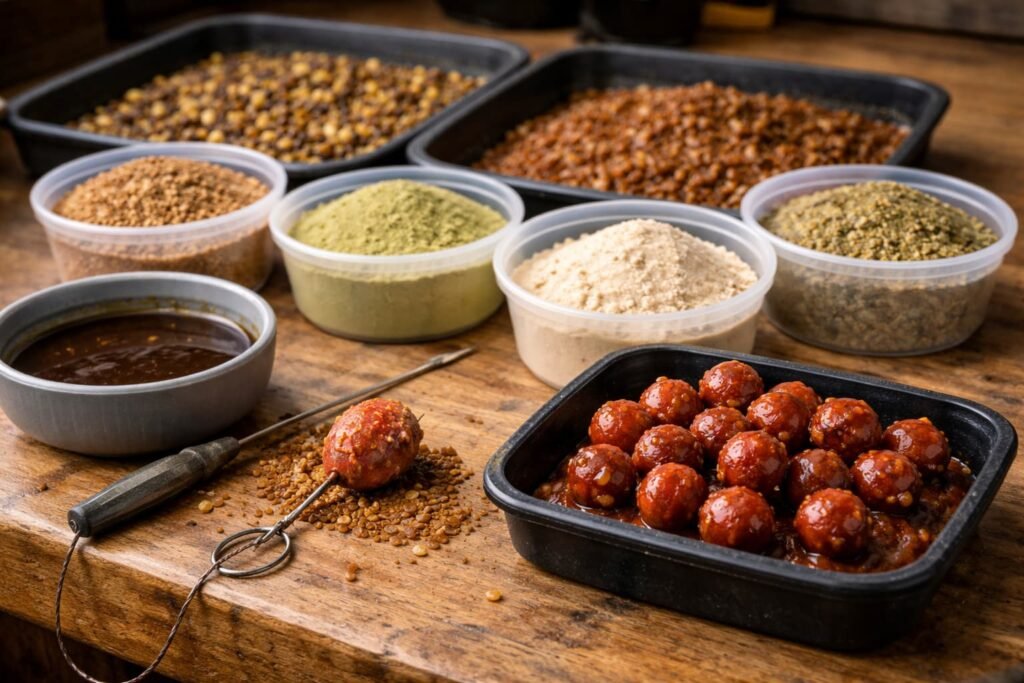
Plant-heavy base mixes
This is the clearest use case.
If a bait contains a fair amount of cereals, seed meals, soy products, pulses, or other plant materials, phytase has a clearer job to do. It helps address one of the weaknesses of those ingredients rather than acting as decorative science.
Economical bait where plant ingredients do more of the work
On big Michigan waters, anglers often want a baiting approach that stretches further. That can mean more reliance on plant-side ingredients, particles, crumb, seed meals, or feed materials. In that sort of bait, phytase makes more sense than it does in a premium low-bulk hookbait mix.
Pre-treatment of ingredients before rolling
This is one of the smarter ways to think about it. If phytase is going to work, it needs conditions that let it work. That points more toward pre-treatment and conditioning than simply stirring it into a mix that goes straight to the boil.
Protease and the idea of pre-digestion
Protease is the other enzyme most bait makers mean when they talk about enzyme use.
Protease breaks protein down into smaller fractions.
That can matter for two reasons.
First, it can make a bait behave more like active food. A partly broken-down protein source often gives off a richer, more immediate signal than a hard, intact material.
Second, it can help create the sort of surface activity that anglers often describe as “food signal” or “pre-digestion.” In other words, the bait starts feeling less dead.
That links directly with The Science of Fermented and Food-Signal Baits. Fermentation and enzyme use are not the same thing, but they overlap in one important way: both are trying to move the bait from inert toward active.
That is why protease makes more sense in:
- hookbait treatments
- soluble coatings
- pastes
- pre-digested soaks
- ingredient pre-treatment
- short-life specialist baits
It makes much less sense when anglers talk as if boiling it into a hard shelf-stable bait will still leave the same active effect.
What about other enzymes?
There are other enzymes people mention, such as amylase for starches and carbohydrase blends for plant-side materials.
These are not nonsense either. But they are even easier to misuse.
In theory, they can help soften or partly break down carbohydrate-heavy ingredients. In practice, the same problem keeps coming up: if you do not give them the right environment, they cannot do much.
For most carp anglers, that makes them more relevant in:
- soak waters
- particle conditioning
- paste work
- bait slurries
- hookbait preparation
- specialist food coatings
They are less relevant as routine clutter in everyday rolled bait.
The biggest issue: heat
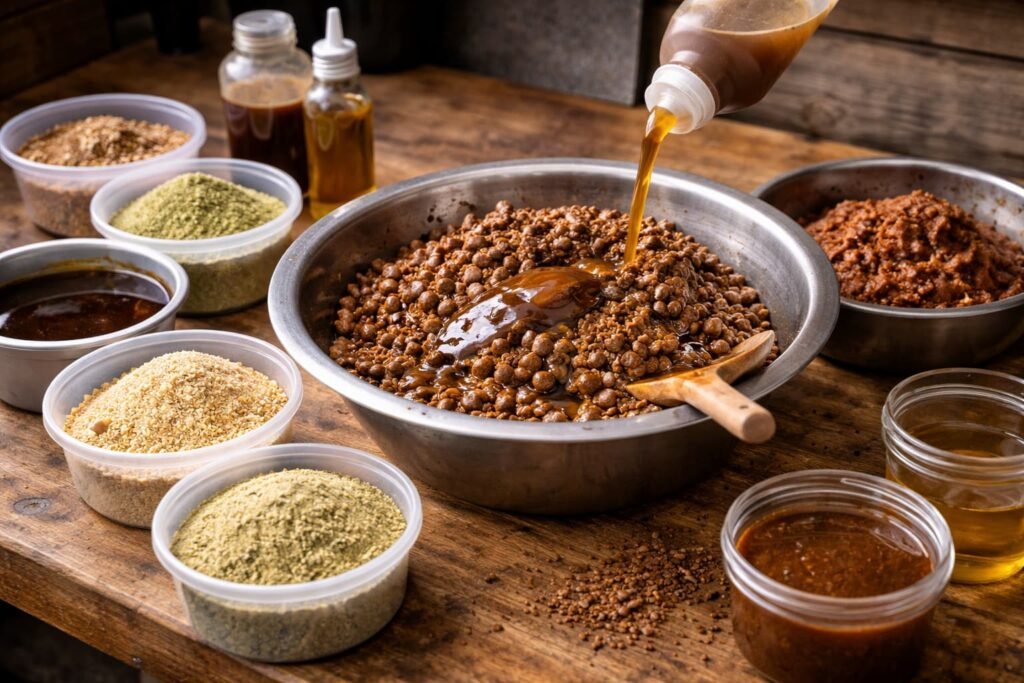
This is where many enzyme plans fall apart.
Heat is the big problem.
Most enzymes are sensitive. Once exposed to the temperatures involved in boiling bait, much of the active effect is reduced sharply or destroyed altogether. That means an enzyme may be useful right up to the point you treat it like any other powder and boil the lot.
That is the classic mistake.
Anglers read about enzymes helping digestion or leakage, add them to the dry mix, roll the bait, boil it, air-dry it, and then assume all the original activity is still there.
Usually, it is not.
That does not mean the bait is ruined. It means you may have paid for an effect you never really kept.
This is why the better uses of enzymes usually involve:
- pre-soaking ingredients
- treating particle baits before use
- coating or rehydrating hookbaits after boiling
- using paste rather than fully boiled baits
- applying them in short-life bait systems
- using them in liquid food phases where they get time to work before heat exposure
Where enzymes and phytase help most
1. Plant-heavy bait that needs help from the inside
If your bait leans heavily on cereals, soy products, pulses, seed meals, or economical plant-side materials, phytase and selected enzymes make more sense. They are helping address real limitations in the raw material.
2. Hookbaits where you want the surface to feel more active
This is one of the best practical uses.
A hookbait does not need to be a full balanced diet. It needs to feel convincing and food-like. Enzyme-assisted treatments, food-rich rehydration, and pre-digested liquid layers can all help there.
3. Paste and short-session bait
Paste lets you dodge part of the heat problem. It also lets you keep more of the active effect at the point of use. For that reason, enzymes make far more practical sense in paste than in hard, heavily boiled bait.
4. Particle conditioning
This is a very interesting area for Michigan fishing.
Prepared particles already work well. But if you are building a more active, food-signal-driven bait bed, enzymes and controlled active treatment can help make that particle mix livelier without turning it into a rotten mess.
5. Specialist bait work, not routine broad-brush baiting
That is the big one.
These tools make most sense where the bait is being built with a very specific purpose in mind. They are far less convincing as routine default additions to every mix.
Where they do not help enough to justify the fuss
When the bait was already sensible
If a bait is already reasonably digestible, balanced, and built from good materials, the benefit may be modest. This is especially true in quality mixes that are not overloaded with plant-side baggage to begin with.
When boiling kills the active effect
This is the obvious one. If the method wipes out most of the functionality, you may be left with little more than expensive optimism.
When the angler is solving a problem that does not exist
A lot of bait tinkering falls into this trap.
Sometimes the bait is fine. Sometimes the real issue is location, amount of bait, timing, rig presentation, or simply fishing pressure. Not every quiet spell needs a more advanced powder.
When the inclusion is too token to matter
Tiny gesture-level amounts often make anglers feel clever without changing much in the finished bait.
When the base ingredients are weak
Enzymes cannot fully rescue poor-quality raw materials, excessive filler, or a badly structured mix. A stronger base still matters more than a smarter additive.
That is why Base Ingredients and Boilie School still come first.
Enzymes versus digestibility: not quite the same thing
This is worth keeping clear.
An enzyme may improve part of a bait’s behaviour. That does not automatically mean the whole bait becomes deeply digestible in some grand nutritional sense.
Digestibility comes from the whole structure of the bait:
- ingredient choice
- anti-nutritional load
- fibre level
- processing
- solubility
- inclusion rates
- how hard or soft the finished bait is
Enzymes can support that picture. They do not replace it.
So when anglers say enzymes “improve digestibility,” that is only useful language if they also ask: compared with what, in what type of bait, at what stage, and after what preparation?
Without those questions, the phrase sounds better than it means.
Best practical uses for carp anglers
If I were keeping this practical for an everyday bait maker, I would narrow it down like this.
Hookbait treatment
Very sensible.
This is one of the cleanest uses because you can add activity where it matters most, after boiling, without asking the whole base mix to behave like a laboratory trial.
Pre-treatment of plant materials
Also sensible.
If you are using plant-heavy materials, enzyme or phytase treatment before the final bait stage makes more sense than pretending boiling will leave everything intact.
Paste
Very sensible again.
Paste keeps things closer to active and avoids some of the thermal destruction that spoils the whole idea.
Specialist short-life bait
Potentially useful.
If the bait is being used quickly and not blasted with prolonged heat, there is a better chance the active effect remains relevant.
Everyday rolled boilie mix
Much less convincing.
Not impossible, but far easier to get wrong than right.
Michigan Notes
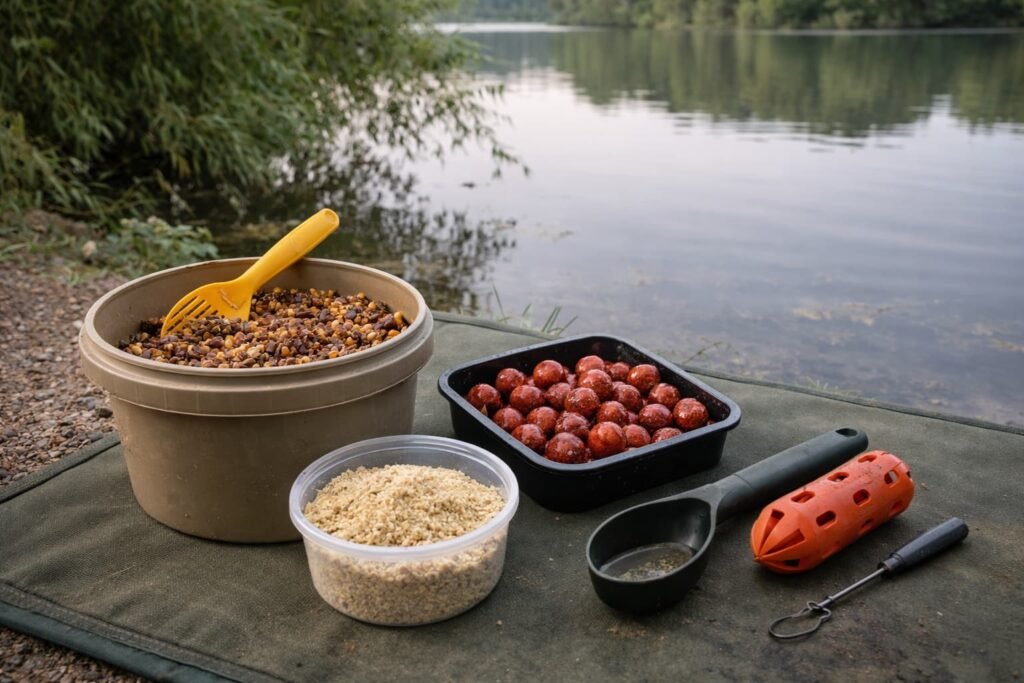
On Michigan waters, these are specialist tools, not everyday clutter.
That is how I would look at them.
Most of our practical baiting still comes down to watercraft, sensible feeding, ingredient quality, and keeping the bait believable. On big lakes, especially where you may be feeding for several days, it is often more important to get the broad structure right than to chase every advanced additive.
Where enzymes and phytase do make sense here is in narrower jobs:
- improving a plant-heavy bait idea
- sharpening a specialist hookbait
- conditioning particle mixes
- making a paste or treated bait feel more active
- helping an economical baiting plan behave more like food and less like filler
That last point matters on large Michigan waters. If you are trying to stretch bait over a longer session, plant-side ingredients and particles often come more into play. That is where phytase and related thinking make more sense than they do in a small premium hookbait mix.
In spring, when carp can be a bit more measured and a little more selective, a subtle active bait can help. That connects well with Spring Carp Fishing in Michigan. But I still would not treat enzymes as some kind of routine answer. They are tools for specific jobs.
Common Mistakes
Thinking advanced automatically means better
It does not.
Many anglers improve their bait more by simplifying weak ingredients than by adding clever extras.
Boiling them and expecting full effect
Classic mistake.
If heat destroys much of the activity, the label promise and the finished bait are no longer the same thing.
Using them without a clear job
An enzyme needs a purpose. “Because it sounds scientific” is not a purpose.
Adding them to a bait that did not need them
If the mix is already sound, the gain may be small.
Expecting them to rescue poor ingredients
They cannot turn a poor structure into a brilliant food bait.
Forgetting time and moisture matter
Enzymes need conditions to work. Dry powder in a dry mix does not magically perform by wishful thinking alone.
FAQ
Are enzymes worth using in carp bait?
Sometimes, yes. They are worth using when they are solving a real problem or improving a specific part of the bait, especially in hookbait treatment, plant-heavy bait, paste, or pre-treatment work.
Is phytase useful in carp bait?
Yes, especially in plant-heavy bait where phytate is part of the limitation. It makes less sense in a bait that is already built around more digestible ingredients.
Are enzymes essential?
No.
A very good carp bait can be made without them. They are refinements, not foundations.
Does boiling ruin enzymes?
Often, yes, or at least much of the active effect. That is why post-boil use, pre-treatment, paste, or short-life bait systems usually make more sense.
Is protease better than phytase?
They do different jobs. Protease is more about protein breakdown and creating a more active food signal. Phytase is more about helping with plant-side locked-up material.
Should I use enzymes in every homemade bait?
No.
Most anglers are better off improving base ingredients, digestibility, and bait structure first.
Next Steps
Read Anti-Nutritional Factors in Carp Bait Ingredients to understand what enzymes and phytase are actually trying to improve.
Read The Science of Fermented and Food-Signal Baits to see where active bait treatment overlaps with real food signal rather than hype.
Read Boilie School if you want to tighten the whole mix before worrying about specialist additives.
Study Base Ingredients so you know whether the ingredient needs help in the first place.
Browse the Bait Shed for more practical bait prep, testing, and treatment ideas.