

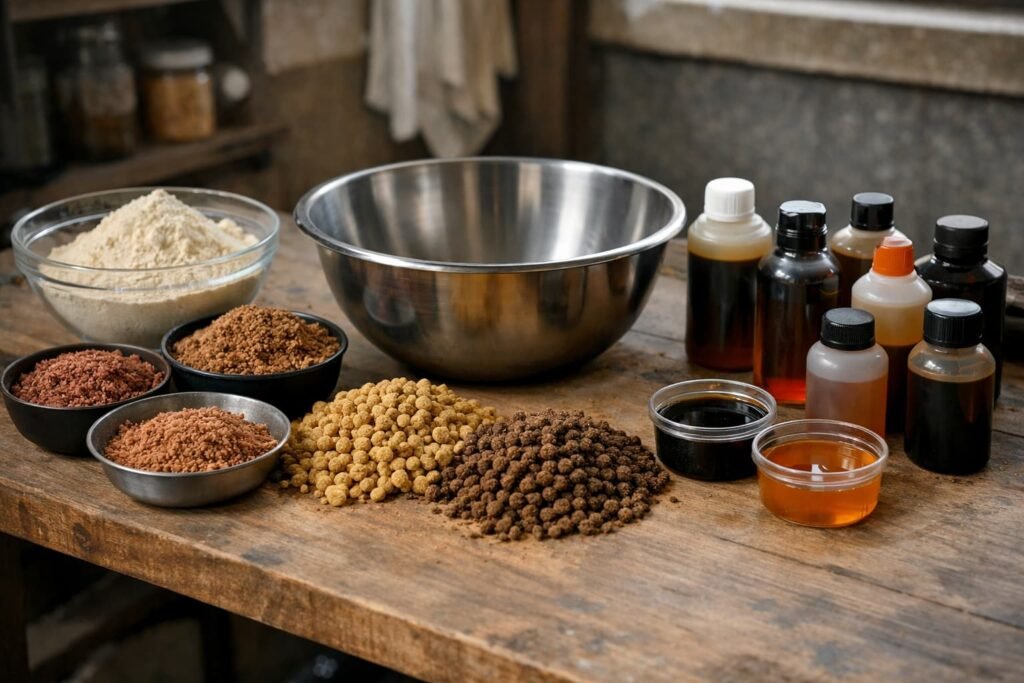
Few subjects in carp fishing create more noise than attractants.
Every few years, the same thing happens. A new ingredient gets talked up, anglers rush to buy it, and before long it is being sold as the missing piece in every bait. Sometimes it has value. Sometimes it is little more than clever marketing wrapped around an old idea.
The truth is simpler. Carp feeding attractants are just compounds or ingredients that help a bait get noticed, investigated, and in some cases eaten with more confidence. They are not all equal. Some work mainly through smell. Some work more through taste. Some help a bait leak faster. Some help trigger actual feeding. And some are far less important than anglers think.
That is why this subject matters. If you understand attractants properly, you stop chasing fashionable labels and start building bait that makes sense. You stop asking what sounds impressive and start asking what the fish can actually detect in the water.
For most carp anglers, especially on big Michigan waters, that is the real shift. Attraction is not about throwing the whole tackle shop into a mix. It is about building a bait package that sends a believable food signal, quickly enough and clearly enough, for the fish to respond.
This article sits naturally inside Bait Shed and works alongside the more practical bait-building side of Boilie School.
Quick Start
- Carp attractants are ingredients that help fish detect, investigate, and feed on a bait.
- The best attractants usually work by improving leakage, taste response, or food-signal strength.
- Not all attractants do the same job. Some are better for smell, some for taste, and some for overall bait communication.
- Amino acids, hydrolysates, yeast products, salts, acids, and some fermented ingredients are often more useful than flashy flavours alone.
- Attractants work best when they support a well-built bait rather than try to rescue a poor one.
- On many Michigan waters, subtle, believable food signals usually beat overdone chemical overload.
What Is a Carp Feeding Attractant?
A carp feeding attractant is anything that helps a bait send out a signal the fish can detect and respond to.
That signal may help the carp find the bait. It may encourage the fish to investigate more closely. It may help the bait taste more convincing once the fish gets near it. In some cases, it may help turn interest into actual feeding.
That is the key point. An attractant is not always just about pulling fish in from a great distance. Sometimes it is about what happens once the fish arrives.
In practical bait terms, attractants usually fall into a few broad groups:
- smell-based signals
- taste-based signals
- soluble food signals
- supporting minerals, salts, and acids
- liquids and compounds that improve leakage
This is why the word attractant can be misleading. It sounds like one simple thing, but in reality it covers several different jobs.
How Carp Detect Bait
To understand attractants, you first need to understand that carp do not “smell” bait in the same simple way anglers talk about smell.
Carp detect dissolved chemicals in the water through olfaction and taste. In plain language, they pick up food-related signals as those compounds move through the water and as they sample material close to or inside the mouth.
That means a bait does not need a strong human smell to be effective. In fact, some of the best signals in carp bait are not especially impressive to us at all. What matters is whether the bait releases detectable compounds in a form the fish can respond to.
This is one reason highly soluble ingredients matter so much. A bait that actually leaks useful material into the water can often outfish a harder, more impressive-looking bait that says very little once it lands.
That is also why discussions around attraction link directly with wider bait-science topics like Solubility vs Nutrition in Carp Bait, The Role of Hydrolysates in Carp Bait, and The Science of Fermented and Food-Signal Baits.
The Two Main Sides of Attraction
A useful way to think about carp attractants is to split them into two main sides.
Distance signals
These are the signals that help fish notice there is something worth investigating in the area. They often depend on leakage, solubility, and movement through the water.
Examples include:
- soluble liquid foods
- hydrolysates
- fermented liquids
- certain acids
- some volatile compounds
- small food particles and crumb that increase release
Close-range feeding signals
These are the signals that matter more once the fish gets near the bait or mouths it. These often relate more to taste, food recognition, and confidence.
Examples include:
- free amino acids
- soluble peptides
- salts
- organic acids
- minerals
- some yeast and savoury compounds
The best carp baits usually do both jobs reasonably well. They say something at range, then they say something convincing at close quarters.
What Usually Matters Most
If anglers are honest, too much bait talk revolves around labels and not enough around function.
In practice, a few things tend to matter more than most.
Solubility
If a bait does not leak, it struggles to communicate. This is one reason crumb, pellets, powders, hydrolysates, and treated hookbaits can all be so effective.
Food-related signals
The more the bait feels like actual food rather than just perfume, the better. Broken-down proteins, savoury liquids, amino-rich ingredients, and yeast products often help here.
Taste response
Once a fish gets near the bait, taste matters. A bait that tastes right can often outfish one that simply smells strong.
Balance
An attractant only works properly when it fits the rest of the bait. Too many competing signals can make the whole thing feel confused.
That is why I would always rather fish a clean, sensible bait with two or three good attractant ideas than a noisy bait built around ten random ones.
The Main Types of Carp Attractants
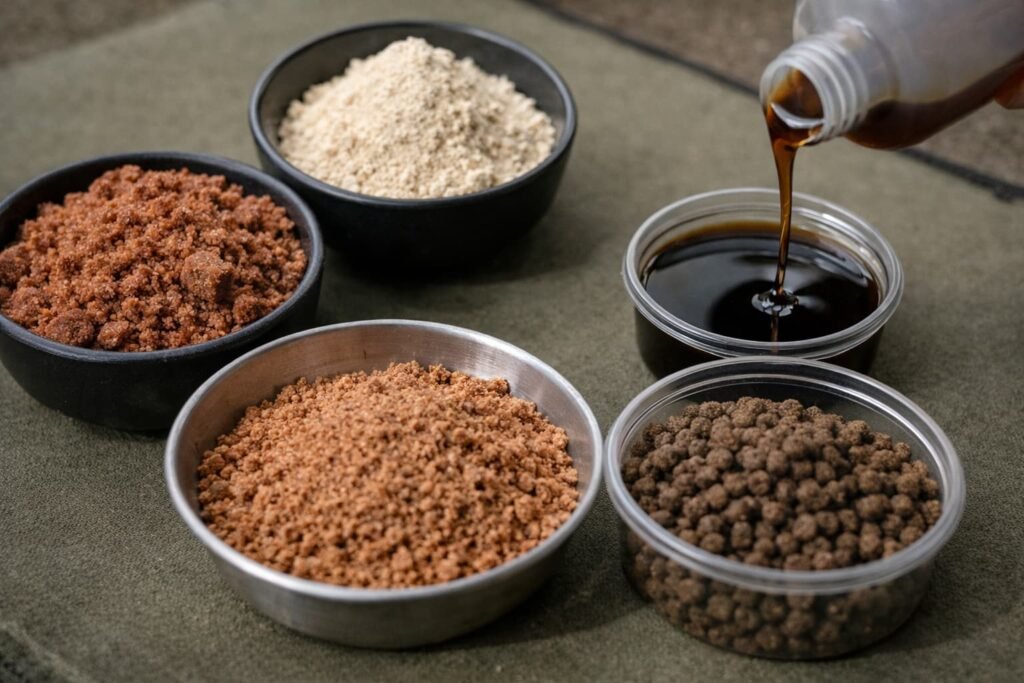
There are several broad families of attractants worth understanding.
Amino acids and protein breakdown products
These are among the most important bait signals in carp fishing. Free amino acids, peptides, and broken-down protein fractions often help create a strong food message.
This is one reason hydrolysates, liquid foods, and certain fermented materials are so useful. They help present protein-related signals in a more soluble, more detectable form.
Hydrolysates
Hydrolysates deserve their own category because they are one of the clearest examples of a practical food-signal attractant. They help a bait speak earlier by supplying broken-down soluble protein material.
This article pairs naturally with The Role of Hydrolysates in Carp Bait if you publish that one in the series.
Yeast extracts and fermented ingredients
Yeast products, fermented liquids, and fermented particles can add savoury, food-like attraction that feels believable and active.
These often work well because they add a more natural food message rather than just a bright artificial note.
Salts and mineral signals
Salt is often underestimated. Used properly, it can improve taste response and support other attractants rather than trying to dominate the bait on its own.
Mineral-rich ingredients can play a similar supporting role.
Organic acids
Some acids help sharpen the food signal and alter how the bait is perceived in the water. Used correctly, they can be very useful. Used badly, they can turn a bait harsh.
Flavours and aromas
These still have a place, but they are often overvalued compared with genuine food-signal ingredients. A flavour can help define a bait, add recognition, or improve short-range appeal, but it does not replace proper bait design.
Sweeteners
Sweeteners are another area where anglers often overthink things. They may help round off a bait or improve palatability in some cases, but they are rarely the real star of the show.
Why Food Signals Beat Hype
This is where a lot of bait science becomes practical.
A flashy attractant might smell strong on the bank, but that does not automatically mean it is doing the most useful job in the water. Carp are not buying the marketing. They are responding to the chemical information the bait releases.
That is why food-signal ingredients usually deserve more attention than fashionable label claims.
A hydrolysate, yeast extract, savoury liquid, fermented particle mix, or amino-rich soluble ingredient may not sound glamorous, but it often makes far more sense than simply pouring in extra flavour.
A bait that leaks believable food information tends to keep making sense no matter what the latest fad is.
This links directly with A Practical Guide to Liquids and Glugs because a good liquid is not just strong-smelling. It has to do something useful in the bait.
Attractants in Different Bait Types
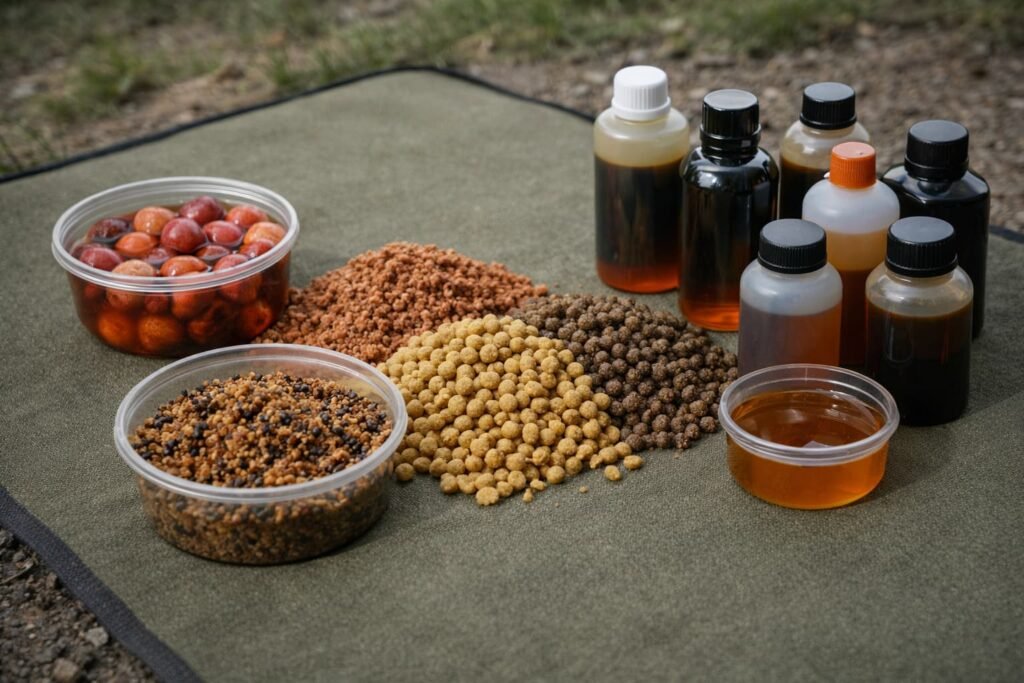
Attractants do not work in exactly the same way in every bait.
In boilies
Attractants in boilies need to survive the making process and still release well enough once the bait is in the water. That is why some are best used in the liquid phase, while others are better post-boil.
In particles
Particles already carry natural attraction of their own, especially when properly prepared. Fermentation, salt, savoury liquids, and simple food signals often suit them well.
In pellets
Pellets break down faster than whole boilies, so they can be excellent carriers for practical attractants, especially in short-session fishing.
In crumb and chops
This is one of the best places for attractants because the physical breakdown of the bait already increases leakage.
In hookbaits
A hookbait often needs slightly more pull than the free offerings around it. That is where attractants can really earn their keep, especially through careful treatment rather than heavy-handed soaking.
In bag and stick mixes
These are ideal for strong early food signals because the whole idea is compact, fast-acting attraction around the rig.
For practical crossover thinking, this also links well with Rigs and your wider bait application ideas in Tactics.
When Attractants Matter Most
There are certain situations where attractants become especially important.
Cool water
In cooler water, bait leakage matters more because everything slows down. Fast food signal can be a real edge.
Short feeding spells
If fish are only on the spot briefly, you need the bait to start working straight away.
Singles and small traps
A strong hookbait or compact little patch of bait often relies heavily on signal rather than quantity.
Big waters
On large Michigan waters, you are often trying to get noticed without simply piling in more bait.
Pressured fish
On waters where carp have seen plenty of standard bait, believable food signals can feel safer and more convincing than loud artificial overload.
When Attractants Are Overrated
This also needs saying.
Attractants are often overrated when anglers expect them to do jobs that really belong to location, presentation, and feeding strategy.
A brilliant attractant cannot rescue:
- bad rig placement
- poor watercraft
- overfeeding
- an unsuitable presentation
- a badly balanced bait
- fishing in the wrong area altogether
Too many anglers try to fix those problems with another bottle.
That is why attractants should be treated as part of the package, not the whole package. Good attractants sharpen a good baiting approach. They do not replace it.
How to Use Attractants Properly
The smartest way to use attractants is to start with the job you want them to do.
Do you want faster leakage? Better hookbait pull? More food signal in a small bag? Better response in cool water? More confidence on a short session?
Once you know the job, the inclusion becomes much easier to judge.
A few simple rules help.
Keep the bait clean
The more cluttered the bait, the harder it is for one good idea to stand out.
Use attractants to support, not dominate
Most of the time, they work best as part of a balanced bait package.
Match the attractant to the bait form
A good hydrolysate or savoury liquid may shine in crumb or hookbait treatment, while a different signal may suit a full boilie mix better.
Think in layers
A bait can have one signal at the hookbait, another in the crumb, and a broader food message in the feed.
Watch the quantity
A measured amount used with purpose usually beats overdoing it.
Michigan Notes
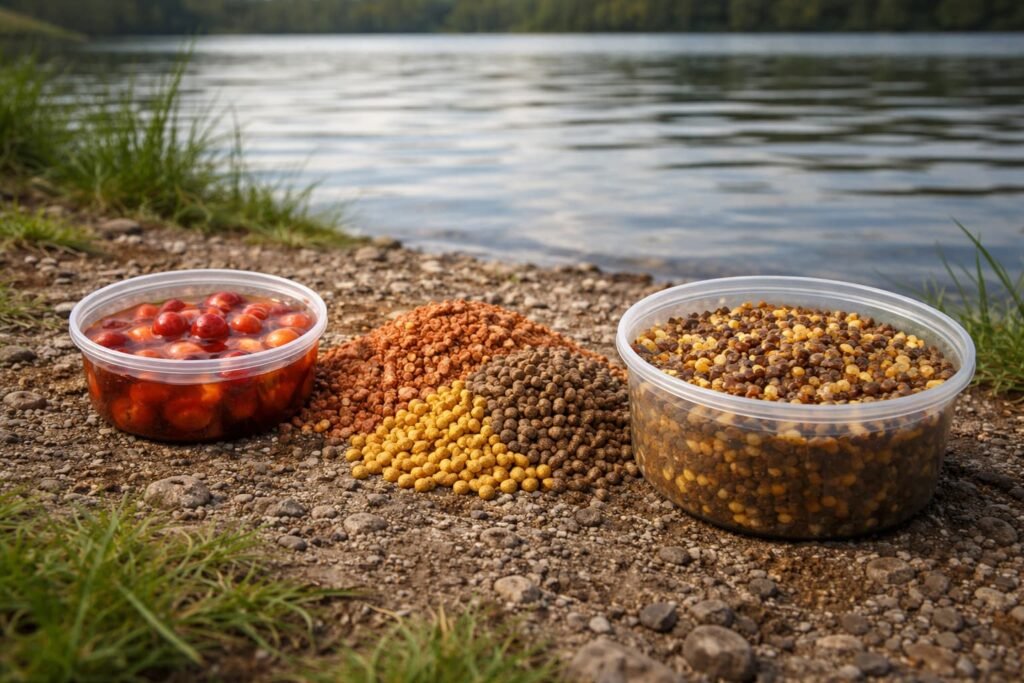
Michigan carp fishing often rewards sensible attraction over flashy excess.
On a lot of northern lakes, fish move over big areas, feed in spells, and often respond better to natural-feeling bait packages than anything too loud or overbuilt.
A few practical Michigan points stand out.
In spring, fast leakage and believable food signal can matter more than big beds of feed.
On clear waters, subtle savoury attraction often feels safer than heavy synthetic overload.
On short sessions, hookbait treatments, crumb, pellets, and compact food-signal traps often make more sense than trying to win with bulk alone.
On big waters, attractants are often most useful when they help the fish find and investigate a small, well-placed baited area.
In warmer water, attractants still matter, but they should sit inside a fuller feeding plan rather than becoming the whole idea.
For much of my own Michigan-style thinking, I would rather use attractants to sharpen a solid bait package than try to build the whole campaign around magic bottles.
This article also supports the wider seasonal thinking inside Sessions.
Common Mistakes
Thinking attractants are all the same
Some help with smell, some with taste, some with leakage, and some with food-signal strength. They do different jobs.
Adding too many at once
A bait with too many competing attractants can end up confused and less convincing.
Overvaluing flavour alone
Flavour has a place, but it is often not the most important part of attraction.
Ignoring solubility
If the bait does not leak, it does not communicate very well.
Expecting attractants to rescue poor fishing
They can improve a good approach, but they do not replace watercraft and presentation.
Chasing hype over function
The best attractants are often the ones that quietly make the bait more believable, not the ones with the loudest label.
FAQ
What is the best attractant for carp bait?
There is no single best one for every situation. In practice, amino-rich ingredients, hydrolysates, yeast products, salts, and good soluble food signals usually matter more than hype-driven additives.
Do strong-smelling baits always attract more carp?
No. A bait can smell very strong to us and still say very little to the fish. What matters is what dissolved compounds the carp can actually detect in the water.
Are flavours important in carp bait?
Yes, but usually as part of the overall package rather than the whole answer. They can help define a bait, but they do not replace proper food-signal ingredients.
Do attractants matter more in cold water?
They often do. In cool water, fast leakage and early food signal can be especially important.
Can you overdo attractants in carp bait?
Yes. Too many can make the bait harsh, confused, or unnatural. A clean, balanced approach usually works better.
What is the easiest way to improve attraction without rebuilding a whole bait?
Treat your hookbaits properly, use crumb and pellets around the rig, and add one or two sensible food-signal ingredients instead of piling in random liquids.
Next Steps
Read these next:
- Bait Shed
- Boilie School
- A Practical Guide to Liquids and Glugs
- Tactics
- Rigs
- Sessions
- Solubility vs Nutrition in Carp Bait [add URL]
- The Science of Fermented and Food-Signal Baits [add URL]
- The Role of Hydrolysates in Carp Bait [add URL]
- Raw vs Processed Ingredients in Carp Bait [add URL]