

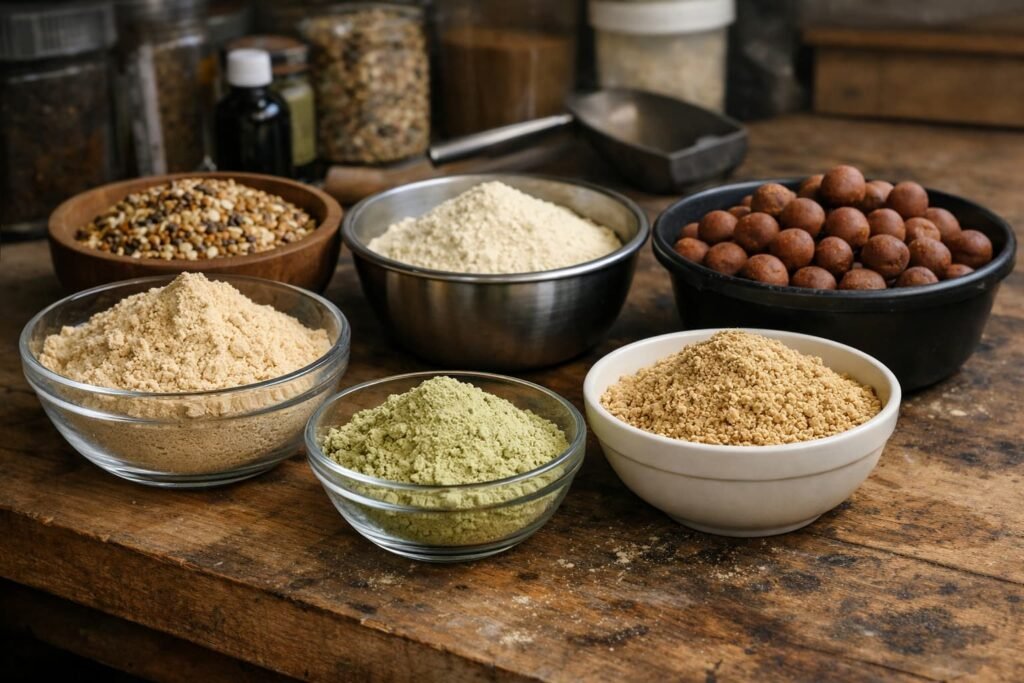
Not every bait ingredient that looks good on paper behaves well in the mix.
A flour can show decent protein. A meal can sound rich and nutritious. A seed product can be popular in animal feed. But if that ingredient carries too many anti-nutritional factors, the carp may not get the full benefit of it. In some cases, the bait may be harder to digest, less palatable, or simply not as effective over time as the label suggests.
This is one of the biggest differences between ingredients that fill space and ingredients that genuinely help a bait perform.
Anti-nutritional factors are natural compounds found in many plant-based materials, especially legumes, seeds, cereals, oilseed meals, and some untreated feed ingredients. They are not always dangerous. They are not always a disaster. But they do matter. They can reduce protein digestion, tie up minerals, interfere with enzymes, affect gut comfort, and sometimes make a bait less attractive or less efficient than it ought to be.
That matters far more in a bait you plan to use regularly than in a one-off hookbait.
For carp anglers building their own bait, the real lesson is simple: do not judge ingredients by crude protein alone. Look at digestibility, processing, inclusion level, and what else comes with the ingredient. A cheaper ingredient is not always cheaper once it starts dragging the rest of the mix down.
This article fits alongside Boilie School, Base Ingredients, and the wider bait-making work in the Bait Shed. It also links naturally with more active bait approaches in The Science of Fermented and Food-Signal Baits, because one of the best ways to reduce some anti-nutritional problems is proper processing.
Quick Start
- Anti-nutritional factors are compounds in some ingredients that reduce digestion, nutrient uptake, or bait efficiency.
- The main problem materials in carp bait usually come from raw or poorly processed plant ingredients.
- Common examples include trypsin inhibitors, lectins, phytates, tannins, saponins, and some seed-specific compounds.
- Soy products, raw legume flours, some seed meals, and badly prepared particles are the main areas to watch.
- Processing matters. Heat treatment, fermentation, soaking, cooking, extrusion, and good ingredient choice can reduce many problems.
- Anti-nutritional factors are usually a dose and inclusion-level issue, not a reason to panic over every plant ingredient.
- In carp bait, the goal is not perfect textbook nutrition. It is a digestible, attractive, fish-safe bait the carp will eat confidently and return to.
What anti-nutritional factors actually are
Anti-nutritional factors are naturally occurring compounds in certain ingredients that interfere with normal digestion, nutrient use, or feeding efficiency.
That sounds more dramatic than it often is.
In practice, this usually means an ingredient carries something that can do one or more of the following:
- reduce enzyme activity
- make proteins harder to digest
- bind minerals so the fish cannot use them properly
- irritate or challenge digestion at high inclusion
- reduce palatability
- lower the practical feeding value of the bait
This is especially common in plant materials because plants defend themselves. Seeds, beans, legumes, and oil-bearing crops are not designed to be convenient bait ingredients. They are designed to survive, resist predators, and protect stored nutrients.
That is why processing matters so much.
A properly treated ingredient can be very useful. A raw or badly chosen version of the same ingredient can be far less effective.
For the carp angler, that means one thing: there is a big difference between including an ingredient and using it well.
Why carp anglers should care
It is easy to dismiss this as fish-farm talk or nutrition-lab detail. But it matters on the bank for a few simple reasons.
1. Digestibility affects repeat feeding
A carp may eat a bait once through curiosity or attraction. That does not mean it is an efficient long-term food source. If the bait is harder to digest, nutritionally awkward, or unpleasant in the gut, it may not build the same long-term confidence.
2. Poor ingredients can dilute good ingredients
You can spend money on quality milk proteins, liver powders, yeasts, or hydrolysates, then quietly blunt the whole mix by filling too much of it with poor plant material.
3. Big-water baiting multiplies small mistakes
On a one-hookbait trap, anti-nutritional factors matter less. On a week-long campaign over a lot of feed, they matter more. When you are putting real bait in front of carp day after day, ingredient quality begins to show.
4. Cheap protein is often not cheap protein
A meal may look affordable by the kilo, but once you factor in lower digestibility, poorer processing, rougher texture, and unwanted compounds, it may not be much of a bargain.
That is why Base Ingredients is so important. It is not just about what an ingredient is called. It is about what it actually does in the finished bait.
The main anti-nutritional factors that matter in carp bait
Trypsin inhibitors
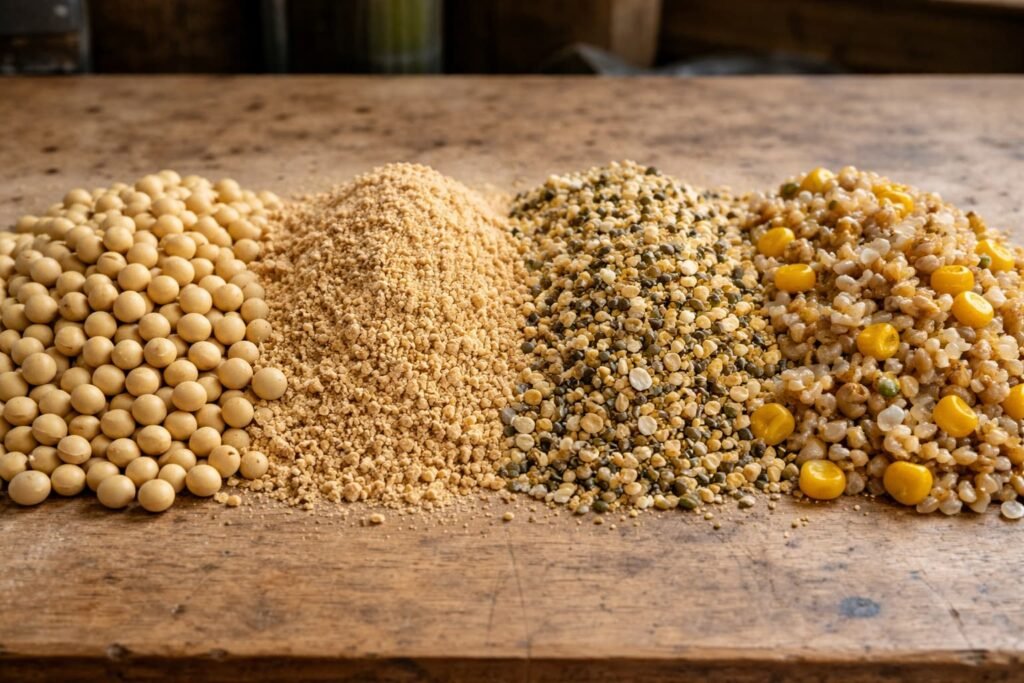
These are among the best-known anti-nutritional compounds in soybeans and some other legumes.
Trypsin is one of the enzymes used to digest protein. Trypsin inhibitors interfere with that process. In simple terms, they make protein digestion less efficient.
This is why raw soy is a poor idea. It is also why properly heat-treated soybean products are far better than raw or lightly processed ones.
For carp bait, the practical lesson is clear:
- properly processed soy flour can be useful
- full-fat or raw soy products need much more caution
- do not assume all soy ingredients are equal
A toasted or correctly treated soy product is a different animal from raw soybean flour.
Bait-building takeaway
Soy can still have a place in carp bait. But it should be used with respect, and preferably in processed forms that have had these inhibitors reduced. The cheaper the soy product and the less clear the processing, the more careful I would be.
Lectins
Lectins are another class of compounds often associated with beans and legumes.
They can interfere with digestion and gut comfort if used in raw or insufficiently cooked forms. In bait terms, they are one more reason why raw bean flours and improvised kitchen-legume experiments are not always as clever as they look.
This does not mean all legume ingredients are bad. It means raw or poorly prepared ones can be.
Proper heat treatment and preparation reduce lectin problems significantly. That is one reason many commercial feed-grade legume products are safer than homemade raw flour versions.
Bait-building takeaway
If you are using pea flour, bean flour, chickpea products, lupin meals, or other pulse-based materials, keep inclusion sensible and favour properly processed versions. For particles, soak and cook correctly. Never treat raw pulses as plug-and-play bait ingredients.
Phytates
Phytates, or phytic acid compounds, are common in seeds, grains, legumes, and bran-rich plant materials.
Their main issue is that they bind minerals such as calcium, zinc, iron, magnesium, and phosphorus, making them less available. That matters nutritionally and can reduce the real feeding value of a bait built too heavily around high-phytate materials.
This is one reason a bait can look decent on paper and still be a bit second-rate in practice.
Phytates are especially relevant when a bait relies too much on cereals, seed meals, and untreated plant proteins without enough balancing ingredients or proper processing.
Fermentation, sprouting, and some forms of soaking or enzyme activity can reduce phytate issues. That is one reason active processing can improve a bait beyond simple texture and smell. It links directly with ideas covered in The Science of Fermented and Food-Signal Baits.
Bait-building takeaway
A few phytate-containing ingredients are no problem in a balanced mix. But building half the recipe out of cheap bran, cereal fillers, raw seed meals, and untreated plant protein is a different matter.
Tannins and polyphenols
Tannins are common in some seeds, grains, legumes, and plant husks.
They can reduce palatability, interfere with protein use, and create an astringent character. At modest levels in some birdfoods or seed products, this may not be a major issue. At heavier levels, they can become another drag on the bait.
This is where “natural” can fool people. Natural does not always mean ideal.
Some richly coloured, husk-heavy, or bargain seed materials may look interesting in a mix but contribute more baggage than benefit if overused.
Bait-building takeaway
Use tannin-containing ingredients for texture, character, or limited nutrition if they earn their place. Do not make them the backbone of the bait unless you know exactly what you are doing.
Saponins
Saponins occur in several plant materials, including some legumes and oilseed crops.
They are often discussed because of their bitter character, surface activity, and potential digestive effects at high levels. In moderate amounts, they may not ruin a bait. But in rough, poorly processed plant materials, they are one more reason to keep inclusion sensible.
Bait-building takeaway
Do not assume every plant concentrate is a clean protein source. Some bring baggage that makes them less attractive or less efficient than the crude analysis suggests.
Glucosinolates
These are associated mainly with rapeseed and related brassica materials.
Certain rapeseed meals can have value in feed contexts, but they must be used with some caution depending on how they were processed and what exactly the ingredient is. Poorer forms can carry compounds that are less than ideal nutritionally.
For most home bait makers, the issue is simple: not every oilseed meal is automatically a bargain.
Bait-building takeaway
If you are experimenting with rapeseed or unusual oilseed meals because they are cheap or high in protein, look harder before using much of them.
Gossypol and seed-specific toxins
This is more of a specialist warning than an everyday bait issue.
Cottonseed products can contain gossypol, and some other plant materials carry their own specific problem compounds. Most carp anglers will never use these ingredients. But the lesson is wider than the individual example: some agricultural by-products look attractive on price and protein, yet bring more risk than reward.
Bait-building takeaway
Do not build carp bait from odd livestock-feed leftovers just because they are cheap by the sack.
Excess fibre and non-starch polysaccharides
Not all anti-nutritional problems come from famous named compounds.
Sometimes the issue is simply too much indigestible fibre, husk, or awkward carbohydrate structure. A little can help texture, leakage, or open the bait up. Too much can reduce digestibility, crowd out better ingredients, and turn the bait into cheap bulk.
This happens when anglers overdo bran, husk-heavy birdfoods, rough cereal by-products, or low-grade feed meals.
Bait-building takeaway
Texture ingredients are useful. Fillers are easy. But the more rough bulk you use, the more you should ask whether it is helping the bait or simply padding it out.
Where these problems show up most in carp bait
Raw soybeans and raw soy flour
This is the classic example.
Raw soy carries trypsin inhibitors and other unwanted baggage. Properly processed soy products are better. That does not make soy useless. It means you must know which soy you are using.
Raw or underprocessed legume flours
Pea, chickpea, bean, lupin, and similar ingredients can all have uses, but they are not all equal. Processing matters. Inclusion level matters. Raw kitchen improvisation is usually not the best route.
Cheap seed meals and odd feed ingredients
Anything bought mainly because it was cheap, high-protein, or available in bulk wants a second look. Many animal-feed ingredients are built for broader feed economics, not refined bait performance.
Poorly prepared particles
Particles are brilliant when prepared properly. They are not brilliant when rushed, undercooked, or badly handled. In that sense, some anti-nutritional problems in particle fishing are really preparation problems.
This is why care, soaking, cooking, and controlled preparation matter so much in the Bait Shed approach.
Why processing changes everything
This is the good news.
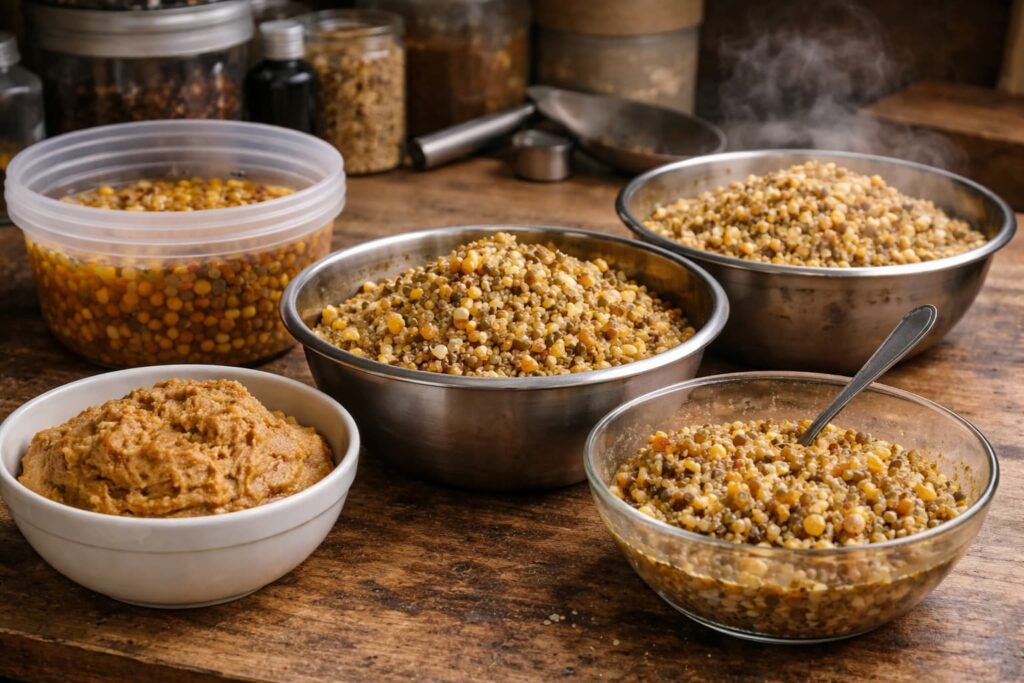
Many anti-nutritional factors can be reduced, sometimes sharply, by good processing. That is why two ingredients with similar names can behave very differently in bait.
Heat treatment
Heat helps reduce trypsin inhibitors and lectins in ingredients like soy and other legumes. Toasting, steam treatment, and extrusion all matter here.
Soaking and cooking
For particles and some plant materials, soaking and cooking are not optional details. They are part of making the ingredient fit for purpose.
Fermentation
Fermentation can help reduce some anti-nutritional pressure while also improving solubility, food signal, and digestibility. That is one reason active bait approaches can be so useful when done properly.
Extrusion and industrial processing
Feed-grade materials that have been extruded, micronised, toasted, or otherwise treated are often far better choices than raw home-ground versions.
Enzymatic activity and sprouting
These are less common in straightforward carp bait building, but they can reduce certain seed and grain issues and improve availability.
Bait-building takeaway
Processing is not marketing fluff. It often decides whether an ingredient is useful, average, or more trouble than it is worth.
Anti-nutritional factors are a dose problem, not just an ingredient problem
This is the part many anglers miss.
Almost any plant-based bait ingredient can be used sensibly. Trouble usually starts when:
- the ingredient is raw or poorly processed
- the inclusion is too high
- too many similar ingredients are stacked together
- the mix lacks better balancing ingredients
- the bait is designed around price rather than performance
A small amount of a middling ingredient may be harmless or even useful for texture and binding. A large amount can quietly drag the whole bait down.
That is why balanced formulation matters more than ingredient hero worship.
A bait is not good because it contains one fashionable item. It is good because the whole mix works together.
How this applies to homemade boilies
For most homemade boilie makers, anti-nutritional factors are not a reason to panic. They are a reason to tighten standards.
A sensible homemade boilie should:
- avoid raw problem ingredients
- use processed plant proteins rather than raw versions where possible
- balance plant materials with more digestible and functional ingredients
- keep rough fillers under control
- use active liquids and processing where helpful
- think about repeat feeding, not just smell and rolling texture
That is one reason good homemade bait often improves sharply once anglers stop chasing crude protein and start thinking in terms of digestibility, leakage, ingredient function, and long-term acceptance.
It is also why Boilie School matters. Better bait is usually built by removing weak thinking, not by adding ten more powders.
The danger of “budget bait logic”
Budget bait logic usually goes like this:
- find cheap protein meal
- find cheap flour
- find cheap filler
- add some flavour
- call it nutritionally balanced
That is how plenty of mediocre bait gets made.
The problem is that many cheap protein and feed materials bring anti-nutritional baggage, poor processing, excess fibre, mineral-binding compounds, or weak digestibility. The bait may still roll. It may still smell nice. It may still catch a fish. But it is not the same as a clean, well-thought-out food bait.
There is nothing wrong with building economical bait. In fact, on big Michigan waters it often makes sense. But economy should come from smart structure, not from stuffing the mix with low-grade bulk.
Michigan Notes
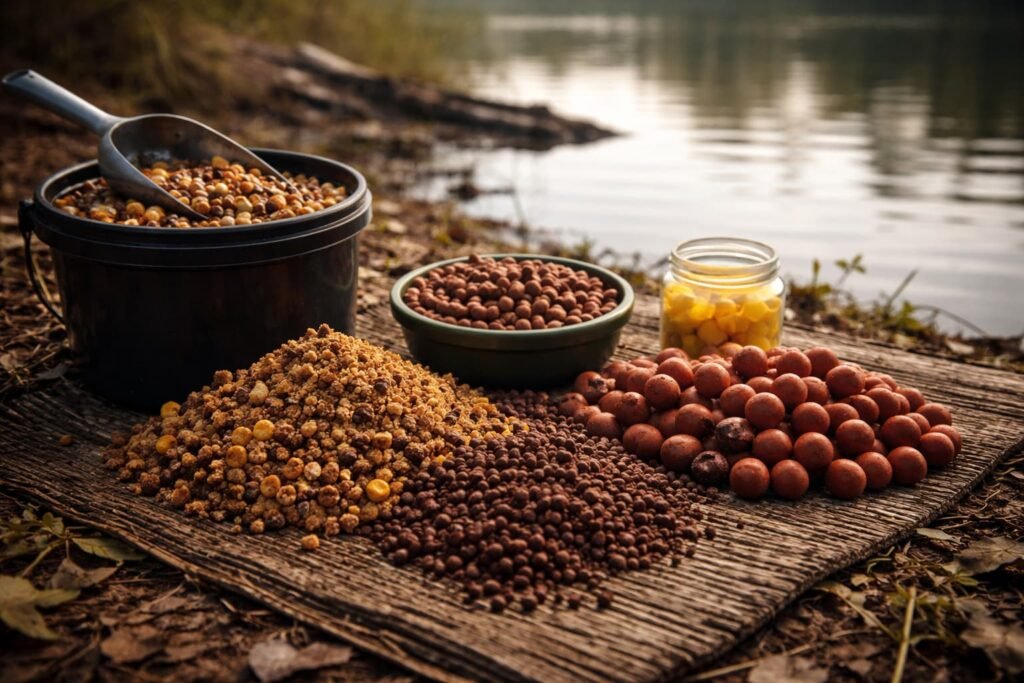
This subject matters more in Michigan than some anglers think.
A lot of our fishing is on big waters, long sessions, or campaign-style baiting where you may be introducing real feed over time. In that setting, ingredient quality matters more than it does in a tiny single-hookbait trap.
A few practical points stand out:
- On short sessions, anti-nutritional factors matter less than on repeated long-term baiting.
- On large lakes, it is tempting to bulk mixes with cheap fillers. That is exactly where quality can slide.
- Properly prepared particles still make excellent sense, but they must be soaked and cooked correctly.
- Hookbaits can get away with ingredients that would be poor choices in a full freebie recipe.
- A balanced bait with moderate plant content is usually much better than a heavily plant-loaded bait built mainly around price.
- In spring, when carp are often feeding in a more measured way, a digestible bait can be especially important. This links well with Spring Carp Fishing in Michigan.
For MichiganCarp.com readers, the main lesson is simple: on our waters, where natural food and big-water movement both matter, a bait should feel like something worth eating, not just something cheap enough to throw in.
Common Mistakes
Mistake 1: Judging ingredients by crude protein only
Protein percentage alone tells you very little. Digestibility and anti-nutritional load matter just as much.
Mistake 2: Using raw soy or raw legume ingredients too casually
Processing matters. Not all soy flour or bean flour is equal.
Mistake 3: Overloading the mix with cheap plant material
A little can be useful. Too much turns the bait into a compromise.
Mistake 4: Ignoring preparation with particles
Badly prepared particles can create needless problems. Proper soaking and cooking are part of the job.
Mistake 5: Assuming “natural” means harmless
Plenty of natural plant compounds are there to protect the plant, not to help the fish.
Mistake 6: Trying to save a weak bait with liquids and flavour
A good liquid can sharpen a bait. It cannot fully rescue a poor ingredient base. That is why Guide to Liquids and Glugs should be read as a finishing tool, not a cure-all.
FAQ
What are anti-nutritional factors in carp bait?
They are compounds in some ingredients that reduce digestion, nutrient uptake, or the real feeding value of the bait. They are most common in certain plant-based materials such as legumes, seeds, and grain by-products.
Is soy bad in carp bait?
Not automatically. Properly processed soy products can be useful. Raw or poorly processed soy is the real problem because of compounds like trypsin inhibitors.
Do anti-nutritional factors matter in hookbaits?
Less than they do in a full feeding bait. A hookbait is usually eaten in tiny quantity, but it is still wise not to build it from poor ingredients for the sake of it.
Are particles full of anti-nutritional factors?
Some raw particles do contain compounds that need proper preparation. That is why soaking and cooking are so important. Properly prepared particles are a different story from raw dry grains.
Can fermentation help reduce anti-nutritional factors?
Yes, in many cases it can help. It can improve digestibility, solubility, and overall bait activity, which is one reason properly managed active baits often perform so well.
Should I avoid all plant ingredients in boilies?
No. That would be throwing the baby out with the bathwater. Many plant ingredients are useful, economical, and effective when they are processed properly and used in sensible amounts.
Next Steps
Read Boilie School to tighten the structure of your homemade bait from the ground up.
Study Base Ingredients to understand which flours, meals, and proteins earn a place in a mix.
Visit the Bait Shed for more practical bait-making and prep ideas.
Read The Science of Fermented and Food-Signal Baits to see how proper processing can improve bait quality rather than just make it smell stronger.
Use Guide to Liquids and Glugs to sharpen an already sound bait, not to cover up weak ingredients.
For seasonal bait application, revisit Spring Carp Fishing in Michigan.