
Want the deeper science behind what actually makes bait work? This special report breaks down the main attractor categories used in modern carp bait, shows what is genuinely useful, and explains how to apply it without wasting money on hype. Read The Complete Science of Carp Feeding Attractants.
The Complete Science of Carp Feeding Attractants
Amino Acids, Betaine, Nucleotides, Organic Acids, and What Actually Matters on the Bank
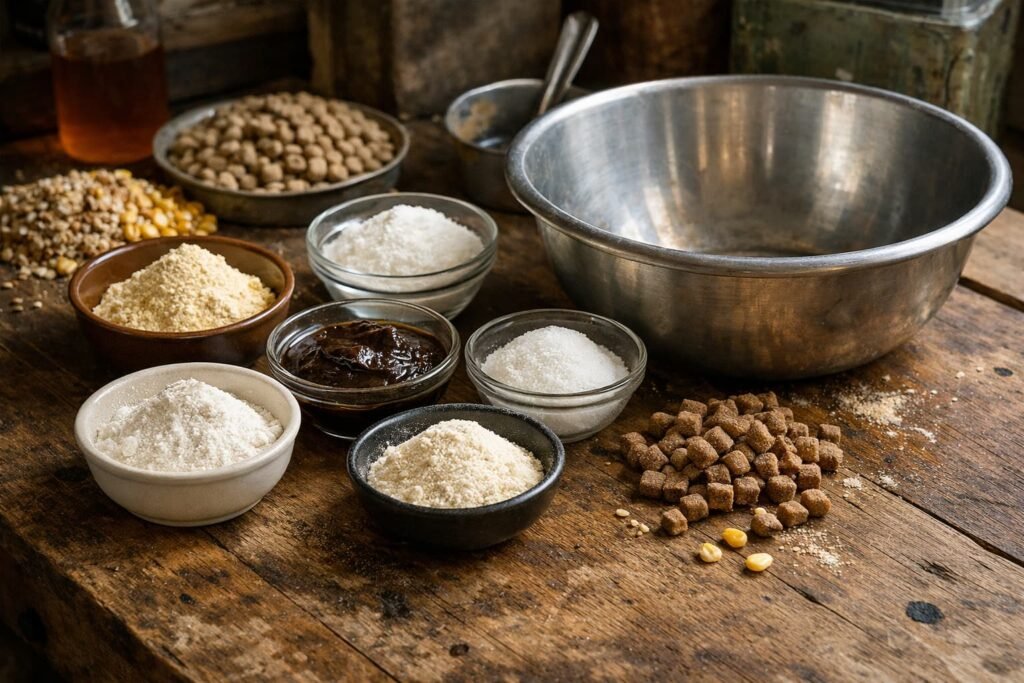
This page is part of the Carp Bait Guide.
If you want the broader bait overview, start with [Carp Bait Guide].
If you want the practical bait-building side, read [Building a Better Boilie].
A lot of carp bait additives sound impressive. That does not mean they all deserve a place in your mix.
Some ingredients help create a real dissolved food signal. Some help a bait taste right once the fish mouths it. Some are useful only in certain applications. Some are just ordinary food or supplement ingredients repacked with a fishing logo and sold at a silly markup.
This page is here to sort that out properly.
The goal is simple: explain what the science points toward, strip away the fluff, and turn it into something useful for boilies, hookbaits, particles, pellets, crumb, and PVA work on real Michigan waters.
- The Science of Minerals, Salts, and pH in Carp Bait
- The Science of Fermented and Food-Signal Baits
- The Science of Carp Bait Solubility and Leakage
On This Page
- Quick Start
- Quick Reference Formula
- How Carp Find and Judge Food
- The Main Attractor Categories
- What Is Proven, What Is Promising, and What Is Mostly Marketing
- How to Use It in Real Bait
- Michigan Notes
- Common Mistakes
- FAQ
- Next Steps
Quick Start
If you only want the plain practical version, it is this:
- Build attraction around free amino acids that carp are more likely to respond to well, especially proline, alanine, glutamic acid, aspartic acid, glutamine, and cysteine.
- Use betaine as a support attractant, not as a complete answer on its own.
- Treat citric acid and a few other organic acids as useful helpers, not magic bullets.
- Use nucleotide-rich ingredients such as yeast extract or IMP/GMP-style enhancers to strengthen savory food signals.
- Keep DMPT in the experimental box. It may have value, especially in hookbaits, but it is not something to build your whole baiting approach around.
- Keep the whole thing practical. A good bait still needs digestibility, texture, leakage, confidence, and proper presentation.
Practical Rule:
The best carp attractants are not just strong-smelling substances. The useful ones are the compounds that help create a dissolved food signal and still make sense once the bait is mouthed.
Quick Reference Formula
Revised Formula at a Glance
Part A — Attraction Blend
Use at 5–15g per kg of dry base mix.
- L-Glutamine — 20g
- L-Glutamic Acid — 15g
- L-Proline — 15g
- L-Alanine — 15g
- L-Aspartic Acid — 10g
- L-Cysteine HCl — 8g
- Betaine HCl — 10g
- Citric Acid — 5g
- Calcium Chloride — 2g
Optional boosters
- IMP + GMP powder — 1–2g per 100g batch
- DMPT — 0.5–1g per 100g batch for hookbaits only
- Taurine — 5–10g per 100g batch
Part B — Nutritional EAA Base
Use at 3–5g per kg of dry base mix.
- L-Phenylalanine — 18.3g
- L-Lysine — 16g
- L-Arginine — 11.8g
- L-Threonine — 11g
- L-Valine — 10.1g
- L-Leucine — 9.6g
- L-Methionine — 8.7g
- L-Isoleucine — 6.4g
- L-Histidine — 5.9g
- L-Tryptophan — 2.3g
How to read it:
Part A is the attraction side. Part B is the nutritional support side. Part A makes the bait chemically interesting. Part B helps stop it becoming a one-dimensional trick bait.
Best first buys
- MSG
- Betaine
- Citric Acid
- Proline or Alanine
- Yeast Extract
How Carp Find and Judge Food
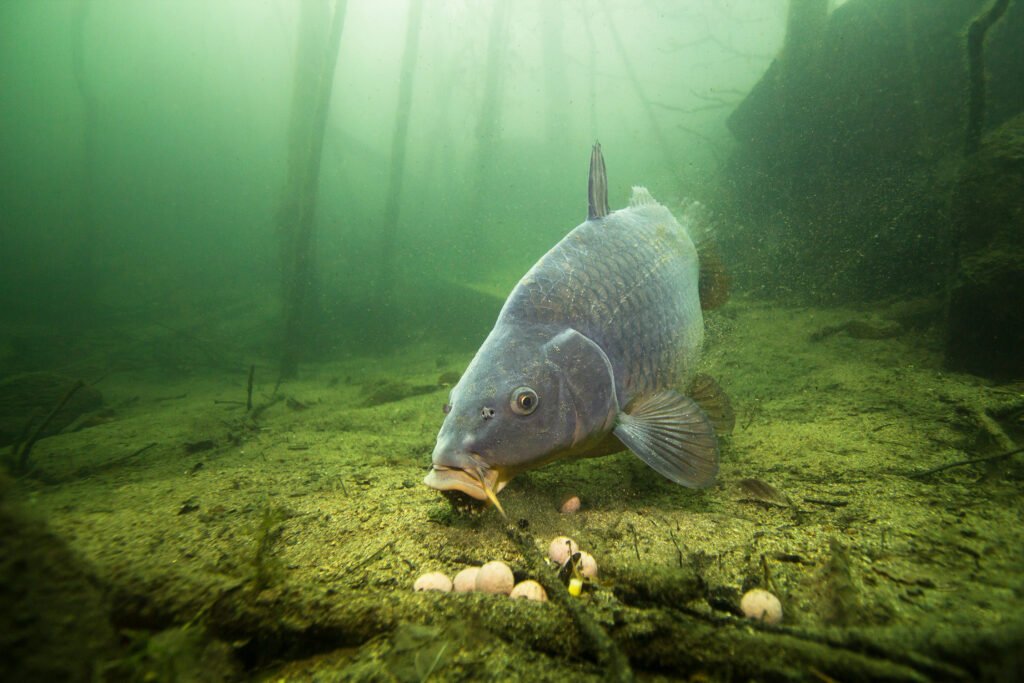
Before getting into specific compounds, it helps to keep one thing straight: carp do not evaluate bait the way anglers do.
They are not reading a label. They are not impressed by a famous additive. They are responding to dissolved chemical signals through smell and taste.
Stage One: Smell Gets Them Interested
Carp use olfaction to detect dissolved substances in the water. That does not mean every bait leaks a trail that fish follow from the far side of the lake, but it does mean soluble compounds can create a local chemical footprint around the baited area.
That is the first job of an attractor package. It helps the fish notice something worth investigating.
Stage Two: Taste Makes the Final Decision
Once the bait is mouthed, taste becomes the gatekeeper.
This matters because not every soluble additive is automatically a good bait additive. Some compounds may smell active in the water but do little for actual mouth acceptance. Others fit much better with what carp are prepared to accept once the bait is in the mouth.
What This Means for Bait Makers
The best additives are not just the ones that leak well.
They are the ones that help create a food signal and still make sense at the point of mouth contact. That is why some baits smell busy to us but do not really fish as they should.
The Main Attractor Categories
1. Free Amino Acids
This is the backbone of the subject.
If you are going to build a sensible attractor package, free amino acids are one of the first places to look. The practical short list is not endless. The names that matter most here are proline, alanine, glutamic acid, aspartic acid, glutamine, and cysteine.
These are the amino acids most worth building around in a practical attractor blend. They are not all equally easy to source. They are not all equally stable in every bait process. But this is the group that makes the most sense to prioritise.
The Standouts
L-Proline is one of the most interesting amino acids in the whole discussion. It deserves serious respect.
L-Cysteine also looks very useful, but it needs more care in application. It makes more sense in paste, hookbait work, or post-boil treatment than in a bait that is going to be hammered by heat.
L-Glutamic Acid is especially useful because it ties into the savoury side of food signalling. That becomes even more interesting when paired with nucleotide-rich ingredients.
2. Betaine
Betaine deserves its reputation more than most bait additives do.
The key is not to treat it as a complete answer on its own. Betaine works best as a support ingredient alongside free amino acids and other food signals.
That is why it makes so much sense in liquids, soaks, pellets, stick mixes, crumb, and lightly treated hookbaits.
3. Nucleotides and Nucleosides
This is one area many bait makers overlook.
Nucleotide-rich ingredients help explain why yeast extract, Marmite-style products, liver extracts, fish solubles, and other broken-down savoury ingredients often pull above their weight. They are not just smelly. They carry food-cell signals that make sense in a bait.
For the practical angler, the lesson is simple: pairing glutamate with a nucleotide-rich ingredient makes more sense than chasing a shelf full of exotic labels.
4. Organic Acids
Organic acids are useful, cheap, and easy to overdo.
For practical carp bait work, citric acid is the safest starting point. It is inexpensive, easy to source, easy to use, and sensible in small amounts.
Other acids may have value in specialist hookbaits or seasonal work, but this is one area where more is definitely not always better.
5. The Promising but Don’t-Go-Mad Category
DMPT
DMPT may have value, especially in hookbaits and small-scale testing. But it is not something I would build the whole baiting approach around.
Treat it as a specialist tool. Not a miracle answer.
Taurine, Creatine, and Collagen Hydrolysate
These make more sense as support compounds or whole-food-signal ingredients.
Taurine fits naturally with aquatic tissue signals. Creatine belongs to muscle tissue chemistry. Collagen products bring useful proline-rich support. None of them need to be treated like magic.
What Is Proven, What Is Promising, and What Is Mostly Marketing
Proven Enough to Build Around
Free amino acids that fit the common carp picture, especially proline-led and glutamate-led systems.
Solid Support Ingredients
Betaine, citric acid, and nucleotide-rich savoury ingredients.
Promising but Best Treated as Specialist Tools
DMPT, stronger organic-acid tricks, and aggressive exotic blends.
Mostly Marketing When Oversold
Anything sold as a must-have universal additive regardless of water temperature, bait type, feeding pressure, stock density, and the rest of the bait.
How to Use It in Real Bait
Boilies
For a milk bait, fishmeal, birdfood, or hybrid boilie, use the attractor side as a light inclusion, not as a powder dump.
Keep heat-sensitive bits modest. Do not make the bait too sour or too sharp. Let the base mix still behave like a boilie.
If you want to use cysteine more seriously, a post-boil soak or warm coating makes more sense than asking it to survive a harder boil.
Hookbaits
This is where specialist additives earn their keep.
Hookbaits can justify stronger coatings, more aggressive solubles, and experimental additions that would be wasteful or risky in free offerings.
That is the right place to test stronger savoury treatments, sharper liquids, or small-scale DMPT use.
Pellets, Crumb, and PVA Mixes
This is often where attractor chemistry shows best.
There is no heavy boiling. Leakage is immediate. The whole parcel breaks down quickly around the hookbait. Betaine, glutamate-type support, citric acid, and the more useful free amino acids all make very good sense here.
Particles
With particles, the science matters, but so does restraint.
Particles already carry natural food value and confidence. A light attractor treatment after cooking is enough. There is no need to turn maize, hemp, corn, or tigers into a chemistry experiment.
Michigan Notes

This is where the science needs bringing back to the bank.
In cold Michigan spring water, stay subtle. High leakage matters more than making the bait loud. A restrained amino-acid-led approach, a little betaine, and maybe a light savoury or yeast angle is plenty.
In summer, when the fish are moving and feeding harder, the full practical blend makes more sense. This is the time to lean a little more on food signal rather than just instant attraction.
In fall, when carp are feeding heavily, you can justify richer baiting and stronger food messages. This is where a properly built boilie with both attraction and food value starts to show properly.
On snail-heavy or mussel-rich Michigan waters, do not try to out-weird the lake. Use the science to sharpen a bait, not to turn it into a chemistry set. Savoury, mineral, shellfish, yeast, and digestible protein signals fit those waters far better than perfume-style overload.
Common Mistakes
1. Treating Every Additive as if More Must Be Better
That is one of the quickest ways to make a bait worse.
2. Confusing Solubility with Acceptance
A substance can leak very well and still do little for actual mouth acceptance.
3. Building Everything Around One Fashionable Additive
Most good bait works because of a system, not one hero ingredient.
4. Overcooking the Chemistry
If you are using more delicate compounds, heavy boiling and harsh drying are not always your friend.
5. Paying Fishing Prices for Grocery or Supplement Ingredients
A lot of so-called carp magic is ordinary chemistry with a fishing label stuck on it.
FAQ
Are amino acids really worth adding to carp bait?
Yes, but not blindly. A narrower group makes more sense than simply adding random amino products.
Is betaine still worth using?
Yes. It is still one of the more sensible support additives, especially in pellets, liquids, stick mixes, crumb, and light hookbait treatment.
Are nucleotides overhyped?
Pure nucleotide products sometimes are. But the bigger idea behind yeast extracts and savoury cell-breakdown ingredients is still very sound.
Is DMPT essential?
No. It may have value, but it is not essential.
Can I do most of this without paying carp-tax prices?
Yes. MSG, citric acid, betaine, yeast extract, collagen, and standard supplement amino acids all show why smart sourcing matters.
What matters most in the end?
A digestible bait, sensible leakage, proper presentation, and enough confidence to fish it properly.
Next Steps
Read [Carp Bait Guide]
Read [Building a Better Boilie]
Read [Guide to Liquids and Glugs]
Read [How to Build a Better Hook – Bait]
Read [Particles for Michigan Carp]