
Most baiting mistakes in carp fishing come from one simple problem.
Anglers use bait to cover uncertainty.
They are not sure whether fish are there, not sure whether the area is right, not sure whether the timing is right, and not sure whether the presentation is right. So they throw more bait in and hope that solves it. Sometimes that works by accident. A lot of the time it does not.
That is why baiting strategy matters.
Bait is not just something you put in the water. It is a tool. It should support location, timing, and fish behaviour. It should help you hold feeding carp, create a trap, build confidence in an area, or increase the chance of a fish settling where you want it to settle. It should not be a substitute for watercraft.
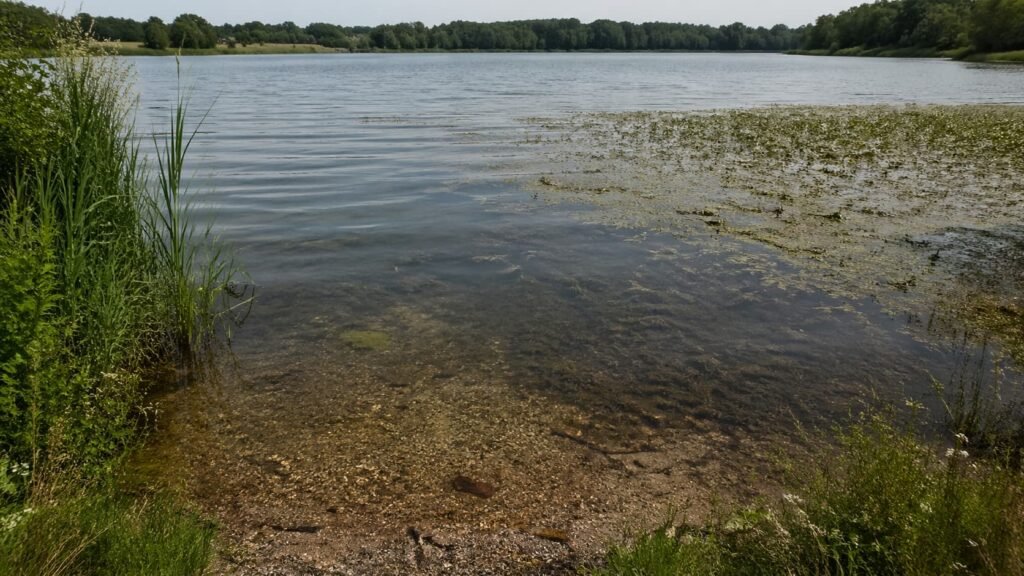
For Michigan carp anglers, this matters even more. Our waters are mixed. Some are small and pressured. Some are big and open. Some are clear. Some are weedy. Some fish best on short windows. Some hold fish in tight feeding zones. Others need much more mobile thinking. A baiting approach that makes sense on one water can be wasteful or completely wrong on another.
The good news is that baiting strategy does not have to be complicated.
You do not need fashionable theory or endless formulas. You need a practical answer to a few basic questions:
- Are the carp already likely to be here?
- Are they feeding, passing through, or just holding?
- Am I trying to nick a bite, hold fish, or build a spot?
- Is this a short session or a longer one?
- Does the water reward subtlety or positive baiting?
Once you answer those properly, the baiting often gets much simpler.
Quick Start
- Start with location, not bait quantity
- Match baiting to fish behaviour, not angler nerves
- Use less bait when carp are moving, pressured, or on short windows
- Use more bait only when fish are likely to stay and feed
- Big baiting is not “better” baiting
- Tight, accurate baiting often beats spreading it everywhere
- Michigan waters often reward measured baiting more than dumping kilos in
- Ask what the bait is meant to do before you put it in
What baiting strategy really means
A proper baiting strategy is not just “how much bait.”
It is:
- how much
- how often
- how tight
- how spread
- how attractive
- how durable
- and, most importantly, why
That last part is the key.
If you cannot answer why you are baiting a spot a certain way, the plan is probably weak.
There are really only a few main baiting jobs:
1. Nicking a bite
This is trap fishing. You are not trying to feed the lake. You are trying to get one opportunity from fish that are likely to pass through or investigate.
2. Holding feeding fish
This is different. Here you believe fish are likely to settle and feed with confidence, and the bait helps keep them there longer.
3. Building confidence in an area
Sometimes the bait is there to make a known good area even more worth using over a period of time.
4. Creating a clear feeding signal
Sometimes you want the bait to stand out quickly and draw attention in the right type of water.
Those are different jobs, and they need different approaches.
Step 1 — Decide what kind of water you are fishing
Before thinking about bait amount, think about the water in front of you.
Small pressured waters
These often punish heavy-handed baiting. Carp on these waters usually know the obvious tricks. Tight, believable, low-disturbance baiting often makes more sense.
Big open waters
These can sometimes handle more bait, but only if you are already in the right area. Dumping bait into dead water on a big lake is still just dumping bait into dead water.
Clear waters
The clearer the water, the more fish confidence often matters. Overdoing the bait can make things feel unnatural, especially in daylight.
Weedy or natural-food-rich waters
If the lake already offers lots of natural food, your baiting needs to fit that picture. Too much bait can work against the area rather than with it.
This is why baiting must always sit underneath Location First — Finding Carp Before Choosing Rigs and Natural Food Sources — What Carp Eat and Why It Matters in Michigan Waters.
Step 2 — Work out what the carp are doing
This is where the right baiting plan usually reveals itself.
If carp are travelling
Use less bait. Travelling fish often respond better to a neat chance than a big dinner table. Routes, staging areas, short dusk lines, and passing fish usually suit tighter approaches.
If carp are feeding confidently
Now you can think more positively. If fish are actually dropping in, bubbling, clouding, and settling, more bait may make sense because you are trying to hold fish rather than just tempt one.
If carp are holding but not feeding hard
This is a danger zone for overbaiting. Fish may be present, but not really in the mood to settle properly. Often the better move is a measured trap, not a pile of feed.
If carp are pressured
Less is often more. A cautious fish often needs to feel safe before it needs to feel full.
This is where Signs Carp Are Feeding: How to Spot Feeding Carp and Fishing Pressure — How Carp Learn and How to Beat It become part of baiting strategy, not separate topics.
Step 3 — Match baiting to session length
Session length matters a great deal.
Short sessions
Short sessions usually reward:
- tighter traps
- less bait
- faster attraction
- less waiting for fish to “find it eventually”
You often do not have time to build a big feeding area from scratch, especially in Michigan where short feeding windows can be critical.
Day sessions
These sit in the middle. Sometimes a little more bait is useful if the area already makes strong sense, but the trap mindset is still very important.
Overnight or longer sessions
Now you can sometimes justify more bait, especially if:
- fish are clearly visiting the area
- the swim fits the season
- the water allows it
- the bait is meant to keep fish there over time
But even then, the extra bait has to be earned by the situation.
Step 4 — Decide between tight baiting and spread baiting
This is one of the biggest practical decisions.
Tight baiting
Best when:
- fish are pressured
- the water is clear
- the area is small or precise
- you are fishing a route
- you want a quick chance
- you know exactly where you want the fish to feed
Tight baiting is often underrated. On many Michigan waters, especially pressured ones, it is the most sensible default.
Spread baiting
Best when:
- fish are feeding confidently
- the lakebed allows it
- the swim is bigger
- you want to hold fish rather than just trip one up
- the area already has a natural feeding feel
Spread baiting can work very well, but only if the fish are likely to use the full area.
A common mistake is spreading bait because it feels more “natural,” when in reality it just reduces the chance of the fish reaching the hookbait quickly.
Step 5 — Understand what each bait form is doing
Not all baiting is the same just because it all ends up in the water.
Whole boilies
Good for building cleaner, longer-lasting feeding areas. Often better when nuisance species or breakdown speed matter.
Crumb and chopped boilie
Good for quicker attraction, more leak-off, and tighter trap work. Often useful in short sessions or cooler water.
Particles
Very useful, but only when used for the right reason. They can hold fish well, but they can also encourage messy, prolonged feeding if overdone in the wrong place. On some Michigan waters they are excellent. On others they can be too much or attract too much unwanted attention.
Pellets
Useful for quicker response and breakdown, but they need matching to the situation. In some waters they are brilliant. In others they disappear into the background too fast.
Liquids and glugs
Helpful as support, not magic. They can sharpen a trap, especially when you want a baited area to start working quickly, but they do not rescue poor water choice.
The real question is not which bait type is “best.” It is which one best suits what the fish are doing.
Michigan Notes
Michigan baiting is often best when it stays practical.
A few things matter here:
- Many public waters are not the place for reckless heavy baiting.
- Clear lakes often reward restraint.
- Big lakes can tempt anglers into overbaiting because the water looks huge.
- Weed-rich lakes often already hold natural food, so your bait should complement that rather than fight it.
- Short feeding windows are common, especially in spring and summer.
- Carp are often catchable here on sensible baiting, not heroic quantities.
A lot of anglers coming from a “more is more” mindset end up feeding areas the fish only wanted to visit briefly.
Baiting by season
Early spring
Less is often better. The fish may not want a huge feed yet. Trap fishing, crumb, chopped boilie, and measured baiting often make more sense than building a full dinner table.
Mid to late spring
This is more flexible. If fish are clearly moving and feeding with more confidence, you can step things up slightly, but still keep it tied to location and timing.
Pre-spawn
Do not confuse movement with feeding. Lots of fish activity does not always mean a big baiting situation.
Post-spawn
Fish may feed again, but often unevenly at first. Let the lake show you how positive they really are before piling it in.
Summer
Now baiting becomes very water-dependent. Some summer situations suit a little more feed. Others, especially pressured or clear ones, still reward tight accurate baiting around low-light windows.
Fall
This is often the season where more positive baiting makes the most sense, provided the fish are in the right area and actually feeding.
How much is too much?
There is no magic number.
Too much bait is simply more bait than the situation can justify.
Signs you may be overbaiting include:
- fish signs without bites
- fish visiting but not settling
- no reason to believe fish are staying long enough to eat it
- you adding more because you are worried, not because the swim is proving it needs it
- hookbait getting lost inside a feeding situation that never really developed properly
A better rule is this:
Bait just enough to do the job you need done.
That job may be:
- one bite
- a short holding spell
- a built spot over time
- a confidence area on a longer session
But it must still be a job, not a guess.
How often should you top up?
Again, this depends on evidence.
Top up when:
- fish are clearly feeding
- you are getting response
- the area is holding life
- you believe the swim is still active and deserves more feed
Do not top up when:
- nothing is happening
- fish are only passing through
- the area feels uncertain
- you are topping up because silence is making you nervous
That second list is where a lot of bait gets wasted.
On many waters, topping up too soon just refreshes disturbance, not opportunity.
This is one reason On-the-Water Adjustments — Adapting When Plans Change belongs beside this page.
Big-lake baiting versus small-water baiting
Big lakes
The temptation is always to think bigger water needs more bait. That is only true if the fish are actually likely to settle and feed there. Big water usually demands better location first, not automatically more feed.
Small waters
These often punish careless baiting much faster. The fish see more, feel more, and learn more quickly. Often a smaller, quieter, more deliberate approach wins.
This is where Finding Carp in Big Lakes (Michigan Strategy Guide) and How to Find Natural Carp Feeding Areas in Michigan Lakes help shape the baiting answer.
Common baiting situations and the best response
You found a clear feeding spot with natural food signs
Use a measured positive baiting approach. Enough to make it worth stopping on, but not so much that you bury the hookbait in uncertainty.
You found a route between two better areas
Go tight. This is usually a trap situation.
You saw a couple of shows but no real feeding signs
Stay cautious. Showing is not feeding.
You are fishing a pressured margin
Usually fish very little and very accurately.
You are on an overnight session with repeated signs
Now you can justify a little more if the swim continues to prove itself.
You are not sure the fish are there
Do not use bait to compensate for doubt. Improve the location decision first.
Common Mistakes
Using bait to solve poor location
This is the biggest one. Baiting cannot fix dead water.
Feeding too much on short sessions
You often do not have time for the fish to use it properly.
Confusing activity with feeding
Showing fish and feeding fish are not the same.
Copying heavy-bait approaches from other waters
Michigan waters vary too much for lazy imitation.
Topping up because you are bored
That is not strategy.
Spreading bait too widely in precise swims
A smaller feeding zone often produces faster and cleaner chances.
FAQ
Should I always start with less bait?
Usually yes, unless the swim is already strongly proven and the fish are clearly likely to feed hard.
Are particles better than boilies for holding fish?
Sometimes, but only if the situation suits it. They are not automatically the better answer.
Is heavy baiting ever worth it in Michigan?
Yes, sometimes, but only where fish location, feeding mood, session length, and water type justify it.
What is the best baiting approach for pressured carp?
Usually tight, accurate, believable, and not excessive.
How do I know when to top up?
When the swim is giving you signs that fish are actually using it and likely to keep using it.
What matters more, baiting or location?
Location, every time. Good baiting makes a good area better. It rarely turns a poor area into a good one.
Next Steps
Read How to Find Natural Carp Feeding Areas in Michigan Lakes and Natural Food Sources — What Carp Eat and Why It Matters in Michigan Waters next, because baiting works best when it fits the food picture already present in the swim.
Then keep this page tied to Location First — Finding Carp Before Choosing Rigs, Signs Carp Are Feeding: How to Spot Feeding Carp, and On-the-Water Adjustments — Adapting When Plans Change.
And for the bigger session picture, link it forward to Putting It All Together — Building a Complete Michigan Carp Strategy and The Complete Michigan Carp Session Checklist.