
A lot of anglers talk about bait as if carp live on boilies, corn, packbait, and whatever else gets thrown in by fishermen.
They do not.
Carp spend most of their lives feeding on what the lake already gives them. That is the starting point for understanding location, feeding behaviour, confidence, and why some spots always seem to hold fish even when no one has baited them.
If you want to catch more carp consistently, you need to stop thinking only in terms of “what bait should I use?” and start thinking in terms of “what are carp already eating here, and where do they find it?”
That is what natural food sources are really about.
Carp are built to search, root, sift, graze, and patrol. They feed in silt, on hard spots, around weed, along margins, over mussel beds, through soft-bottom feeding zones, and anywhere else they can pick up something worth eating. The best anglers do not just place bait in water. They place bait where it makes sense inside the carp’s normal feeding world.
For Michigan anglers, this matters even more. Our lakes vary wildly. Some have weed, some are sandier, some hold heavy silt, some have mussels, some have rich shallow margins, and some look barren until you realise fish are still finding food there. The angler who understands natural food instantly reads the lake better.
Quick Start
- Carp spend most of their feeding time on natural food, not angler’s bait
- Look for areas where food is concentrated, not just randomly present
- Weedbeds, silt pockets, margins, mussel areas, reedlines, and shallow warming zones all matter
- If a spot already gives carp a reason to visit, your bait becomes far more effective
- Natural food explains why some areas produce repeatedly and others stay dead
- The smartest baiting usually fits around natural feeding behaviour, not against it
- Learn to identify feeding zones by signs, lake features, and repeated carp movement
- The best question is often not “what bait?” but “why would carp already want to feed here?”
What do carp actually eat naturally?
Carp are opportunistic feeders. They are not delicate specialists. If it is edible, available, and worth the effort, they will investigate it.
On most waters, their natural food can include:
- snails
- mussels and shellfish
- bloodworm and midge larvae
- insect larvae
- worms
- small crustaceans
- bits of plant material
- seeds and grain washed in naturally or by people
- detritus-rich soft-bottom life
- tiny food items buried in silt or weed
That list changes from water to water, but the principle stays the same: carp feed where small food items are repeatably available.
This is why one lake seems to revolve around weed edges while another revolves around hard spots, silty depressions, reed margins, or mussel-rich areas.
Why natural food matters so much to anglers
Natural food matters for four big reasons.
1. It explains location
Carp do not just wander. They use the lake in ways that make feeding sense. If a swim has a genuine food source, it gives fish a reason to keep returning.
2. It explains confidence
A carp feeding naturally is already comfortable. That matters. If fish trust an area, your bait does not need to drag them there from nowhere. It only needs to fit into a place they already like using.
3. It explains repeated captures from the same areas
Some zones keep producing year after year because they are not just “good looking.” They are actual food areas.
4. It helps you bait more intelligently
If fish are already visiting a natural feeding area, you usually do not need to overdo the bait. Often you are better off presenting neatly in or near the natural zone.
That is why this subject links directly to How to Locate Carp Before You Cast and Signs Carp Are Feeding. Natural food is one of the strongest reasons a swim comes alive in the first place.
The main natural food zones carp use
Soft silt and rich bottom areas
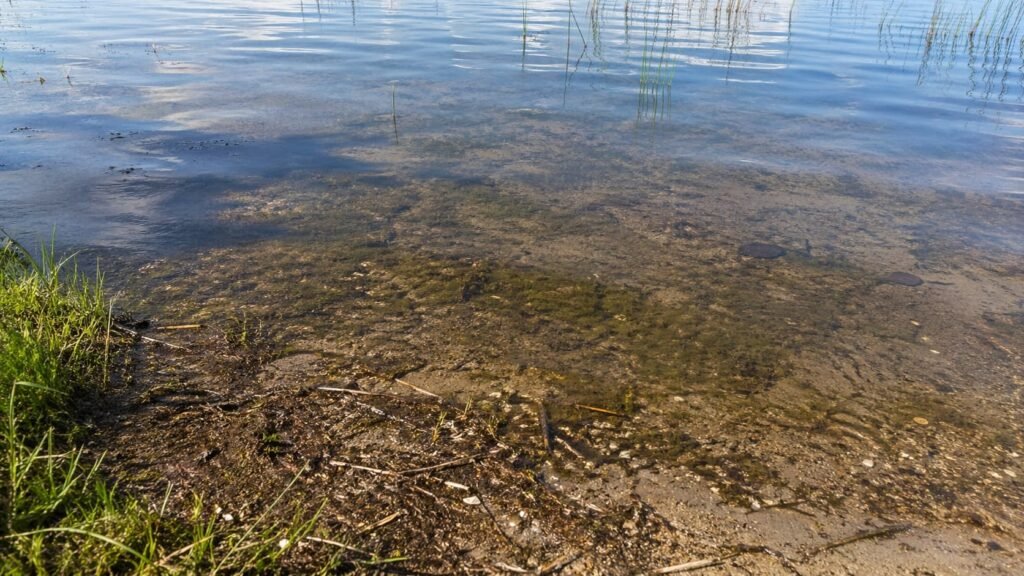
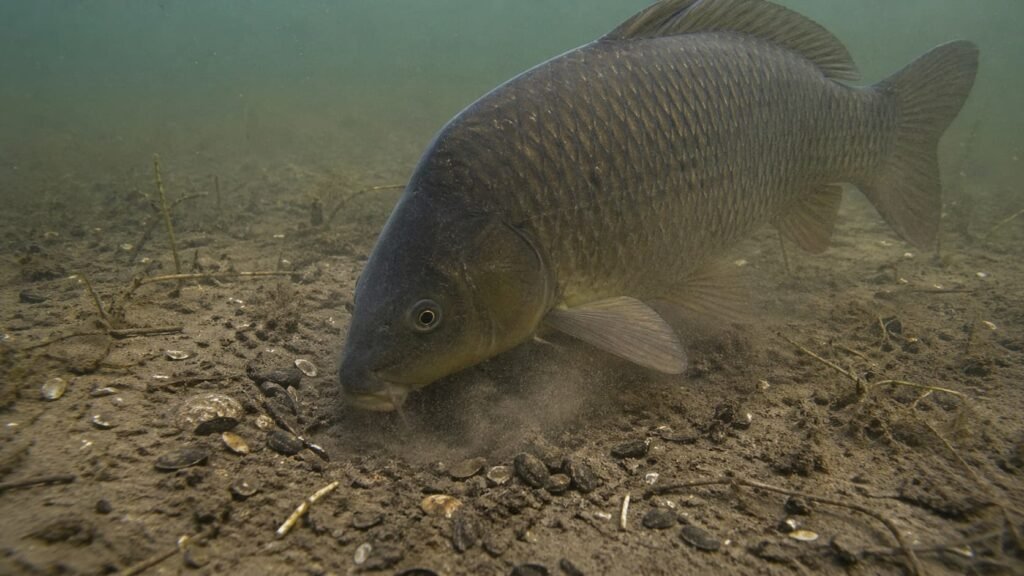
Soft areas often hold life. Not every bit of silt is good, but rich silt can contain bloodworm, insect life, rotting organic matter, and all sorts of tiny edible items carp know how to sort through.
This is one reason carp are so often seen grubbing in soft-bottom areas. They are not just nosing about. They are feeding properly.
The trick is learning the difference between good feeding silt and dead, nasty, sour silt. Rich feeding silt usually gives signs of life. Dead black sludge with no real sign of feeding activity is a different matter.
Weedbeds and light vegetation
Weeds do more than hold carp. They hold food.
Snails, insect life, tiny organisms, and trapped organic matter all gather around healthy vegetation. That makes weed edges, holes in the weed, lanes through weed, and nearby clean spots very valuable.
This is why the weed article mattered so much. Vegetation is not just cover. It is often a feeding system.
Mussel and shell areas
Harder bottom areas with mussels or shell can be excellent feeding spots. Carp will feed over these areas if they can do so efficiently and safely.
In some Michigan waters, mussels can be a major factor. They do not just affect line damage and leader choice. They can also help explain why fish favour certain harder zones.
Margins and reedlines
Margins are classic natural feeding zones, especially where there is shelter, warmth, light weed, insect life, reed cover, or washed-in food. Carp often patrol these areas because the food is there and because they can feed without needing to move far from cover.
Shallow warming areas
In spring especially, shallow areas can come alive early. Warmer water wakes up food life, encourages movement, and gives carp a reason to investigate areas that looked lifeless a few weeks earlier.
That is why Carp Water Temperature Guide for Michigan Lakes is so important. Temperature does not just affect carp directly. It affects the whole feeding system around them.
The most common natural foods anglers should understand
Snails
Snails are one of the classic carp food items. They are protein-rich, repeatable, and commonly associated with weed, margins, reedlines, and certain bottom types.
Where snails are present in numbers, carp learn that quickly.
Bloodworm and insect larvae
Soft-bottom areas can hold huge numbers of tiny food items. Carp are very good at feeding over this kind of ground, especially when it is safe and comfortable for them to do so.
Mussels
Mussels can concentrate carp in certain areas and help create very specific feeding zones. They are not always easy to fish over, but they can be very important.
Small crustaceans and aquatic life
Carp will feed on all sorts of little living food items that most anglers barely think about. You do not need to identify every species in the lake. You just need to understand that rich areas usually stay rich for a reason.
Plant-based feeding
Carp are not predators in the classic sense. They will also take in plant material, seed-like items, softened grains, and organic matter while feeding. That is one reason grain-based and seed-based baits can make so much sense. They do not feel alien in a carp’s world.
How to spot a natural feeding area
This is the practical part.
A good natural feeding area often gives itself away through a combination of signs:
- repeated shows in the same zone
- bubbling with purpose
- cloudy or coloured patches
- cleaned-out spots
- smooth patrol routes through weed or margins
- fish entering and leaving a zone repeatedly
- obvious shallow-to-deep access nearby
- reedlines, weed edges, mussel patches, or silty depressions that “fit” the lake
No single sign proves everything. But several signs together are powerful.
This is where Signs Carp Are Feeding becomes useful. You want evidence of feeding, not just the vague idea that “carp probably pass through here.”
Why some spots hold carp year after year
Because the food stays there.
Anglers often overcomplicate this. They start talking about mystery holding areas, secret spots, special magic banks. Often the truth is much simpler. The area keeps fish because it offers comfort, access, and reliable food.
That is why productive spots often survive changes in bait trends. The anglers change. The hot baits change. The natural food reason stays the same.
If a swim has:
- food
- safety
- access
- suitable depth nearby
- seasonal relevance
it has a real chance of being consistently good.
How bait should work around natural food
Your bait should usually do one of three things.
1. Match the feeding mood
If fish are naturally grubbing over a soft spot or a clean area near weed, then a neat, believable baiting approach often works best.
2. Add to what is already there
You are not trying to replace the lake’s food. You are trying to become part of the same feeding picture.
3. Give fish an easy target inside a natural zone
Sometimes the best role of bait is simply to give carp something convenient and attractive to pick up while they are already comfortable and searching.
That is why huge baiting in rich natural areas can be a mistake. If the zone already contains natural food, overbaiting can actually reduce the edge.
Natural food and seasonality
Natural food availability changes through the year, and carp respond to that.
Spring
Warming shallow areas, reedy margins, light weed growth, and newly active soft-bottom areas can become very important. Carp often move into areas where both temperature and natural feeding opportunity improve together.
Summer
Weeds, margins, shallow cover, mussel areas, and stable feeding zones often come into their own. Carp can settle into repeatable use of food-rich areas, especially on waters with consistent summer growth.
Fall
Fish may feed more seriously and range harder, but they still relate to food-rich zones. The better natural areas do not suddenly stop mattering just because the air turns cooler.
Winter
Food intake often slows, but natural food still helps explain where fish hold and what areas remain worth watching. Reduced feeding does not mean random feeding.
Michigan Notes
- Many Michigan lakes reward anglers who understand shallow seasonal food shifts
- Weed growth can create major feeding value, not just cover
- Mussels can be a huge clue on some waters, even when they are a headache for tackle
- Quiet margins often hold more natural life than anglers realise
- Big natural lakes may spread fish out, but carp still keep returning to routes and areas that hold dependable food
- Clear water often means you need to present more carefully in natural feeding areas, because fish may inspect more than on coloured waters
Common Mistakes
Looking for “features” without asking why they matter
A bar, weedbed, margin, or gully only matters if it gives carp a reason to use it.
Overbaiting obvious natural feeding zones
If the lake is already feeding fish there, do not bury the spot under more bait than it needs.
Ignoring soft-bottom life
Some of the best feeding zones look unimpressive until you understand what is in the silt.
Thinking natural food means you should never use bait
Wrong. It means you should use bait more intelligently.
Fishing for carp where food is scarce and hoping attraction solves it
Sometimes it will not.
Treating all lakes the same
A mussel-rich big lake, a shallow weedy water, and a silty park lake are different feeding worlds.
FAQ
What is the main natural food of carp?
There is no single answer. It depends on the lake, but common foods include snails, mussels, bloodworm, insect larvae, worms, tiny crustaceans, and plant-associated food items.
Do carp prefer natural food over anglers’ bait?
Often, yes. Natural food is what they already know and trust. Good bait works best when it fits into that world.
Are weedbeds natural feeding zones?
Very often, yes. Healthy weed can hold snails, insect life, and other edible material, making weed edges and nearby clean patches especially valuable.
How do I know if a spot has natural food?
Look for repeated carp activity, feeding signs, productive bottom types, weed, mussels, margins, and areas that keep producing year after year.
Should I bait heavily where natural food is abundant?
Usually not as a first move. A tighter, more controlled approach is often better because the fish are already visiting the area for feeding reasons.
Does natural food matter on big Michigan lakes too?
Absolutely. It may just be more spread out and harder to identify. Routes, transitions, and recurring feeding areas become even more important there.
Next Steps
Read How to Locate Carp Before You Cast to connect natural food to real swim choice.
Then read Signs Carp Are Feeding so you can tell when a natural area is actually being used.
For seasonal context, read Carp Water Temperature Guide for Michigan Lakes and Spring Carp Fishing in Michigan.
For larger waters, follow it with Finding Carp in Big Lakes and Watercraft.